We are a commune of inquiring, skeptical, politically centrist, capitalist, anglophile, traditionalist New England Yankee humans, humanoids, and animals with many interests beyond and above politics. Each of us has had a high-school education (or GED), but all had ADD so didn't pay attention very well, especially the dogs. Each one of us does "try my best to be just like I am," and none of us enjoys working for others, including for Maggie, from whom we receive neither a nickel nor a dime. Freedom from nags, cranks, government, do-gooders, control-freaks and idiots is all that we ask for.
So yeah, still crazy busy with my final Radiation every day and Chemo - but finally ending next Monday and moving to feel better.
I am still reading news regularly. The Abortion changes by SCOTUS happened two years ago properly as it reversed Roe laws. Justifiably. I do not support abortions, but I do believe the US government needs out of this. It can say states should allow it - but the basic law (and even Ruth Bader Ginsburg stated the truth) that was clearly impossible to remain and needed massive state level changes and management. The change was smart in 2022. But Democrats continue to say no this is not true and we were all cheated. Women tend to lean on this as well. The reality is laws SHOULD REMAIN but each state should set the levels of engagement and use - and that's the end of the discussion. Trump wisely recognized this all recently - and while I don't love him, at least he's been correct on this.
Moving onward, Jack Smith keeps falling apart. And my guess is almost every one of the Trump in-law issues will eventually fall apart and make nothing. Already Smith is falling apart, and even Georgia is winning its gains and management. Only Carroll's case against Trump "won" because it was a civil case - but it takes a lot to review all that information and assume she had a truth - which was damn near impossible and unlikely. But given Trump it was easy to win and push it - so they did. But even that could still be rejected as more information comes in.
While I don't push for anyone in particular in November, here is what I know. I wouldn't ever vote for Trump or Biden - I'd fare exclude Biden, really - and I'd really like to see a more open number of opportunities but know that is highly unlikely. That said, the size of spending for local injection to win your party is basically over without any of the local tests. Biden and Trump ARE the two main elections which MEANS that the MOST spending for advertising will occur starting late August and mid September it will really take off. This money wasn't spent for local party gains - that ended quickly without much spending. Now the goal(s) MUST BE - SPEND THE MOST YOU CAN TO WIN THE NATIONAL ELECTION.
As an FYI - Biden will have to rig things. Expect him to. It would not surprise me to rig and cheat and make all kinds of questionable things. But he's just not bright enough to win. I have to assume the Democrats will hope they win him and then find a pass to shift him out finally afterward. I can see them trying to rig that...
3/4, Monday, was full of a ton of news which is beginning to show how small portions of the Republicans, but mostly Democrats, are failing massively. SCOTUS eliminated almost all the anti-Trump ballot attempts - and the vote was 9-0, though some Democrats made a few key points. Democrats pushing for that, at the state level, failed. A certain troll seemed to say it was perfectly "legal" when we all knew it wasn't. Once more a silly attempt by this flawed idiot drawing attention to useless information sources and flawed politicians shifting laws to pursue their personal idiocy goals.
Also noted, massive flaws by Hunter Biden. Which most of us have knwon about for a long time. But it continues to be hidden by politicians and the FBI which was assigned as a "friendly source" by Democrats (2 former members of the FBI are friends of mine and have complained of this nonsense since they left 6 years ago). Non-FBI people will claim the FBI is always trying to protect legally. This simply isn't true. And more evidence continues to indicate their path of trying to support Demorats is flawing more and more.
A final note is that more information is coming out that many Jan 6 people who were found "guilty" may see more of this removed. It's a matter of time. Some of them certainly do deserve some guilt - let's be open and honest that several did some pretty bad behaviors. Most have not. So most of the ones found guilty are a joke of politicians exceeding their value. Demcorats and a few pro-Democrat Republicans who not only hid information, but destroyed quite a bit to protect themselves. I've known MANY people who went there on Jan 6. Several were called to be potentially found 'guilty' but managed to twist out with good lawyers. Many others have not had good lawyers and faced lawsuits against them.
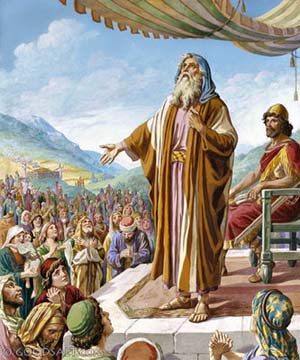
Sorry, been extremely busy and traveling this past week. Many visits to my doctors and updates on starting my chemo and radiation tonight and tomorrow. Hoping for some extensions from benefits. The reason I am adding this was an hour with my Pastor. I'll write more about that meeting. However, we spoke about 1 Samuel 8, politics (and my specific reason for leaving masses due to political statements often misguided due to not speaking about 1 Samuel 8, and he admitted he was behind on it) and the fact I've written versions of this 3 times. Once in college for a class that earned me zero grades. Once in grad school which led to a shift in a former leftist set of professors who often misstated Biblical versions of political views. And the third was in 2011 here on Maggie's. Enjoy and feel free to comment. It will be my 5th writing (since I sent this and some updates) to all my friends recently).
The first political systems, from an institutional standpoint, were monarchies. Monarchs either considered themselves gods, chosen by 'the gods', or "Chosen by God". In almost every sense, the political system was tied somehow to the spiritual beliefs of the nation.
During a college course on Democracy, my professor spent the better part of an hour and a half discussing the implications of this concept. He pointed out that God Himself chose Israel's first king, and approved of their choosing a king. I immediately raised my hand and asked "But God didn't want Israel to have a king, did He? He considered Himself their king and allowed them to have Judges which acted as their spiritual and moral guides on earth."
If you don't love it, it would drive you crazy - and it certainly does.
Several states have either tried, and failed, or succeeded so far, to remove Trump from their ballots.
The best example recently was in Maine. Where an unelected official pushed this through, then had the temerity to explain their reasoning.
That reasoning is best described as a version of "I had to destroy democracy to save democracy." It's a classic trope and one which is often crafted in literal and legal fashions to make them sound smarter, better, and more caring for all. As if we want them to do this.
The person who did this claims, in a manner I have yet to really completely wrap my head around, that doing this was a method of getting "better leaders" and avoiding "election sabotage." Now how making Trump's candidacy and the right of people to vote for him isn't election sabotage must require some elaborate rhetoric, and certainly she tried very hard to explain it. Naturally, it's all nonsense and she's basically, in the most respectful fashion I can dredge, an idiot with few redeeming qualities to hold the office currently held.
Boycott Israel. It's a great idea if you're angry at Israel for developing a strong economy and thriving culture. You may be upset at them for invading Gaza, and you can support the right for Palestine to have their own nation. Truth be told, Israel and the UN have offered Palestine a nation several times, and each time been rebuffed. Israel also isn't happy about returning to Gaza. Remember they removed all Israeli settlers, and the IDF, years ago with an understanding that it would be demilitarized. Funny how that worked out.
I've not been contributing since about September, and I apologize for the long gap. I apologize only because it's rude to disappear without letting people know where you're going and I do my best to avoid being rude. In a nutshell, I've been overwhelmed at work, which is a good thing. After not working for many months, I managed to land a (much lower level) position which is working out very well for me and my long-term prospects have improved dramatically in the last few weeks. Of course, improved opportunity means additional responsibilities. Which means more time at a desk, at least in my current role. At my age (pushing 60), that's something many others cannot say. They're either at or near the pinnacle of your career, or winding it down. As I have done 4 other times in my life, I'm winding up again and feeling great.
One thing I do is try to go for a walk each day for at least an hour. Fresh air and exercise enables me to be nimble of body and mind. I'll listen to history podcasts while I walk, or just think. Recently, after a particularly difficult conversation with a friend who has gone full-on Woke, I chewed the mental cud and began to wonder where all this Wokism is headed.
It suddenly struck me what the essential problem of Wokism and Cancel Culture represent. In the name of creating and expanding opportunity, these people are limiting it severely. I wondered what history would look like if Woke and Cancel mindsets had been in place for a longer time than just the last decade or so. Not that we need another discussion on Wokism, but I felt this was a good mental exercise.
Put simply, the more successful the current common-good movement is, the more it will erode one of the key pillars of American conservative thought: the idea of liberty. The biggest danger is not that America will evolve into national or imperial socialism, but that statist arguments from conservatives will end up reinforcing similar arguments made by progressives. Politics would devolve into a bidding war on which side, the Right or the Left, can buy the most votes with government handouts, win the most battles in the courts over defending “their” version of free speech, control the courts and administrative elites, or get to define what industrial and administrative policies mean. In that battle, I would put my money on the political masters of collectivism, the progressives, because that is their raison d’être.
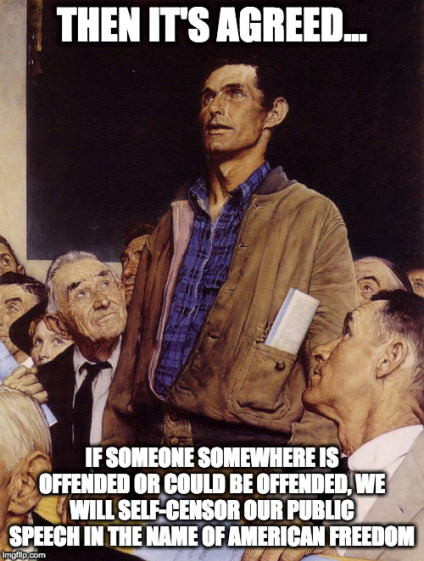
You might be living through The Turn if you ever found yourself feeling like free speech should stay free even if it offended some group or individual but now can’t admit it at dinner with friends because you are afraid of being thought a bigot. You are living through The Turn if you have questions about public health policies—including the effects of lockdowns and school closures on the poor and most vulnerable in our society—but can’t ask them out loud because you know you’ll be labeled an anti-vaxxer. You are living through The Turn if you think that burning down towns and looting stores isn’t the best way to promote social justice, but feel you can’t say so because you know you’ll be called a white supremacist. You are living through The Turn if you seethed watching a terrorist organization attack the world’s only Jewish state, but seethed silently because your colleagues were all on Twitter and Facebook sharing celebrity memes about ending Israeli apartheid while having little interest in American kids dying on the streets because of failed policies. If you’ve felt yourself unable to speak your mind, if you have a queasy feeling that your friends might disown you if you shared your most intimately held concerns, if you are feeling a bit breathless and a bit hopeless and entirely unsure what on earth is going on, I am sorry to inform you that The Turn is upon you.
The Turn hit me just a beat before it did you, so I know just how awful it feels...
He (Sandel) fails to consider that substantial numbers of Americans are proud of their local way of life, have no yearning to live in Manhattan or Silicon Valley, and mostly want progressive elites to mind their own business. And for the most part he ignores the abundant evidence that the anger and the resentment of the people who live beyond urban centers and the wealthy suburbs that surround them stem from the political class’s faulty conduct: Many members of communities in red America believe that elites have recklessly opened the southern border and suspended immigration laws; promiscuously spent taxpayer dollars with little concern for the long-term effects on the nation’s fiscal health; tarnished America’s good name by bungling wars and diplomacy; converted much of the mainstream media into a propaganda arm of the Democratic Party; mobilized powerful government agencies—the IRS, the FBI, and the Department of Justice—against the conservative grassroots as well as its democratically chosen standard-bearer; and, not least, transformed the educational system—from kindergarten through graduate and professional education—into an assembly line for the reproduction of leftist ideology.
Despite the many causes for concern, including a few vague doubts that he himself raises, Sandel rejects the possibility that the primary problem with meritocracy in America is the failure of many members of our intellectual and political elites to perform their jobs well. Instead, he sets out to discredit the very idea that human beings deserve the fruits of their labor.
She could be canceled for that article, don't you think?
It is a form of terrorism, and none of it is "for the better." You can scare people into not saying what they think, but you can't scare them out of free-thinking unless you start with the little kids. Oh, wait...
Today Marco Rubio made a statement on Cuba that is both timely for the citizens of that nation and for those of us here in the US. "We don’t just condemn this tyranny. We condemn this communist, this Marxist, this socialist tyranny.” Rubio then demanded that America make “clear about whose side we’re on.”
“The first lesson we need to take away from it is that Marxism, socialism, doesn’t work."
Rubio continued, “The way socialism, the way Marxism has always worked, the way it’s always empowered itself, is it goes to the people and immediately divides them. It says there is an oppressor class and that there is this victim class and these evil oppressors, capitalists, in the case of socialism or traditional Marxism, they oppress the victims.”
I visited Cuba several years ago, when I had the opportunity. I felt it was a good chance to see Communism in action, and to see a nation that is (rather literally) stuck in the late 50's and early 60's (and earlier, based on some of the cars I rode in). I was clear that the people, as we are seeing now, want freedom. Many know that Castro hoodwinked them, but once in, there was little they could do to get him out. Castro was good at convincing many, whose families at one time had little or nothing, that his way was 'better'. Over the years, most have learned this is simply not true. Cubans are now aware of the reality of the world, mainly because of (in spite of the government's restrictions) the internet. They lack many modern conveniences and opportunities. But they are not lacking in skill or entrepreneurialism. A nation that can survive, and thrive, in the face of communist limitations says more about its people than it does about its government or system.
I wish the Cuban people well and hope they can somehow manage to toss off their yoke of oppression. If they do, Venezuela's tyrants may not last for long, as Cuba is their last reasonably-sized supporter in this hemisphere.
Cuba still has a lot to offer, and we can hope the people find a path forward in spite of Biden's insistence to avoid the obvious. I notice Bernie and AOC, both believers that Cuba is somehow special and different and 'better' than the US, have been silent. Rubio hit the nail on the head, though, and within his statements, he was taking a swipe at BLM, Antifa, and the other leftists in the Democratic Party.
In the successor ideology, there is no escape, no refuge, from the ongoing nightmare of oppression and violence — and you are either fighting this and “on the right side of history,” or you are against it and abetting evil. There is no neutrality. No space for skepticism. No room for debate. No space even for staying silent. (Silence, remember, is violence — perhaps the most profoundly anti-liberal slogan ever invented.)
And that tells you about the will to power behind it. Liberalism leaves you alone. The successor ideology will never let go of you. Liberalism is only concerned with your actions. The successor ideology is concerned with your mind, your psyche, and the deepest recesses of your soul. Liberalism will let you do your job, and let you keep your politics private. S.I. will force you into a struggle session as a condition for employment.
What happened to me? You know what I want to know: What on earth has happened to you?
He sees the nation's power institutions going crazy. He know these middle-class white lefties will be the first cohort to be hung from the lamppoles.
He says "systemic racism" is a political narrative:
I am left wanting to know just what they are talking about when they say, “systemic racism.” Use of that phrase expresses a disposition. It calls me to solidarity while asking for fealty, for my affirmation of a system of belief. It frames the issue primarily in terms of anti-black bias. It is only one among many possible narratives about racial disparities, and often not the most compelling one.
I wish to offer here an alternative way of telling the story of persistent racial inequality which I call the “development narrative.” This account stresses patterns of behavior within the disadvantaged population that need to be considered. I speak now about African Americans, some 40 million people in the United States. This, of course, is a variegated, differentiated, and heterogeneous population. One size does not fit all. Nevertheless, I am willing to ask: do some behaviors observable in certain communities of color have the consequence of inhibiting the development of human potential among their members? And should such behavioral disparities be borne in mind when confronting and acting against the fact of racial inequality?
It's a lengthy piece so I'm sure he could not include every factoid, but I find it interesting, when considering these things, that the bourgeois black family in the US was stronger in the 1950s than today. I don't think "urban black dysfunction" existed then. Correct me if I am wrong.
I am now a proud "anti-vaxxer." Actually, I'm not. But Merriam-Webster does define me as one. The funny thing is, I've gotten vaccinated. For polio, smallpox, MMR, tetanus, and even recently I received my second shingles vaccine. I got the shingles vaccine on the day I turned down the coronavirus vaccine. I have my own personal reasons for turning down the new vaccine. After all, I've had covid, and it was a bit tough, but nothing I couldn't handle. I have other reasons, too, which I won't share since the information on all of this is convoluted and tends to spark arguments (not discussions). It is not hard science by any stretch. Even my doctor, when I gave my reasons for rejecting it, tried to convince me to get it by saying "we know so little about it, the vaccine is a good idea." I replied that if you know so little, it seems odd that you're convinced that the vaccine will help me. I hardly see that as a reassuring argument. She agreed (which surprised me) and said "just realize you may get it again." I told her I've gotten the flu many times, too. Even after I was vaccinated. My reasons are mine alone and I'll get the answers and make my determinations as I go along. I have that right (in the old United States I did...).
I'm not opposed to the coronavirus vaccine, either. I suggested my father (85, with heart issues) get it when he asked me if he should. He is a retired doctor, I laughed when he asked me, but I was honest. He agrees with my reasons for not getting it. It could be he's not seeking to have a discussion, but I know he has his own questions. Mrs. Bulldog got it (and, as I suspected, had no side effects, as she has been exposed to covid several times and never gotten it. Long exposures, both from me and friends. She really is a Viking.) and I supported her decision to get it. My mother (85 and frail) got it. Other members of my family have gotten it. I just have my own questions about this particular vaccine. I have a right to question it, and be skeptical.
Even today, it's not uncommon to see or hear about fully-vaccinated people testing positive. I doubt this means they have covid. In fact, I'm willing to bet heavily the tests are incorrect (as so many are). I'm also not afraid of getting covid again. I dealt with it once, and it wasn't bad. I'm in better shape now than I was then (lost about 5 lbs, lifting more, using the elliptical for longer stretches - I made it a goal to get in better shape), and know how to deal with it (low sugar, lots of water, Vitamin D and lots of sun and fresh air). There are also improved treatments if I'm wrong.
All that said, I'm not an anti-vaxxer. Not even a little. Not even a tiny bit. I'll get the vaccine IF my questions are resolved by my doctor AND if I reach a point that I feel it is useful and necessary. In the meantime, I'm not a threat. At least not health-wise. That said, I do oppose mandates and forcing people to do things they don't necessarily want to do. And if opposing mandatory vaccine programs makes me an anti-vaxxer, then I am a political problem to some people.
What annoys me is that I'm defined by Biden and Merriam-Webster as an anti-vaxxer. That's wrong. The dictionary has extended its definition far too broadly. It's also wrong to have a President tell me that I have to choose between a mask and a vaccine. He, of all people, is unqualified to make this determination. He's just a power-mad elderly man with dementia (at least I think he's got dementia, he certainly behaves that way). I've gone without a mask pretty much everywhere (mostly outdoors, though I keep one in my pocket). Yellowstone, Grand Tetons, Block Island, New Orleans, North Carolina - I've done quite a bit of traveling. I wear the mask if I'm asked to, but not otherwise. As time goes by, people will see I'm not a risk. But for now, politically, I am. I am a massive risk politically. And I'm loving it. I won't make people do things they oppose. I appreciate others who realize this is the essential reason for the creation of our great nation.
As I see it, practical politics does not require philosophical consistency. However, there are attitudes with long histories which continue to shape practical politics.
Is there a "New Right"? I do not know what "Right" means in a country in which freedom from overly-intrusive government is termed "Right".
The most recent one to implode is "the 1/6 insurrection led to the death of a police officer." That is now absolutely not true. Assuming you believed that (or the "insurrection" meme) is what happened. Being a natural skeptic, I didn't believe much of the official nonsense 'news' that was shared. After all, I knew many people who were there that day, and none of them were in the Capitol, all were outside protesting. While appalled at the few who did rush the building and do damage, they all said it was a small number by comparison to the group outside, which was peaceful.
Other Progressive narratives are breaking down, too, though. Progressive stronghold Portland is still a hot mess. Pulitzer Prize winner Andrew Cuomo's mismanagement of Covid is set aside for a more Progressive-friendly sexual misconduct. Maxine Waters has in the past, and is now, inciting 'insurrection' and won't face impeachment. Gaffe Machine Biden keeps putting his foot in his mouth. His son is on a make-nice tour answering softball questions to clear his image. Wikileaks published emails showing Dominion's legal firm offered assistance to the Clinton campaign in 2016. All this dirt is readily available and very little is going to make the mainstream news (frankly, I'm shocked the Russian bounty story's dismissal made it to the mainstream, as that was one of Biden's memorable hot buttons).
It's hard to understand why anyone pays attention to mainstream news. DeSantis' treatment is such that one can only shake their head in wonderment at the brazen nature of the lies and deceit. Living in one of the few (there really aren't many - just look at the map of popular votes for all the blue sections) bastions of Progressive thought, I am often stunned at what people are willing to listen to and believe. Comfortable lies rule the day.
Say what you want about alternative news sources being 'fake news'. Determining what's real in the supposedly 'credible' media is a feat in itself.
Yes, the downtrodden pigs, the exploited horses, and the victimized sheep finally did expel Farmer Jones from America’s Animal Farm.
But in his place, as Orwell predicted, revolutionary pigs began walking on two feet and absorbed all the levers of American cultural influence and power: the media, the bureaucracies, Wall Street, Silicon Valley, publishing, the academy, K-12 education, professional sports, and entertainment. And to them all, the revolutionaries added their past coarseness and 1960s-era by-any-means-necessary absolutism.
We are now finally witnessing the logical fruition of their radical utopia: Censorship, electronic surveillance, internal spying, monopolies, cartels, conspiracy theories, weaponization of the intelligence agencies, pouring billions of dollars into campaigns, changing voting laws by fiat, a woke revolutionary military, book banning, bleeding the First Amendment, canceling careers, blacklisting, separate-but-equal racial segregation and separatism.
Conspiracies? Now they brag of them in Time. Read their hubristic confessionals in “The Secret History of the Shadow Campaign That Saved the 2020 Election.” Once upon a Time, radicals used to talk of a “secret history” in terms of the Pentagon Papers, or a “shadow campaign” in detailing Hollywood blacklisting. They are exactly what they once despised, with one key qualifier: Sixties crudity and venom are central to their metamorphosis.
Our left-wing American revolutionary cycle from the barricades to the boardroom was pretty quick—in the manner that the ideology of the Battleship Potemkin soon led to Stalin’s show trials, or Mao’s “long march” logically resulted in the Cultural Revolution. The credo, again, is that the noble ends of forced “equity” require any means necessary to achieve them...
It's an interesting development. Evil, of course by American standards, but, as the article points out, the USA is an outlier in the world when it comes to free thought and free speech. Establishments and powers hate freedom. Thus American values.
Hopefully calm will be restored as the nation moves back toward some semblance of whatever it is we consider 'normal' for the last 9 months. I hope things continue to improve as we move out of the Covid scare and fear mongering (yes, Covid is real, I had it as have many friends, but no it's not so bad for 95% of the people who get it). If we can move past all this, my job opportunities may improve.
Then again, who knows? I know few of you are on Facebook, but I am (or was). It allowed me to reconnect with friends and family and it's a useful tool. I've also shared Maggie's articles there with my friends, and met many other people who I share interests with. I am well aware of the privacy issues, but I know how to navigate them (part of my everyday job) and manage them effectively. There is, however, one thing I can't manage. It's the real problem we're facing today. It's the reason I deactivated my Facebook recently (after letting people know how they can reach me if they want/need to).
I am aware of many HR Departments doing sweeps of social media to find things out about people. I have heard several stories of pro-Trump people losing job offers. This doesn't surprise me at all in NYC today. The shift here has been significant from not just hating Trump to full-fledged belief that anyone who supports him is a deranged psychopath. I have never been a Trump supporter, but that doesn't mean anything because I've never hated him, either. It's best to hate him with the passion of a thousand suns in order to win approval with many organizations today.
I haven't loved him, haven't hated him, I've merely tolerated him, and realized his persona was a massive problem but that he was accomplishing some good things. I was for honesty and balance of thought and reason. Today, you can't be that way. You have to be a true believer, or at least not come across as a believer of "the other side". In other words, it is almost a requirement to be Progressive to be "acceptable". Such is the nature of modern definitions of Diversity - be like us or you're not acceptable. I'm all for Diversity. Diversity of thought, and respect for other views, without accepting the enforcement of those views on others by law, social shame, or other means of behavioral modification (brainwashing via education, for example).
The real issue I see coming out of what's going on in DC is not what has happened. What occurred in DC is not that different from what's been going on all summer. It's not right, it's uncalled for, and it doesn't matter who you support. It's just lawless behavior and it should've been stopped in the summer - just as it should be stopped here (and I'm sure it will be). It's wrong that the media spent the whole summer telling us riots were 'peaceful' protests and didn't care about the destruction of businesses and livelihoods. That was wrong. The only thing we 'lost' here was a few hours and a slowdown to the certification.
As a result, the credibility of our journalists has reached a new low. Today was wrong - we cannot pretend that this kind of behavior is acceptable regardless of who we want in office. But we've been told all summer that rioting is fine. It just matters what you're rioting 'for', I guess.
The REAL problem, as I see it, is that finally the politicians have a taste of what they've wrought...and they will use it to insulate themselves further from the people. And that will be a very bad situation. These politicians have outsourced their riots to other cities for years. They've never felt the wrath of the people. Now that they have, they are blaming the people for the problems they, the politicians, have created. You can be sure they will find ways to continue to distance themselves from us rather than realizing this is just the start of the people demanding our PUBLIC SERVANTS act like what they are, rather than acting as our overlords.
Is Die Hard a Christmas movie? My son says no. I say yes. My brother says yes, the director John McTiernan says yes, and a host of others say no.
Others play Solomon and split the baby. It's not a movie with a Christmas theme, but does include the element of Christmas. So, "no, but..."
Another way of looking at this is to ask if there was a message regarding "the system" in Die Hard. It was based on a book which was clearly anti-capitalist in nature, and McTiernan states it was supposed to be anti-capitalist. Frankly, I think he lost on that score. The proletarian nods don't really add up well. Capitalism had been so successful in providing more for all that by the time the movie was made some of the items he felt delineated 'wealth and privilege' from 'working class' were no longer meaningful. They are even less so today (assuming our economy had not been locked down, which has only exacerbated some of the divisions of wealth which were barely noticeable before).
That said, the most noticiable delineations of class today are not wealth-related, but power related as our "leaders" lock us down and lecture us on how to behave, only to go do the exact opposite things which they suggest we do. The real 'class warfare' today is power vs. the lack of it, not whether one has more money than someone else. Of course, that was always the nature of 'class warfare', but Leftists love to obscure that fact with a veneer of basic economic BS that only people with common sense can see through. McTiernan, therefore, fails miserably in his goal of making a legitimate anti-capitalist story. Mainly because there is no legitimate anti-capitalist story to be made. Unless you are a "trained Marxist" and know how to create one out of whole cloth. (For what it's worth, the term "trained Marxist" always made me laugh. I studied Economics at The New School, which tried very hard to push the Marxist agenda, and I read quite a bit of Marx, Hobsbawm, Gordon and a host of other Marxist garbage. So I'm a "trained Marxist" and one of the things every single Marxist professor said was "Marx left no blueprint, only an idea with no path forward and no clear goal except revolution." That's why Marxism and Leftist thought is such utter BS. Unlike Classical, Neo-Classical, Monetarist or even Austrian schools of thought, Marxism is just an idea and not a fully-formed one, but full of childish and misleading binary concepts. Though I will credit Marx with completely shifting the study of History in a very meaningful and useful fashion.)
At any rate, to me Die Hard is very much a Christmas movie and very much a pro-capitalist one. After all, Hans Gruber himself, like so many Marxists before him, only cared about the power he was managing (his gang) and the money he was trying to collect, and was utilizing a facade to perpetrate his crime...you know, like BLM and Antifa today. These movements are cargo cults, full of images that seem to 'make sense' but cannot ever effectively achieve the goals they have set for themselves because they are inclined only toward one thing. Perpetual Revolution.



 ON BEING AMERICANS
 I've not been contributing since about September, and I apologize for the long gap. I apologize only because it's rude to disappear without letting people know where you're going and I do my best to avoid being rude. In a nutshell, I've been overwhelmed at work, which is a good thing. After not working for many months, I managed to land a (much lower level) position which is working out very well for me and my long-term prospects have improved dramatically in the last few weeks. Of course, improved opportunity means additional responsibilities. Which means more time at a desk, at least in my current role. At my age (pushing 60), that's something many others cannot say. They're either at or near the pinnacle of your career, or winding it down. As I have done 4 other times in my life, I'm winding up again and feeling great.