We are a commune of inquiring, skeptical, politically centrist, capitalist, anglophile, traditionalist New England Yankee humans, humanoids, and animals with many interests beyond and above politics. Each of us has had a high-school education (or GED), but all had ADD so didn't pay attention very well, especially the dogs. Each one of us does "try my best to be just like I am," and none of us enjoys working for others, including for Maggie, from whom we receive neither a nickel nor a dime. Freedom from nags, cranks, government, do-gooders, control-freaks and idiots is all that we ask for.
Reminds me of this Neal Stephenson quote: “The twentieth century was one in which limits on state power were removed in order to let the intellectuals run with the ball, and they screwed everything up and turned the century into an abattoir. . . . We Americans are the only ones who didn’t get creamed at some point during all of this. We are free and prosperous because we have inherited political and value systems fabricated by a particular set of eighteenth-century intellectuals who happened to get it right. But we have lost touch with those intellectuals.”
Many people only know about the Municipal Art Society of New York through their acclaimed architectural walking tours or their historical preservation efforts, but they do much more than that. A BD daughter is considering getting involved with them, and I'm sure the BD lad would be interested too.
In the 20 years to 2010, he gave 2,045 concerts, according to the fan site ExpectingRain.com, where you can study the setlist for every one of those nights. In April he will play in Singapore, Australasia and—if Beijing lets him in, after rebuffing him last year—China. In the summer he is expected in Europe. Not for nothing are his wanderings known as the Never Ending Tour.
and
His predicament raises the opposite question: how does it feel to be so known? Dylan gives an answer in “Chronicles”. “The big bugs in the press kept promoting me as the mouthpiece, spokesman, or even conscience of a generation. That was funny...I was more a cowpuncher than a Pied Piper...I really was never any more than what I was—a folk musician who gazed into the grey mist with tear-blinded eyes and made up songs that floated in a luminous haze...I wasn’t a preacher performing miracles. It would have driven anybody mad.” Maybe that is his achievement: to have stayed sane.
Bob's Where are you tonight? (Journey Through Dark Heat) from the under-rated and garage-recorded Street Legal (1978):
There's a long-distance train rolling through the rain, tears on the letter I write. There's a woman I long to touch and I miss her so much but she's drifting like a satellite. There's a neon light ablaze in this green smoky haze, laughter down on Elizabeth Street And a lonesome bell tone in that valley of stone where she bathed in a stream of pure heat. Her father would emphasize you got to be more than street-wise but he practiced what he preached from the heart. A full-blooded Cherokee, he predicted to me the time and the place that we'd part.
There's a babe in the arms of a woman in a rage And a longtime golden-haired stripper onstage And she winds back the clock and she turns back the page Of a book that no one can write. Oh, where are you tonight?
We don't know what we are doing. We only know that we have moral support for it on paper, from an international organization that is utterly corrupt, wherein members who do not wish us well are pleased to grant us permission to blunder.
A friend who recently moved to New England from Texas asked me for a few good long-weekend getaway spots (to get away from their kids for romance, with good food and good hiking, regardless of season). It's important to couples to get away from it all - daily life routine, internet, rug rats, dogs, - to refresh the relationship.
I don't really like to stay in an inn without a fireplace in the room, but off the top of my head, I offered these (with a range of luxuriousness), although I am sure readers have their own lists of favorites:
All over the developed world, nations are coming to terms with the fact that the social-democratic welfare state is turning out to be untenable. The reason is partly institutional: The administrative state is dismally inefficient and unresponsive, and therefore ill-suited to our age of endless choice and variety. The reason is also partly cultural and moral: The attempt to rescue the citizen from the burdens of responsibility has undermined the family, self-reliance, and self-government. But, in practice, it is above all fiscal: The welfare state has turned out to be unaffordable, dependent as it is upon dubious economics and the demographic model of a bygone era.
Sipp found this little ad for Whistler-Blackcomb, and I'm sure our kids and the friends we skiied with there will recognize the spots. Best skiing I've ever had, with fresh powder daily.
After a couple of days, we tended toward the Blackcomb side, but maybe partly because they had closed the very top of Whistler for dynamiting for avalanches. Cool. We did have fun skiing off a cliff and landing in powder over our heads. Sheesh. That was good for some giggles (later), trying to find one's poles and hats, etc.
Sipp correctly identified the video as "tilt-shift." That's new term to me.
My Lenten discipline this year focuses on gratitude.
I am disappointed by my tendency to get exasperated whenever something goes wrong in life, while taking for granted the 99.9% of things that go OK. For example, car goes 125,000 miles and provides a good service. Needs a new transmission? "Sh-t. Dammit. What a pain." Unexpected problems are always cropping up.
It's as if I carry some implicit expectation, hidden in the back of my mind, that life is or should be smooth and go right all the time. A sort of infantile utopian assumption probably partly engendered by growing up safe and comfortable in America in the 20th Century. It's a flaw, and I plan on going to war against it with gratitude for everything that goes well. For example, the fact that my heart continues to beat steadily and miraculously while I accept - and expect - that it cannot do so indefinitely.
Given time, some things will always go wrong or not work out well. When I am forced to be honest with myself, many of the things that go wrong are at least partly my own damn fault anyway, due to laziness, stubborness, poor judgement, boneheaded or wrong impulses, lack of planning, character defects, stupidity, ignorance, etc.
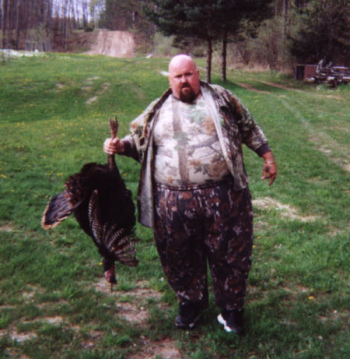
It's the opposite of the Wild Turkey phenomenon. People tell me that Turkey hunting must be easy, because they see Turkeys all the time. I remind them of all the times they don't see Turkeys - and tell them that's what most Turkey hunting is like.
The only thing surprising to me is that the Islamists have been emboldened so fast. I thought they would be cautious a while longer in their pretense at being moderate and pro-democracy. But revolutionary Islamists quickly become arrogant when people make concessions to them and they conclude that they are strong and victorious.
One of my staunchly Conservative brethren at church today (all are my brethren, regardless of their politics) was adamantly opposed to American intervention in a Libyan civil war, or uprising, or whatever the heck it is.
Naturally, we Americans are being labeled "Crusaders." Not an insulting label in my view (because I view the Crusades as an effort to push back against the Moslem invasion and occupation of the Holy Land which closed it off to pilgrims), but I think it's a roll of the dice, maybe too late, partly designed to prove Obama's - or Hillary's - masculine bona fides.
War is always interesting, horror that it is. I do not know whether this all makes sense or not. Latest update: Allied Forces Attack Libya. That article leaves me confused about goals and purposes, but I am not too smart and have never claimed to be.
Our Commander in Chief is partying in Rio but he knows nothing about military matters so it doesn't make any difference. The Libs are having a fit, and the Arabs suddenly are not pleased either.
Now back to yard and farm chores. Spring is coming, and I see the feisty Redwings at my bird-feeder. Lots to get done here to fend off entropy and nature's relentless rebellion against man's efforts to make things his way.
"...my eye caught The Gospel of John. Now this was the film I meant to see in February 2004 when The Passion of the Christ came out, but I missed the brief window of opportunity for catching it here in Fresno. Slasher flicks play for weeks and weeks and weeks at the monsterplexes, but at the brave art theater, gospel films (without Mel's name attached), sad to say, don't."
While I do not believe that a parent owes a kid a free college education, I think it can be a heck of a nice present for a kid who is eager for it, and can use it. Those without an avid hunger to learn things in a formal format need not apply.
Nothing is more costly, or more over-priced, than education today. At the same time, knowledge has never been more available and accessible - few people remember more about Plato from college than they can read as a refresher on Wiki. (I always believed in reading an encyclopedia entry on a topic before studying it, to get oriented.)
With some gracious grand-parental assistance, we have paid for private college 2 1/2 times thus far - one half to go. Prep-schools too, but that's another story. (Like the Obamas and Clintons and most Dems, we are not huge fans of government schools when it comes to our own kids. It's an investment - we expect them to take care of us in our old age when we are broke or broken-down - and will be happy to do the same for our parents if and when they want it or need it.)
Because most colleges and universities today have relatively few standards about what a college-educated person ought to know, I had to do it myself. Re-inventing the wheel, you might say, because Socrates and Aristotle might have made a comparable list.
Here are Bird Dog's Basic, Minimum Requirements for payment for his kids' "higher" educations, whether in school or outside of formal schooling (high school AP counts, as does a serious approach to a Teaching Company course):
1. Calculus 2. A Shakespeare course 3. The Bible 4. Physics, Chem, and Bio. I would have liked to see some Organic and Biochem in there too, so they could understand what's in the newspapers. These are not "difficult," but require some simple discipline. 5. Western Civ, Hammurabi thru Plato through Nietzsche 6. Western Lit, The Book of the Dead and Gilgamesh thru Homer and Hesiod through Melville 7. Art history 8. Music history 9. English Lit, minimum of 2 courses 10. Econ, macro and micro 11. Intro Geology 12. Intro Philosophy 13. American history (not from Zinn or some Lefty nut, but the real deal) 14. European history 15. One classical language - Greek or Latin, plus one modern language 16. Basic Business and Accounting (unfortunately, most of my kids' schools are too elite to offer such mundane and practical courses, but they need to learn this somewhere.)
I put "higher" in quotes because this doesn't sound very higher, does it? My requirements leave plenty of room for a major in Underwater Basket-weaving or Female Studies. (When I was in college, we did our studies of females mostly on weekends with beer, and usually flunked the quizzes.)
My kids have mostly kept to this. In my view, if you don't know this basic stuff, you are not fully schoolin'-eddicatedand not fully and cushily prepared, as the cliche goes, "for a lifetime of self-education and informed citizenship." After all, this stuff is just foundational and all of it could be self-learned, but college makes it more likely to happen, and a good guide is always helpful.
When you think about it, a decent high school ought to be able to do most or all of it. After all, they take four years to do two full years' worth of hard work. Why else did they call it "high" school? (My theory is that they slow it all down to the pace of the stragglers and slackers.)
I also advise them that any random course with a great teacher who knows everything about everything is worth many courses with ordinary profs in subjects they think they are "interested in." How do you know whether you are "interested in" something until you dig into it? Everything is interesting, in my opinion.
Finally, I expect them to earn their spending money. Jobs during college. (My lad bussed tables at the B-school faculty dining room while being reporter, editor, then Editor in Chief of the newspaper and running a softball team. My middle pupette was a restaurant receptionist, then a part-time assistant at Merrill-Lynch - while playing Div. 1 Tennis and majoring in Econ and Math. I don't know how they did it all. I admire their energy and initiative. My little one would too, but there are no jobs in a tiny college out in the lovely woods and fields of central Ohio. She works hard in the summer, though.)
What do you require of your kids?
(Pic is an old one-room schoolhouse in Westport, CT. Those kids could learn more than our kids do, as witness Abe Lincoln, John Adams, Tom Jefferson, etc. Of course, exceptional individuals who were highly motivated.)
The keen stars were twinkling, And the fair moon was rising among them, Dear Jane. The guitar was tinkling, But the notes were not sweet till you sung them Again.
As the moon's soft splendour O'er the faint cold starlight of Heaven Is thrown, So your voice most tender To the strings without soul had then given Its own.
The stars will awaken, Though the moon sleep a full hour later To-night; No leaf will be shaken Whilst the dews of your melody scatter Delight.
Though the sound overpowers, Sing again, with your dear voice revealing A tone Of some world far from ours, Where music and moonlight and feeling Are one.
In the seventies, not to put too fine a point on it, everyone was still alive. Martha Graham and Agnes de Mille were no longer making great work, but they were vivid, high-profile totems. Antony Tudor had one more great ballet in him: 1974’s The Leaves Are Fading. Robert Joffrey and his Joffrey Ballet were going full speed ahead, an audience-friendly ballet troupe that toured the country like a young, hip, and sometimes hippie version of the old Ballet Russe de Monte Carlo. Alvin Ailey, Eliot Feld, and Arthur Mitchell had companies that brought different demographics to the theater, and Merce Cunningham and Paul Taylor finally had national stature and repertoires that placed them in the pantheon. Twyla Tharp was coming into her own, bringing her melting-pot style and antagonistic syntax to the mainstream when she choreographed Push Comes to Shove in 1974 for ABT and Baryshnikov. Meanwhile, at NYCB, Jerome Robbins was experimenting with different forms of narrative (Watermill, Dybbuk), and Balanchine was deep into the late phase of his genius, putting on festivals—Stravinsky in 1972, Ravel in 1975—and tossing off blockbuster ballets like Union Jack in 1976 and Vienna Waltzes in 1977. Vienna Waltzes, according to Kirstein, would rank as the company’s “most successful” ballet. “For four seasons every performance scheduled was sold out,” he wrote. “It brought into the theater a new public, many of whom had certainly never been in the State Theater before.”
Couple all this creative energy with cheap rents—for no artistic discipline needs as much space, from class to rehearsal to performance, as dance does—and you had yet another reason for the dance boom.
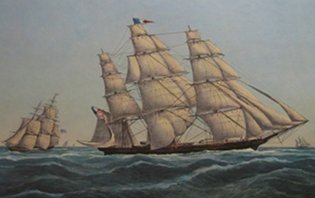


 Anchoress:
 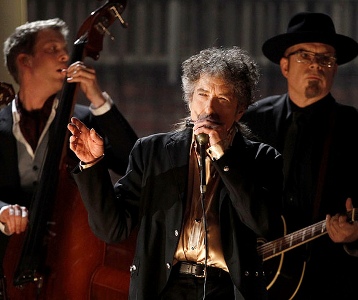 Still sane? Dylan turns 70 in May, and is still on the road. From
  Prelutsky: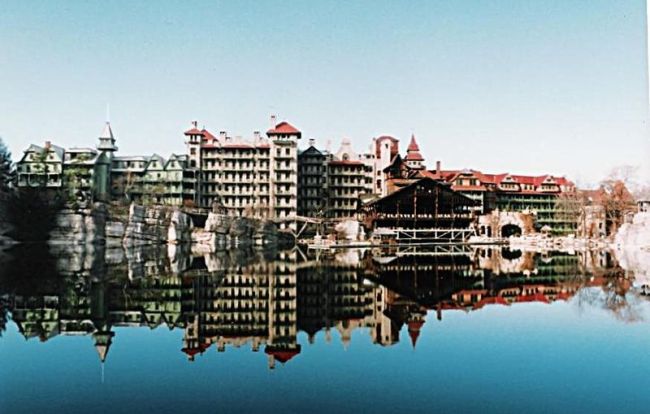
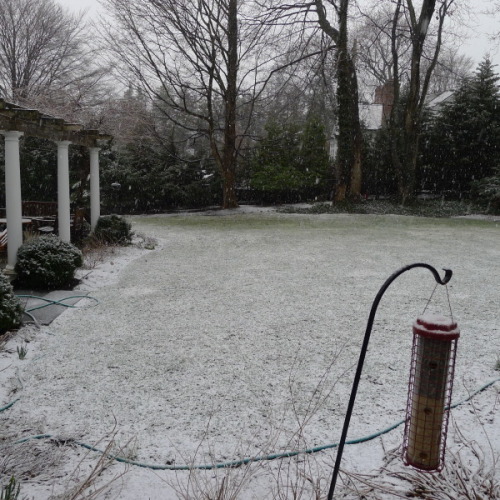
 My Lenten discipline this year focuses on gratitude.
 While I do not believe that a parent owes a kid a free college education, I think it can be a heck of a nice present for a kid who is eager for it, and can use it. Those without an avid hunger to learn things in a formal format need not apply.
 To Jane
 Good stuff on Ring Lardner: