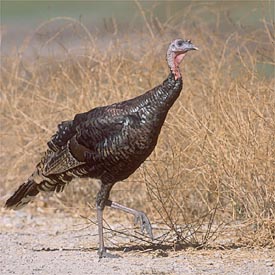
 At the turn of the century, the Eastern Wild Turkey was nearly eradicated by hunting and habitat loss, and was entirely absent in the Northeast.
By the mid 1800s, the woodlands of New England had disappeared for farming, charcoal production, and lumbering.
But the woodlands have returned as farming moved west, and the wierd gobble now can be heard even in residential areas.
Thanks to dramatically successful conservation and transplantation efforts, there are now estimated to be 7 million of these huge iridescent birds, which Ben Franklin felt to be so quintessentially American that he wanted one on the US Seal. (Video of the turkey's comeback here.)
There are six species of wild turkey in the New World, and none elsewhere. (The domestic turkey is likely a descendent of the large Mexican species.) It is the Eastern which we feature here which has, in recent years, been transplanted successfully west of the Mississippi, and elsewhere.
As a sought-after game bird, the turkey's habits have been much studied. They are wary and cautious. In most areas, there is a spring and a fall hunting season for turkey, and they are pursued with bow or shotgun. It is the one game bird which it is sporting to shoot on the ground.
I have hunted them on a couple of occasions. Never managed to shoot one, though. Had a good time however, sitting at the base of a tree in camo, watching the other wild critters pass by.
Does the wild turkey taste different from a supermarket bird? Yes - the wild turkey tastes like turkey and the supermarket bird tastes like a supermarket.
The tail-fanning? That's part of the male's mating strut. The CLO page here, and the website of the worthy National Wild Turkey Federation here.



 Walter Williams, R.I.P.
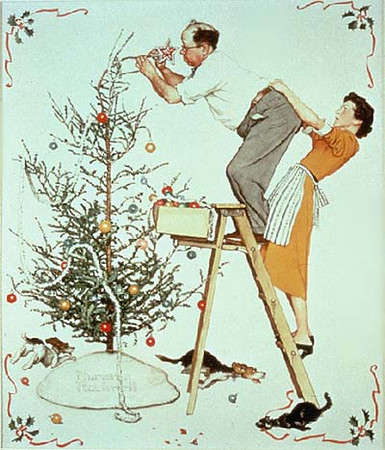 It is Advent
 The
The 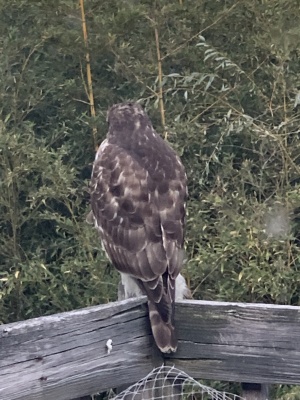 On a reader's deck in CT this week