We are a commune of inquiring, skeptical, politically centrist, capitalist, anglophile, traditionalist New England Yankee humans, humanoids, and animals with many interests beyond and above politics. Each of us has had a high-school education (or GED), but all had ADD so didn't pay attention very well, especially the dogs. Each one of us does "try my best to be just like I am," and none of us enjoys working for others, including for Maggie, from whom we receive neither a nickel nor a dime. Freedom from nags, cranks, government, do-gooders, control-freaks and idiots is all that we ask for.
Many would claim that Sicily is not really part of Italy (they even speak Sicilian, not Roman Italian). However, the tiny country of Italy contains many regions with separate cultures, genetics (northern Italy is full of lovely blondes), foods, languages - parts of northern Italy speak German or French or Veneto - and accents, etc. that it seems like an artificial nation. Well, it is.
Languages of Italy. Many Italians speak a regional language or dialect, maybe plus the official Roman Italian, especially if they are urban.
The nation turned 150 years old in 2011, so it is still young and culturally divided.
Anyway, this post was meant to offer a sample of classic Sicilian cooking. We had something very much like this Swordfish outside Agrigento two years ago. However, the filet of swordfish, sliced horizonally, was neither pounded nor rolled - just stuffed with the herbs and pignolis, with the other slice laid on top before baking.
It was topped with a wine and white raisin sauce and served on a bed of - you guessed it - Italian-style mashed potatoes (ie with oil not butter, plus garlic). That's Sicilian cooking.
Sicily is on our list of places to spend more time in the future. Due to its relative poverty and its corruption (from what I have read, it's still basically run by the Cosa Nostra, and what we would term "sociopathy"in the USA is normal there), it hasn't changed much in the past century.
If you go, don't forget the Cannolis (they are a Sicilian dessert).
Photo on the right is a couple of charming Sicilian gals
The killings at Haditha in November 2005 were blown up by opponents of the US in Iraq into an indictment of the US and its troops. This onslaught sapped the will of many Americans. The following rules of engagement and the drawn out prosecution of the Marines involved have undermined the morale and endangered the lives of our troops in Iraq and Afghanistan.
Take the premise that at Haditha both the Marines and those who were killed in houses 1 and 2 were correct in their own view. The long term losers are both US troops and noncombatants.
Both Marines and US troops generally are at increased risk due to perhaps understandable rules of engagement that in practice are often excessive and dangerous. Noncombatants are at increased risk of oppression, or more impersonal death from US technology, in countries where thuggish foes seek domination and can serve as refuges for further attacks on the West.
Haditha was a decidedly treacherous town overrun with Al Quaeda led foes who blew up Marines in the convoy and fired on the survivors from the nearby houses. What else could the Marines do but attack and eliminate the threat from the houses? Walking in, exposing themself to harm, would have been suicidal. Those inside lived in fear of the insurgents, who had already executed the local police force, and were aware that an IED was to be exploded. What else could they do but huddle inside? Warning the Marines beforehand would have exposed themselves to extermination. Walking outside, hands up, after the attack on the Marines, may have been a good move, but they knew gunmen were nearby and they didn’t want to be in the middle of a shootout.
Tried a good Italian restaurant the other day, and I decided to see what they could do with a simple Braciola - Braciole - (made with flank steak in this case) with a Barolo sauce.
Readers know that I am an obnoxious Italian food snob, but it's not my fault. I never ate Italian growing up, so I never heard of spaghetti and meatballs. Between Mrs. BD's cooking, and many trips to Italia, the two things often thought of as Italian in the US that I can do without are tomato sauce (this good place had no tomato sauces on the menu), and pasta (mostly, with rare exceptions for clam or porcini, or near-starvation with nothing else in the pantry). Another tip: never order a pizza in Italy. Terrible stuff. Only Americans know how to make good pizzas. Furthermore, you can get a better bruschetta in America than the lame, stingy ones you get in Italy.
Italian red wine sauces for meat are simple: briefly sautee a glass of good wine, a hunk of butter, salt, and a little flour to thicken. In Sicily, they add some raisins to it and a little sugar. That is pleasant.
They served the Braciola on a bed of soft, creamy polenta with a splash of oil on it. I think there was a touch of parmesan in the polenta. These are the simplest of foods. For me, that's Italian cooking. You cook that Braciola until it almost falls apart.
At our house, we make polenta as a primi, firm and knife-cuttable with a sauce on top - black truffle or Porcini - but this saucy polenta was a good choice by the chef. Soft polenta. My chef friend disparages firm polenta, but I think it's fine for the right purpose and it's real Italian - thanks to the American Indians who genetically-engineered corn (maize, to you in Yorba Linda Europe).
Like Italian potatoes, tomatoes, squash, polenta (corn meal) were all recent imported products from the New World, and their risotto from Asia. Pasta? It's a topic of debate.
Feel free to tell me how much you like spaghetti and meatballs, and soggy penne with red sauce!
I would highly recommend it for students before they take any neuoscience-related courses in school. Our learning theory here is that it's best to learn all you can about a topic before you take a course in it. That way, you will at least be oriented. Sometimes, the whole expensive course might end up being redundant.
I have been asked by readers why I can sound so harsh about education and our current educational systems. The answer is that I care about learning so much. For me, learning new things is relaxing, recreational, and a gift (and does not need to be expensive), but I accept that not all feel the same way. I am a teacher at heart, even though I do not teach although I do help train our young associates. If I were as tough on students as I am on our associates, I'd be fired in a New York Minute.
Schools of education represent the academic slums of most any college. American education can benefit from slum removal.
Sounds true, although those pathetic standards certainly do not apply to my town in CT where, unions aside, the public school teachers are well-educated, enthusiastic, demanding, and dedicated. However, our local school system avoids hiring teaching school graduates.
I honestly do not know the answer, but it seems basic to me. If you can't master Algebra and Trig, and use them to hone the brain, it's tough for me to figure out how you graduate from high school.
Sorry, governor, but colleges don’t graduate students. Students graduate themselves if their efforts are sufficient, and the sad fact is that many who enroll are so academically weak and unmotivated that they don’t amass enough course credits to get their degrees within six years. That isn’t the fault of the institutions.
Maintaining standards is an endless and possibly a losing battle with today's credentialism. Someday, we'll have to admit that most people are not scholars (even to the level of Algebra ll), and that learning how to do something useful and practical might be more important. That view, however, runs right up against the Big Education lobbies.
There is no market for Sociology Majors, but there is a big market for Master Plumbers and Gunsmiths. They make more money, too. But they need to know some math to do their work.
We have rreported so many scientific frauds in the past couple of weeks, I thought I would highlight some commonly-used "data-management" tricks designed to dishonestly influence people.
1. "Clustering." We have all heard about cancer clusters - Why does my town have triple the breast cancer of towns two miles away? There must be someone I can sue about this. Such claims have an emotional appeal, but they are nonsense. Random distribution is not even - it is uneven. Just try flipping a quarter, and you will get little runs of tails. Clustering is a natural effect of randomness, but trial lawyers are always busy trying to track them down: they can get rich before anyone figures out the game.
2. "Cherry-picking." Cherry-picking is a frankly dishonest form of data presentation, often used by newspapers to create alarmist stories about the economy, the environment, food safety, etc. It fools people without some decent science education. What it entails is combing through, say, 60 pieces of data, and then using the three points that support your argument, and ignoring the rest. Presenting random changes as meaningful facts is a lie. Environmentalists use this all of the time, as do other agenda-driven fact-handlers. A casual use of this fallacy is characteristic of The New York Times typical headline: Despite Good Economic Statistics, Some Are Left Behind - and then they scour NYC to find some single black mom in the Bronx who cannot support her kids - and she becomes the "story".
3. "Anectdotal evidence." The above example could also be termed "anectdotal evidence." If you look around, you can always find an exception, a story, and example - of ANYTHING. But anectdotes are compelling, and Reagan used them to the best effect. And how about those swimming Polar Bears! (I always thought they liked to swim.)
4. "Omitted evidence". You tell me how common this is! A first cousin of Cherry-picking, Omitted Evidence is also a lie. All you do is ignore the evidence and data that disagrees with your bias or your position. Simple.
5. "Confirmation bias". People tend to remember evidence which supports their opinion, belief, or bias, and to dismiss or forget evidence which does not. It's a human frailty. Humans have to struggle to be rational.
6. "Biased Data". "A poll at a local pre-school playground in Boston at 2 pm today indicated that 87% of likely voters will vote for Obama." Picking your data sources, like picking the questions you ask, can determine your results with great accuracy. As pollsters always say, "Tell me the answer you want, and I will design the question."
7. "Data mining." Data-mining is used by unscrupulous academics who need to publish. Because it is a retroactive search for non-hypothesized correlations, it does not meet criteria for the scientific method. Let's say you have 10,000 data points from a study which found no correlation for your hypothesis. Negative correlation studies are rarely published, but you spend a lot of time collecting it - so you ask your computer if it can find any other positive correlations in the data. Then you publish those, as if that was what you had studied in the first place.
Image: two good varieties of cherries for picking; Stella on the left, Lapins on the right, from Miller Nurseries
Michelangelo Merisi da Caravaggio's The Calling of Matthew (1600)
The notoriously brawling artist brought a new look to European late Renaissance art, and is viewed as a bridge between Mannerism and Baroque. He was a rock star artist in his time.
The Associated Press reports the most extensive study yet of whether engaging in sex causes heart attacks.
In its first science-based recommendations on the subject, the American Heart Association says having sex only slightly raises the chance for a heart attack. And that's true for people with and without heart disease.
Surprisingly, despite the higher risk for a heart patient to have a second attack, there's no evidence that they have more sex-related heart attacks than people without cardiac disease.
However,
The doctors' group offers advice for heart patients based on scientific research involving sometimes provocative sex-related topics:
—Who's most at risk for sudden death related to sex? Married men having affairs, often with younger women in unfamiliar settings. Those circumstances can add to stress that may increase the risks, evidence from a handful of studies suggests.
Still, “sexual activity is the cause of less than 1 percent of all heart attacks," says the lead author of the report.
So says Robert Redford. (But, I ask, who will stand up against Big Hollywood?)
I think our readers understand that this is not about "Big Oil." "Big Oil" is a straw man. This is about a supply of cheap energy for Americans, and a supply that does not come from the Middle East or from Venezuela. The moonbats, who depend on energy as much as I do for daily life, appear to believe that it grows on trees.
How does Redford heat all of his houses? And does he care what it costs him? Would he care if his estate in Aspen lost heat this winter?
During his campaign, Obama promised to raise the cost of energy. He and his EPA have been doing their best to do that. Makes no sense to me. Now Canada's fuel will be used in China instead of here. What sort of accomplishment is that?
It's been repeated so often that it's become a mantra. Google search. If you walk or run or elliptical or stairmaster or hoeing the fields or whatever over 10,000 steps daily, you have an "active life;" if under, you fall into the "sedentary life" category.
Nobody wants to think of themselves as leading a "sedentary" life because it sounds slothful and decadent, not luxurious. There are roughly 2000 steps per mile, but it's about the steps, not the distance. It is probably not a bad rule of thumb to do it, just to stay fit, energetic, and vigorous.
Urbanites walk far more, in the course of a day, than suburban or rural folks. My theory is that that is why city folk are trim, and country folk tend towards the bulky, but I am sure that fashion plays a role in it too. City people need to look like they have their act together or they won't get any respect.
"What a coinkydinky. I was just about to call you."
Synchronicity, Serendipity, Seriality, and Simulpathity. It's a fun topic, but I can't tell for sure whether Dr. Beitman is writing tongue-in-cheek or in all seriousness. Or perhaps he's a Jungian, in which case all bets are off.
I know people who say "There are no coincidences." Count me an agnostic on the topic.
One interesting aspect of modern life in the Western World is the pathologizing, or "diseaseifying," of moral and character failures. Putting such failures into the disease category is a popular conceit for a number of reasons, not the least of which is the way it seems to let people off the hook. The victim thing.
But while even AA may make use of the disease metaphor, if you go to a meeting you will hear far more about character flaws than about disease. They are not into disease excuses for problem behavior.
Despite the addiction meme, ordinary people still term those who eat more than they need "pigs," people who buy too much stuff "self-indulgent," people who habitually drink too much "drunks," and people with uncontained sexual efforts as "lechers" or as "nymphomaniacs" or "hos". Ordinary language reflects the common sense moral disapprobation of ungoverned behavior.
To say that they "lack a self-governing function" is the disease model, a defect model, but to use it requires turning a verb idea into a noun idea, by reification. The better form is "They do not govern themselves," or, better yet, "They do not exert themselves to govern themselves." The disease/defect model does not do justice to all of the people who must struggle mightily to resist all of the temptations that life offers.
Pajamas has a piece up about sex "addiction," Sex Addiction 101 - PJM's advice columnist on the Chinese food syndrome of loveless sex: no sooner satisfied, than feeling empty again.
While the article makes the obvious point that people seek pleasure and often seek to replace distress with simple pleasures, it entirely overlooks the moral, spiritual, and character dimensions of lechery as if it were a "chemical imbalance" instead of plain old-fashioned rotten, socially-inappropriate behavior. Sinful too, if anybody believes in sin anymore.
While it seems true that habitual pleasures change the brain a little, so does habitual self-control. Self-control offers many rewards, but few rewards of the instant, animal sort. There are good habits and bad habits. I don't know whether it is a sociological fact, but it seems as if the debauchery and bad habits, once the domains of the very rich and powerful and of the poor, have become democratized and, in the process, excused to some extent (eg the Oval Office BJs).
People I talk to with bad or unrestrained behaviors of all sorts tend to despise themselves for it, and view putting their behavior into a disease category as a condescension. Unless they are guilt-free sociopaths, they know that their behavior is self-indulgent and immoral. People can quit these things, with help and sometimes without help, if they want to or need to, but it means giving up a lot of instant gratification in exchange for, one hopes, better life results and less self-contempt.
Both cities' rent control laws began as emergencies to meet temporary housing crunches (you always need a "crisis" to create an opportunity for government control). Then your "emergency" action becomes permanent due to its newly-created constituency. That is how Leviathan grows.
If rent control were eliminated in NYC today, in short time there would be tons of new middle class rental housing built; supply up, prices down. The moral issue, though, is that these controls do constitute a form of government theft from the owners.
...there may be a perception in many key areas of contemporary life—law, business, politics, among others—that expecting honesty on a regular basis is a naïve and foolish attitude, a “loser’s” way of operating. Such a perception is practically a mandate for personal dishonesty and a concession to interpersonal distrust. When we no longer assume that those who communicate with us are at least trying to tell the truth, we give up on them as trustworthy persons and deal with them only in a strictly instrumental manner. The bounds of mutual moral obligation dissolve, and the laws of the jungle reemerge.
Our serious problem today is not simply that many people routinely tell lies. As I have noted, people have departed from the truth for one reason or another all throughout human history. The problem now is that we seem to be reaching a dysfunctional tipping point in which an essential commitment to truthfulness no longer seems to be assumed in our society. If this is indeed the case, the danger is that the bonds of trust important in any society, and essential for a free and democratic one, will dissolve so that the kinds of discourse required to self-govern will become impossible.
I have no way of discerning whether there is anything new here. What I do know is that it is generally a good rule of thumb to let people prove their integrity, rather than assuming that they have any. I have been burned by people enough times to cure me of my optimistic naivete.
Dishonesty and concealment, despite whatever mass culture may do, continues to appall me whether in myself or in others.
I have always asserted here that "feeling good about oneself" can only come from doing right things and from doing hard things. Even so, we all deserve plenty of criticism and nobody deserves to think that they are wonderful. (We are allowed to think that of others, however, or at least to love others despite their flaws.)
Did the Founding Fathers make an error? As much as anything else, this Robinson interview with Paul Rahe (that's #5 of 5)captured most of the key political issues with which we Maggie's Farmers are concerned today.
Some people desire to run other peoples' lives for their own good. I wish those Rahe interviews were on YouTube. They deserve to be.
On Martin Luther King Jr. Day, many are asking questions about how much freedom most people really want. How much freedom will the average person trade for a bowl of lentils? In other words, for security or for free money?
When I was in 6th Grade, our school had a speech contest, the title being "What Freedom means to me." Mine came in second. If I were doing that speech today, I'd probably come in last. Freedom from involuntary servitude - slavery - is of course basic, but freedom from government power is the beseiged freedom of today, just as it has always been.
Captain Pete Hegseth, US Army, has served at Guantanamo, Iraq and Afghanistan, and was Executive Director of Vets For Freedom to support our troops and missions. No weak sister.
During his current deployment in Afghanistan, Hegseth has sent email letters home to those on his mailing list. His most recent arrived today, "Endgame in Afghanistan." It is near 4-thousand words long, so I have put it below the fold. Hegseth is not optimistic, stripping away what he refers to as "wishful thinking."
This isn’t to say that we couldn’t affect a more advantageous outcome for the United States; of course if we got rid of the 2014 withdrawal deadline completely, were willing to truly remove Taliban and Haqqani safe-havens in Pakistan (we know where they are!), and purged the Afghan government of its most corrupt nodes we could “change the game” of this conflict. But for various reasons—be they domestic politics, a nuclear-armed Pakistan (a lesson for Iran, I would suggest), and a trepidation with undermining corrosive “Afghan sovereignty”—it is highly unlikely we will make the hard choices necessary to level the playing field. A bad outcome in Afghanistan isn’t inevitable, but in light of current realities, it is likely.
He believes this battleground is "central to defending the United States."
In the realm of perception and international opinion it is still very important; how we “finish” in Afghanistan will send strong signals to the rest of the world about whether we finish what we start. Recent events in Iraq make this plainly clear. However, the question is whether the cost in Afghanistan is worth the outcome?As my British colleague says, “is the juice worth the squeeze?”I think seeing this through, while gradually drawing down, is worth doing.
According to defense analyst Anthony Cordesman the US will need to spend about $10-billion a year for the next 14-years to stand a chance of stabilizing Afghanistan.
We do not need more good intentions and vague promises from the Obama administration. We do not need a vacuous set of positions from Republican presidential candidates who either do not understand the issues or fear addressing their cost. If the United States is to make this commitment we need to start making it now in every part of our posture and spending in Afghanistan — and be clear that we will do so through 2025. If not, we need to be honest about the consequences for some 30 million Afghans and their country.
There's so much detail and stark facts in Hegseth's email that you would be remiss to not read on.
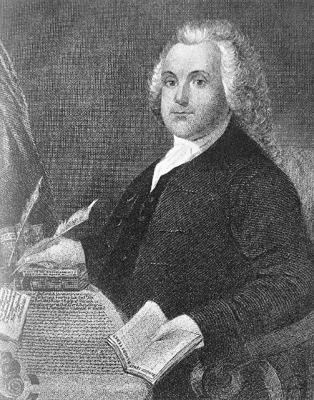
A wonderful synopsis of Roger Williams' life and influences:God, Government and Roger Williams' Big Idea - Banished from Massachusetts, the Puritan minister originated a principle that remains contentious to this day—separation of church and state.
I had not known that he had been a pretty big deal in English government before coming to Boston.
When you read about the Puritans in the 1600s - or about the C of E at the time, it is reminiscent of today's Middle Eastern Moslems. No "tolerance," and religious beheadings.
A quote on the founding of The Providence Plantations (Rhode Island):
On March 14, 1644, Parliament’s Committee on Foreign Plantations granted Williams his charter.
The committee could have imposed a governor or defined the government. Instead, it authorized a democracy, giving the colonists “full Powre & Authority to Governe & rule themselves...by such a form of Civil Government, as by voluntary consent of all, or the greater Part of them shall find most suteable” so long as its laws “be conformable to the Laws of England, so far as the Nature and Constitution of the place will admit.”
Even more extraordinary, the committee left all decisions about religion to the “greater Part”—the majority—knowing the majority would keep the state out of matters of worship. Soul liberty now had official sanction.
Williams had created the freest society in the Western world. But he had only begun...
Working people frequently ask retired people what they do to make their days interesting. Well, for example, the other day, my wife-Annie and I went into town and visited a shop.
When we came out, there was a cop writing out a parking ticket. We went up to him and I said, 'Come on, man, how about giving a senior citizen a break?'
He ignored us and continued writing the ticket.
I called him an "asshole". He glared at me and started writing another ticket for having worn-out tires. So Annie called him a "shit head". He finished the second ticket and put it on the windshield with the first.
Then he started writing more tickets. This went on for about 20 minutes. The more we abused him, the more tickets he wrote.
Just then our bus arrived, and we got on it and went home.
We always look for cars with "OBAMA 2012" stickers. We try to have a little fun each day now that we're retired. It's important at our age.
"I've often been asked, 'What do you old folks do now that you're retired?' Well, I'm fortunate to have a chemical engineering background, and one of the things I enjoy most is converting beer, wine and vodka into urine.
I tend to agree with George Leef in that debate, but of course I think anybody ought to go if they want to. Some of my points, as readers know, are these:
- college does not equal education - very few people are natural scholars - for many people, it is just an extended adolescence, with credential-buying, beer, and sleeping til noon - many young people would rather work than study
Lubel is a nut (see his other Youtubes. I know a nerdy guy from Long Island who reminds me of him, who has always gotten lots of girls into bed not from his looks or achievements but from plain cheerful confidence and an optimistic, animal openness about his desires):
This is something that gets obscured in today's medical reporting--everyone, as they get older, will get sick for some reason and die at some point. The biggest risk factor for heart disease and cancer isn't BMI, cholesterol, blood pressure, etc....it's age. And to a large extent, the incidence of those diseases is random; doing everything right lowers your risk of disease, but not to zero, and usually not to that small a fraction of the risk for the general population.



 Many would claim that Sicily is not really part of Italy (they even speak
 It was topped with a wine and white raisin sauce and served on a bed of - you guessed it - Italian-style mashed potatoes (ie with oil not butter, plus garlic). That's Sicilian cooking.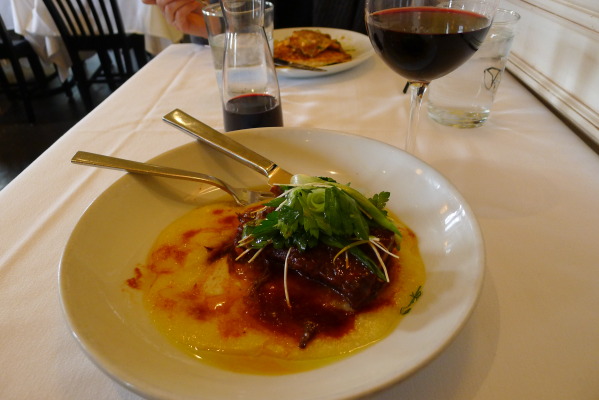
 We have rreported so many scientific frauds in the past couple of weeks, I thought I would highlight some commonly-used "data-management" tricks designed to dishonestly influence people.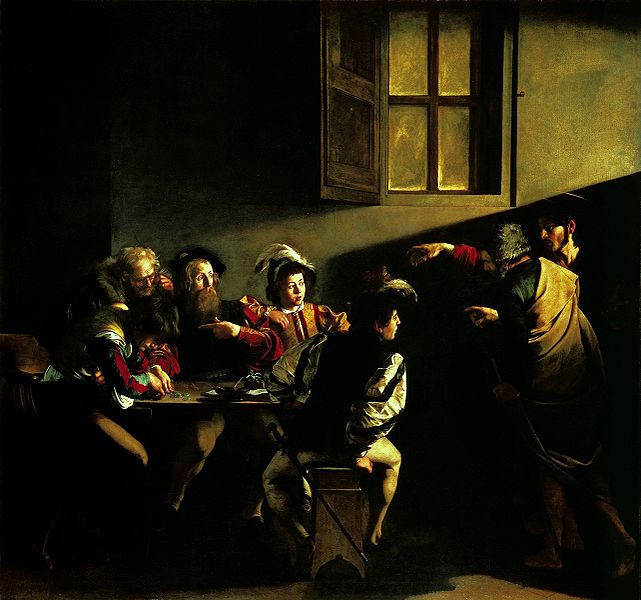
 The
The 


 A wonderful synopsis of Roger Williams' life and influences: