Tuesday, January 22. 2008
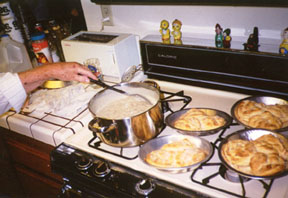 For those who believe that the three basic food groups are beer, chips and dip: A real cowboy breakfast from B&G Cowboy Chef Chuck Green. Here's his recipe for 24 servings of this delicious and supremely healthful breakfast - or lunch, or night-time snack. (Thanks, reader) For those who believe that the three basic food groups are beer, chips and dip: A real cowboy breakfast from B&G Cowboy Chef Chuck Green. Here's his recipe for 24 servings of this delicious and supremely healthful breakfast - or lunch, or night-time snack. (Thanks, reader)
We have written about that disgusting Hot Dog Gravy they like to make in eastern Kentucky. This recipe is a better idea.
Monday, January 21. 2008
 We enjoy visiting the White Flower Farm in the charming antique village of Litchfield, CT, once or twice a year. Most of their business is mail-order. We enjoy visiting the White Flower Farm in the charming antique village of Litchfield, CT, once or twice a year. Most of their business is mail-order.
They are already taking orders for Spring, and we were interested in their collections for planters. Photo is one of their shade collections. Since they are so good at putting plants together, my theory is just to steal their ideas. A propos gardening, check out the gardens of Pearl Fryar - topiary surrealist.
 We posted this link yesterday from American Thinker: Alinsky's tactics: Hillary and Obama. A quote: We posted this link yesterday from American Thinker: Alinsky's tactics: Hillary and Obama. A quote:
Obama's four-year stint as a political organizer and agitator in Chicago's South Side neighborhoods gave him a hands-on education in Alinsky revolutionary tactics, which he seems adept at using now. His problem, however, may be that he is in direct competition for the ultimate power prize, the Presidency, against another Alinskyite, Hillary Clinton, who studied Alinksy and his rule book and turned down an offer to work for him.
Here's a summary of Alinsky's Rules for Radicals. Simon at Classical Values considers The Democrats' Gramscian Problem. Divide and conquer to create the brotherhood of man, without use of arms. Alinksy was indeed a Gramscian Marxist, in my view, although he is often labelled otherwise. We did an introduction to Gramsci here. ("The long march through the culture.")
Simon links to a piece at Armed and Dangerous about ideological warfare and the Gramscian damage to America. He lists the most important Stalinist propaganda memes: - There is no truth, only competing agendas.
- All Western (and especially American) claims to moral superiority over Communism/Fascism/Islam are vitiated by the West’s history of racism and colonialism.
- There are no objective standards by which we may judge one culture to be better than another. Anyone who claims that there are such standards is an evil oppressor.
- The prosperity of the West is built on ruthless exploitation of the Third World; therefore Westerners actually deserve to be impoverished and miserable.
- Crime is the fault of society, not the individual criminal. Poor criminals are entitled to what they take. Submitting to criminal predation is more virtuous than resisting it.
- The poor are victims. Criminals are victims. And only victims are virtuous. Therefore only the poor and criminals are virtuous. (Rich people can borrow some virtue by identifying with poor people and criminals.)
- For a virtuous person, violence and war are never justified. It is always better to be a victim than to fight, or even to defend oneself. But ‘oppressed’ people are allowed to use violence anyway; they are merely reflecting the evil of their oppressors.
- When confronted with terror, the only moral course for a Westerner is to apologize for past sins, understand the terrorist’s point of view, and make concessions.
He observes that these notions would have been considered insane just a generation ago, and comments: The first step to recovery is understanding the problem. Knowing that suicidalist memes were launched at us as war weapons by the espionage apparatus of the most evil despotism in human history is in itself liberating. Liberating, too, it is to realize that the Noam Chomskys and Michael Moores and Robert Fisks of the world (and their thousands of lesser imitators in faculty lounges everywhere) are not brave transgressive forward-thinkers but pathetic memebots running the program of a dead tyrant.
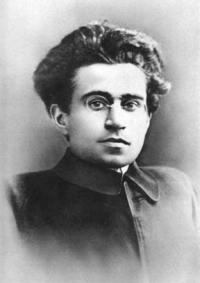
Read the whole thing. Photo: Neo-Marxist tactician Antonio Gramsci
Saturday, January 19. 2008
I suspect we have many readers who either live in New York City or who commute to the city daily by train. As an ex-New Yorker, living in Boston and New Hampshire, it is now a special treat for me to hop the train to New York three or four times a year to stay for a few days, usually with the excuse of giving a talk or to attending a medical meeting (which I did this past week and this week-end). I change from Amtrak to a Metro-North express in New Haven, and sometimes spend a day visiting my New Haven friends. I do not shop in NY (well, not very much), but I like to visit my old haunts, and to find new ones. I got up to the front of the train, next to the driver, just after we took the train bridge from the Bronx to Manhattan: 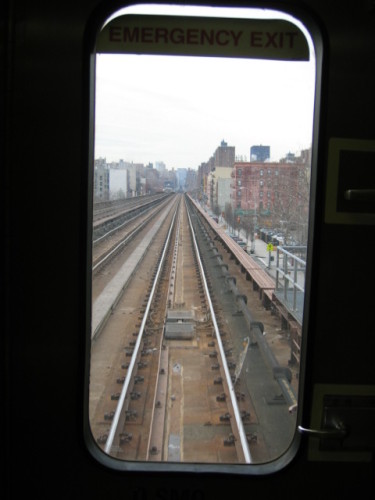
Coming from Boston, I am greeted by the magnificence of Grand Central Station instead of the execrable Penn Station or the idiotic, government-designed JFK airport. Somehow, this lame snapshot managed to eliminate every bit of the grandeur and scale of Commodore Vanderbilt's creation: 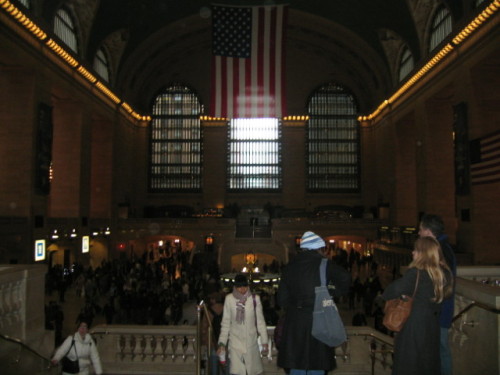 Something new: The Grand Central Market. Wonderful food stalls, and perfect to pick up some stuff on the way home: rare cheeses, imported Italian sausages of every variety, 200 types of olive oil, a bread bakery, a patisserie, pre-cooked goodies and dinners, etc. etc. All of the old, bleak empty spaces of the Station have now been put to good use, and the whole place is like an upscale mall, and busy as can be: 

And something old on the lower level: The good old Oyster Bar, with the best oyster stew in the world, and a larger selection of oysters - and fresh seafood in general - than you can find anywhere in the world. The entire Lower Level is now a food court, and good enough that I think people come in off the street for a snack. No chain restaurants - good stuff. 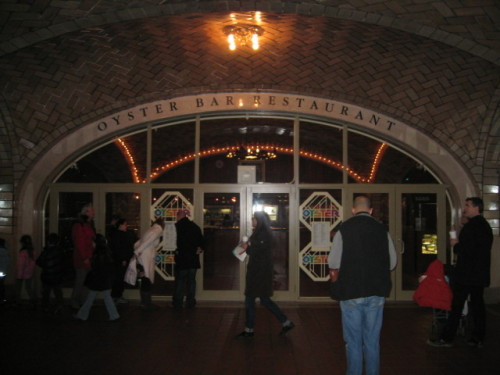
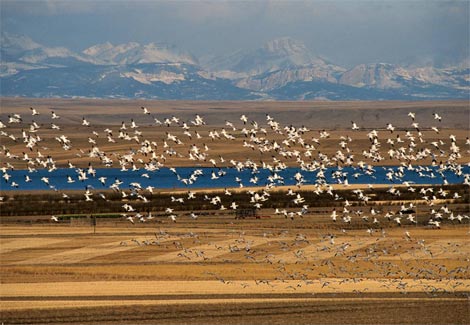
Our piece on the strange Salton Sea reminded me of western Montana's not-strange but wonderful 1500-acre Freezeout Lake WMA (Wildlife Management Area) between Great Falls and Choteau, on the Rocky Mountain front. I have visited it twice, birding - not hunting. It's a small WMA, but packed with life. I have only been there in June, but during migration the shallow lake harbors over 300,000 Snow Geese and 10,000 Tundra Swans, not to mention everything else. Here's one guy's report of the geese. When I went, the birds that stood out were the Western Grebes dancing, the Avocets, the Phalaropes, and the Short-Eared Owls. Tons of breeding ducks. This place looks like a good place to stay, near the lake. Nice view of a cute butte. When I have been out that way for a week, I have stayed at the excellent, Nature Conservancy-run Pine Butte Guest Ranch. Photo above: Snow Geese over Freezeout, from this Snow Goose site
Thursday, January 17. 2008
A photo of midtown Park Avenue today, just north of Grand Central Station before the snow started, on my way to the Waldorf to meet Dr. Bliss for lunch at the Bull & Bear, and to catch an interesting talk or two from the sachems at the American Psychoanalytic Annual Meeting, including Drs. Otto Kernberg and Roy Schafer (the former whom I respect enormously, and the latter whom I have a deep gratitute and appreciation for, which I was pleased to have the chance to tell the old fellow today). One hopeful sign for the economy: No bankers jumping out of windows, as far as I could see, and no disturbing blood spots on the sidewalks to upset the gentle and largely genteel Psychoanalysts who were gathered from across the globe to try to add to their understanding of the human soul. 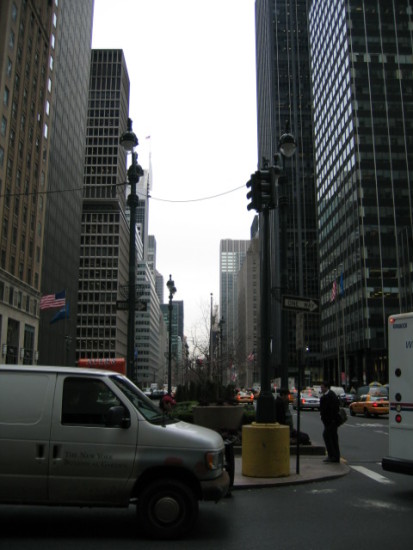
 This fallacy site defines this fallacy as simply: "The appeal to pity takes place when an arguer tries to get people to accept a conclusion by making them feel sorry for someone." This fallacy site defines this fallacy as simply: "The appeal to pity takes place when an arguer tries to get people to accept a conclusion by making them feel sorry for someone."
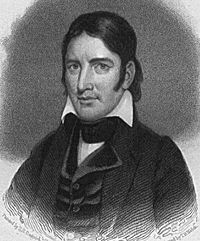
Classic example: The boy who killed his parents pleads for mercy from the judge on the grounds of being an orphan. Of course, pity is just one of the emotions which can be manipulated in order to attempt to overwhelm reason and to score points. While a member of Congress from his home state of Tennessee, Davy Crockett is believed to have given a successful speech refuting an appeal to pity, regarding a Congressional appropriation of money to a widow: "Mr. Speaker -- I have as much respect for the memory of the deceased, and as much sympathy for the sufferings of the living, if suffering there be, as any man in this House, but we must not permit our respect for the dead or our sympathy for a part of the living to lead us into an act of injustice to the balance of the living. I will not go into an argument to prove that Congress has no power to appropriate this money as an act of charity. Every member upon this floor knows it. We have the right, as individuals, to give away as much of our own money as we please in charity; but as members of Congress we have no right so to appropriate a dollar of the public money. Some eloquent appeals have been made to us upon the ground that it is a debt due the deceased. Mr. Speaker, the deceased lived long after the close of the war; he was in office to the day of his death, and I have never heard that the Government was in arrears to him. This Government can owe no debts but for services rendered, and at a stipulated price. If it is a debt, how much is it? Has it been audited, and the amount due ascertained? If it is a debt, this is not the place to present it for payment, or to have its merits examined. If it is a debt, we owe more than we can ever hope to pay, for we owe the widow of every soldier who fought in the war of 1812 precisely the same amount. There is a woman in my neighborhood, the widow of as gallant a man as ever shouldered a musket. He fell in battle. She is as good in every respect as this lady, and is as poor. She is earning her daily bread by her daily labor, and if I were to introduce a bill to appropriate five or ten thousand dollars for her benefit, I should be laughed at, and my bill would not get five votes in this House. There are thousands of widows in the country just such as the one I have spoken of; but we never hear of any of these large debts to them. Sir, this is no debt. The Government did not owe it to the deceased when he was alive; it could not contract it after he died. I do not wish to be rude, but I must be plain. Every man in this House knows it is not a debt. We cannot, without the grossest corruption, appropriate this money as the payment of a debt. We have not the semblance of authority to appropriate it as a charity. Mr. Speaker, I have said we have the right to give as much money of our own as we please. I am the poorest man on this floor. I cannot vote for this bill, but I will give one week's pay to the object, and if every member of Congress will do the same, it will amount to more than the bill asks." That is one heck of a good argument - and an argument for the restraint of government as well. Crockett had the good sense to eliminate the tone of cold-hearted rationality with his offer at the end. More about the speech and its aftermath here. Interesting fellow, Crockett. He was elected twice to Congress, then defeated twice, after which he said "I told the people of my district that I would serve them as faithfully as I had done; but if not ... you may all go to hell, and I will go to Texas." Which he did, and was killed by the Mexican Army while defending the Alamo in 1836. Image: David Crockett (1786-1836)
Jackie Robinson was VP of the Chock Full o' Nuts coffee company, whose chain of luncheonettes in NYC were as well-known from the 20s through the 60s as MacDonalds is today. Note the prices. And note the piece of Scotch tape holding up the Dodger's banner - for those few who might not recognize the great man. 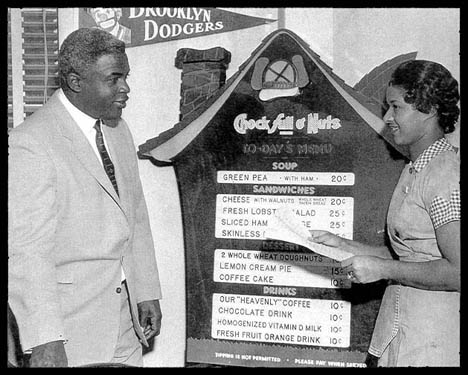
Wednesday, January 16. 2008
Bad loans discussed vigorously by Michelle. Who is to blame if you take out a fraudulent loan, or a loan you doubt you can pay off? Sovereign funds from the Middle East might help rescue Citibank's liquidity, but they will extract a heavy price for that investment. If you gamble, you're on your own. When you win, you win. When you lose, don't come crying to me. And please don't claim that you are a victim because you didn't read the terms of the loan. Basic literacy is assumed in financial transactions, as is the assumption of risk. As we can see, your lender also assumes his share of risk. But don't listen to me. I think the stock market is a gambling enterprise unless you have a 20-year time horizon. Blue Chip US stocks have not moved an inch in 8 years - other than downwards recently.
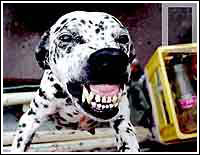 Vanderbilt researchers, studying mice, claim that aggression can be as emotionally rewarding as food or sex. Vanderbilt researchers, studying mice, claim that aggression can be as emotionally rewarding as food or sex.
“We learned from these experiments that an individual will intentionally seek out an aggressive encounter solely because they experience a rewarding sensation from it,” Kennedy said. “This shows for the first time that aggression, on its own, is motivating, and that the well-known positive reinforcer dopamine plays a critical role.”
I cannot speak about mice, but every psychiatrist - and every person - knows that this is a fact for human beings. Freud, who thought harder about these things than most people, found it necessary to hypothesize a "death instinct": "an urge inherent in all organic life to restore an earlier state of things" (SE 18:36). It is a drive towards destruction. He could not make sense of human behavior and human thoughts without it. Indeed, Freud mocked critics of that instinct theory as “…little children [who] do not like it when there is talk of the human inclination to ‘badness’…”. The trick to a sane life is to keep all of these "instincts" on a tight-enough leash that they do not senselessly destroy one's life. Ideally, our conscience does that job for us, to help maintain our self-respect, if not the respect of others.
Monday, January 14. 2008
A street scene from one of Knoxville's old bungalow neighborhoods. These houses, probably built for the city's lower-middle class residents back in the 1920s, provided working class families a first chance to have a place of their own, complete with indoor plumbing, electricity, heat, and a modest backyard. The homes were probably kept quite tidy at that time, but the entire neighborhood suffered during the postwar move to the suburbs, and by the looks of things has not yet really got back on its feet. My neighborhood of Edgehill in Nashville, only a block or two from Music Row, once had dozens of blocks of small but dignified bungalows such as these, virtually all of which were bulldozed in the 1960s for public housing, the expansion of Vanderbilt and Belmont universities, and Interstate 65. (The somewhat wealthier streetcar suburbs, just a little further out, were spared the wrecking ball, resulting in a sad situation today where there are very few affordable single-family homes in the area, but plenty of dead-end Section 8 housing). For some reason, urban renewal was not as prevalent in Knoxville, and many of the poorer bungalow neighborhoods may still be seen, lying in wait for some enterprising individuals to restore them. 
Saturday, January 12. 2008
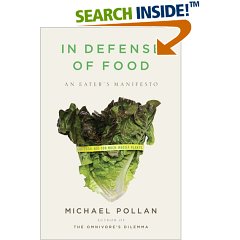 I have been a fan of Pollan since I read his Second Nature, which tells his story of a city-dweller buying a country house in northwestern CT and learning about the land, the local critters, and especially about gardening. Suburban and country folk have long-known what he slowly learned, but his fresh eye is illuminating, especially his take on gardening as a war with a nature which wants to return his man-altered spaces to woodland succession - via the weed phase. I have been a fan of Pollan since I read his Second Nature, which tells his story of a city-dweller buying a country house in northwestern CT and learning about the land, the local critters, and especially about gardening. Suburban and country folk have long-known what he slowly learned, but his fresh eye is illuminating, especially his take on gardening as a war with a nature which wants to return his man-altered spaces to woodland succession - via the weed phase.
He has a new book, In Defense of Food: An Eater's Manifesto. One of his points seems to be that nutritonal "science" is in its infancy, and that it has little to tell us about what to eat. He recommends eating whatever you grandmother would have cooked. Sounds like my kind of book. He is an engaging writer on any topic. New Yorker quality, but no politics. The Frontal Cortex has more on the book.
Friday, January 11. 2008
This oldie came in over the transom: Scenario 1: Jack goes quail hunting before school, pulls into school parking lot with shotgun in gun rack. 1967 - Vice principal comes over, looks at Jack's shotgun, goes to his car and gets his own shotgun to show Jack.
2007 - School goes into lockdown, the FBI is called, Jack is hauled off to jail and never sees his truck or gun again. Counselors are called in to assist traumatized students and teachers.
Scenario 2: Johnny and Mark get into a fistfight after school. 1967 - Crowd gathers. Mark wins. Johnny and Mark shake hands and end up buddies.
2007 - Police are called, SWAT team arrives and arrests Johnny and Mark. They are charged with assault and both are expelled even though Johnny started it.
Scenario 3: Jeffrey won't sit still in class, disrupts other students. 1967 - Jeffrey is sent to the principal's office and given a good paddling. Returns to class, sits still and does not disrupt class again.
2007 - Jeffrey is given huge doses of Ritalin. Becomes a zombie. Tested for ADD. School gets extra state funding because Jeffrey has a disability.
Scenario 4: Billy breaks a window in his neighbor's car and his Dad gives him a whipping with his belt. 1967 - Billy is more careful next time, grows up normal, goes to college, and becomes a successful businessman.
2007 - Billy's dad is arrested for child abuse. Billy is removed to foster care and joins a gang. State psychologist tells Billy's sister that she remembers being abused herself and their dad goes to prison. Billy's mom has an affair with the psychologist.
Scenario 5: Mark gets a headache and takes some Aspirin to school. 1967 - Mark shares Aspirin with the school principal out on the smoking dock.
2007 - Police are called and Mark is expelled from School for drug violations. His car is searched for drugs and weapons.
Scenario 6: Pedro fails high-school English. 1967 - Pedro goes to summer school, passes English, goes to college.
2007 - Pedro's cause is taken up by local human rights group. Newspaper articles appear nationally explaining that making English a requirement for graduation is racist. Civil Liberties Association files class action lawsuit against state school system and Pedro's English teacher. English is banned from core curriculum. Pedro is given his diploma anyway but ends up mowing lawns for a living because he cannot speak English.
Scenario 7: Johnny takes apart leftover Independence Day firecrackers, puts them in a model airplane paint bottle and blows up an anthill. 1967 - Ants die.
2007 - Homeland Security and the FBI are called and Johnny is charged with domestic terrorism. Teams investigate parents, siblings are removed from the home, computers are confiscated, and Johnny's dad goes on a terror watch list and is never allowed to fly again.
Scenario 8: Johnny falls during recess and scrapes his knee. His teacher, Mary, finds him crying, and gives him a hug to comfort him. 1967 - Johnny soon feels better and goes back to playing.
2007 - Mary is accused of being a sexual predator and loses her job. She faces three years in federal prison. Johnny undergoes five years of compulsory therapy with a sensitive social worker specializing in sexual abuse. Editor comment: re Scenario 6 - What's wrong with mowing lawns? It's good, clean honest labor, in my opinion. And the result is more measurable than most. Our modern world is too disparaging of real work. Useful effort is ennobling of any man or woman.
Thursday, January 10. 2008
 Where is the world's largest Beaver dam? Where is the world's largest Beaver dam?
We have heard the stories that the largest is somewhere in Three Forks, MT, but the best data I can find is that the largest is in Wood Buffalo Park in northern Alberta. It is 2790 feet, or about a half mile in length. It makes sense that the longest dams would need to be built on gently-sloping, slow-moving wetlands in order to impound a good volume of water, while most Beaver-sized streams can be effectively dammed with shorter lengths, or a series of shorter lengths, as in the photo below (from this excellent Beaver photo site): 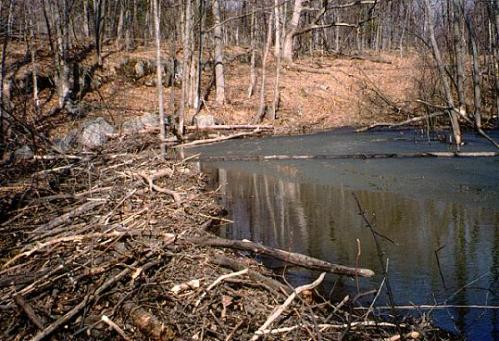
Wednesday, January 9. 2008
This piece from Obama's website indicates that he and others like Barbara Boxer support the notion of government benefits for military employees discharged due to Personality Disorders. (the link came to me via Opie via our Editor)
Being politicians, this is probably pure pandering rather than ignorance. Fact is that Personality Disorders cannot be acquired. They generally become evident in adolescence, if not earlier - but they cannot be created by military service or by anything else.
Since the most common seriouspersonality disorder in males is the untreatable Antisocial Personality (known to laymen as sociopaths, or people with no conscience, who lie easily, believe themselves to be above the rules of civil society, treat others as useful objects, and have minimal capacity for guilt - those without souls, as they used to say), one must wonder how many of these discharges are of people who did not belong in the service in the first place, would not follow the rules, and created problems for everybody else.
In the sane, good old days, they were known as "trouble-makers." Now they have a diagnosis. And, God knows, if we get Hillarycare, somebody equally sociopathic will probably try to make money pretending to "treat" these folks - on my nickel.
Wacky as it may sound to some, the only "cure" for this problem I have ever seen is for them to find God and to be deeply changed. And, even then, sometimes they just convincingly fake it to get out of trouble.
Monday, January 7. 2008
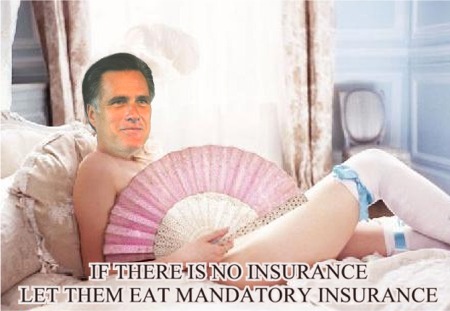 I was born in Boston. I've lived in Massachusetts for the vast majority of my life. I don't want to live here any more. Mitt Romney has surrendered me to my enemies. It's foolish to blame it on him, perhaps; his successor, Deval Patrick, stays up late every night thinking of things I detest. But Romney's face is on this Massachusetts Universal Medical Insurance Requirement. I don't have health insurance. I haven't had any health insurance for about four years. I had health insurance for four years prior to that. Before that, I didn't have health insurance for twenty years. I've never had dental insurance. Health insurance is a misnomer. Insurance is designed to safeguard you from ruination if unexpected things happen. People call that "catastrophic health insurance" nowadays. They call prepaying for all sorts of tangentially medical-related things "health insurance," but it's really more like a retainer or a club. Massachusetts wouldn't allow me to insure myself or my family. They still don't, really. I should be able to insure my family of four for a few hundred dollars a month against catastrophe, while I pay 100% of everyday doctor bills out of pocket. It's illegal here now, as it was illegal here before. Very wealthy people use tax-subsidized employee benefit money for all sorts of things that have no business being called "Health," and the legislature mandates that all these sorts of extraneous, frivolous, and even criminal things must be covered by any insurance offered in this state. I tried to get insurance before the state mandated it. It cost over $1100 dollars a month, and it had deductibles that we would never conceivably meet, So we just ended up paying on the nail for everything anyway. I let the insurance lapse, and saved the money to pay my doctor bills.
Continue reading "Hey Mitt Romney: Pound Sand"
Sunday, January 6. 2008
A 1920s home, which incorporates elements from both the bungalow and foursquare styles, in the Belmont-Hillsboro neighborhood of Nashville. 
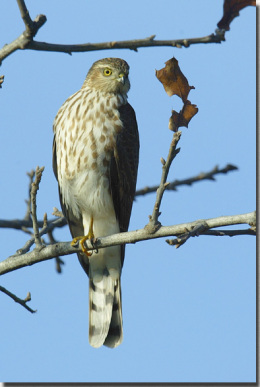 We have a few Sharp-Shinned Hawks in the neighborhood this winter who have decided not to bother flying further south, and that it is more energy-efficient to hang out here and to feed off the sparrows and Goldfinches around peoples' bird feeders. We have a few Sharp-Shinned Hawks in the neighborhood this winter who have decided not to bother flying further south, and that it is more energy-efficient to hang out here and to feed off the sparrows and Goldfinches around peoples' bird feeders.
I almost got a photo of one this morning, perched on the tray of my feeder three feet from my window. I could see the iris of her alert eye. She fled when I reached for my camera. Thus does my bird-feeder do double-duty, because I love seeing these small dive-bomber predators around the place. I have watched them catch a few delicious English Sparrows but they seem to miss their target most of the time despite their talent at crashing through shrubs in hot pursuit. It's too bad the Sharpies won't take some of my Grey Squirrels, but they are Accipters - hunters of birds on the wing. We human bird-hunters can relate: hunting is not shopping.
Wednesday, January 2. 2008
Why do we extend to universities the priviledge and advantage of being tax-free and partly if not largely tax-supported institutions? What is it that they do which is so special? Is it their duty to be conservators of knowledge and wisdom, or to be "adversarial" critics of society? I would make the case that few of the great thinkers of world history worked for universities, almost none of the great writers, and, until the past 30-40 years, few to none of the great scientists. I would make thae case that, in a world of high liteeracy and high levels of education, professsors no longer represent a unique intellectual priesthood as they might have in the Middle Ages. And I would make the case that there is nothing about being a professor which renders their views of anything outside of their teaching expertise of any more value than my own views. Mark Bauerlein takes on The Adversarial Campus. One quote: ...the Adversarial Campus Argument isn't really an argument. It's an attitude. And attitudes aren't overcome by evidence, especially when they do so much for people who bear them. For, think of what the Adversarial Campus does for professors. It flatters the ego, ennobling teachers into dissidents and gadflies. They feel underpaid and overworked, mentally superior but underappreciated, and any notion that compensates is attractive. It gives their isolation from zones of power, money, and fame a functional value. Yes, they're marginal, but that's because they impart threatening ideas. The powerlessness they feel rises into a meaningful political condition.
Read the whole, brief essay. Also, David Thompson on the same topic. A quote: The idea of academic administrators and professors picturing themselves as Luke Skywalker figures - pitted against an evil empire of oppressive bourgeois vales - is rather quaint and not without comic potential. And, as we’ve seen, ‘rebellion’ of this kind is often difficult to distinguish from absurdity, psychodrama and reactionary role-play.
This is a re-post from one year ago: 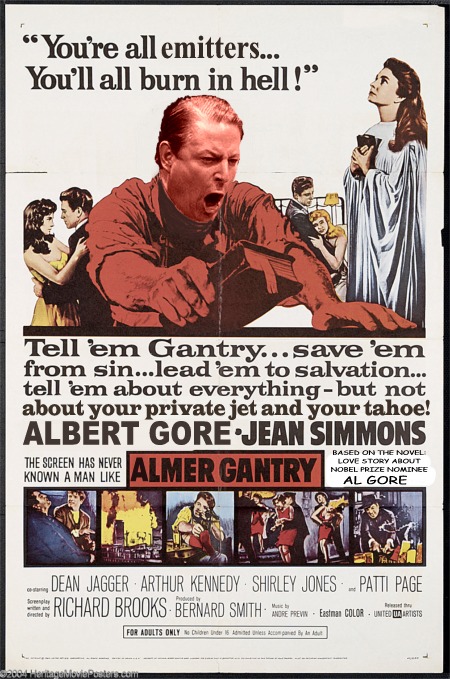
Well, the United Nations has its Intergovernmental ... its Interglobal... its Climatological... Oh, why even bother getting the title right. We all know what it is. It's a global taxation system tarted up with a graph and a chart or two. The United Nations has never accomplished anything. Let me retract that. The United Nations has never accomplished anything beneficial to mankind. Every once in a while, you can shove it aside if you bribe enough of its members and get something done. You can put a UN patch on a US uniform and kick North Korean ass, for instance. But let's not pretend the UN did anything. It's a talking shop for the worst kind of people, representing mostly venal or totalitarian governments. The only successful program run by the UN was Saddam's Oil for Food scam. And by "successful," I mean Kofi Annan's and Saddam Hussein's kids got theirs. It took the US military to give Saddam's kids what they deserved.
Continue reading "#1: Declare Panic"
Tuesday, January 1. 2008
| |      | | | | | | | | | | | | | | | Jan
2007 | Feb
2007 | Mar
2007 | Apr
2007 | May
2007 | Jun
2007 | Jul
2007 | Aug
2007 | Sep
2007 | Oct
2007 | Nov
2007 | Dec
2007 | |
| Month | Unique visitors | Number of visits | Pages | Hits | Bandwidth | | Jan 2007 | 42771 | 88340 | 451722 | 1514869 | 28.46 GB | | Feb 2007 | 26251 | 62621 | 308345 | 1214301 | 24.68 GB | | Mar 2007 | 35450 | 89636 | 437227 | 1695353 | 39.77 GB | | Apr 2007 | 38694 | 90413 | 428220 | 1690123 | 34.68 GB | | May 2007 | 48252 | 98050 | 347565 | 1594555 | 32.54 GB | | Jun 2007 | 48710 | 106876 | 405280 | 1677266 | 33.88 GB | | Jul 2007 | 46074 | 109817 | 436890 | 1891411 | 49.41 GB | | Aug 2007 | 41954 | 114650 | 518150 | 1871204 | 45.63 GB | | Sep 2007 | 64866 | 145758 | 566266 | 2043086 | 37.77 GB | | Oct 2007 | 56019 | 139676 | 611301 | 2210653 | 44.35 GB | | Nov 2007 | 60629 | 147986 | 636885 | 2694851 | 58.80 GB | | Dec 2007 | 64082 | 156346 | 630201 | 2463276 | 57.37 GB | | Total | 573752 | 1350169 | 5778052 | 22560948 | 487.34 GB |
My take-home message from these data is that we have become a solid and steadily-growing small-to-medium-sized "boutique" site - a bit obscure but but surprisingly more often-read than many of the wonderful sites we read, admire, look up to, and depend upon for good stuff and interesting thinking. With millions of sites out there, we are grateful for our readership and for its steady growth as folks find us. If we did not have fun with this, learn things, and receive some appreciation from our readers, we would quit. For 99.99% of "blogs," it's a hobby and closer to vanity publishing than to anything else. (If we could take in $1 per visit, we'd be more than delighted! But we decided not to do ads, etc., because of the hassle, the messiness, and the reality of the de minimus after-tax income from it.) That is why we have not chosen to be a an official member of the excellent Pajamas Media site, despite being on their blogroll: we would have to take the ads. Our recurrent question is whether we have any slight impact on "the world" at all. In some ways, we would like to: in others ways, we would not like to, because we suspect that people who want to save the world might be a bit insane. (Still, we would love to have 100,000,000 readers across the globe, of all political stripes and colors.) So we forge onward into a new year with the hope of adding something fun, stimulating, informative and provocative to the life of each individual reader in 2008, and with full awareness that what matters most is our own integrity and intellectual integrity, clarity of thought, our bred-in-the-bone Yankee skepticism and distrust of politicians and experts, our various random interests, the joy we are able to take in life, and the firmness of our foundational ideas and beliefs about "man and God and law," as the Dylan line goes. Trust us to question these all the time: we do. 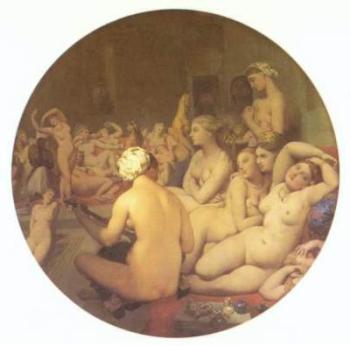 We have had many comments about the amount of totty on Maggie's - some positive and some negative. It's really never been all that much, but it has led to some awkward situations at work or school for some of our readers. We will deal with that issue, somehow. Perhaps we need to control our inner 13 year-old. We have had many comments about the amount of totty on Maggie's - some positive and some negative. It's really never been all that much, but it has led to some awkward situations at work or school for some of our readers. We will deal with that issue, somehow. Perhaps we need to control our inner 13 year-old.
Also, we have had frequent suggestions that we create a place for comment threads, because they become diluted among all of our daily posts. Well, we have been determined to reduce the amount of daily "product," but it never seems to happen. I cannot think of a solution to that. Furthermore, is reducing productivity a worthy goal anyway? Finally, another response to a repeated question: Why the anonymity of our writers? For a variety of personal and professional reasons, we want to keep it that way for now. We are sorry if you disapprove of our modestly hiding behind the cybercurtain, but it is our choice because, as RR would say: We paid for this microphone.
Happy New Year, and stick with us! And tell your friends about us, if you haven't yet. They might get a kick out of Maggie's Farm. Image: Ingres' depiction of the Maggie's Farm newsroom. (We felt obliged to photoshop out all the the Coors Lite empties and the bottles of Wild Turkey from his artistic effort, to protect the children.)
Monday, December 31. 2007
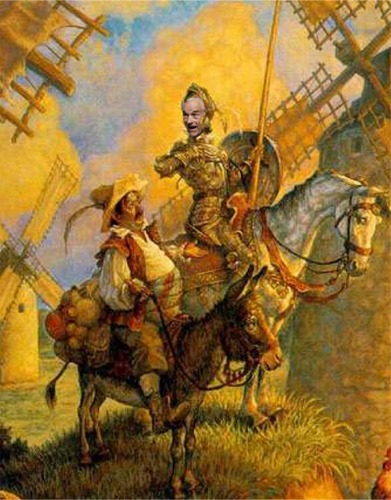 Let me save you all some time. Look, I know it's amusing talking about Ron Paul! Ron Paul! is a blast. Everybody loves a verbal grenade rolled into excrutiatingly dull settings. But politics is supposed to be dull. Politics was interesting in Russia in 1917, in Iran in 1979, in Venezuela last year... well, what I'm trying to tell you is you don't want to "live in interesting times." Now, young persons and people in rent-controlled apartments that work at fair trade coffee shops can afford the luxury of talking about whether the American Civil War was a good idea. If you just got out of college, Ron Paul! is right up your alley. Why talk about today's silly problems when Ron Paul! is arguing about whether we should abolish the Second Bank of The US? It's so much more lively to talk about history, because it's on the shelf and you can find any damn version of it you want to argue over. Real time isn't indexed yet. Ron Paul! is captivating to youngins because he's like the reset button on Halo. You don't have to live with your decisions in the context of your surroundings. If you charge into a nest of fiat currency economies or Brutes, Elites, and Grunts and get slaughtered, just start over! Instead of having to offer cogent and useful advice on how to move forward in contemporary life, you just mention that contemporary life shouldn't be that way. But governance is not an editing exercise. It's a writing exercise. The editors are many; some have access to editorial pages, and some have access to nuclear weapons. And if you're feeling devil-may-care with every aspect of government andyou figure: Why not blow it up and start over? it's useful to remember that the fellow behind door number two when you press the reset button on government sometimes isn't all that interested in the gold standard; he might be more interested in invading Poland or collectivizing the farms or something. So Ron Paul! excites youth because they really don't think they have anything at stake yet in the affairs of the world. And he attracts the survivalist nuts who have already gone to the bunker, and desire someone to give the imprimatur of sanity to their decision to drink their own urine, hoard Kruggerands, and eat Spam underground already. The Pat Buchananites love anyone who says: Things used to be swell but now they suck. And conventional Conservatives, ashamed to call themselves that because the hip kids will photoshop them in Brownshirts or in a bathroom stall with Larry Craig, call themselves Libertarians for cover and adore Ron Paul! because he says over and over again that he's not interested in doing the one thing Libertarians hate: governing. So he's got the idealistic college kids, the country club anarchists, and the nuts. Who's that help?
Continue reading "Hello Ron Paul!"
Re-posted from February 13, 2007 I stumbled into an online petition yesterday entitled "End Climate Change Now!" Such foolishness makes me laugh and cry. If every human on the planet were to sacrifice their lives on the altar of Gaia today, the climate would continue to change. Who do we think we are, anyway? Climate is always going either up, or down. It never stands still, but zigs and zags, like every natural phenomenon. But it led my thoughts to lovely, remote Greenland. 
 The population of Greenland is 56,000, about 85% Eskimo. As you recall, Denmark "owns" Greenland, but they are mostly self-governing. The imperialist Eskimos invaded pristine Greenland around the same time that the imperialist Erik "the Red" Thorwaldsson began to bring settlers to Greenland, in the late 900s. The population of Greenland is 56,000, about 85% Eskimo. As you recall, Denmark "owns" Greenland, but they are mostly self-governing. The imperialist Eskimos invaded pristine Greenland around the same time that the imperialist Erik "the Red" Thorwaldsson began to bring settlers to Greenland, in the late 900s.
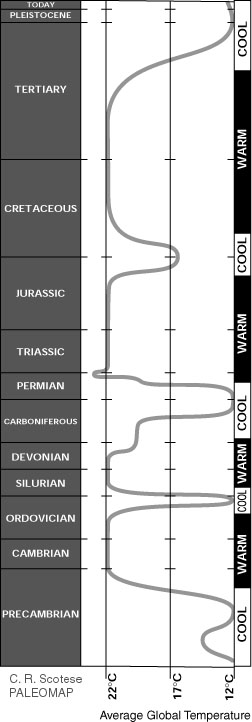
At that time, Greenland had far less ice, was green, and was warm enough for farming. By the 1300s, Greenland had become too cold for the Norwegian Vikings, and they all returned home. Earth has been in an Ice Age (mostly Pleistocene - previously the entire planet had been tropical for a long time) for 3 million years ("Ice Age" defined by ice on both poles), with repeated advances and retreats of the ice sheets, and repeated micro and macro fluctuations which are just trivial blips on a giant chart. We only know a lot about a few of these blips, such as the "Little Ice Age" of 1000-1350s, and the "Medieval Warm Period" (1400-1900), when it was possible to grow all sorts of crops in England. Major "cool periods," or Ice Ages, occur about every 200 million years, and last several to tens of millions of years. The most recent advance of our current ice sheet peaked about 10,000 years ago (this one tends to advance and reteat every 15-18,000 years). We, in our micro view, often term the most recent advance "The Ice Age" - the one with Wooly Mammoths etc. But we are, historically, in the middle of the big one now. Will another little ice advance occur and bury NYC? Definitely. We are in the longest cold period in the earth's history. Stop climate change? Heck no. It's freezing out, sleeting and snowing, and we are, in fact, in the middle of a darn ice age. A bit of a warm spell should be welcomed as a blessing. No, I will sign no Stop Warming petition, but I'd sign one to stop tectonic plate movement. I do not want MA to reconnect itself to Africa just now, and only Halliburton could move those things. Check out this site for historical climate changes. As you can see by the graph on the right from Scotese, we have been in a heavy duty cold spell for quite a while. When our climatologists look at climate, they tend to look at the micro picture, but that is like trying to predict the stock market by looking at one day's fluctuations. It's meaningless. And apparently most folks, other than the loonies, have figured that out. Problem is, we have another blip of a serious Ice Age coming on our path to our return to the normal Pleistocene tropical climate. Can we handle it? We will survive; we can cope, but just as surely we will all die off, in time, in whatever apocalypse the future has in store for mankind - even if we last long enough to see the sun fade out. That is history's lesson, and the lesson of science.
Image of Mammoth: Moravec does excellent prehistoric paintings. Check out his cool website.
Friday, December 28. 2007
As regular readers know, we all seem to have been thinking recently about the cost of liberty and the human ambivalence about freedom. See, for a few examples: Freedom? No thanks, and a word about Erich Fromm Is Liberty Obsolete? Of mice and men: Dems want the US to be like Denmark Live Free or Die. How come Liberals never talk about Liberty? Individual liberty erodes, one little trans-fat molecule at a time The dignity trap of "positive liberty" Liberty "Freedom to" vs. "freedom from," the duties of citizenship, plus Dostoevsky Shrinks, Thoreau, Pencils and Freedom A few Sundays ago our preacher spoke provocatively about the cost of Grace. We want to think of Grace as being, by definition, a freebie. My pastor says not. Roger Kimball recently discusses the cost of freedom. Perfect. Freedom and liberty are costly in money, lives, bruises, setbacks, and effort. And freedom is messy, too. All valuable things are costly, like relationships with man or God. Over time, the Left has actually managed to find a way to permit people's consciences to allow them to accept things and money from their neighbors which are not willingly given. Old-fashioned American dignity would not permit that. In the end, the issue is whether we, as citizens, want to pay the price, or whether we want somebody else to pay for it like the old bowl of lentils. There is no free lentil lunch. The infant in all of us wants everything good to be free to us, like mother's milk. If adults want to live in freedom, they need to get beyond that, because liberty is not for babies. Good things are costly. Related: Popular Dictators at Econlog, and The Allure of Tyranny by Stephens at Opinion Journal.
|