Sunday, February 22. 2009
Joseph Priestly was curious about everything, and one of those things was the gasses coming out of the vats in the brewery next door. But Priestly was much more than that. Smithsonian.
I will post a series of random quotes from Boswell's London Journal for a while, on Sundays. As was commented on the publication of these journals:
 "Boswell was the most charming companion in the world, and London becomes his dining-room and his playground, his club and his confessional. No celebrant of the London world can ignore his book."-Peter Ackroyd, from the introduction; Praise for the earlier edition: "The journal is admirably edited and annotated."-W. H. Auden, New Yorker "Boswell was the most charming companion in the world, and London becomes his dining-room and his playground, his club and his confessional. No celebrant of the London world can ignore his book."-Peter Ackroyd, from the introduction; Praise for the earlier edition: "The journal is admirably edited and annotated."-W. H. Auden, New Yorker
A friend told him "Mr. Boswell, you are the vainest man I have ever met, and yet it is impossible for me not to love you." Mr. Boswell - Jamie - is an easy person to like. His honesty about himself shines through. He is 22 at this time, journaling about his second move from Edinburgh to London in search of a cushy commission in the Footguards (which he was never able to obtain despite his extensive networking efforts).
Much of these journals documents his daily life, which is mainly social - and centered on meals. Breakfast with these friends, dinner with other friends, see a play with others, then maybe a late supper with others, perhaps after a bit of whoring, which he describes in some detail including an assessment of his performance. He is quite open about preferring "genteel" ladies for his "amorous adventures" because he lives on a tight budget and prefers not to pay.
He is a devout Anglican. He takes long walks every day, usually discussing politics or literature with friends. The great David Garrick befriends him, and, towards the end of these journals, Boswell meets Samuel Johnson. Johnson, of course, finds the young fellow to be a delightful companion. Boswell is always puzzled about why people like him so much and seek out his company, viewing himself as shallow and dull. He worries about his social presentation, especially his tendency to lose his reserve and dignity (which he constantly does). He also has recurrent incapacitating bouts of depression.
This bit is from December 11, 1762:
I drank coffee at Macfarlane's. Erskine and he got into a dispute about the Peace and each told his antagonist that he was speaking arrant nonsense. They were seriously hot. I was much diverted at Captain Andrew's being so, who does not enter the least into common notions, and does not care a farthing whether there be peace or war or confusion in Europe, provided he and his own agreeable circle be safe and happy.
I must own that I am much of that way of thinking. I cannot help it. I see too far into the system of things to be much in earnest. I consider mankind in general, and therefore cannot take a part in their quarrels when divided into certain states and nations. I can see that after a war is over and a great quantity of cold and hunger and want of sleep endured by mortals, things are upon the whole just as they were. I can see that Great People, those that manage the fate of kingdoms, are just such beings as myself: have their hours of discontent and are not a bit happier. This being the case, I am rather passive than active in life. It is difficult to make my feeling clearly understood. I may say, I act passively. That is, not with my whole heart, and thinking this or that of real consequence, but because so and so things are established and I must submit.
Meditating calmly and finding myself situated in this sublunary system, I do not know well what to make of it. I do not rightly understand it. Guardian Angel: "Stop. How should you? God has formed men with very limited capacities." True. But still I cannot help enquiring and thinking.
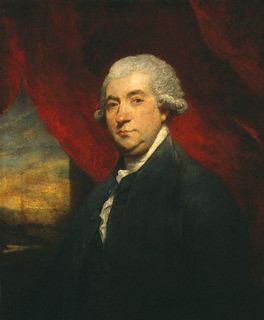
Image: Boswell in his 40s. Portrait by Sir Joshua Reynolds, 1785
Massachusetts' Berkshire County (and northwestern CT Berkshires) has been a popular summering area for 150 years. The nightime is cool, even in August. It is filled with second homes and country places for those from NYC and Boston. The area is artsy and full of pretty-good, small-scale skiing. There isn't much work up there outside of once-industrial Pittsfield - and there never has been. As we have commented, 2009 is a good time to have cash to buy things, because these second home prices are falling. Take a look:
This 3-BR 1942 Cape on 0.3 acres overlooks the town of Great Barrington. $620,000:

This 1793 eyebrow colonial in New Marlborough has 1/2 acre, 3 bedrooms. $185,000;

This 1770 center hall colonial is on 1/2 acre near downtown Sheffield. 6 BR. $725,000.

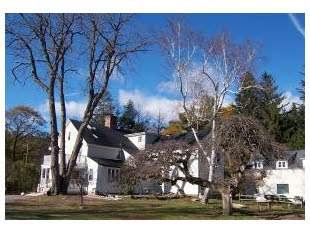
The village of Alford has a Congregational Church, an 1830 schoolhouse, and a town green. Not a single store, shop, or restaurant. This is a 4 BR 1810 farmhouse (with additions) on 4 acres. $700,000:

Here's an 1825 village colonial in Becket. 5 BR, one acre. $430,000:

In Lenox. Not an antique, but just a walk to Tanglewood and to the pleasant antique village. 4 BR, 0.5 acres, $1,000,000.

In Stockbridge, this 1795 renovated farmhouse. 8 BR, 4 acres. $1,000,000. I like it, but 150 acres would be better.
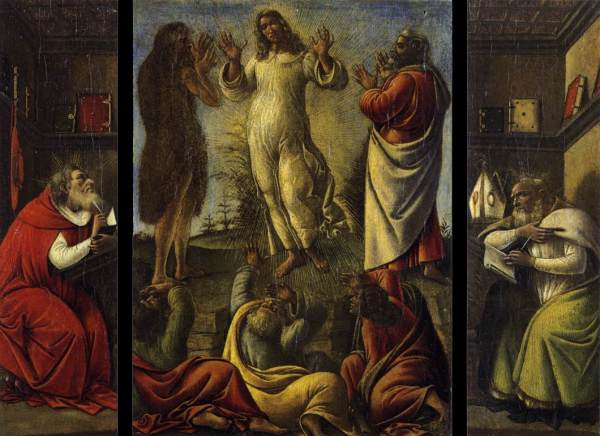
The Transfiguration, Workshop of Alessandro Botticelli, c. 1500.
9:2 Six days later, Jesus took with him Peter and James and John, and led them up a high mountain apart, by themselves. And he was transfigured before them,
9:3 and his clothes became dazzling white, such as no one on earth could bleach them.
9:4 And there appeared to them Elijah with Moses, who were talking with Jesus.
9:5 Then Peter said to Jesus, "Rabbi, it is good for us to be here; let us make three dwellings, one for you, one for Moses, and one for Elijah."
9:6 He did not know what to say, for they were terrified.
9:7 Then a cloud overshadowed them, and from the cloud there came a voice, "This is my Son, the Beloved; listen to him!"
9:8 Suddenly when they looked around, they saw no one with them any more, but only Jesus.
9:9 As they were coming down the mountain, he ordered them to tell no one about what they had seen, until after the Son of Man had risen from the dead.
Saturday, February 21. 2009
From A Beacon of Liberty amid Depression:
The event in question took place over four days in an obscure building, the Musée Social, just off the Boulevard Saint-Germain in Paris at the end of August, 1938. Present were some 26 academics, business people and writers, mostly from Europe, but including the American commentator and journalist Walter Lippmann (who, as it turned out, was in Paris on honeymoon at the time). Also in attendance, apart from the young Raymond Aron, were some of Europe's leading economists: Louis Rougier and Jacques Rueff from France, Ludwig von Mises and Friedrich von Hayek of the Austrian School, and two Germans, both living in exile, Wilhelm Röpke and Alexander Rüstow. Although invited, neither the future Italian President Luigi Einaudi nor the Spanish philosopher José Ortega y Gasset was able to attend.
The immediate cause of this coming together was the publication of a French version of Lippmann's An Inquiry into the Principles of the Good Society by the Librarie de Médicis, the same publisher that had also recently published Rougier's Les Mystiques Economiques and von Mises's anti-collectivist broadside, Socialism. The wider context was the challenge to liberalism and the free market posed by the rise of a generalised state interventionism in the form of planning, corporatism and socialism. Capitalism seemed on the brink of systemic failure and for many it was capitalism itself that was to blame. Its decline and its end appeared inevitable.
But the participants also saw that the challenge they faced was directed against more than simply the liberal economic order and the political democracy born out of the 19th century. "The totalitarian rebellion," Lippmann commented in his introductory remarks to the conference, "attacks the entirety of the Western tradition - its religion, its science, its law, its state, its property, its family, its morality and its conception of the human person." As a matter of urgency, the civilised world had to find a response to an inhuman enemy.
And, like Benda, they saw that intellectuals were aiding and abetting this enemy. Never, Rougier asserted, had the clercs betrayed as much as they were now doing. They denounced the crimes of Hitler and of fascism but remained silent before the Moscow show trials. They called for the socialisation of the economy without understanding that they were weakening democracy and helping dictators. Believing themselves to be the most implacable enemies of tyranny, they were in fact its best allies. They were betraying the very cause that they professed to serve.
Read the whole essay at Standpoint
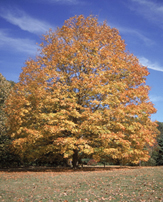
- An annual re-post for sugarin' season.
Our Vermont friends have been busy getting ready for sugarin.' We tend to think of Vermont maple syrup, but Canada is the major producer. We consume it abundantly in New England and do not approve of the cheap substitute goop in the supermarkets. We buy Maple syrup by the gallon.
Grading - lots of us like the intensity and gnarliness of Grade B and C, but you won't find it in supermarkets: Maple Syrup Grades. Photo below:
$ - We pay retail in the $20s/gallon, but the farmers get between $2-$3/gallon, usually. More in a "bad" year.
Other uses besides pancakes and waffles:
Put it on oatmeal like the Pilgrims did.
Pour some into winter squash halves and bake, like my Indian ancestors probably did.
Drizzle some over fresh-fallen snow. Instant Maple popsicles with the power to pull out your fillings.
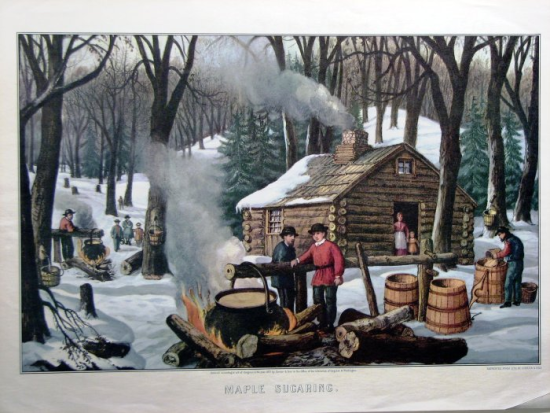
Photo on top: The Sugar Maple, in its autumn splendor. Below: Currier and Ives' "Maple Sugaring":
 Thus far, most corrupt White House ever. Nobody cares. Thus far, most corrupt White House ever. Nobody cares.
The Dow under Obama. Related, at Pajamas: Turn Back, Mr. President
Chicago wants surveillance cameras everywhere. Except in their pols' offices, no doubt.
Disagreement with stimulus is racist, claims Congressman
Can we stop talking about race? Mod. Voice
A "kick me" foreign policy. Krauthammer
No correct answers: A solution to the math and science gender gap
Jamie Dimon likes the Admin's mortgage relief plan (video). So does Baseline Scenario
"Let housing find its clearing price." Saft at Reuters. Don't worry - it will.
Friday, February 20. 2009
If you watch the movie `Jaws’ backwards, it’s a movie about a shark that keeps throwing up people until they have to open a beach.
h/t, Bits and Pieces
with the Grateful Dead. I don't know the year or place. It begins like this:
Sometimes I feel so low-down and disgusted
Can't help but wonder what's happening to my companions
Are they lost or are they found, have they counted the cost it'll take to bring down
All their earthly principles they're gonna have to abandon ?
There's slow, slow train coming up around the bend.
I had a woman down in Alabama
She was a backwoods girl, but she sure was realistic
She said, Boy, without a doubt, have to quit your mess and straighten out
You could die down here, be just another accident statistic
There's slow, slow train coming up around the bend.
Full lyrics here.
Thursday, February 19. 2009
This could be from a movie. Fantastic Americana: an American soldier offers subtle motivation to Iraqi policemen:
I have grown cynical since 1979 when I found myself in Washington as a 24 year old sprite, agog at the majesty and towering historical figures with whom I was rubbing shoulders. But the reverence I had for politicians and our system of government back then was misplaced. I see now that the stately buildings, the stirring rhetoric, the passion, the belief in ideas was a mirage, a beautiful facade behind which was the crumbling, rotten ruins of 200 years of hopes, aspirations and bloody sacrifce made irrelevant by hard-eyed, cynical men who exploited people like me and what I believed for their own gain. By the time I left Washington 6 years later, I had been disabused of my boyish naivete, having seen the grubby underside of politics and governing as well as the grasping, conniving nature of so many who wield power, ideally to benefit the people but instead, to protect and enrich a wealthy elite. The education of Rick Moran was complete.
Rick Moran
h/t, Theo:

Wednesday, February 18. 2009
The perfect girlfriend isn't the possessive type, and just wants you to be happy (h/t, S,C&A):
3800 acres, with 6 miles of the Teton River, 50 miles west of Great Falls. $12 million, but probably negotiable. Nice views? Can any reader name that mountain?
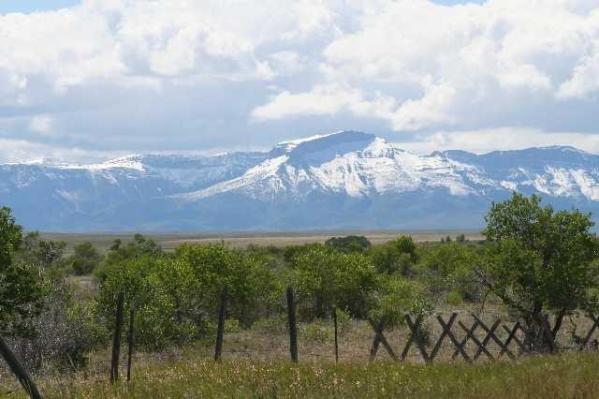
Downtown Choteau, 3 BR, $69,000:

VDH, via Anchoress:
Barack Obama immediately upon entering office demanded the largest government expansion in the history of the nation. The staggering debt program will require nearly a trillion dollars in borrowing to fund all sorts of entitlements and redistributive efforts, and in revolutionary fashion redefine the role of government itself. Obama pronounced the current economic crisis the moral equivalent of war, and he wanted a national mobilization to meet it — pronto.
But unlike the Bush administration, which took 15 months to prepare the country for a real war in Iraq, the Obama administration gave the public only a few hours to read the final draft of the legislation before it was made into law. Where the polarizing partisan George Bush managed to obtain the vote of majorities in both parties to remove Saddam Hussein, the healing bipartisan Barack Obama lacked the support of even a single Republican in the House and won over a mere three Republicans in the Senate.
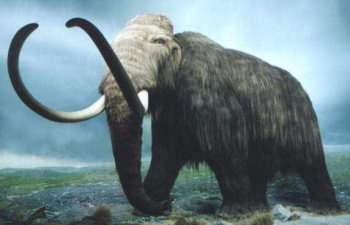 Wooly Mammoths used to live in LA. Not very long ago, either. Wooly Mammoths used to live in LA. Not very long ago, either.
But you already knew that (h/t, Jungle Man). They are findling lots more interesting bones, though.
Tuesday, February 17. 2009
Our link this morning to the "Make it rain candy, Mr. Obama" bit reminded me of what should be one of the Left's theme songs. Here's the great Burl Ives:
"He's the most unselfish person I've ever met."
Brianna Kelliher of her boyfriend, Lance Cpl. Kenneth Preach, mortally wounded in Afghanistan
From Bruce Kesler:
International Relations professors “are often the last people a president turns to for advice on running the world. At least, that’s what the professors say,” in a 2008 survey of 1743 IR faculty at every 4-year college and university in the US. “Most revealing? Nearly 40 percent of respondents reported that these scholars have “no impact” on foreign policy or even the public discourse about it.” Foreign Policy reports the results.
If they, or you, are wondering why they are so irrelevant, just look at their top priority: “It’s a largely liberal internationalist agenda, one that names the most important foreign-policy priorities facing the United States as global climate change (37 percent).”
What issue could possibly trump a major recession and not one but two foreign wars? Our warming planet. According to the scholars in this year’s survey, a U.S. commitment to take the lead on international climate treaties is long overdue. Although the election of President Obama—who has described the global climate change threat as “a matter of urgency”—promises movement on U.S. environmental policy, it might not be nearly high enough on Obama’s to-do list for these experts. Not only do academics consider the environment to be the greatest threat we face today, they predict it will be an even more important foreign-policy challenge for the United States in 10 years.
If there’s still wonder, I looked into the 93-page survey report the article is based upon. Guess what? “Seventy-five percent describe themselves as liberal,” and that percentage has increased from 69% in 2004.
Still wondering? Read on:
In 2008, for instance, we see fewer than half as many scholars (23 percent of respondents in 2008 compared to to 48 percent in 2006) describing terrorism as one of the three most significant current foreign policy challenges facing the United States. Most surprisingly, while 50 percent of U.S. scholars in 2006 said that terrorism was one of the most important foreign policy issues the United states would face over the subsequent decade, in 2008 only 1 percent of respondents agreed….Concern over several other foreign policy issues is also declining markedly: when asked about the most important problems facing the country over the next ten years 18 percent fewer respondents chose WMD proliferation, 12 percent fewer said armed conflict in the Middle east, and 13 percent fewer indicated failed states. At the same time, 17 percent more respondents in 2008 than in 2006 believed that climate change will pose a serious challenge…
Want more reasons to not look forward to paying those huge tuition bills for your children?
 She's a Dartmouth gal, and she keeps rifles around the house. She's a Dartmouth gal, and she keeps rifles around the house.
I think she's a Maggie's Farm sort of senator (despite being D-NY). The self-protective instinct seems sadly lacking in the flabby Western world these days. Plus she has a nice, honest smile.
If you get immunized for Polio, you should just as reasonably immunize yourself against the bad guys by being armed. Both dangers are rare, but can really hurt you.
Somebody made her move those guns, though.
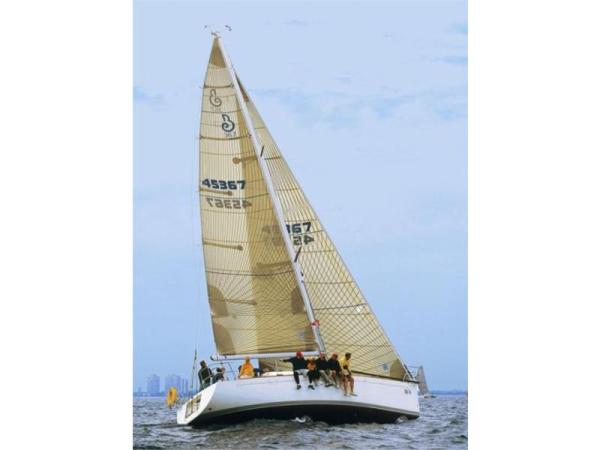
As the angle of Mr. Sun begins to increase in the New England skies, we generally post a few boats that catch our eyes. Usually classic old boats, but this 2003 Beneteau 36 for sale seemed appealing.
They term this Farr design a racer-cruiser, but she looks like a racer to me. In this sort of economy, nice boats become more affordable. Asking 124,000.
Monday, February 16. 2009
Starbuck's stock price tracks the economy. Ouch.
As much as we enjoy promoting the simple virtues of Dunkin Donuts here, we have never really been mad at Starbucks. I like their House Blend, and I think the idea of a "third place" to hang out for a while either alone or to meet - which isn't a pub - is a civilized thing.
And, when you think about it, they don't charge any more than a pub would charge you for a drink. As with a pub, you are paying for a place to go to, not for the liquid.
I think they over-reached in their expansion. The are spots in NYC where you can see at least two of them from one corner.
Dunkin is still making money, and, if you don't mind hard plastic chairs, no wireless, no semi-cool CDs for sale, no bean-sprout sandwiches on bread so "natural" that I doubt Medieval serfs would want to eat it, no phony 1/4" thick ambience, and no barristas, Dunkin is still a pleasant "third place" for lots of folks.
Still, for your first e-Harmony get-together, Starbucks is probably a better idea...
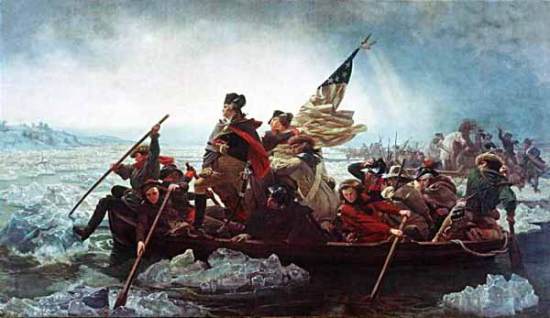
"First in war, first in peace, and first in the hearts of his countrymen, he was second to none in humble and enduring scenes of private life. Pious, just humane, temperate, and sincere; uniform dignified, and commanding; his example was as edifying to all around him as were the effects of that example lasting.... The purity of his private charter gave effulgence to his public virtues...."
John Marshall, official eulogy of George Washington, delivered by Richard Henry Lee, 26 December 1799
|