We are a commune of inquiring, skeptical, politically centrist, capitalist, anglophile, traditionalist New England Yankee humans, humanoids, and animals with many interests beyond and above politics. Each of us has had a high-school education (or GED), but all had ADD so didn't pay attention very well, especially the dogs. Each one of us does "try my best to be just like I am," and none of us enjoys working for others, including for Maggie, from whom we receive neither a nickel nor a dime. Freedom from nags, cranks, government, do-gooders, control-freaks and idiots is all that we ask for.
Yes. It used to be that Psychiatrists were the only ones who would talk to a distressed person with some depth of understanding. Nowadays, everybody can be a "therapist," and the "New, Improved" Psychiatrists don't want to get to know who you are. They want a symptom for the right pill.
I kept going on doing what I knew how to do anyway – just kept "doing what I did before and what I loved." I was a late arriver, having had another career first, so I was never around for the days of wine and roses to "go backwards, moneywise, in [my] career." I’m retired with "the lifestyle that my wife and I have been living for the last 40 years." I live in a log cabin. We travel and buy the things we want. It was a modest life with a modest retirement. I wouldn’t have had it be much different. I get calls from Therapist friends often who want me to help them find a "good Psychiatrist" who will do their "meds." I don’t even know what to say. Good Psychiatrists don’t "do meds," they treat people.
In my view, all docs should treat people, not diagnoses and not symptoms. People aren't "cases" - not even to good surgeons and anesthesiologists. No two "cases" are the same. Medicine is a humanistic, humanitarian art as much as it is science, and people are too complicated for simple formulations - unless they are bleeding out in the ER or some such. As I read the medical literature, most people don't even take their prescribed medicines.
I take note that the current head of the American Psychiatric Association, Dr. Carol Bernstein, has problems with the DSM model.
So do I. I have some hope for it too, but believe it to be of limited utility. It's largely pseudo-scientific, and pseudo-certain. "Sex Addiction"? Give me a break.
As 1 Boring Old Man says, "Don't mistake the pointing finger for the moon."
From a choice of offers, the lad has accepted a new interesting "opportunity" (as jobs are termed, these days) in NYC.
Now I will have two kids working there, plus one beloved daughter-in-law. It's all good.
I tend to think that all ambitious young folks need to do some time in the Big City, whatever their field, if only to find out what high energy and high demands and sharp elbows really mean. I did, and it didn't hurt me none. Well, maybe a few narcissistic scars, but that's good for one's character. If you haven't been introduced to your flaws, weaknesses, and deficiencies yet, NY will happily introduce you to them - and tax the heck out of you for the privilege. I think it's worth it. At least for a while.
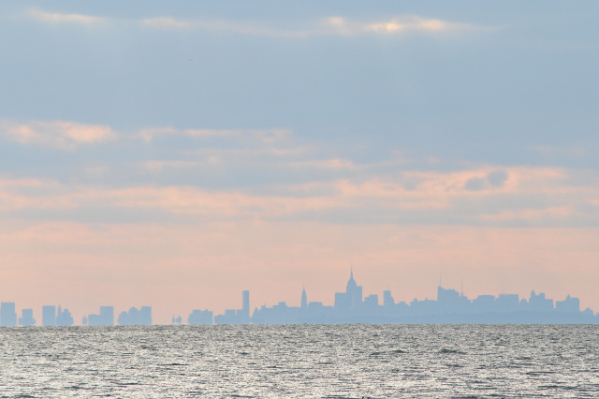
Pic is Manhattan from the Whitestone Bridge at dawn, on my way to some airport
From Vietnam to today, the majority of US public opinion has supported confronting active threats to US security. And, naturally, Americans sympathize with the oppressed and their human rights. However, as the costs rose, time elapsed, and foreign policy dilettantes recoil from the realities of armed intervention, other firmer supporters increasingly bemoan the restrictions imposed by the half-hearted and the saboteurs of winning that not only cost more US military lives but place the end-goals in jeopardy.
In short, the inherent contradiction in US foreign policy is between those willing to undertake the burdens and those who undermine that will. This leads to initial enthusiasms that fade to regrets, and has created a new isolationism among many who favor strong actions but – having paid the price -- are unwilling to become wasted cannon fodder. This is particularly felt among many veterans who have felt the anguish of their efforts being undercut and frittered.
Most – but not all – of the usual advocates of an assertive US foreign policy argue for the US to be clearer and more forthright in standing by those in the Middle East fighting against its satraps – whether allied to or opponents of the US. The situation in Libya is the current front, while those in Tunisia and Egypt fade from the short attention span of the front pages.
The incoherency of President Obama’s foreign policies, from inauguration to now, however, undermines from the get-go the expectations of focus, perseverance, adequate means, and thus favorable results. The only consistent behavior shown by the Obama administration has been weak and dithering resolve to protect US interests coupled with rewarding enemies and undercutting allies.
There is nothing in the Obama administration’s handling of the current revolts in the Middle East that indicates a meaningful learning or reversal of this course.
Indeed, the ongoing dithering and waffling in the face of events only reinforces the view of an administration at best adrift in confusion, ignorance and denial, and at worst purposely dangerous in furthering US interests abroad.
There are good arguments to be made for the US intervening more actively and forcibly in the Middle East revolts, but in my view they pale before the lack of confidence that the Obama administration has labored so hard to deserve.This is especially so given the likely outcomes just enmeshing the US further in the Arab world’s self-inflicted dysfunctionality, with not even any worthwhile gratitude to result.
It is not easy nor consistent with our decency to see innocents or rebels slaughtered. It is less easy to send our sons and daughters into the cauldron created by the Arabs themselves, with only slightly marginal lasting results the best outcome and more likely not even that.
P.S.: Andrew McCarthy at National Reviewgoes into more detail. Read it all, and think, think, think.
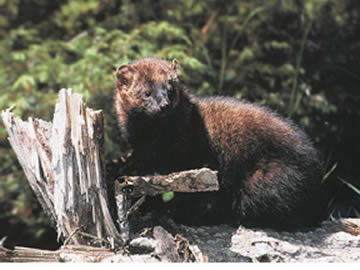
Country folk call them "Fisher cats," and blame them for the decline of Ruffed Grouse populations in the Northeast (about which they are wrong. Grouse and Fishers coexisted for millennia. I blame the grouse population drops on fire suppression, habitat loss - and the dang Coyotes who would not be here had we not killed all of the wolves).
Fishers are large members of the weasel family (the Mustelidae - stoats, badgers, otters, martens, mink, weasels, wolverines) - kinda like mini-Wolverines.
With the return of woodlands and the decline of fur trapping, Fisher populations are rebounding in the northern US, especially in New England (same as with the Black Bear). They are one of the few animals that kills Porcupines.
The day I met O'Reilly it was 32 below; The sparks were flying off me pick, I was up to me neck in snow. His footsteps shook the basement slab, I saw the sky go black As he roared out, "I'm your ganger now, so dig until you crack.''
He was bigger than a dumper truck with legs like concrete piles, His face was like a load of bricks, his teeth were six inch files. His eyes, they shone like danger lamps, his hands were tough as steel, But a man as small as that was never a match for Big McNeill.
When tea came round at dinner-time, he grabbed a gallon tin, But I said, "Better put that down, if you would save your skin. You may be called O'Reilly but I will to you reveal That the cup you've got your hands on, it belongs to Big McNeill.''
Well, he laughed at me and carried on as if I hadn't spoke. He said, ``A man from Dublin Town can always take a joke.'' But when he picked a shovel up, wee Jimmy gave a squeal "You'd better leave that teaspoon, it belongs to Big McNeill.''
Well, everything the ganger touched we said to leave alone, Or else McNeill would grind him up and make plaster of his bones. At last O'Reilly lost his head and said he'd make a meal Out of any labourer in the squad, especially Big McNeill.
We said McNeill was sick in bed and told him where to go. The boys all downed their tools and went along to watch the show, And when we got to Renfrew Street, wee Jimmy danced a reel, To see him thundering at the door to fight the Big McNeill.
When the ganger got inside he saw a monster on the bed, A mound as big as a stanchion base with a barrel size of head. He punched it and he thumped it and he hit about with zeal, 'Til the missus cried: "Don't hurt the child, or else I'll tell McNeill.''
He was bigger than a dumper truck With legs like concrete piles, His face was like a load of bricks, His teeth were six inch files, His eyes, they shone like danger lamps, His hands were tough as steel, But a man as small as that was never A match for Big McNeill.
THE INTOLERANCE of the avant-garde. “That helps to explain why the ideas of the avant garde have been the same for more than a century, and why, today, avant garde means defending the statist status quo.”
I believe (Jesse) Jackson and company are intentionally distorting the truth, misleading, manipulating and abusing the American people. They have been getting away with it for far too long. It is time they are called out and held politically accountable.
Krugman and the Times editorial board are both examples of something important in American life today: left-liberal intellectuals are increasingly able to understand that individual supports of the blue social model are crumbling. But they are still so captivated by the blue model, so profoundly convinced that the Progressive movement’s solutions to America’s social ills in 1910 are still valid today, that they cannot yet look beyond the blue model to imagine a different and brighter future for the United States.
...perhaps the most troubling aspect of this new federal intrusion in the higher education marketplace is its underlying assumptions about the best way to control college costs. Whether it has been efforts to increase Pell Grants, or now this student loan fix, President Obama and his allies in Congress, driven I believe by the best of intentions, have assumed that increasing federal aid will help students better afford college. And there is no doubt that college costs have skyrocketed recently, more than doubling the rate of inflation over the past twenty years. However, every time the federal government has increased aid to students, colleges have turned around and raised tuition and fees accordingly.
Aided by the government-encouraged extension of credit, education costs have skyrocketed. In fact, it is fair to describe today's higher education price tag as having been reduced to a formula - where tuition seems to equal all the money a student can pay plus all the money a student can conceivably borrow. And, this same access-for-all government policy has made loan-eligible middle- and lower-income students easy prey for aggressive higher education and student-loan marketing. The end result has been an unprecedented, debt-fueled wealth transfer from students of modest means to the increasingly affluent higher education industry and its student-loan lenders. Unfortunately, as this damage continues to reveal its depth, its consequences are likely to become more evident by the day.
A generation of students has been reduced to the equivalent of the underwater homeowner: resigned to a fate where the amount owed to finance their schooling might be greater than the value of the education they received (and, therefore, beyond their capacity to repay it).
Government student loans and grants are little more than indirect handouts to the academic institutions in whose pockets they end up.
“The government decides to try to increase the middle class by subsidizing things that middle class people have: If middle-class people go to college and own homes, then surely if more people go to college and own homes, we’ll have more middle-class people.
But homeownership and college aren’t causes of middle-class status, they’re markers for possessing the kinds of traits — self-discipline, the ability to defer gratification, etc. — that let you enter, and stay, in the middle class. Subsidizing the markers doesn’t produce the traits; if anything, it undermines them.”
"This General Assembly will not be intimidated by nomadic bands of professional agitators on spring break bent on disruption," he said. "We talk through our differences here. Tennessee is not Wisconsin."
How close did we get to the Humpback whales last week, on the Zodiac? Almost close enough to touch them. You can see another one underwater, swimming under the Zodiac. Friendly whales who like to interact with Zodiacs.
Sipp: Marketing, Advertising, and Sales 101. Great video ad for Telluride. Skiied there one week, a few years ago. Great. I hate the chair lifts without bars, though, especially when you're going over canyons. Yikes. I still have the Osprey backpack I bought there for dumping kids' clothing in when it warmed up during the day, and things were shed. You find challenging and exciting skiing there. Same as tennis: keep those knees bent.
The BD family contains avid snorkelers, but only Mrs. BD is a skilled scuba diver. But even snorkeling, she can swim down 20 feet easily to inspect something. Loves it.
But about the peas. On good advice we bought a big bag of frozen peas at the Cabo WalMart, filled a plastic water bottle with them and then added water to the bottle. When you are diving or snorkeling near rocks or a reef, just squirt a few peas out of that bottle. You will be swarmed with tropical fish. Works like a dream. Like tossing bread to pigeons in a park. Fish were crashing into me, some over a foot long, and one bit Mrs. BD while trying to get to the pea bottle. Very cool thing to try. Wish I had had an underwater camera.
We had to go on a goofy party boat to get to a good snorkeling area, and they provided the equipment. Unlimited free drinks. It was jolly. On the way back, Mrs. BD danced the Macarena and YMCA without touching a drop of drink (not a photo of her). I didn't, and I did.
Lawns are dumb things to have, but almost everybody has some. It's expected nowadays, but gardens and plantings are more interesting, look more natural, are more inviting to birds and other friendly critters, and offer more privacy - and shade. On the other hand, everyone needs a space for croquet and badminton.
Once the preserve of the wealthy, lawns became de rigeur for the aspiring middle class during the 20th century, as new homeowners attempted to create miniaturized versions of grand English estates on 1/4, 1/2, 1- and 2-acre building lots.
The orgin of lawns was sheep-grazed fields. Sheep are the primitive machine which transforms grass into wool and mutton.
But the subject assigned to me is top dressing. (Bear in mind that I am talking about Northern and mid-western lawns with Bluegrass and fescue in them. That's all I know about. Southern lawns are an entirely different breed.)
I top dress my lawns every spring, and I know Bird Dog does too. He does it casually, but I do it methodically. I mix about 1/4 leaf compost, 1/8 light sand, 1/8 topsoil or potting soil, 1/4 peat moss and 1/4 composted manure in the big wheelbarrow and toss it around the ground after around the second grass cutting of spring. Probably plain peat moss or composted manure would do the trick just as well. Ideally, it all should be rather dry, but life is never ideal. Then I lightly rake it in - or have the lawn guys rake it in - so it doesn't compress the grass. I apply it rather heavily, and use around 40 wheelbarrow loads for the lawn areas I care about.
It's about stewardship of the land, and not a cheap nitrogen-intoxicated superficial green. We have to remember that lawns are not natural things, but they aren't plastic either.
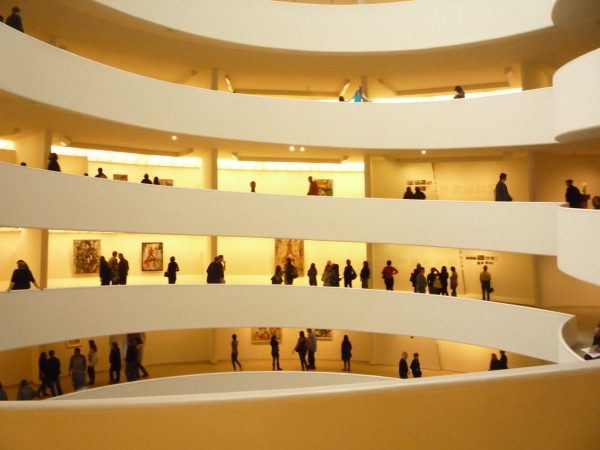
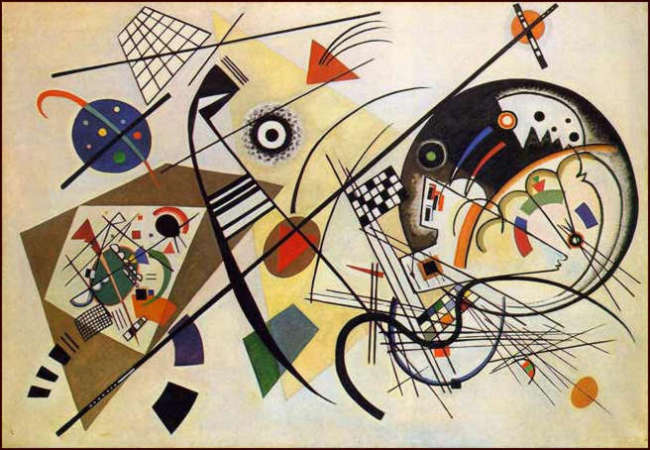
Met the pupette in NYC yesterday to take her to brunch and to take her to look at some Kandinsky at the Guggenheim. Clever of those Guggenheims to buy so many Kandinskys before he became too well-known, but you have to figger they got rich by being perceptive.
Readers know that I am a Kandinsky fan.
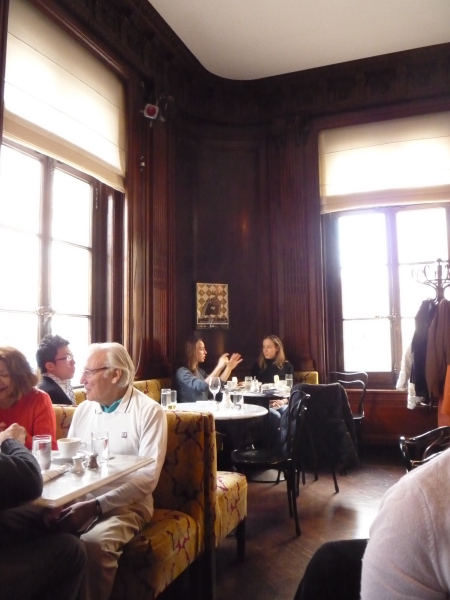
Mrs. BD wanted to get lunch first at the Viennese cafe, Cafe Sabarsky, in the Neue Gallery up the street. Having been in Vienna last summer, I can say that it sure feels like Vienna in there. Wonderful. Gallery worth visiting too.
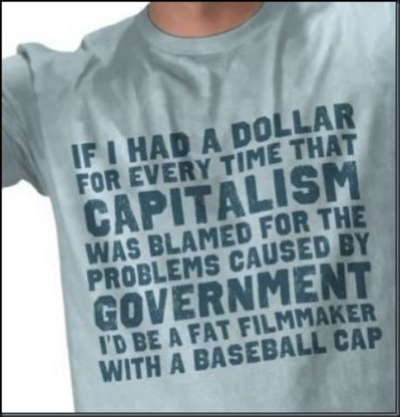
How come everybody else understands that business taxes harm consumers (who ultimately pay them) and harm job-creation? Everyone, except American Democrats. There should be no corporate taxes despite the fact that it would put a lot of tax lawyers and accountants out of work.
(BTW, I'll be in Bermuda the rest of the week. Business plus pleasure, ie golf and maybe tennis.)


 That is, of course, the title of
  Country folk call them "Fisher cats," and blame them for the decline of Ruffed Grouse populations in the Northeast (about which they are wrong. Grouse and Fishers coexisted for millennia. I blame the grouse population drops on fire suppression, habitat loss - and the dang Coyotes who would not be here had we not killed all of the wolves).
  O'Reilly and the Big McNeill (Donneil Kennedy)
 Relationships:
  Are Christians Obsessed with Gays and Abortion?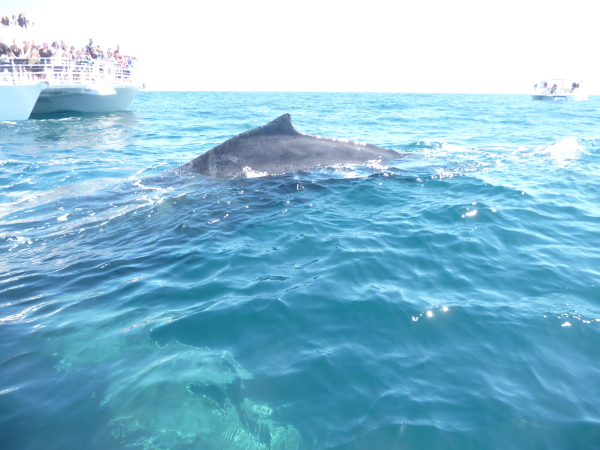
 What it's like to have
 Lawns are dumb things to have, but almost everybody has some. It's expected nowadays, but gardens and plantings are more interesting, look more natural, are more inviting to birds and other friendly critters, and offer more privacy - and shade. On the other hand, everyone needs a space for croquet and badminton.
  T-shirt via