We are a commune of inquiring, skeptical, politically centrist, capitalist, anglophile, traditionalist New England Yankee humans, humanoids, and animals with many interests beyond and above politics. Each of us has had a high-school education (or GED), but all had ADD so didn't pay attention very well, especially the dogs. Each one of us does "try my best to be just like I am," and none of us enjoys working for others, including for Maggie, from whom we receive neither a nickel nor a dime. Freedom from nags, cranks, government, do-gooders, control-freaks and idiots is all that we ask for.
My Christmas present from Mrs. BD was a winter hiking and birding trip on Barbados. I'm not a big fan of the Caribbean, but what the heck. Lots of good hiking along the 24-mile old railroad bed, and famous birding.
The author, Robert Ligon, was a gentleman, highly educated and literate but a third son so given nothing but education. After losing what little he had on a bad real estate investment in London, he headed to the Caribbean to seek his fortune. He found no fortune, but his book remains the best first-hand report of the Caribbean of the time. An elegant writer too with interest in the geology, the soils, the fish, the trees and lumber, the birds, the architecture, the cuisine, the booze (French brandy for the planters, rum for everybody else including the slaves), etc.
And in the people. The Brit planters (sugar cane, thanks to Columbus) were mostly drunken whoremongers but some were not. Ligon befriended many of the slaves. He even taught them music. Ligon was a talented lutist, and felt the slaves could benefit from learning how to make tunes instead of just their African drumming for their Sunday dance and rum parties.
He also defended their wishes to become Christian. The slaves believed that Christianity seemed to impart wisdom. This was illegal at the time: you could not have a Christian as a slave.
His writing and speech-making productivity is remarkable, but he still finds time to write scholarly books, exercise, and to run his farm. Pretty busy for a retired fellow. Admirable indeed.
Spanning nearly 200 years, Ice Ghosts is a fast-paced detective story about Western science, indigenous beliefs, and the irrepressible spirit of exploration and discovery. It weaves together an epic account of the legendary Franklin Expedition of 1845―whose two ships, the HMS Erebus and the HMS Terror, and their crew of 129 were lost to the Arctic ice―with the modern tale of the scientists, researchers, divers, and local Inuit behind the recent discoveries of the two ships, which made news around the world...
On a chilly evening in early March 1507, high in the Apennine Mountains of northern Italy, a group of cultivated gentlemen and ladies sit around the fire in the audience chamber of the Duchess of Urbino discussing the qualities of the perfect courtier.
Such is the setting of one of the most celebrated books of the Italian Renaissance, The Book of the Courtier (Il libro del cortegiano) by Baldassare Castiglione (1478-1529), which was an international best-seller for a century after its first publication in 1528. The author, a minor nobleman from Mantua, was a humanistically-educated diplomat who served at the courts of northern Italy for most of his life, ending his career in Spain as Pope Clement VII’s nuncio to the Holy Roman Emperor Charles V...
The latest Solzhenitsyn book to appear in English, March 1917, focuses on the great turning point of Russian, indeed world, history: the Russian Revolution. Just a century ago, that upheaval and the Bolshevik coup eight months later ushered in something entirely new and uniquely horrible. Totalitarianism, as invented by Lenin and developed by Hitler, Stalin, Mao, Pol Pot, and others, aspired to control every aspect of life, to redesign the earth and to remake the human soul. As a result, the environment suffered unequaled devastation and tens of millions of lives were lost in the Soviet Union alone. Solzhenitsyn, who spent the years 1945 to 1953 as a prisoner in the labor camp system known as the Gulag archipelago, devoted his life to showing just what happened so it could not be forgotten. One death is a tragedy but a million is a statistic, Stalin supposedly remarked, but Solzhenitsyn makes us envision life after ruined life. He aimed to shake the conscience of the world, and he succeeded, at least for a time.
In taking literature so seriously, Solzhenitsyn claimed the mantle of a “Russian writer,” which, as all Russians understand, means much more than a writer who happens to be Russian. It is a status less comparable to “American writer” than to “Hebrew prophet.”
We don't have a "Sports" category, but maybe we should. I normally wouldn't call out a seemingly obscure sports obituary. However, it seems worthwhile, particularly in these 'racially troubled' times (let me be clear, I don't feel we are in any troubled times, but Connie Hawkins' story goes to show just how far we've come).
I was surprised to learn Hawkins passed away. In fact, I'd forgotten about him, more or less. Not an extremely well-known NBA player after the early 70's, in his early years he had been blacklisted by the NBA because he was implicated in a point shaving scandal. The problem, of course, was he was a freshman in college, ineligible to play, and couldn't have been involved in any point shaving. During the investigation, he was denied the right to legal counsel while being interviewed by NYC police.
As a result, he was expelled from school, and the NBA blackballed him. He played for the Globetrotters, the Wizards and eventually joined the fledgling ABA and proved he was every bit as good as expected. Unfortunately toward the end of the 1968-69 season, he injured his knee and it required surgery. That same year, his suit against the NBA's blackball was settled and he received a large payment as well as having his rights assigned to the Phoenix Suns.
His first season, he again set out to prove he was a top tier player. But after 8 years of being denied the right to play professionally, many of his best years were behind him. Despite this, he averaged 24.6 points per game, 10.4 rebounds and 4.8 assists. There's little doubt that, fully healthy, Hawkins would have been a premier talent, probably even an NBA legend, if not for circumstances lining up against him.
7 years later, his career was over. He remained a regular at Phoenix poker rooms for years, where his affable nature and celebrity kept him in good company. He was honored by the NBA and inducted into the Hall of Fame because of his overall contributions to the game, in 1992. The Phoenix Suns retired his number, 42.
In the genre of sports literature, 2 books stand out to me. Ball Four and Foul! The Connie Hawkins Story. I read both in my early teens, and they taught me as much about life as they did about sports and celebrity. They are, in various ways, classics and paved the way for all the stories in that genre which followed. They broke the rules of silence surrounding sports, exposing the soft underbelly and dirt which were previously ignored because athletes were icons, and sports leagues seemingly incorruptible (despite the Black Sox Scandal, Americans had a love affair with sports leagues and even today these flawed organizations are viewed as leaders and examples for young athletes). Hawkins was a victim, as opposed to a perpetrator (unlike Jim Bouton), of bad behavior.
What may have made him most well-known, toward the end of his injury-riddled NBA career, was a sketch on the second episode of Saturday Night Live, in which he played Paul Simon in a game of one-on-one.
Here is a link to the video (there is no embed capability, unfortunately). The Paul Simon/Connie Hawkins sketch occurs about the 17:20 mark.
I was cleaning up this weekend and emptied out a backpack to find notes I'd written a year ago about topics of interest to me. While I traveled through Austria and the Czech Republic, the extended family took meals together and whenever something caught my ear, I'd write it down. One such topic was 'bog butter' - something I'd heard of, but knew little about.
The thought of it makes me wish to know as little as possible, in some ways. Yet it turns out to be an intriguing topic. We are all probably familiar with the remarkable capacity of peat to preserve just about anything. Peat has properties of preservation which are rather astounding. Apparently, old societies used peat to preserve their butter and occasionally forgot about it, lost it, or left it behind. Which means some archaeologists or bog workers are the lucky recipients of free butter. If they're willing to try it.
Its quality varies based on the kind of peat, how long it's been sitting, and what it's made of. I was told by someone who has seen some that it smells like old shoes, which may not make it the most appetizing of condiments. However, perhaps a better description is 'strong cheese'. I'm still not trying it, even if it is edible.
While these random finds are of little culinary value, they do provide insight into techniques of ancient food preparation and management. It has been noted that butter was a bit of a luxury, but was used for more than just food. It was also used to pay taxes, rents, fines and provide hospitality as well as helping out with healing. The quality of the butter would be an indicator of socio-economic status.
As for me, I'll stick with my Land O' Lakes, salted. Refrigerated, not stored in peat.
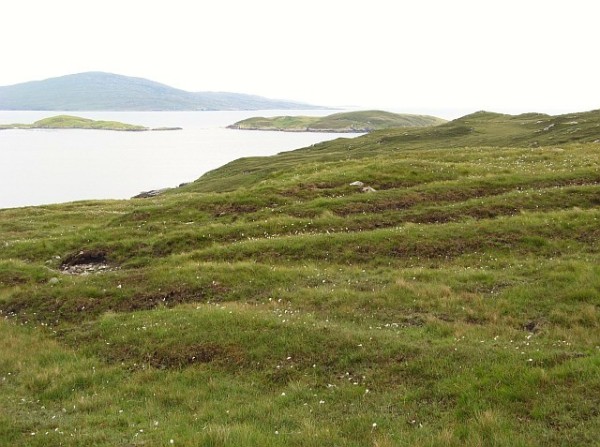
Lazybeds are the original raised-bed farming. On the Isle of Harris, where almost nobody bothers to farm or garden anymore since the Medieval Warm Period, remnants of old lazybed "farming" - more like heavy subsistence gardening - are often seen where there is enough soil to plant. There is not very much soil for planting, and peat bogs can not be gardened. However, raised beds with good drainage (always sloping how towards the sea), enhanced with seaweed as fertilizer, could grow enough peas and potatoes for a crofter (who also had some sheep and cattle). Maybe some oats or barley, but not much.
Like Ridge-and Furrow farming, Lazybeds date back at least to Roman times in the rough parts of the British Isles.
Today, on the islands, wool is the cash crop. The sheep just run wild until shearing time which is why so much of the landscape looks like a putting green. In fact, sheep originated putting greens. (The "rough" was, more likely than not, heather - which is very rough indeed.)
Below the fold, somebody in the Hebrides is still using lazybeds - and a view of what looks like a golf course with natural water hazard and sand traps
If you take a nice hike from the center of Florence across the Arno and up the hill to San Miniato (an active abbey), you will walk past and even clamber over some of the defensive walls designed by Michelangelo. The monks at San Miniato are friendly fellows, and they can sure chant the vespers.
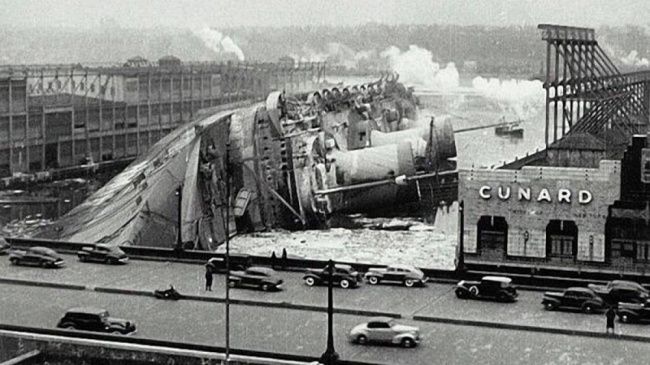
Ocean liners, aka Cruise Ships, still dock on Manhattan's remaining Hudson River piers. The Normandie was one of the great liners but not the last one as the article wrongly suggests (eg The France, QE ll, the Nieu Amsterdam, the Queen Mary, the United States, etc)
Living in the NYC area, I have plenty of wacky Progressive friends. They are really wacky these days. Of course, my Republican friends can be just as nutty, at times. It all depends on what you're discussing, though this should go without saying.
What's really crazy, though, is how one Progressive friend mentioned to me that polarization has reached "fever pitch" and the basis of her comment was the recent Congressional shooting. I shrugged and said it had been at that level for 24 years, really, and she'd simply chosen not to notice. Now that she's energized politically, it matters to her. No, no, no, she replied, that can't be it. It most certainly is.
All my Progressive friends are members of the #Resist movement. I am not a Trump supporter, but I'm not suffering from Trump Derangement Syndrome, either. He's had mixed results so far. Nothing outlandish, nothing crazy. I think he's accomplished quite a bit (both better and worse) for not passing a single piece of major legislation. His bluster and hyperbole bug me, but that's just talk and Tweets. I've seen and heard worse from regular politicians. Yet it's these words that set off the #Resist people. They go bonkers over every little thing! It's fascinating.
Judging people of the past by the moral standards of today is grotesque intellectual arrogance, what you expect from 19-year-old sophomores demanding trigger warnings. The people of the past lived in a different moral universe, just as the people of the future will.
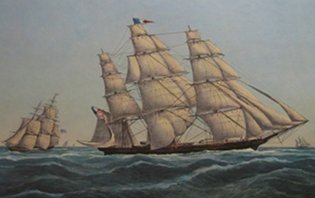


 My Christmas present from Mrs. BD was a winter hiking and birding trip on Barbados. I'm not a big fan of the Caribbean, but what the heck. Lots of good hiking along the 24-mile old railroad bed, and famous birding.
 Ice Ghosts: The Epic Hunt for the Lost Franklin Expedition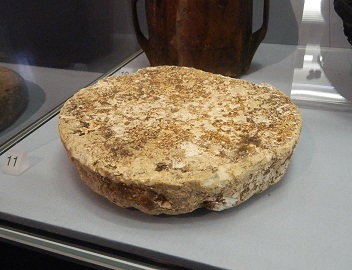
 American Houses: A Field Guide to the Architecture of the Home
  Living in the NYC area, I have plenty of wacky Progressive friends. They are really wacky these days. Of course, my Republican friends can be just as nutty, at times. It all depends on what you're discussing, though this should go without saying.