We are a commune of inquiring, skeptical, politically centrist, capitalist, anglophile, traditionalist New England Yankee humans, humanoids, and animals with many interests beyond and above politics. Each of us has had a high-school education (or GED), but all had ADD so didn't pay attention very well, especially the dogs. Each one of us does "try my best to be just like I am," and none of us enjoys working for others, including for Maggie, from whom we receive neither a nickel nor a dime. Freedom from nags, cranks, government, do-gooders, control-freaks and idiots is all that we ask for.
It seems an odd thing to think about, but I'd recently heard a comment about the world's first novel. If you'd asked me prior to hearing this comment, I'd have replied it was Beowulf or Canterbury Tales, mainly because these were items of Western Literature and it's what we read about in school. So you tend to think about what is familiar. I suppose you could also point to The Odyssey or The Iliad, though these are technically 'histories' of a sort, and are also classified (like Beowulf) as epic poems. Given this, the comment struck me as intriguing. Because not only was the first novel not from Western culture, but it also started an entire genre unto itself - the Romance Novel.
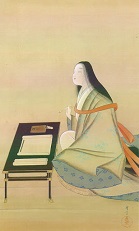
The Tale of Genji was written sometime in the 1000's, and was written by a woman, Murasaki Shikibu. This may not be her real name, as daughters' names were rarely recorded, and as a noblewoman, her name was more a title and descriptor of status. Shikibu means "Bureau of Ceremonial" - a post held by her father, and Murasaki is the name of the heroine in the novel. While reading and writing, for a woman of status, was not rare in Japanese culture, what Shibiku accomplished elevated the form, and introduced new aspects to writing as an art. She was creative, unique, and thoughtful. As such, she has been held in high esteem within Japanese culture.
Doing some reading, and musing, on this 245th year of the greatness which is our fine nation. Right now, we live in a world where we're supposed to be humble, and there are factions which would prefer to not tout American Greatness. Still others believe our best years are behind us. My view is some of our best years are behind us, but our very best is still ahead, as long as we understand where we've come from, and the principles for which we stand.
I don't believe in being humble about our national identity. No other nation has done many of the things our nation has. Our Constitution was one of the very first, and certainly the first that enshrined individual rights as primary over the predations of a government. Our Constitution started a period of constitutional revolution which spread around most of the world at that time. And while our nations' flaws are evident, we are among the few nations which air our dirty laundry, not proudly, but to learn and improve. Other nations can point to civil or human rights failings we have now, or have had in the past, but none of them have a track record better than ours improving these rights.
Recently, the term "Man of Kent" was mentioned to me. I supposed I could have responded with a limerick about his nose being terribly bent, and the fact nobody knows where he went. Of course, the limerick was about a young woman from Kent, and the term did specify Man of Kent. This term may not seem much to us here in the U.S. On the other hand, there can be an interesting delineation of culture if, in fact, you are from Kent.
After all, the difference between a Kentish Man (or Maid) and a Man (or Maid) of Kent may (or may not) be significant. It all depends on how you look at it, and whether or not you care much about the term itself. I suppose it's not unlike people being from Pittsburgh or Philadelphia. Both are from Pennsylvania, and if that's how you're looking at things, that's fine enough. On the other hand, don't think a denizen of Philly is going to relate easily to one from the Steel City. Even setting aside the rivalries in hockey and baseball (football not being played commonly enough between the cities to be of great importance), Philadelphia has a proud history. It is a birthplace of the Revolution, the Constitution, and was the nation's capital city for a brief period. This is countered by the economic power and free-spirited nature of western PA. After all, divisions from the Whiskey Rebellion still defines socio-political culture, and our transportation systems and urban landscape owe a great debt to the steel plants.
But this is about Kent, and the nature of what it means to be a Man (or Maid) of Kent.
I learned about the difference between castles and the later forts, the evolution of gunpowder use in the 1400s, the evolution and then disappearance of armor, the Hundred Year War, throwing down the gauntlet, siege warfare and assault warfare, the use of cavalry, the role of peasants and farmers in warfare, the reasons many tried to avoid being knighted, and why Henry Vlll was a great king.
And lots more about their Civil War. It was a bloody history, over all those years, for no good reasons. I suppose it has been like that everywhere. Power, money, land, glory.
Everybody has seen Seth Thomas clocks. Seth Thomas, born in 1785, brought mass production to clockmaking in the US.
The Seth Thomas company had a good run, going defunct in 2009. The factory employed so many people that the town's name was changed from Plymouth Hollow to Thomaston.
Yes, the clock in Grand Central Terminal was a Seth Thomas company product.
Bordewich's other book, The First Congress, is another page-turner and an eye-opener. For example, the so-called First Amendment was not given pride of place because it was viewed as the most important. Instead, the First Amendment, as originally drafted, failed to pass so this one was swapped in at the last minute.
I also am a member of the Thaddeus Stevens Society, which I heartily recommend. It sponsors very interesting periodic ZOOM lectures and is raising money to save Stevens' house in Lancaster, PA.
Five Points is a bit of an interest of mine. We stopped there on the second Urban Hike, I've read several books about it, and I find its history a useful guide. Knowing about Five Points allows us to see how far we've come economically, spiritually, socially and politically. It is an indication of how much we've improved our lives, in a broad, general sense. When people say "things never are getting better" I remind them of Five Points. I'll mention Dickens. I'll mention the death of a president's son due to a staph infection in the 20th century (remember, a president in 1924 was getting some of the best medical care at the time). There may be some places in the U.S which are bad, but it's hard to say they are as bad as Five Points was, even in a relative sense.
It is easy to look back over periods of our life and see some things, particular to ourselves individually, and say "things are worse" while ignoring larger trends which clearly point to overall improvements. This is one reason small sample sizes should be considered, but not used as yardsticks. Many fall in for small sample sizes to 'prove' points which are often untrue.
All that said, Five Points is a wonderful place and time to learn about. The horrors of its existence, but also the great gains and learnings which took place during and after its existence are what make the U.S. a great nation. My own ancestors, the Irish, made up a good portion of the people living there. At the time, the Irish could realistically call themselves 'discriminated against' - but life was so much better than where they came from, all they focused on was moving forward. This isn't to say any discrimination should be supported or approved. Certainly not. But there are ways to recognize life is improving and getting better while also pushing back on behaviors and opinions which are misguided and drag us all down.
Having read Tyler Anbinder's excellent book, I'll recommend this virtual book talk. As I mentioned early on, some good things have come out of lockdowns. Not many, but virtual events of this and other type have been quite wonderful.
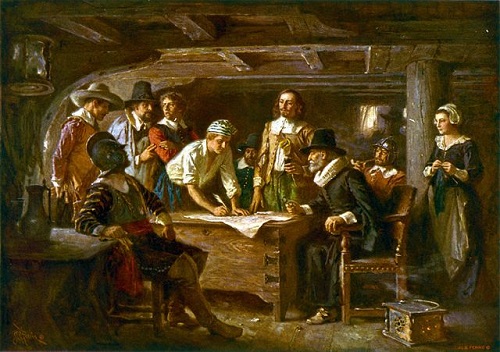
I suppose I had forgotten that only 23 of the 200 people on that boat were religious pilgrims, separatists. I had a separatist ancestor on that ship, but what does that mean? When you go back that far, how many hundreds of equal ancestors do you have?
The approach Reilly takes in defending the Founding is to demonstrate that the principles upon which it was based were the most positive and productive ideas of Western culture. The application that the Founders gave to those principles was unquestionably original, but the principles themselves were not. The Founders took full advantage of the pregnant ideas that had been bequeathed to them by a tradition whose three originating sources were the thoughts of ancient Greece, Judaism, and Christianity. His book, Reilly explains, “is not so much about the Founding itself as the provenance of its ideas,” the ideas that made the United States possible.
Webinars can be hit or miss. The New York Adventure Club, due to the obvious difficulties of getting out these days, have some on offer. I took in one on Five Points that was excellent, and there is one on July 21 about the Brooklyn Bridge that I have signed up for. $10 isn't too much, I guess, though I'd rather do tours on foot (boy I miss the Urban Hike and I hope we can pull one off in the Fall...I was thinking of focusing on movie locations this time).
If you're interested in spending an hour and learning about NYC's history, here's a great way to do it. Just click the link and see what they have to offer.


 It seems an odd thing to think about, but I'd recently heard a comment about the world's first novel. If you'd asked me prior to hearing this comment, I'd have replied it was Beowulf or Canterbury Tales, mainly because these were items of Western Literature and it's what we read about in school. So you tend to think about what is familiar. I suppose you could also point to The Odyssey or The Iliad, though these are technically 'histories' of a sort, and are also classified (like Beowulf) as epic poems. Given this, the comment struck me as intriguing. Because not only was the first novel not from Western culture, but it also started an entire genre unto itself - the Romance Novel.
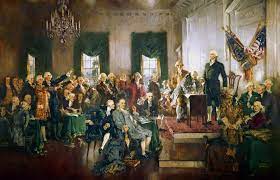 Doing some reading, and musing, on this 245th year of the greatness which is our fine nation. Right now, we live in a world where we're supposed to be humble, and there are factions which would prefer to not tout American Greatness. Still others believe our best years are behind us. My view is some of our best years are behind us, but our very best is still ahead, as long as we understand where we've come from, and the principles for which we stand.
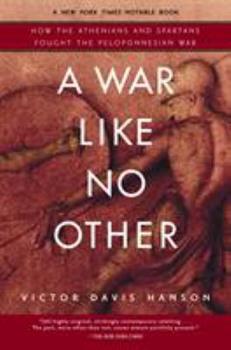 I guess we were all asked to read Thucydides (a brilliant story-teller) in high school or college, but VDH's recounting of the Peloponesian Wars is much more fun to read:
 I learned a lot from this book.
 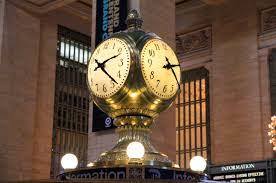 Everybody has seen Seth Thomas clocks.