We are a commune of inquiring, skeptical, politically centrist, capitalist, anglophile, traditionalist New England Yankee humans, humanoids, and animals with many interests beyond and above politics. Each of us has had a high-school education (or GED), but all had ADD so didn't pay attention very well, especially the dogs. Each one of us does "try my best to be just like I am," and none of us enjoys working for others, including for Maggie, from whom we receive neither a nickel nor a dime. Freedom from nags, cranks, government, do-gooders, control-freaks and idiots is all that we ask for.
It's true. It's not just health and medical advances, it's attitude too. Who rarely retires until incapacitated? Farmers, carpenters, surgeons and most other docs, small biz-owners, people with family businesses - you name it.Most government-employed people like cops and firemen go on to new careers, as do ex-military.Some people are quitters, and some are workers."Retirement" itself is a modern, decadent, government concept.
Well, I don't know about insenstive but it's not very good, altho fun once in a while. Really just a side dish for Margueritas and beer.Beer, of course, is insensitive to Germans so we must be careful about that too.
She doesn’t just get media coverage; she gets meta-coverage. The staging
is so obvious that actual events disappear. The story is their
symbolism — campaign as semiotics.
I wandered lonely as a cloud That floats on high o'er vales and hills, When all at once I saw a crowd, A host, of golden daffodils; Beside the lake, beneath the trees, Fluttering and dancing in the breeze.
Continuous as the stars that shine And twinkle on the milky way, They stretched in never-ending line Along the margin of a bay: Ten thousand saw I at a glance, Tossing their heads in sprightly dance.
The waves beside them danced; but they Out-did the sparkling waves in glee: A poet could not but be gay, In such a jocund company: I gazed---and gazed---but little thought What wealth the show to me had brought:
For oft, when on my couch I lie In vacant or in pensive mood, They flash upon that inward eye Which is the bliss of solitude; And then my heart with pleasure fills, And dances with the daffodils.
The left's deconstruction of social institutions is not a quest for equality, but for destruction. As long as the institutions that preceded it exist, it will go on deconstructing them until there is nothing left but a blank canvas, an unthinking anarchy, on which it can impose its perfect and ideal conception of how everyone should live.
Equality is merely a pretext for deconstruction. Change the parameters of a thing and it ceases to function. Redefine it and expand it and it no longer means anything at all. A rose by any other name might smell as sweet, but if you change 'rose' to mean anything that sticks out of the ground, then the entire notion of what is being discussed has gone and cannot be reclaimed without also reclaiming language.
Other topics there, but I can say that, without my marriage of many years, my life would be terrible. To each his or her own, though. Invent your own life if you want, and go for it! Just do not ask me to pay your bills because I have organized my life to pay my own.
I posted about it earlier. Well, it's a "boot camp" deal, 15-30 seconds rest between strenuous exercises - some whole-body, some targeted - for an hour or more, 3 days/week. The aerobics is just built into the non-stop exertion.
He made me clarify my goals, and he tracks everything. I said I wanted to avoid muscle atrophy, to increase endurance, overall fitness, agility, and physical vigor. Going from 36" to 35 belt would be fine too. So he made a plan to destroy me.
A trainer will whip you along like you would never do yourself unless you are far more self-disciplined than I am. It is quite intense because there is no recovery time - and that's the point. When he senses that I need a two- or 3-minute break, he puts me on the elliptical or the bike instead of real rest to keep the heart rate up.
Battle ropes and medicine balls? Sheesh.
Guy says that if I don't hurt all over then he has not done his job. Says that if you are not sore after exercise, you've done no good and wasted your time. Even walking with intention for 30 minutes, he says, should leave you exhausted and sweaty. Says his goal is to get me barely stumbling out to my car, covered with sweat and gasping for air, in the dark around 6:15 am. For the final 5 minutes, he stretches me out and it hurts like hell and he laughs. So far, that has been working.
He caught me checking my watch 40 minutes in this morning, and laughed. Cruel SOB.
He says that, for now, to rapidly convert fat to muscle, he wants me mainly on protein, 4 small doses of food per day. Like one hard-boiled egg for breakfast, a small bowl of plain yoghurt or a little cheese around noon, a slice of meat mid-afternoon, a few slices of meat or fish for supper. No bread or mashed taters, no beans, no pasta, no bread, no fruit except perhaps half an apple with peanut butter on the slices in the afternoon. Non-carb vegetables if I want anytime, but, like me, he thinks they are nutritionally irrelevant for anything other than pleasure or filling a stomach. Says I can take a multivit for the placebo effect. Mind you, I have no weight issue but since I pay him, I might as well follow his dietary advice for a while. Stupid not to. I am determined to be a good and gratifying customer and the notion of converting soft weight to hard weight is appealing. I'll believe it when I see it.
Next week he'll tell me what routine he will require me to do on days between and after sessions. Oh boy - can't wait. Says he just wants to keep waking up my body for a few weeks first. Sheesh. For now, he just wants me pushing the elliptical on off days to stay loose and to keep the muscles awake. The guy is a sadist. Don't most of us prefer comfortable "exercise" most of the time? He says ordinary walking is worthless unless it's just for fun - unless you are over 75.`
Man, I knew my endurance was slacking but I did not realize how badly until there was a guy with a whip (altho a gal with a whip might be more interesting). Ladies, if your hubbie is going a little soft (I mean in general, not you know) and you don't really like it, give him the present of a couple of months of boot camp so I don't feel so alone...
These guys will negotiate fees for a package deal especially during their slow hours. I go at 5 am instead of milking the cows. Some American ladies I've seen in Walmart could use this too but, around here in Yankeeland, many or most ladies do hard things to stay trim, youthful, and desirable. Admittedly, it is social class-related to some extent. However, as Murray says, social class (not $) is correlated with self-discipline and goal-orientation.
"Letting yourself go" gets just so easy, like letting a garden fill with weeds. I do not want that for myself.
... the term “sustainable” postulates fragility and scarcity that entail government planners and rationers to fend off planetary calamity while administering equity. The unvarying progressive agenda is for government to supplant markets in allocating wealth and opportunity. “Sustainability” swaddles this agenda in “science,” as progressives understand this — “settled” findings that would be grim if they did not mandate progressivism.
"In order to “reduce emissions” at Drax, more than 70,000 tons of wood will be harvested every day from forests in the US and shipped 3,000 miles across the Atlantic Ocean to Britain."
It's worth knowing, same as your height and weight.
This gives a very close idea, I'd say +/- 3 points. It is context-free so has nothing to do with education, just pure mental horsepower. Give it a try. You will either be humbled and hate yourself for being an overachiever - or hate yourself for being an underachiever. No, not really. Many will figure they had themselves pegged correctly.
Speed counts, of course. No allowances for slower thinkers or "disabilities" because it is not a test of knowledge or operations. I came out 123 which I think is about right.
I am sick of this election already. I'm a Rubio-Walker or vice-versa guy. Some days I watch it like a football game, some days I have zero interest.It's all too stupid. Of course Clintons lie.Of course the MSM hates evil Repubs.
I’m not going to paint this post with pictures or videos, but just let the words stand on their own. Today is Yom Hashoah, the day of remembrance of the millions of Jews singled out for slaughter in World War II and the heroes who fought back. Everyone says “never again”, but we all know that is a hollow pretense for almost all who say it. We have watched mass slaughters, including some specifically targeted against discrete ethnic or religious groups, and done little or nothing. As always, almost all say it’s not their business or they don’t want to get involved or similar. So, where does that really leave the Jews of Israel who are daily, openly threatened with extinction by MidEast fanatics who are gathering the means to do so, and getting closer? It leaves the Jews of Israel to do everything possible within its limited persuasion and power to protect itself. That’s the simple truth of the matter. And, the other simple truth of the matter is that the enemies of Israel have so infected this administration in Washington that it is speeding and easing the day of confrontation, in effect and in direct consequences of Washington’s weakness.
It is not surprising that some Jews in the US go along, either out of comforts or lack of ever actually feeling the wolf’s breath. There have always been such. And, although fate has not been kind to them in the past, they are an infection that is not due any excuses for their perfidy. These are simple truths. We will all face the violent outcome and consequences -- regardless of religion or national background -- either by fallout or the burning of our souls in the hell deserved for cowards. Or, we can be more forthright and outspoken and involved in doing all we can, really, to turn this administration away from utter capitulation and the prospective presidential candidates from any shadow of such policies.
I have posted about IQ in the past. It's said to be a measure of "g", which is not much different than saying IQ is a measure of IQ.
IQ and total SAT scores are well-correlated so, at the least, it says something about one's power to handle relatively, but not extremely, complex cognitive tasks like higher math, challenging reading, high-level abstractions, etc. etc. It's about cognitive potential more than anything else. In today's world, cognitive powers matter more than they used to and more than they should, I suppose.
Many psychiatrists and psychologists have learned over the years to estimate peoples' IQs quite accurately, just in conversation. Subtlety of mind, rigor of logic, and curiosity as manifested by breadth and depth of knowledge are some of the markers. Of course, there is the birds of a feather issue too: people tend to find others within a similar range most engaging.
Very high IQ is a life handicap, sad to say. There are few of those, though. Lower IQs which are fully-functional and effective in life are far more common.
Medium-range IQ is the most life-adaptive (ie 110-115) for 95% of things in life from plumbing to software sales to money management. It's often been reported that the ideal IQ for CEOs of large, intricate organizations is near or around 130. Of course, character, personality style, sense of humor, and ability to connect with others in a positive way play perhaps larger overall roles in life although they will not help you perform, or even understand, a regression analysis. Furthermore, even moderately alert managers can easily hire brighter people to carry their water and make them look good. We call that "savvy" or "street smarts," not intelligence.
...a significant percentage of people with IQs over 140 are being systematically and, most likely inappropriately, excluded from the population that addresses the biggest problems of our time or who are responsible for assuring the efficient operation of social, scientific, political and economic institutions.
Lots of awkward nerds there.
Report says schools still shortchanging gifted kids - UI research finds many high-ability children bored and unchallenged, despite increased access to programming
Most public school teachers can rarely keep up with the truly gifted
IQ and wealth are the two of the main things social justice warriors hate. They sort-of tolerate every other sort of inequality like musical talent or running speed.
Republicans know—they see it every day—that Republican candidates get grilled, sometimes impertinently, and pressed, sometimes brusquely. And it isn’t true that they’re only questioned in this way once they announce, Scott Walker has been treated like this also, and he has yet to announce. Republicans see this, and then they see that Mrs. Clinton isn’t grilled, is never forced to submit to anyone’s morning-show impertinence, is never the object of the snotty question or the sharp demand for information. She gets the glide. She waves at the crowds and the press and glides by. No one pushes. No one shouts the rude question or rolls out the carefully scripted set of studio inquiries meant to make the candidate squirm. She is treated like the queen of England, who also isn’t subjected to impertinent questions as she glides into and out of venues. But she is the queen. We are not supposed to have queens.
A current 'hot topic' among the young and ill-informed (thanks to their heavy dosage of 'news' from The Daily Show and Last Week Tonight) is the belief the IRS should get more money for enforcement.
I have a better idea. Shut it down and generate taxes via another method.
I think there are some easier ways to take money by taxing financial transactions, given the size of those markets.
But even if that isn't going to work, and income taxes remain the main method of tax taking, then funding the IRS is a terrible idea. The best way to raise revenue isn't to force people to adhere to a difficult and unworkable code that is punitive. It's to simplify that code and reduce the work. The idea of increasing enforcement is a 'jobs creation' idea that produces nothing. Let jobs be created where they add, rather than take, value - in the open market.
To do this, make the income tax low and flat. You earned $10,000? Fill out the form on the back of a postcard. Maybe you have deductions for family members living at home, but beyond that, you pay 10%. So $10,000, deduct yourself and pay $900. $250,000, deduct the wife and 3 kids and pay $24,600. Easy to file, easy to audit, easy to enforce, hard to avoid...lower staff, lower costs, higher collection rates.
It really is that easy. But again, it's just another good idea that won't pass because people are too caught up in how things have been rather than considering how they can be.



 There is a musical called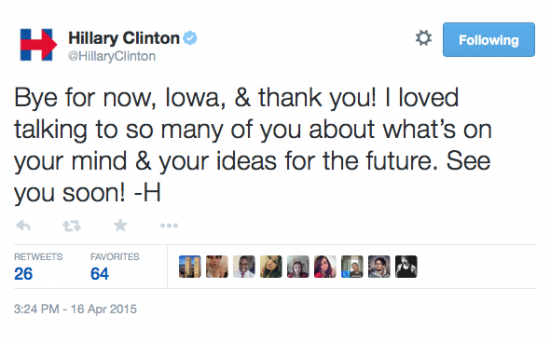
 I Wandered Lonely as a Cloud
 I
I  Pub sign seen in Manhattan
 "I am a born-free, American woman – wife, mother and citizen –
  King John was not a good man: