We are a commune of inquiring, skeptical, politically centrist, capitalist, anglophile, traditionalist New England Yankee humans, humanoids, and animals with many interests beyond and above politics. Each of us has had a high-school education (or GED), but all had ADD so didn't pay attention very well, especially the dogs. Each one of us does "try my best to be just like I am," and none of us enjoys working for others, including for Maggie, from whom we receive neither a nickel nor a dime. Freedom from nags, cranks, government, do-gooders, control-freaks and idiots is all that we ask for.
Note jar of duck fat to rub in before cooking. Plus carrots, brussel sprouts with bacon, mashed rutabaga - and Yorkshire pudding. Yum if I cook that beast right. 120 degrees F inside and 30 minutes rest.
Christmas is a traditional feast day (but it was not for true puritan folk like Dutch Reform or Congregationalists, who did not historically care for Christmas), so you are expected to cook something tasty. We have done all of the things: turkey (again), goose, roast beef, crown roast of pork with apple stuffing (real good).
On the other hand, the southern Italians do a cool thing - they do the Christmas Eve fish dinner - because it is a vigilia di magro (fasting, Italian-style).That is darn good. Fried baccala, fried calamari, scungilli, clams, mussels, maybe lobster etc etc. I love the baccala, and those little fried minnows bagiggi - smelt - with lemon that you eat whole like french fries, and clams (if they aren't cooked), but hate those cold seafood salads - dolphin food. In Sicily, the tradition is seven fishes. Serious abstinence: cook a leg of lamb, and you burn in hell for eternity.
But back to Yankee Christmas dinner, and goose.
As regular readers know, we cook our Canada geese with the breast only, marinated and sauteed rare. We confit the legs and thighs.
Store-bought goose tends much smaller (maybe in Dickens' time they had bigger farm geese - if you can find a giant Christmas goose as big as Tiny Tim, great), and has lots more fat on it. In fact, it seems about 50% fat, which oozes out during cooking and fills the pan below. If you want to cook that traditional English bird, you need a few of them. I would say, one per 3-4 people, minimum, if you are using the supermarket birds. (Some might disagree with this.) One bird will not do it, as a turkey does, because once the fat melts off, there isn't much left except bones. The plus side of all of the fat is that they are self-basting.
This is a good approach. Overcooking a goose, at low heat, is not a bad idea. For a roast goose, you may really want the meat falling off the bone, unlike a nice rare breast of wild goose. Goose is, of course, a dark meat like duck (but more coarse in flavor, I think).
Make a tasty sauce out of the drippings, once you have removed the fat. Add a little red wine, maybe a handful of huckleberries or dried cranberries and a bit of sugar, and reduce/thicken.
What to serve with goose? Mainly braised and sauteed roots. Parsnip, carrot, potato, turnip. And how about a rutabaga puree? Or a celeriac (celery root) puree? Maybe a pile of braised, sauteed baby squash, too. Cranberry sauce? You bet.
Same simple recipe, but Americans put the goo right into the pan under the roast beef shortly before it has done cooking. Better, in my view. Greasier.
Yes, Roast beef (prime rib, boneless or not) is a Christmas Day thing. I've always liked mashed rutabaga with it all, and horseradish with the roast beef.
We'll be having Christmas in olde Albion, but an early one here on the 21st. With Roast beef of course.
Turkey Hash is pretty good, and so is turkey soup (for which I am boiling a stock from one of the carcasses right now with water, onions, garlic, celery, parsley, herbs, etc - we fight over the carcasses and bones like jackals), but the main reason people in my family cook so many turkeys at Thanksgivings is for the sandwiches for a few days after.
Here's how I make them:
White bread Smear of mayo on one slice of bread Smear of cold congealed turkey gravy on the other slice Slice or two of left-over turkey, white or dark meat (I like the dark) Generous spoonful of my cranberry sauce Generous spoonful of turkey stuffing Salt and pepper
Squoosh the sides of bread together, and cut in half with a sharp knife. Then eat with a glass of beer. Delicious.
Then take a little nap.
How I make turkey stock:
Throw into a large stock pot a whole or chopped turkey carcass, leg bones, wings, etc. Not a bad idea to break the bones with a cleaver and/or to roast the carcass first so some of the bones brown. Cover with water. Take a bunch of celery, carrots, onions and garlic. Chop very roughly with skins on - do not peel - and sautee in butter or cooking oil until browned. (The skins add color and flavor) Then toss them into the pot. Add some cut-up raw potatoes, skins on. Throw in some salt, whole peppercorns. Then parsley, thyme, a little sage and marjoram. A little sugar. A bottle of white wine in there is optional. Simmer for 5-8 hours, adding water as needed. Then strain. That's a tasty turkey stock. It's man-cooking.
For pottage and puddings and custards and pies Our pumpkins and parsnips are common supplies, We have pumpkins at morning and pumpkins at noon, If it were not for pumpkins we should be undoon."
Pilgrim verse, circa 1633
Pumpkins are just one variety of winter squash. Winter Squash have the virtues of being harvested in the fall, and easily storable for keeping through the winter in a root cellar as long as they do not freeze. All winter squash (Butternut, Acorn, etc) taste pretty similar and are more or less interchangeable in recipes.
Winter Squash, along with string beans, maize (which we call "corn" in the US, and many other foods like peppers, tomatoes, and potatoes) were first genetically modified for agriculture by American Indians.
Eastern Indians had large fields in which they grew winter squash, maize, and beans (which climbed up the corn stalks) together. In fact, one of the reasons the Pilgrims decided to stay in Plymouth was for the 50-acre and 100-acre planting fields that the Indians (recently dead probably from European diseases brought in by explorers and fishermen) had prepared there.
The Pumpkin of the Americas quickly became a popular crop in many parts of the world. Our Philippino nanny rarely made a Phillipino stew without pumpkin chunks in it. (Loved that Oxtail stew with peanut sauce, potato, and pumpkin, or her winter squash and string bean stew with coconut milk plus some shrimp or chicken chunks.) And people who have read Alexander McCall Smith's series, The No. 1 Ladies' Detective Agency, know how popular pumpkin became in the African diet. As for Pumpkin pasta recipes, there are tons of them.
Mashed pumpkin with salt, pepper and butter is great. Same with steamed pumpkin chunks. A little chopped fresh Sage is good with them. Never boil winter squash. Steam or roast, or it will get too soggy.
As for the olde standbys, Pumpkin Pie and Pumpkin Soup, those are OK too but the spices tend to obscure the subtle flavors of the winter squashes used. (Re Pumpkin Pie, the Maggie's Farm advice is to go very light on the sugar, and serve with a spoonful of whipped cream, then drizzled with 100% Maple Syrup.)
I had one bottle of expensive Graves (one bottle for two dinners) in France last month. Very nice but I thought the Bergerac reds were just fine at 10th the price.
They are not vin ordinaire, but definitely a cut above. Anyway, I ordered some for Thanksgiving.
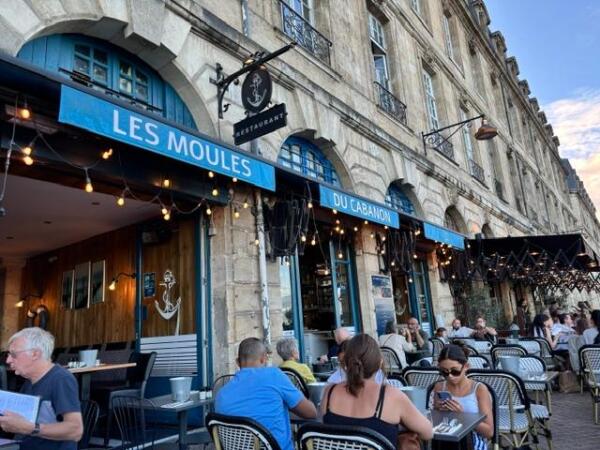
Nice antique village, probably touristy in season but not in October. Eating places in France do not serve before 7 or 730. Kinda late for Americans.
Supper at a brasserie, not a fancy place, in Sarlat, officially Sarlat-la-Caneda. That's 3 hunks of sateed foie gras on the right, a pile of sliced taters roasted in duck fat. The bread in Perigord Noir tends to be walnut bread.
The basic French sandwich is a baguette sliced horizontally with a thin spread of Dijon mustard on one half, butter on the other half, with a slice or two of ham and thin slices of gruyere cheese.
That's fine if you're hungry, but an open-faced grilled version in a cafe is better. I had two of these in the past 10 days. Delicious lunch.
Here's how to make it: Grill an American white bread in a pan with plenty of butter, on one side only. Put a small layer of ham, then top with a generous layer of cheese. Many choices of cheese to use. Then put under a broiler until the top turns brown.
That's it. Here's one I had last week:
If you want to go more complicated, there is the famous Croque Monsieur
For a little bit longer. I love corn on cob and I've never minded peeling it, but there are two ways of cooking it with easier peeling afterwards. I prefer grilling it in the husk.
This small mountain of sliced foie gras, drizzled with a port wine reduction, was an appetizer but all I needed for a meal. They suggested a white port (white port is good) with it, so I did. Amazing supper in Porto while listening to buskers on the main drag.
Mrs. BD had something else, can't recall what that was.
I posted one of my pics of the picturesque Douro Valley yesterday. Except for the steepest parts, it's all vineyards.
The Douro Valley has produced plenty of table wines since Roman times, but is most famous for its Port Wines.
The table wine vines are irrigated, but the vines destined for Port are not.
Port Wines are a 17th Century invention, traditionally transported (mostly by Brits) from the town of Porto at the mouth of the Douro - hence Port.
I've never been much of a Port drinker, but I had a bit in Portugal. Whites and Tawnies. Nice. Unlike table wines, I can't tell much difference between expensive and cheaper Ports but connoisseurs can.
Far too late today to begin making the Classic Italian-American Sunday dinner ("feast"). In the old days - like when my wife was a kid - all the sibs and aunts and uncles assembled at 2 pm after Mass for the feast.
How the assigned Nonna had time to make all of this, and get to church, I dunno.
Lots of families had one priest in the family, who of course would come. Or invite the parish priest.
In those days, relatives lived nearby. It was a support system and a help. Not so much these days.
I have no Italian heritage, and I did not really enjoy that food. Ziti with "gravy"? However, it was a getting-together tradition like a weekly Thanksgiving. Mrs. BD told me that, as a kid, her Nonna always made Lasagna as a first course at Thanksgiving. Tradition.
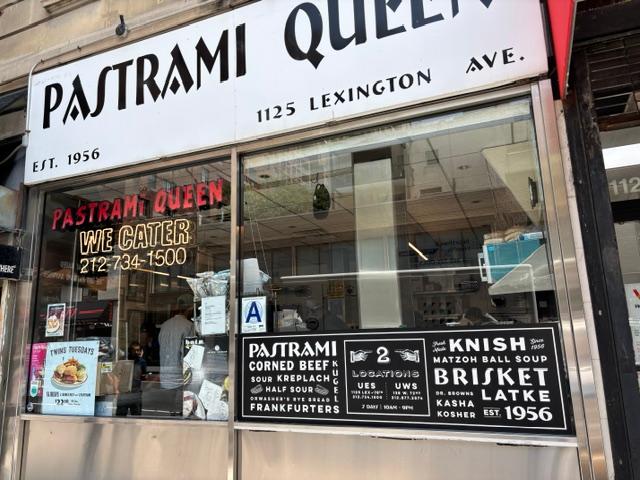
It's a little silly to bring in falafel, but we were in NYC this morning for a family church event. (Ask me what Protestant churches have become these days - sheesh. Not mainline churches. Packed with all ages and races and loving Jesus. As one of my daughters said "Were kinda spiritual here") Across the street from our parking garage was Moshe's Falafel. Despite having neither Italian or Jewish heritage, I'm sure Moise's falafel was better than that in Egypt. As I always say, a NY falafel in a pita with a little lettuce and tomato with a drenching of tahini is darn good.
Meat loaf and mashed taters, and maybe some steamed summer squash on the side. Meat loaf needs gravy or its juices, on top.
At the Maggie's HQ, we make meat loaf the Italian way:Italian Meat Loaf Recipe. Italian-style meat loaf usually has a dash of nutmeg and/or allspice in the recipe, but that particular one does not. I do not think they make this in Italy. Maybe it's a modified meat-ball recipe, but they don't eat meatballs in Italy either. (Nor do Swedes cook Swedish Meatballs.)
Best thing about meat loaf? Meat loaf sandwiches the next day or two. White bread only, plenty of mayo.