Tuesday, August 7. 2007
I noticed the similarity between Gen. Pacepa's examples of KGB psy-ops and John Kerry's testimony in Congress. So did Sissy Willis, but Gateway shows the real deal. Gateway calls it "useful idiocy," but I think otherwise. "Useful," but not an idiot: I am not saying he was a spy, but perhaps a willing ally of the Soviets, and one who had clearly been handed a KGB script designed to undermine support for the war. I agree with Sen. Kerry about almost nothing political, but he isn't an idiot. Kerry was reading from the KGB propaganda script, word for word. So am I insane when I sometimes wonder what Bill Clinton was doing on that trip to Moscow (also here) while be was at Oxford? Yes, probably paranoid, but if I had told you a week ago that Kerry was reading a KGB script when he testified to Congress, you would have (rightly) called me crazy too. There are Americans out there who truly hate America enough to ally themselves with America's enemies. That sad and unsettling fact opens the door to all sorts of suspicious thoughts which are unpleasant to entertain. That is what happens when one's reality is shaken. I thought Kerry was disloyal, but not a man who would read a KGB script in Congress.
Monday, August 6. 2007
 It is my honor today to announce the MFBA winners for the blogs with the most interesting images and photography. Our editor and staff have voted unanimously this year. It is my honor today to announce the MFBA winners for the blogs with the most interesting images and photography. Our editor and staff have voted unanimously this year.
Best Totty on a Non-Porn Blog: Theo Spark Best Historic Photographs of Real Life: Sippican Cottage Best Old Photos, General Category: Dr. X Best Images of British Military History: Free Market Fair Tales Congratulations to our winners, who we expect will wear their readily-recognizable MFBA medal proudly if and when they ever leave the house.
Sunday, August 5. 2007
 A summer message to the congregation from The Rev. Charles Hoffman, rector of Grace Episcopal Church, Old Saybrook, CT: A summer message to the congregation from The Rev. Charles Hoffman, rector of Grace Episcopal Church, Old Saybrook, CT:
Fundamentalism is not a four letter word. Dear Friends in Christ: The present controversy in the Episcopal Church and the Anglican Community is primarily over the issue of the authority of scripture and our interpretation of it. Those who hold to a devotion to the Bible as the Word of God are called many names from “conservatives” to “fundamentalists,” as if these are derogatory terms. I have come to believe that being faithful to the fundamentals of the Christian faith contained in the Apostles and Nicean Creeds and in the 39 Articles of the Church is essential to the preservation of the core doctrines of the Christian Church. Much of orthodox Christianity depends on the way we understand God’s written word to us. When I was ordained a priest in the Episcopal Church in 1969, the Bishop of Chicago asked me the following questions from the Book of Common Prayer (1928): “Are you persuaded that the Holy Scriptures contain all doctrine required as necessary for eternal salvation through faith in Jesus Christ?” “And are you determined out of said Scriptures to instruct the people committed to your charge; and to teach nothing, as necessary to eternal salvation but that which you shall be persuaded may be concluded and proved by the Scripture?” To which I replied: “I am so persuaded and have so determined, by God’s Grace.” (1928 BCP p. 542) By this oath I promised to uphold the authority of Scripture in my life, my ministry, and in the church I was called to serve. When I came into the fullness of faith through a personal relationship with Jesus Christ, and was born again and baptized in the Holy Spirit, I personally accepted the Bible as the Word of God to be the rule of my life. As I began to preach more faithfully from the Bible and to call people to new life in Jesus Christ, I was accused of sounding like Billy Graham, as if that would not be a great honor, and I was often called a fundamentalist. When asked the question of whether I took the Bible literally, I often responded by saying, “I take the Bible literally where it is meant to be taken literally. I take the Bible figuratively where it is meant to be taken figuratively. But I always try to take the Bible seriously.” So what does it mean to be called a fundamentalist? Fundamentalist Christianity or Christian Fundamentalism is a movement that arose mainly within British and American Protestantism in the late 19th and early 20th centuries by evangelical Christians, who in a reaction to modernism actively affirmed a fundamental set of Christian beliefs: the inerrancy of the Bible (Sola Scriptura), the virgin birth of Christ, the doctrine of substitutionary atonement, the bodily resurrection of Jesus, and the imminent return of Jesus Christ. While there was no single founder of of fundamentalism, many ideas and themes had been suggested by American evangelist Dwight L. Moody (1837-1899) and British preacher John Nelson Darby (1800-1882). The original formulation of American fundamentalist beliefs can be traced to the Niagara Bible Conference (1878-1897) and in 1910 to the General Assembly of the Presbyterian Church, which distilled these into what became known as the “five fundamentals:” 1. The inerrancy of Scripture
2. The virgin birth and deity of Jesus
3. The doctrine of substitutionary atonement through God’s grace and human faith
4. The bodily resurrection of Jesus
5. The authenticity of Christ’s miracles (or alternatively, his pre-millenial second coming)
(From Wikipedia, the free encyclopedia) But consider these questions: Are these five fundamentals not the core of the Christian faith and life as contained in the Creed and traditions of the church? Are they not held as the teaching of the Episcopal Church and the Anglican Communion as reflected in the teaching and praying of the Book of Common Prayer? Are they not what the church has believed throughout its history? So why should we be ashamed of being called a fundamentalist? Perhaps if the Episcopal Church returned to these fundamentals of doctrine, we would find our way back into the fullness of the Christian faith and heal the many divisions in the church. So the next time someone calls you a fundamentalist, respond by saying: “Yes, and which of these fundamentals do you reject?” In Christ,The Rev. Charles L. Hoffman, D. Min.
Rector
Thursday, August 2. 2007
 "That's my story and I'm sticking to it." Bill Clinton "That's my story and I'm sticking to it." Bill Clinton
The Cognitive Psychological concept of "Confirmation Bias" falls under the broader scope of my Fallacy and Logic portfolio here at Maggie's Farm. Furthermore, it fits well into one of the main themes of Maggie's, which is to detect the insidious and fact-defying "narratives" by which we busy citizens are presented information by politicians and news organizations. I have no doubt that we are sometimes guilty of both Confirmation Bias and Selection Bias at times - but we try to be aware of it, just as we try to be aware of the flaws of inductive reasoning. "One swallow does not make a summer", we try to remind ourselves. On the other hand, much of common sense consists of inductive "reasoning" wherein we happily greet the first swallow of summer. This comes up today because our editor emailed me a short piece by Protein Wisdom comparing a Michael Yon Iraq report with a WaPo report. Of course, I tend to go with the Yon because he is on the ground and has no axe to grind, while I know full well that the WaPo, like the NYT, is fighting a propaganda battle and weeding out the news that will interfere with their narrative du jour. Real life is too complex and messy for neat narratives and clean stories. That's why we love them so much. And that is why politicians and the MSM and trial lawyers, and anyone with an agenda, try to feed simple fairy tales to us. One thing I often find myself wondering about these common biases is to what extent they are conscious manipulations, and to what extent they are automatic. With politicians, of course, one can assume that they are calculated manipulations most of the time, because those folks need the job and they need the attention. On the other hand, I know plenty of people who just don't take in information that would conflict with their narrative about something (selection bias), and only permit into their brains information which seems to be consistent with the narrative they have adopted (confirmation bias). I have been guilty of that plenty of times, but I am more aware of it now when I am tempted. We humans would be more rational beings if we dumped all of the fairy tales and worried about facts. Alas, "facts" can be subject to the same biases, as every scientist and attorney knows all too well. Still, "Facts are stubborn things." - Ronald Reagan
Monday, July 30. 2007
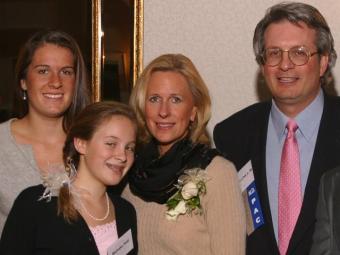 We posted a piece this week on the terrible recent home invasion in Connecticut, about 20 minutes from where I live. By coincidence, this was the same week I was taking my required Concealed Carry course down in Bridgeport (which was excellent, and good fun blasting away at targets with 9mm Glocks and H&Ks, plus some .22 revolvers). We posted a piece this week on the terrible recent home invasion in Connecticut, about 20 minutes from where I live. By coincidence, this was the same week I was taking my required Concealed Carry course down in Bridgeport (which was excellent, and good fun blasting away at targets with 9mm Glocks and H&Ks, plus some .22 revolvers).
One could not help but wonder what good protection might be from home invasion. In the reported story, the good doctor was downstairs, and knocked out by the invaders with a baseball bat immediately, then tied up and carried to the basement. No handgun in the bedside table would have been of any use. As home invasion becomes more common, I wonder what good protection might be, unless you carry 24 hrs/day, as many do. I had a good chat, during a break in the course, with a husky young black kid with a du-rag, silver earrings, and pants half-falling off - nicest kid in the world - who wants to be a bank guard. He told me that he was dozing in front of the TV when he was awakened by an intruder, while the rest of his family was upstairs. The intruder was a bit frightened, and this kid told him to leave in 3 seconds. The minute the guy turned, the kid slammed him in the back of the head with an aluminum baseball bat that was lying around. The kid had been at softball that afternoon, and never put his bat away. The one swing knocked the guy out. He called the cops who cuffed the skull-fractured intruder and took him away in an ambulance. He said the cops came back one more time to ask more questions, and told him "You done good, kid." He never heard any more about it. I told him to forget being a bank guard - go into the Army. He told me his Dad was a jarhead, and his granddad was in the Army. I told him he had an innate tactical sense. The way my life is, I do not have enough contact with du-rag kids. (I told my wife the story, and told her that the kid looked scary until I chatted with him. She said "It's just fashion: he wants to look scary, and you want to look dorky.") A man's home is his castle. My friend and I concluded that a short-barreled pump 12 ga., like a trench gun, might the the best tool - assuming it's handy. It is tough for an amateur to hit anything moving with a handgun, unless it's ten feet away. 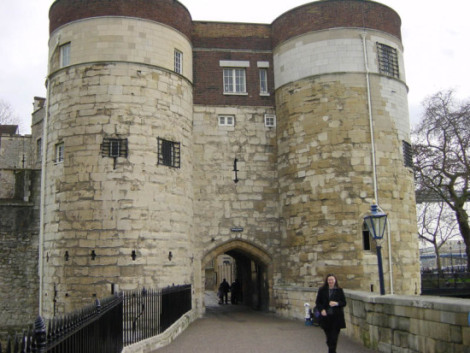
Photo on top: The Petit family of Cheshire, CT, the victims of the home invasion/rape/murder. Photo below, The entrance to The Tower, of course.
Sunday, July 29. 2007
Penfield Reef, a long-time hazard to ships and boats, extends south from the Fairfield (CT) beach one mile into Long Island Sound. It is covered at high tide, but exposed otherwise as a broad ridge of sand, now reinforced with large riprap in parts so you can walk out - but not without slipping on slabs of rockweed. Here's a photo of Jennings Beach, the wide and excellent town beach of Fairfield: 
During the Revolution the Brits landed on this beach, marched a mile into town, and burned a few houses and the Congregational Church. I don't think they killed anybody. I knew a girl whose family showed the burn marks on the inside of their house. After the Brits began to march back to their boats, the owners quickly returned and put the fire out. Many moons ago, an awkward, dorky, bookish young Bird Dog was rejected by a number of young fillies on that beach in the sunshine, and made out with one or two others on that beach in the dark. That photo brought back memories... And I shot my first duck from Penfield Reef, just a few hundred yards away. In the good old days, the hunters would huddle on the reef with their Labs and get wonderful passing shots at the Bluebills buzzing around. I don't know whether they even allow it anymore, but a mile-long reef could accommodate quite a few duck hunters comfortably and happily. On the southernmost tip of the reef sits Penfield Light, a handsome 1880s structure which was manned by a lighthouse keeper until 1970. The light is automated now. The place is well-known for being inhabited by a ghost. Here's Penfield Light at high tide: 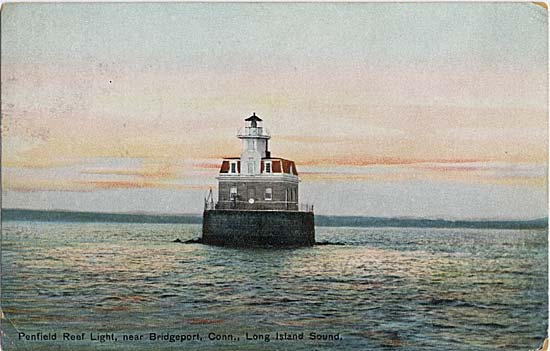
The subject of Penfield Light comes up because the Coast Guard, which is responsible for navigation aids, has decided that they don't need to own it, and are putting it up for sale. It would be a fine dwelling for a non-social blogger who wants to get away from it all, and who wants to shoot their supper every day in the winter from the front porch, and to catch their fish dinner the rest of the year from their back porch. Moonbattery noted that PETA is considering buying it, and using it as a place to study the souls of fish, or something equally PETA-ish. I would like to warn them off. In a good storm, spray and crashing wave tips reach the level of the roof. I doubt that PETA types would be comfortable with that much raw nature... not to mention the cormorant shit everywhere.
Friday, July 27. 2007
 The terrible story of the home invasion-murder-rape in a peaceful, leafy Connecticut suburb this week reinforces the necessity to have an armed home, as Never Yet Melted notes. The terrible story of the home invasion-murder-rape in a peaceful, leafy Connecticut suburb this week reinforces the necessity to have an armed home, as Never Yet Melted notes.
The right to self-defence is the most basic human right. It matters not to me that such crimes are rare. Lightning strikes on houses are rare, but where they are possible, we have lightning rods. We have them on the house and on the barn. It's a reasonable, cheap precaution against a low-likelihood but catastrophic event. Like fire insurance. More thoughts: I have been thinking about this doctor for days, since the Dylanologist emailed the story to me. How does he feel? I cannot imagine losing a whole family - his life - in that way, or in any other way. Does he regret that he could not protect his family - or that he could not die trying? Surviving something like this must be a world of pain. Our longer essay on the topic of the CT invasion, and home defence, here.
Thursday, July 26. 2007
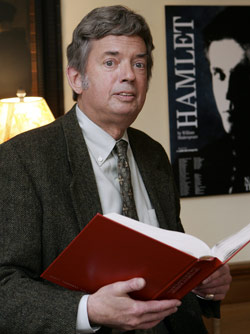 I do not recommend that anyone waste any time on Shakespeare's plays without listening to Prof. (and Shakespearean actor) Peter Saccio talk about them first. I do not recommend that anyone waste any time on Shakespeare's plays without listening to Prof. (and Shakespearean actor) Peter Saccio talk about them first.
For us, it has been like being half-blind, and finally getting the right glasses. Prof. Saccio's retirement from Dartmouth is a huge loss for the College, but anyone can listen to his course via the Teaching Company's recordings. A bit expensive, but if your library doesn't have them, ask them to buy them. Listening - and re-listening - to Saccio is a pure delight. A quote from the piece in Dartmouth Life: On the day of the lecture, Saccio begins almost dispassionately. "The death of Falstaff," he says, "is a short passage, in prose, related by simple characters leading common lives." And then he begins to act the parts of those characters, explaining between lines how Shakespeare employs biblical allusion, Elizabethan thought and culture, word play and stage direction. He describes how Falstaff, near death, plays with his bedclothes and examines his fingertips, noting that contemporary doctors tell him that what Shakespeare portrayed four centuries ago is grounded in the physical reality of death. The room becomes electric. Saccio continues, "For Falstaff, in his final moments the world is getting smaller and smaller. He is 'focusing down'—as dying people do." He points out a reference to the 23rd Psalm towards the end of the scene and begins, "The Lord is my shepherd; I shall not want..." and the classroom becomes utterly silent, spellbound. Breaking the silence, Saccio concludes, "I've been trying to enter into Shakespeare's imagination. He imagined a scene that was peaceful, hopeful, bawdy, silly, childish, drunken, lecherous and terrifying—terrifying both physically and spiritually. All at once, in only 40 lines. I put my cards on the table," he concludes. "The man could write."
Photo: Leon D. Black Professor of Shakespearean Studies Peter Saccio
Wednesday, July 25. 2007
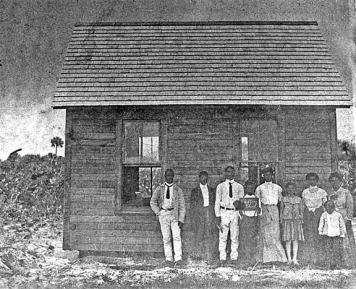 The rise of a black underclass in America since the 60s has been troubling, and puzzling, to me for years. Wasted lives, wasted opportunities, wasted talents. It's been around for so long that many seem to forget that it did not exist before or during the war - or even in the 50s. The rise of a black underclass in America since the 60s has been troubling, and puzzling, to me for years. Wasted lives, wasted opportunities, wasted talents. It's been around for so long that many seem to forget that it did not exist before or during the war - or even in the 50s.
From before the Civil War, and since then, many people of all colors worked and died to bring the full freedoms of citizenship to black Americans. The emergence of a self-destructive underclass in the wake of all of that work is heartbreaking. From In the Heart of Freedom, from Myron Magnet in City Journal, a quote: Two April days threw a clarifying light on the state of race in America. On the 11th, North Carolina’s attorney general exonerated three white Duke students of the rape charges that a black stripper had lodged with much press fanfare a year earlier. The next day, CBS fired shock jock Don Imus for calling black Rutgers women’s basketball players “nappy-headed hos.” Between them, these events suggest an explanation for America’s most vexed social question: in a country whose chief domestic imperative for 50 years has been ending racism and righting long-standing wrongs against blacks—with such success that we now have an expanding black middle class, a black secretary of state, black CEOs of three top corporations, a black Supreme Court justice, and a serious black presidential candidate—how can there still exist a large black urban underclass imprisoned in poverty, welfare dependency, school failure, nonwork, and crime? How even today can more black young men be entangled in the criminal-justice system than graduate from college? How can close to 70 percent of black children be born into single-mother families, which (almost all experts agree) prepare kids for success less well than two-parent families? The legacy of slavery and racism isn’t the reason, economist Thomas Sowell has long argued. That legacy didn’t stop blacks from raising themselves up after Emancipation. By World War I, Sowell’s data show, northern blacks scored higher on armed-forces tests than southern whites. After World War II and the GI Bill, black education and income levels rose sharply. It was only in the mid-1960s that a century of black progress seemed to make a sudden U-turn, a reversal that long-past events didn’t cause. Beginning around 1964, the rates of black high school graduation, workforce participation, crime, illegitimacy, and drug use all turned sharply in the wrong direction. While many blacks continued to move forward, a sizable minority solidified into an underclass, defined by self-destructive behavior that all but guaranteed failure. What was going on in the mid-sixties that could explain such a startling development? Political scientist Charles Murray gave the first answer to that question: welfare benefits sharply rose just at that moment. Offering more purchasing power than a minimum-wage job, the dole, he argued, provided an economic incentive for women to have out-of-wedlock babies and for their boyfriends to live off their welfare payments, too.
Is a sub-culture of dependency the issue? I don't know. Read the whole thing. Photo: The Clifton School on Merritt Island, Florida, 1890
Monday, July 23. 2007
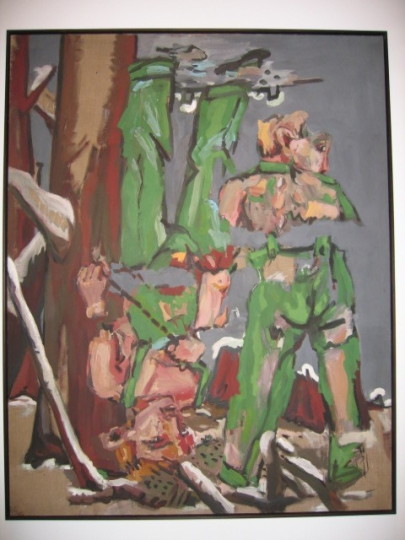 Made it to the MOMA "What is painting?" show yesterday. Their new building is excellent. As usual, the place was packed. Made it to the MOMA "What is painting?" show yesterday. Their new building is excellent. As usual, the place was packed.
Do I love Modern Art? I dunno - I just like to look at stuff and to think about it. I learned that "painting" is anything man-made (or man-altered), based on a flat surface which engages the eye when you stand and look at it. I could have thought of that, but it seems overly-broad: would not that definition apply to a Men's Room sign, when one is in need of one? Anyway, it's a very eclectic show, with the predictable and silly all-white canvas which makes you wish you had a magic marker in your pocket. I liked this very large piece by George Baselitz, "Woodsmen."
Friday, July 20. 2007
Regular readers know that Maggie's Farm has a strong conservationist orientation, but if anyone tries to call us Greenies we will shoot you in both kneecaps with our Colt Python. I know some readers are inclined to disagree with us about this, but we do believe in certain sorts of planning, and even certain sorts of government "taking," Kelo notwithstanding. 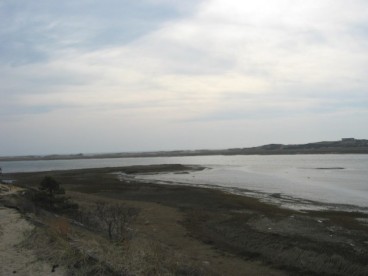 For two examples we like, JFK's Cape Cod National Seashore took the development rights to broad swaths of the Lower Cape (which is the upper Cape). This action not only preserved the feel and aesthetics of the Cape but preserved the unusual Cape environment - and ultimately raised land values through the roof. Without the National Seashore, there would no longer be anywhere on the Cape to hunt, the salt marshes would be filled in, and the place would look like the worst parts of the Jersey Shore. (Photo is a view of Wellfleet's Chequessett Neck). For two examples we like, JFK's Cape Cod National Seashore took the development rights to broad swaths of the Lower Cape (which is the upper Cape). This action not only preserved the feel and aesthetics of the Cape but preserved the unusual Cape environment - and ultimately raised land values through the roof. Without the National Seashore, there would no longer be anywhere on the Cape to hunt, the salt marshes would be filled in, and the place would look like the worst parts of the Jersey Shore. (Photo is a view of Wellfleet's Chequessett Neck).
Another example we like is Britain's Town and Country Planning Act of 1947. Without that act of Parliament, Britain would not be a tourist destination: it would look like Indianapolis. It protected the towns, and it protected their farmlands and open spaces. Yes, it essentially confiscated development rights - with the voters' approval. (Photo below: A view of English countryside, just outside of town.) 
So, while our pure Libertarian readers grouse and grumble, let's get to the point. The good Prof. Pat Deneen recently hosted Roger Scruton at Georgetown, which speech is now Scruton's most recent published essay, A Righter Shade of Green, in The American Conservative. Scruton isn't so much in favor of government taking - he is in favor of a local sense of trusteeship. That's the right idea, but I haven't seen it work in practice too often: local politics are not the highest form of human civic evolution or future-orientation. As Prof Deneen notes, and as we have frequently noted here, poor stewardship of our precious land in the US is made possible by the "externalization of costs" to other people and to future generations. Example: highways. Example: development of good farmland for 1/2 acre zoning. Read Pat Deneen's piece here. He quotes Scruton's conclusion: What then is the conservative solution, if there is one? A revival of trusteeship is the only hope for the future, and this attitude is natural to human beings. They enter the world through no choice of their own, to be greeted, as a rule, by the love of parents and the security of home. The trustee is the one who recognizes that his home, and all that it means, are inherited things, things to be safeguarded and passed on. This attitude exercises itself at the local level in the voluntary associations and small institutions of civil society. It is the core component in that associational genius that Tocqueville discerned in the American people. It is the legacy of a political order that regards people, not rulers, as the source of authority and the fount of responsible decision-making.
Environmental movements on the Left seldom pause to consider the question of human motivation. It is so clear to them that something must be done that they leap to the conclusion that it must be done by state power and imposed by law. The problem with that approach is that it makes mistakes into permanent legacies and provides no incentive to ordinary citizens to do what they are told. Conservatives, on the whole, are more respectful of human nature and will recognize in the attitude of trusteeship a feeling to which we automatically tend, when given the freedom to exercise it.
Read Scruton's whole essay at American Conservative.
Our Editor sent out an email suggesting that we not avoid the subject of food. "Our readers like food," he said simply, "so when you have a food thought, feel free to post it if you have the time." 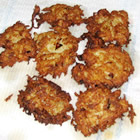 As a Christian Yankee lad, I was not raised on potato latkes, but they have become one of my favorite eats, and they are easy to make. You can eat them for breakfast or lunch or snack, and especially with pork for dinner. I like them with sour cream on top, or applesauce. As a Christian Yankee lad, I was not raised on potato latkes, but they have become one of my favorite eats, and they are easy to make. You can eat them for breakfast or lunch or snack, and especially with pork for dinner. I like them with sour cream on top, or applesauce.
I make them like this: - Shred three or four large potatoes in the Cuisinart, then squeeze them in a towel to dry them a bit
- Shred one or two onions in the Cuisinart, and squeeze them too.
- Mix above in a bowl with one stirred egg, some salt, and a couple of tablespoons of flour - just enough to hold them together.
- make irregular patties out of them, and fry them like pancakes. Oil better than butter.
Thursday, July 19. 2007
I don't know whether The Barrister actually wants to carry, or to keep a gun in his glove compartment - or whether he simply wants the permit because it is his right to do so. I asked a friend for advice for The B.  Dear Barrister, Dear Barrister,
If you do intend to carry after you get your CCP, the most important issues are physical comfort, comfort with the use of the handgun, and stopping power. To carry a gun which is not second nature to use could get you into more trouble than you want. There is no "right" pistol to carry. Try lots of them, over time, at the range, and find what suits you best - and what fits under your jackets without scaring the neighbors! Here is a good introductory article on the subject. Pictured is the revolver I carry, when I do carry, which is not all of the time. Colt Python, now out of production. It's a .357 magnum, and I have the 4" barrel. Fortunately for the bad guys, I have never needed to fire it outside of the range, and I hope I never will. Have fun. JBH One of our readers prefers the Springfield Armory's XD. I wonder what other handguns our readers like to carry.
 To what extent should "public goods" be subsidized? What are the limits? To what extent should "public goods" be subsidized? What are the limits?
Transportation is taxpayer-subsidized or government-run in the US. Airports, roads and highways, and mass transit, for starters. All of these things were once entirely private ventures. In the Boston to DC corridor, Amtrak is a wonderful thing and it is heavily used. It's quicker and cheaper than driving and parking, and it takes you from downtown to downtown instead of to a distant airport. Whether Amtrak is overly-subsidized is another question, which I cannot answer. However, I would ask these folks who are mooning Amtrak in Calif. whether they would like their California interstates taken away. The NY Sun a while ago was not too keen on Amtrak subsidies, but when they discuss the far-cheaper cost of busses, they ignore the fact that the highways they use are government-built and maintained. Photo: A high-speed Acela engine
Tuesday, July 17. 2007
 Bird Dog has already commented on the Left's upside-down understanding of economics in which it is assumed that the rich gain their wealth only through taking from others. While this "zero-sum" fallacy usually arises in the context of domestic issues, enterprising Leftists have employed it in an international context as well: see, for example, any of Bono's or Bob Geldof's commentary on Africa, or the lovable George Galloway, who recently remarked that India's economy is growing so rapidly only because it is making up ground that it was "not allowed to occupy" during colonialism. Bird Dog has already commented on the Left's upside-down understanding of economics in which it is assumed that the rich gain their wealth only through taking from others. While this "zero-sum" fallacy usually arises in the context of domestic issues, enterprising Leftists have employed it in an international context as well: see, for example, any of Bono's or Bob Geldof's commentary on Africa, or the lovable George Galloway, who recently remarked that India's economy is growing so rapidly only because it is making up ground that it was "not allowed to occupy" during colonialism.
Galloway is not worth paying any attention to, of course, but even The Dylanologist's old political science professor back in college gave a similar explanation for why the economies of Africa had failed to make any gains in prosperity since independence (it was because those nasty colonialists built railroads to serve resource exploitation rather than domestic growth, in case you were wondering. And no, do not ask how the countries would have been more productive without any railroads at all). The irony of the views of virulently anti-Western politicians such as Galloway is that they necessarily must cast the nations of Western Europe as all-powerful entities, capable of holding entire nations hostage to their will, while India and the nations of Africa are reduced to passive and helpless actors who can only be what the nations of Europe let them be. This point of view is hardly less patronizing than anything dreamed up by 19th century colonialists. The truth? As Bird Dog has mentioned, each nation must come to prosperity on its own terms: no poor nation ever grew wealthy through aid alone, nor have war and oppression ever been able to permanantly cripple an economically vigorous country. Photo: The splendid Masai, who do not welcome Western condescension or pity.
 All summer we see and hear the sturdy Belted Kingfishers rattling up and down the stream with their dipping flight pattern, hunting for minnows and small water critters. During migration, I have seen them around salt water inlets too, but I think they prefer freshwater streams. All summer we see and hear the sturdy Belted Kingfishers rattling up and down the stream with their dipping flight pattern, hunting for minnows and small water critters. During migration, I have seen them around salt water inlets too, but I think they prefer freshwater streams.
I have no idea where they have dug their nest: they dig nest holes in banks, and are highly territorial. Our Belted Kingfisher is found across the US and Canada, and there are a number of species of Kingfishers found around the globe. Another bank-nester is the drab Bank Swallow, which nests in colonies near water. I have only seen a couple of Bank Swallow colonies in New England - one of them had about a hundred nests - and they are very local in distribution, unlike the Kingfisher. Apparently man has expanded their distribution because road-cuts provide good cliffs for their nest holes. Photo: A female Kingfisher. The males don't have the red band.
Friday, July 13. 2007
A re-post from last year: The big problem around here 
with raspberries, as with cherries and strawberries, is that the birds get them just before they are fully ripe. Or worse, they just peck the red parts off the ripening berry, and leave the rest. It really isn't hardly worth the effort, but one perseveres. Life cannot be entirely economics-driven. Especially Catbirds, but Robins too. Nature sure can be annoying sometimes. We grow three varieties. The birds seem to prefer the big fat French dessert variety. They might be stupid, but they aren't stupid. I have heard that it's a good idea to plant some mulberry trees around, to keep the birds busy. I had a couple, but I had to cut them down because they were shading the garden. Ya sometimes can't win. Even the dog doesn't deter them. I'll try the plastic owl, but they'll get used to it in a day or two, and perch on its head. The only thing finer than a handful of sun-hot raspberries is a sun-heated Beefsteak tomato, but we won't have them for another month. That's one thing the birds will leave alone, but in a dry August, the squirrels and chipmunks will bite hunks out of them for liquids. The simple solution is to grow lots of tomatoes, but the simplest solution is to give up. But that is no fun at all. Man vs. Nature.
Wednesday, July 11. 2007
 Clearly the basic human sex act was designed more for the pleasure of guys than of gals. After all, DNA mixing is what it's all about. I suspect that a pill to help with staying power would be a big hit, equalling Viagra. Clearly the basic human sex act was designed more for the pleasure of guys than of gals. After all, DNA mixing is what it's all about. I suspect that a pill to help with staying power would be a big hit, equalling Viagra.
Regarding the study, though - the visual it evokes is just too much: a gal with a stopwatch would make any red-blooded fellow go as limp as a noodle, I would think. All normal guys are a bit scared of girls, of course, but the Feminists don't get it.
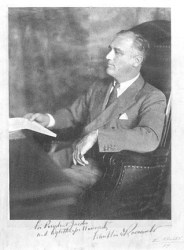 For those who are inclined towards a federalist, libertarian view of the American nation, the debate about the Most Destructive President probably ought to be about Lincoln and FDR. For those who are inclined towards a federalist, libertarian view of the American nation, the debate about the Most Destructive President probably ought to be about Lincoln and FDR.
Lincoln - a superb and fascinating human being by any measure - squashed any pretense of voluntary confederation among the units of the young nation. FDR elevated the power of the Federal government over the individual to levels which never could have been imagined previously. However, the ultimate result of the sickening Civil War has been positive - freedom for many and preservation of the union (although one may and should question whether maintaining the union was worth the destruction of the South and 620,000 dead - the most in any war in America's history). FDR's accumulation of power in DC has been an enduring disaster which, because of the numbers of clients and beneficiaries, may be impossible to undo short of rebellion (see Vermont's recent threats to secede, but for different reasons). Did the New Deal have any impact on the Depression? No, none - and some argue that New Deal policies helped to perpetuate the Depression. But "he cared." I am sure that he did. Individual freedom from government power is always stolen with the excuse of "crisis." (Thus the Left has learned to have a "crisis du jour" to try to justify the expansion of the Federal government at the expense of the states and the citizen.) The Great Depression was the seemingly permanent crisis which was used to justify almost any power grab by Washington. How was this done? The notion of a permanent severe scarcity crisis was presented, which supposedly only Roosevelt's leftist (more acurately, Stalinist) government experts were smart enough to deal with. A piece on the subject by Captain Ed pointed me to George Will's review of Shlaes' The Forgotten Man, which we have discussed here earlier. A quote from Will: Before Roosevelt, the federal government was unimpressive relative to the private sector. Under Calvin Coolidge, the last pre-Depression president, its revenue averaged 4 percent of gross domestic product, compared with 18.6 percent today. In 1910, Congress legislated height limits for Washington buildings, limits that prevented skyscrapers, symbols of mighty business, from overshadowing the Capitol, the symbol of government. In 1936, for the first time in peacetime history, federal spending exceeded that of the states and localities combined. Roosevelt said that modern "civilization" has tended "to make life insecure." Hence Social Security, which had the added purpose of encouraging workers to retire, thereby opening jobs to younger people. Notice the assumptions of permanent scarcity, and that the government has a duty to distribute scarce things, such as work.
The New Deal "brain trust" was wrong about theory, wrong about the American vision of freedom, and wrong about the direction of the future. You can read a couple of our previous pieces on this subject here and here. Addendum: The Jacksonian makes a different argument - for Pres. Wilson, here. He makes the case that the political changes from 1909-1919 set the stage for FDR. A good read.
Tuesday, July 10. 2007
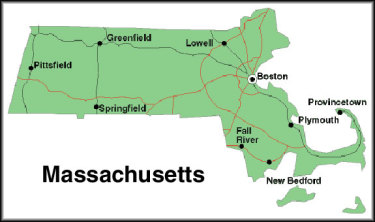 As the Feds gradually gain power over everything that used to be left to the states and to localities - not to mention to the individual citizen himself - the wonderful Federalist concept of states as "laboratories for democracy" has been whittled away. As the Feds gradually gain power over everything that used to be left to the states and to localities - not to mention to the individual citizen himself - the wonderful Federalist concept of states as "laboratories for democracy" has been whittled away.
But the arrogant and power-intoxicated Feds still cannot control state and local taxation. Willisms has one of his excellent graphs demonstrating the out-migration from high-debt states. High-debt states are, inevitably, high-tax states, because they run their government on a credit card. Good piece at Cato on the subject of soaring state and local debt. Some localities are spending 30-40% of their tax revenues on debt service. That is no way to run a railroad. Image: The Commonwealth of Massachusetts, famous for being a laboratory of incremental socialism
I have been lax with our fallacy fun, but suddenly some good'uns are thrown in my face. Reductio ad absurdum is not really a logical fallacy but, at its worse, a fallacy support and, at its best, a fairly compelling logical argument, eg (from Wiki): - Father- Why did you start smoking?
- Daughter - All my friends were doing it.
- Father- You're saying that if all your friends jumped off a cliff, you would do that too?
Reductio can serve the purpose of truth or the purpose of fallaciousness. Example: "If we can go into Iraq to take out a murderous dictator, then we should take out every murderous dictator on earth."
As with the Slippery Slope Fallacy, some credibility is obtained via the logical thread, but the germ of logicality is rendered trivial by the reality and the context. Attack Machine invented the entirely reasonable and useful notion of Dilatare ad Absurdum: Expansion to Absurdity. He presents a beautiful example of expansion to absurdity in a piece on the equating of basic human needs with human rights. In his example, both reality and context support the dilatare. It begins: LA Mayor Antonio recently gushed, “Healthcare is a basic human need, and it ought to be a basic human right.” If healthcare is a right, then: - Food must be a right, too. After all, you cannot be healthy if you don’t eat.
- Clothing is a right because you cannot be healthy and naked (in most parts of the world.)
Read the whole thing. I like it. It's similar to the arguments I use to crush all of my commie friends, such as "People need cars to get to work. So why can't we all get free cars and free car insurance?" Or "Legal representation is a basic human right in a free country, so why don't we all get free lawyers?"
Monday, July 9. 2007
 A new weekly feature at Maggie's Farm! Ask Dr. Bliss! A new weekly feature at Maggie's Farm! Ask Dr. Bliss!
Dr. Bliss can tell you how to be happy, healthy and wise. She knows the Meaning of Life, the Purpose of Existence, the True Nature of God, whether human relationships are worth the bother, which of your sexual and violent fantasies are sick and which are wholesome, how to please a man, what your mother really thought about you, and where to find the best prices for Manolos.
Photo: Our Dr. Joy Bliss in a pensive moment, contemplating the mind-brain problem, the mysteries of counter-counter-transference, and wondering what shoes to wear tomorrow. (Yes, it's a friendly spoof of our blog friend Dr. Helen, who has begun an Ask Dr. Helen feature at Pajamas Media - an excellent idea, and we are chagrined that we did not think of it first.) Editor's Note: Check the comments. Wiseacres abound around here.
Saturday, July 7. 2007
 I will be able to recover my usual sanguine approach to life once I dump this comment on ye olde blogge. I will be able to recover my usual sanguine approach to life once I dump this comment on ye olde blogge.
How can it be possible to earn an undergraduate degree without having studied calculus, chemistry, economics, Plato, statistics, Classical History, Shakespeare, and physics? The sheer ignorance of supposedly "educated" (at great cost and parental sacrifice) Americans never ceases to amaze me. I know why this is, too: it is market-driven. Give those young brains-full-of-mush nice dorm rooms and eliminate standards for what a degree means, and the applications will flow in. People aren't stupid: they know they are just buying a piece of paper. And yes, I know that many serious kids do not approach college that way, but today I have had several encounters with recent grads of fancy schools which were beyond appalling. Some smart people, from outside the education establishment, ought to sit down and re-think the whole idea and purpose of "liberal arts education" in America. American college education is a scam on the same dimensions as the scam of investment management. And now I feel much better. Thanks for listening!
 Our Aliyah Diary author has been truant from Maggie's for too long. He has not yet completed the lengthy and arduous aliyah process required for becoming an Israeli citizen, but his Hebrew and his riflery are getting better and better, I understand. He files this report of his visit to a fellow physician in the Bedouin village of Rahat last week. Our Aliyah Diary author has been truant from Maggie's for too long. He has not yet completed the lengthy and arduous aliyah process required for becoming an Israeli citizen, but his Hebrew and his riflery are getting better and better, I understand. He files this report of his visit to a fellow physician in the Bedouin village of Rahat last week.
An afternoon and evening in Rahat, guest of a gentle Bedouin Professor A., who was my Virgil in a tour through the fringes of Hell. A Bedouin town, one of seven built by the Israelis in the early 70’s, Rahat, meaning water-hole, a place to gather for shepherds, so too to gather-in the wandering Bedouin. A town of several thousand, located geographically at the northern tip of the Negev desert, but in other ways, located someplace between here and the fringe of Bombay. I begin with my leaving. Too late, too tired, I see what A., driving his VW diesel Passat, does not: a man, perhaps a father, red broomstick whipping over his head, full-armed whacks on three children to get into the yard. The youngest, a girl perhaps five, has arms upraised, futile, trying to fend off the next blow. He does not always swing; at moments he motions threateningly, stand at the steel corrugated gate. Then, he lets loose once more on the girl’s back and the gate is closed to the outside world. A. says a few moments later that it is better to tour Rahat at night: the darkness hides what should not be seen. I have spoken about courage among Israeli soldiers at Ben Gurion University, thinking at the back of my neck how there are Bedouin colleagues in the audience. Awad has invited me to his home afterwards. Dinner, early. Awad studied medicine in Rumania during the era when the Israeli Communist Party gave scholarships to Arab students to learn in Soviet medical schools. He lived there some six years, got a degree and a Slavic wife, L. It is an evening all in Hebrew. L. is flaxen, angular-faced, has a large wart punctuating the end of her left eyebrow. Seems a Slavic trait – a punctuated face. A. and I enter the house and I barely notice at my right, sitting beneath a tent suspended from the house, is an ancient woman, a white cotton shawl over her head, the left margin clamped at the left corner of her lips. She is there when I arrive; she remains there six hours later. We pass her once more, A. and I. He says nothing, nor does she. She is his mother. Read the rest on continuation page below.
Continue reading "Aliyah Diary: A visit to Rahat"
|