Sunday, September 13. 2020
Dystopian science fiction writers must be laughing right now.
There is a reason political functionaries are being assholes about wearing masks - and it isn't about keeping you 'safe' (a common lie used to expand power).
They know they can continue to promote themselves and their power more effectively by making you reduce your individuality.
Don't get me wrong, masks can play a role in reducing the likelihood of catching the virus, but it's just a delaying tactic. It's not preventive. There is a larger political play here...even if some of us are not capable of understanding it.
Most science fiction dystopias are based on reducing the individual into a collective hive. The Borg on Star Trek, Harrison Bergeron by Vonnegut, 1984 by Orwell - all of these (and many others) found ways to subjugate the individual to the will of the state or hive.
Humans differ from other animals in a few key ways, which in aggregate make us rather special. The opposable thumb, the ability to analyze situations and prepare plans, the sense of self and free will (self-actualization). Where animals that reject individualism have a level of success in groups or hives - what people who overemphasize these fail to note is that humans exceeded the limitations of groups by emphasizing the individual initiative.
Hives have their place, they can be useful even for humans. Collectives can work, temporarily and in small groupings, if they are VOLUNTARY. But the problem with modern people is they fail to recognize that capitalism and free markets allow for voluntary collectives to form, disband, and form again.
Think corporations are powerful? Name 10 that have lasted more than 100 years. The few that have managed to survive that long only did so one way - by playing political games, or gaining some form of monopoly power guaranteed by the state itself. Natural monopolies can exist over short periods of time, but fall apart without state protection. That is why socialism can only fail, over time. It is an unnatural state monopoly formation. Even fascism, which is a form of socialism, fails because it is still the state dictating the means of production. While competition can exist, it's limited and reduced, innovation is stifled and winners are chosen by political functionaries.
Individualism, in socialism and fascism, is reduced to whatever the state says is acceptable and limited.
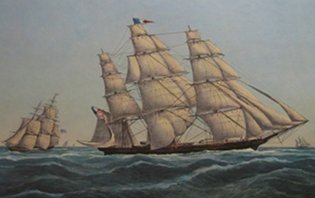
I had the good fortune to see a Shields race yesterday. They are sleek, low keelboats good for day-sailing or racing.
To my surprise, these boats are still bring made by Cape Cod Shipbuilding.
This is their photo, not mine:

Saturday, September 12. 2020
 Maggie's Farm endorses only two watch brands: Timex and Seiko. However, it was Timex (the- then Waterbury Clock Co) which invented the wrist watch for the convenience of artillery gunners. Maggie's Farm endorses only two watch brands: Timex and Seiko. However, it was Timex (the- then Waterbury Clock Co) which invented the wrist watch for the convenience of artillery gunners.
A Timex "Takes a licking and keeps on ticking." Among other virtues, a Timex signals that you are a thrifty and practical sort. Not a bad social signal even if it's not true. Most of my doctors wear Timexes.
If the strap breaks, or it runs a bit slow after 3 or 4 years, or you get in in salt water, you just get a new one from Amazon. $35 or so.
Friday, September 11. 2020
My memory of 9/11 is pretty vivid. I won't go into details about what happened, we all have our personal views on how/why/what all occurred. These views are based on where we were, what we were doing, and what we choose to believe.
I don't believe the 'truthers' and their conspiracies. All you need for a good conspiracy is a couple of willing believers and some good memes that are logical fallacies. But I'm not going to share what I believe happened, either. We're all allowed to believe what we want, even if I don't agree with what someone else believes. That's called a marketplace of ideas. Sometimes there are lemons being sold in that marketplace. The nice part of the marketplace is this - I don't have to buy the lemons.
Getting past that, I have other memories. People coming together. People pulling together. Without any impetus from a 'leader'. Spontaneous organization and commitment to each other. Race differences disappeared. People cared about each other and making sure they were getting what they needed. I remember it as a "lockdown" of sorts. I didn't go back to work for 2 weeks, working remotely from home, just like the last 6 months. Of course, my office was by 14th Street, which had limited ability to cross. Our office felt it best to let the responders have as much space as possible. I saw similar behaviors in the Northeast Blackout of 2003, 2 years later. Spontaneous organization, not something we needed leaders for. People working together, finding solutions to issues we all faced.
Continue reading "A 9/11 Thought"
Thursday, September 10. 2020
At Quillette:
When the ancestors of North America’s Indigenous peoples entered the New World some 16,000 years ago via Siberia, they hunted many of the mammals, reptiles, and birds, from the Arctic down to Tierra del Fuego. Mammoths, mastodons, and enormous ground-dwelling sloths, as well as giant bears, giant tortoises, and enormous teratorn birds with 16-foot wingspans—animals that had never had a chance to evolve in the presence of humans—were among the many species that disappeared from the Americas. Some medium-sized animals—such as horse, peccary, and antelope species—were also wiped out. But others survived: Bison and deer species, tree sloths, tapirs, jaguars, bear species, alligators, and big birds such as rheas and condors are, at least for the time being, still with us.
Thursday, September 3. 2020
 Who he is: Who he is:
"Educated at Harvard, Princeton, and Oxford, MARK HELPRIN served in the Israeli army, Israeli Air Force, and British Merchant Navy. He is the author of, among other titles, A Dove of the East and Other Stories, Refiner's Fire, Winter's Tale, and A Soldier of the Great War. He lives on his farm in Virginia."
(I hate that term, "educated at...". No, that doesn't happen. Wherever in life, one educates oneself - or doesn't. Nothing against Helprin - remarkable guy, and a humble one.)
I feel Soldier of the Great War is his magnum opus, but readers may differ. If you start with him, you will want to read all of them.
Sunday, August 30. 2020
The Maggie's List of Basic Life Skills is from some old post that I can't find, but let's note managing watercraft today.
Here's an idea for the no-foreign travel era: Learn at the Helm at Chapman School. It's a 5-day hands-on course, based in Florida. They claim that, by the end of the course, you will be able to back a 40-ft boat into a slip. I can not do that.
Clearly, if you have been a Naval officer or a Coastie, attended the Maritime Academy, etc, this might be redundant. Studying Charles Chapman's classic Piloting and Seamanship is good, but it's not hands-on.
Saturday, August 29. 2020
Michail Bulgakov's masterpiece. Amazon says:
Full of pungency and wit, this luminous work is Bulgakov's crowning achievement, skilfully blending magical and realistic elements, grotesque situations and major ethical concerns. Written during the darkest period of Stalin's repressive reign and a devastating satire of Soviet life, it combines two distinct yet interwoven parts, one set in contemporary Moscow, the other in ancient Jerusalem, each brimming with incident and with historical, imaginary, frightful and wonderful characters. Although completed in 1940, The Master and Margarita was not published until 1966 when the first section appeared in the monthly magazine Moskva. Russians everywhere responded enthusiastically to the novel's artistic and spiritual freedom and it was an immediate and enduring success. This new translation has been made from the complete and unabridged Russian text.
Friday, August 28. 2020
The first edition of Aaron Copland's classic What to listen for in music was first published in 1939.
I consider the book to be equivalent to a college introduction to music. It is serious, but written in a friendly style.
I make a rough distinction between Folk music (including things like traditonal folk music from wherever, Country, Rock, Blues, Rap, Jazz, Hymns, Gospel, Broadway, etc), and music which demands more attention. Right or wrong, that's how I think but I love a lot of it.
There is a large grey zone between those rough categories. Copland's Appalchian Spring, for just one example. For another, Verdi's operas were what gondoliers and street-sweepers sung at work.
The only music that truly annoys me is Rap and Praise Music.
By the way, who is Taylor Swift?
Thursday, August 27. 2020
Reading body language is partly intuitive, partly a learned skill. It is a basic part of human encounters.
This book, What Every Body is Saying, is about the learning part: An Ex-FBI Agent's Guide to Speed-Reading People
Wednesday, August 26. 2020
Capt. Joshua Slocum did it in 1895. A true Yankee adventurer who tells his tale.
No engine, of course, and he sure knew how to navigate.
Tuesday, August 25. 2020
Hayek's socio-political classic The Road to Serfdom was one of the books that swayed me from youthful idealism to more mature realism. Human nature, really.
Written in 1944, still relevant.
Monday, August 24. 2020
An impressive author: Willam Boyd
Any one of his novels is interesting. Right now, I am reading Waiting for Sunrise
Friday, August 21. 2020
The Death of Satan: How Americans Have Lost the Sense of Evil by Columbia Prof. Andrew Debanco
" In this highly acclaimed work of intellectual history, Andrew Delbanco argues that Americans, who once pictured their history as an epic struggle against the devil, have become indifferent to the reality of evil."
Thursday, August 20. 2020
Spellbinding tale of a ranch kid stolen by Indians and raised by them in what is now Texas.
The Son
Monday, August 17. 2020
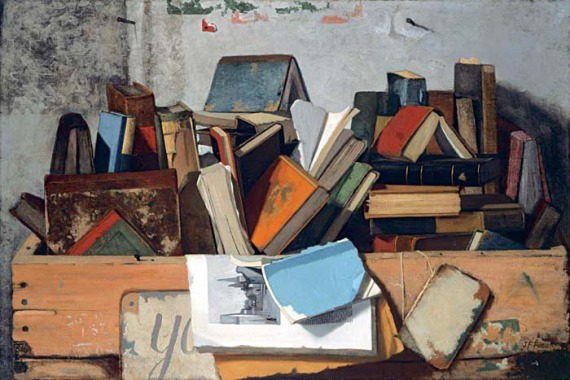
Between now and Labor Day weekend, I have tried to schedule to post a book each day while I am semi-vacationing. These are books that have made an impression on me and stuck with me, for whatever reason. All sorts of books.
For starters, Melville's Billy Budd.
Yes, his cosmic magnum opus Moby Dick is a grand and ever-interesting American tale (the Great American Novel, if there is one), but Billy Budd gets to the heart of human nature and civilization.
No, not to read each day. Sheesh. It's just a personal book list.
Friday, August 7. 2020
For northern North Americans:
1. Get your a/c checked out etc in the winter
2. Get your chimneys cleaned in August
3. Get your furnace checked out in July.
Sunday, July 26. 2020
Boccaccio's Decameron (1352) was written partly as porn for women of the time, situated away from Florence in an idyllic, sybaritic setting away from the urban Black Death.
When women were commonly married off at 15 to older gents, naturally they sought romantic adventure and especially so when you might die any day from the plague.
This was a time when the clergy were not too holy, and not overly-respected except on Sundays.
Boccaccio worshipped Dante's works and was a pal of Petrarch. A canonical writer with whom it would have been fun to have some wine.
The 30-min Great Books podcast on The Decameron.
Thursday, July 23. 2020
 I've always been interested in the mysterious concept of ignition, but fire is of course of great fascination to humans. Controlled fire, of course, is what we prefer. I've always been interested in the mysterious concept of ignition, but fire is of course of great fascination to humans. Controlled fire, of course, is what we prefer.
Life itself is a form of controlled fire.
Despite its ubiquity in human life, chemists have still barely unlocked what’s happening amid the flames.
|