|
Maggie's FarmWe are a commune of inquiring, skeptical, politically centrist, capitalist, anglophile, traditionalist New England Yankee humans, humanoids, and animals with many interests beyond and above politics. Each of us has had a high-school education (or GED), but all had ADD so didn't pay attention very well, especially the dogs. Each one of us does "try my best to be just like I am," and none of us enjoys working for others, including for Maggie, from whom we receive neither a nickel nor a dime. Freedom from nags, cranks, government, do-gooders, control-freaks and idiots is all that we ask for. |
Our Recent Essays Behind the Front Page
Categories
QuicksearchLinks
Blog Administration |
Thursday, June 9. 2011A drive to OrvietoWe took a drive to Orvieto, with the goal of seeing the renowned Signorelli chapel's 16th C. frescoes - the Chapel of the Madonna di San Brizio inside the 15th C. Duomo.
Pics and verbiage below the fold - Continue reading "A drive to Orvieto"
Posted by Bird Dog
in Our Essays, Travelogues and Travel Ideas
at
16:43
| Comments (6)
| Trackbacks (0)
Wednesday, June 8. 2011About side dishes in Italy
Italians like their flavors separate. The taste of food is very important to them. My favorite Italian sides are Spinach with oil and garlic (to accompany any secondi), and oven roast potatoes (cut up a little bit, olive oil, a hint of rosemary, salt, high heat like 425 or 450 until brown and crunchy on the outside and creamy inside, turning occasionally in the oil during the roasting - getting it right is an art but I have figured it out over the years. Generally, at home, Mrs. cooks half of our dinners, and I cook half these days - except for abundant Thai take-out). A little sprinkle of parsley on those roast potatoes is optional. They go with meat. Turnip greens are done the same way as the spinach, and are at least as tasty. We ordered "turnip" at one place (I like turnips), and was happily surprised to be served delicious turnip greens in oil and garlic. Of course, any idiot should have known that turnip root is not available in May or June. Italian food, outside the big cities, is local, seasonal, and there are no supermarkets. Sometimes people order a side insalata misto too, with their secondi or mainly to follow it (salad never before a main course), but at some point it just becomes too much food to eat, especially if you have an antipasto first. Sometimes we would break all the rules at lunch, behave like barbarian Americans, and just share a primi with two salato mistos on the side. Mrs. BD, who has some paisan blood, believes it is an insult to good food to serve rabbit food before a nice meal: i primi should be i primi except for an antipasto, and salato misto is not antipasto. The very best olive oil should not be wasted on cooking (in my view, the best stuff is only for salads or for bread-dipping where you can fully appreciate it but some would disagree with that), but it should be used for this simple spinach recipe where the oil fragrance is part of the deal. We make both simple recipes at home, often, but they taste much better in a ristorante in Italy.
Posted by Bird Dog
in Food and Drink, Our Essays, Travelogues and Travel Ideas
at
15:32
| Comments (2)
| Trackbacks (0)
Tuesday, June 7. 2011More Umbria: Come on, show me something really oldThat is literally the old Via Flaminia as it passes through the Roman town of Carsulae. We drove out there from our tenudo to look around. This via was an ancient trading road between the Tyrrhenian and the Adriatic, but was much improved by Roman engineers when they invaded Umbria around 250 BC. Carsulae is an unusual Roman site because most Roman towns have been subject to later building on the old Roman foundations, but nobody ever built a town on top of Carsulae (in part, because it's not on a defensible hill). The place started as a Roman military camp, and just grew into a town with an amphitheater, a local Senate, etc. by the time of Augustus. Most of the Roman town, and its surrounding Roman vacation villas, are yet to be excavated.
Continue reading "More Umbria: Come on, show me something really old"
Posted by Bird Dog
in Our Essays, Travelogues and Travel Ideas
at
17:07
| Comments (14)
| Trackbacks (0)
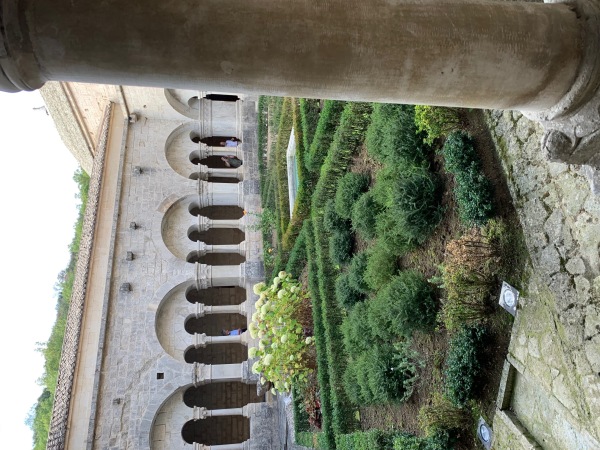
Sunday, June 5. 2011Umbria # 7: For Sunday, an Umbrian monastery which was one of our hotelsActually, it is now a small hotel in the Valnerina (the Nera Valley in the Appennines). We stayed here last week. There is a cross hanging over every bed, and the rooms are (converted) monks' rooms (Yes, each room or suite has a bath). This is the Abazzia San Pietro in Valle. It began as a Benedictine monastery in the 5th C., established by converted Lombard invaders, the lords of Spoleto. In fact, the Lombard Lord of Spoleto gave up his lordship to become one of the early humble monks there, and his bones rest in an old (recycled) and beautifully-carved pagan Roman sarcophagus next to the altar. I guess they threw out some old Roman's bones to make room for him. Their chiesa is old, but, like most things in Italy that have been around for over a thousand years, things have been re-done and re-decorated. We were told that the cheisa, in some places, has five layers of frescoes on the walls. Sort of like old wallpaper, but, as Mrs. BD observed, any one of those layers would make for a blockbuster show at the Metropolitan Museum of Art. This wealthy and politically-powerful monastery was sacked by the Saracens - the marauding Moslems who held parts of Europe in terror for hundreds of years during the Dark Ages, and who specialized in collecting infidels for the Middle Eastern slave trade - around the year 900, but it came back. It was abandoned by the Benedictines in the 1800s and was used as stables and sheep shelters until some rich guy from Rome bought it in the 1920s and began semi-converting it into his country villa. Mussolini himself visited the Abazzia to celebrate the restoration of Italian history and culture. One of the most photogenic places I have ever been to. Impossible for even a lousy pic-taker like me to take a bad photo. Felt unreal to be staying there, stunned by the romance of history but mainly by the beauty and glory of creation, just like when you are on a horse in the Montana Rockies, or on skis at the top of Whistler in a snowstorm. The times when the glory of God gets so much in your face you cannot deny it no matter how much of a curmudgeon you might want to be. See what I mean about Mrs. BD being a good trip-planner? She plans, I just do the driving and go where I am told - except when I don't... More pics from around there later in my ongoing travelogue. This is inside the walls, in the garden, facing the inner cloisters and the rear of the chiesa with its bell tower:
View from the long, steep dirt entry road, lined with small farms and olive groves. The place is halfway up the mountain. Everywhere, the tinkling of sheep bells, the occasional barking of the sheep dogs, and the crazy horn-like braying of mules. (I don't know why they keep mules, but I do know they make a popular sausage out of them, called "Mulo." Not kidding.) Lombard-era carvings of Peter and Paul (with the sword) at the monk's side entrance to their chiesa from the inner cloister. You could write a thesis on these "paleo-Christian" things if you wanted to: Who was staying here? A group of jolly Aussies, and two delightful Dutch couples. The rest were from Rome on getaways with wives or girlfriends. (We had a good chat with a Roman fellow, a young 30s internet entrepreneur, who was there with his dazzling and seductive-looking fiance. They have a 4 year-old daughter. They were planning their honeymoon trip to NYC, San Francisco, and then Kauai, and wanted names of good NYC restaurants and shows to see. What a world! Except for their paranoia, the Italians can teach us all how to really live.) As I said to Mrs. BD, this ain't no Motel 6. The have only around 12 rooms and suites. The inner cloister, with a couple of outside breakfast tables: Monks loved their wines. That's my refreshing post-mountain-hiking, pre-dinner Orvieto - the classic white wine of Umbria:
Posted by Bird Dog
in Our Essays, Travelogues and Travel Ideas
at
05:55
| Comments (15)
| Trackbacks (2)
Friday, June 3. 2011Umbria #5: Typical Umbrian menuWe stumbled by accident into a little ristorante in the dreary (and definitely not touristy) medieval hilltop village of Amelia around 2 pm, and found the place in the otherwise dead town packed with jolly Italians chowing down and drinking wine. We were the only foreigners there. The Hosteria dei Cansacchi. A simple neighborhood place with a simple menu: you order either the Mare or the Terra. I ordered the Mare, Mrs ordered the Terra, and halfway through lunch we had to "stop the menu." However delicious, it was just too much. That's when we decided we needed to share meals. Here's their menu - no choices - they just bring it all, one course after another. The English translations in the fine print are imperfect, eg "Wild Board." Typical Umbrian food:
Posted by Bird Dog
in Food and Drink, Our Essays, Travelogues and Travel Ideas
at
10:53
| Comments (7)
| Trackbacks (0)
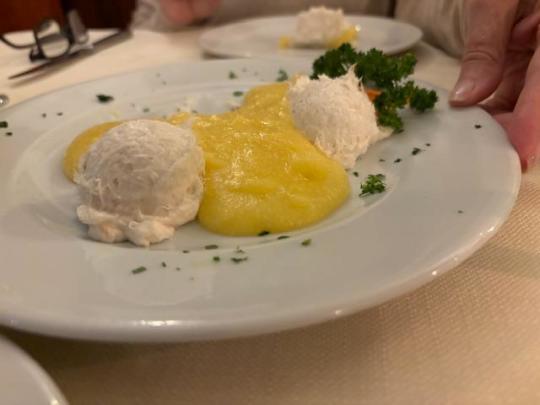
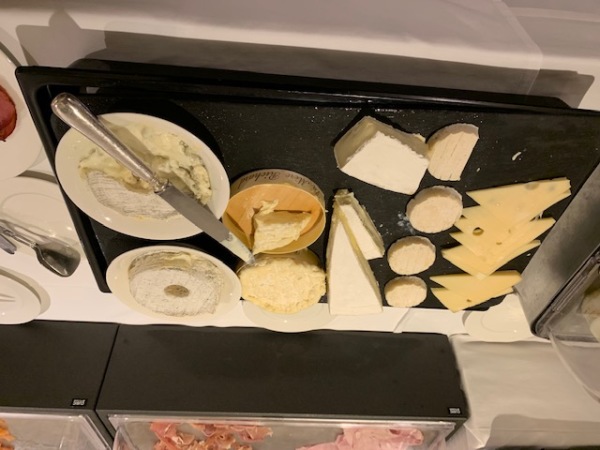
Thursday, June 2. 2011Umbria, #4: Classic foods of Umbria, why there is no salt in Umbrian bread, and other miscellaneous topicsStill working on figuring out which travel pics to post, so a little more background first - Photo above is our lunch antipasto course in Norcia, famous home of the pig and the cinghiale - and the Black Truffle. The cheese is the hard, aged Pecorino from sheep milk. I was tempted to smuggle a wheel of it home. A fantastic cheese. In America, Italian food used to mean things like spaghetti and meatballs, veal scallopini, Lasagna, Penne with red sauce, tomato-meat sauce, Prosciutto with melon, and pizza. North of Rome, in Umbria and Tuscany in particular, the main foods are the below, generally without any tomato except in a salad misto and with no spaghetti to be found (unless you count their regional pasta, Stringozzi and, sometimes, Pappardelle). Tourist towns will offer spaghetti with red sauce for the confused Americans who expect it, but the locals do not eat it (those north of Rome have an incredible snobbery towards southern Italian culture - language, food, and etc. Indeed, Mrs. BD gives me Italian hell when I use a Calabrian or Neapolitan accent in Italy - and I am not even Italian at all. English-American Mayflower-type, with pizza parlor Italian at best. My German is better, and it is terrible too. My French is OK.) Risotto The best known wines of Umbria are the light and crisp Orvieto and the weighty and fragrant (and relatively expensive, ie 25-50 Euros/bottle) Sagrantino di Montefalco. Italian beers are, well, what they are. Drinkable, when you want a beer or two. The most common cheeses seem to be aged Pecorino and aged Ricotta. Both are wonderful. Also, Parmesan of course. They use both wine and balsamic vinegars. They sometimes use balsamic as the base for a meat sauce. Yummy. Except in ristorantes, women cook and men eat - and then go out for smokes and drinks with their pals. In ristorantes, mostly men cook. Olive oil is, of course, the basic ingredient of almost everything. Umbrian oil is green, fruity, and thick - maybe not to everybody's taste but fine with me. I carried home some Umbrian oil, some truffle sauce, some Sagrantino, and some Montefalco Rosso. Also, a good supply of Stringozzi with which to feed my friends. (The sad result was to make my luggage go over the limit. My fee for that indiscretion was 50 Euros. Ouch. It will not happen again.) On our trip, we had some of all of the above. We ate a ton of food but, with all of our hours of walking, hiking, and exploring, we both came home with a welcome weight loss! Best Secondi I had? Roast guinea hen with liver/wine sauce with sage and cooked Prosciutto. I love their chicken liver sauces, on pasta or on anything. Best Primi? I cannot chose. Mrs. BD definitely would chose a Gnocchi with Sagrantino sauce we had in a Mom and Pop ristorante in Bevegna. Fluffiest gnoccis I ever ate. Below, a fine rabbit stew we had in a great restaurant in Montefalco. In Italy, they do not mix foods on a platter. You just have the thing you ordered on the plate. If you order a side vegetable (we like their spinach or turnip greens cooked in oil and garlic, and their roast potatoes), it will come on a side plate. I have always been fond of Italian rabbit stews. A proper Italian dinner (whether at lunchtime or suppertime) consists of an antipasto, a primi (carbs), a secondi (meat), and maybe a dolce. Mostly, people skip the dolce, and maybe grab a gelato later while strolling around town. Restaurant portions are generously-sized. After one day, Mrs. BD and I decided to only order one antipasto, one Primi, and one Secondi, and to share them. Sometimes we ordered two primis and no secondi. That all worked well, and the waiters seemed accustomed to that request. Nobody speaks much English, but the waiters know "to share". One has to remember that, if you want a Risotto as a Primi, they make it for you right then so it takes at least 1/2 hour to be served. Worth waiting for, if you aren't starving. How does a Risotto with black truffle and Pecorino sound to you? This is a primi of polenta with black truffle sauce, in Spoleto. That sauce is all truffle. Polenta is often served on polenta boards. Should have bought one. You can see why we share courses: And bread, of course. Umbrian bread is not very tasty, however, because they use no salt in it. Why not? Because the Pope imposed a punitive tax on salt in Umbria in 1540! The "Salt Wars" were like the Boston Tea Party. They still use little salt, and do not put it on the table. 1540 wasn't really all that long ago, and the vengeful Italians have long memories of real, perceived, imagined, or even justified offenses. Taking offense and carrying grudges is an Italian cultural specialty, and even Popes are not spared. Photo below is just some random cafe menu sign. Odd for the sign to be in English. They probably found the sign in a flea market in Cincinnati.
Posted by Bird Dog
in Food and Drink, Our Essays, Travelogues and Travel Ideas
at
12:44
| Comments (14)
| Trackbacks (0)
Wednesday, June 1. 2011Umbria #3: Where and what
Snap above is on the country road in the hilly Tiber Valley driving from Todi to Montefalco, with the charming town of Todi in the distance, on the hill. Italy is good about having a sharp distinction between town and country. Little-to-no sprawl. Except in the big cities, you go from urban density directly to vineyards, olive groves, or forests full of deer, cinghiale, eagles, even wolves and, best of all, the ferocious and dangerously-expensive Wild Black Truffle. People like to live in towns, where they can walk to work and shop, and can say bon giorno to their neighbors.
Bit of history A quick history and geography of Umbria in central Italy, northeast of Rome, to put my forthcoming travel pics in context. It is generally similar to the history of the entire area we now term Italy. Central Italy was the prehistoric land of the Etruscans (hence "Tuscany" - land of the Etruscans) and of the less-known Umbri. They were, relatively speaking, peaceful and prosperous farmers and traders. When Rome began its imperial expansion around 250 BC, Umbria up along the old trading route to the Adriatic (which the Romans later termed the Via Flaminia) seemed like an obvious target. The Romans did their Roman thing there for 600 years until the empire began to unwind and Goths and Lombards moved into Tuscany and Umbria both by immigration and by arms in the 400s-500s. In many ways, these waves of invasion became sort of Romanized and Christianized, in time. The Byzantines were in the mix then, too. Warring feudal duchys and kingdoms dominated the dark ages in this part of Italy, during a time when the declining Roman regions were also set upon by piratical Saracens (mainly seeking slaves for the Middle Eastern slave trade) and Normans (seeking adventure), until Papal power exerted itself and built an authoritarian, theocratic peace by the 1100s and 1200s. They were big on building castles with which to assert their powerful churchly presence, but from the days of the late empire people were building their own keeps and walls to defend themselves from foreigners and also from their neighboring towns. The Roman Legions had previously made walls and keeps unnecessary: the Roman armies had been the wall. The Pax Romana. The Papal State pretty much controlled central Italy, perhaps to its detriment, until the Italian nation was invented 150 years ago. Roman Catholicism was pretty much corrupted by money and politics, during that era, including the Benedictines. 2011 is the 150th anniversary of that political event. Garibaldi, etc. Geography Geographically, southern Umbria divides itself into three regions: The north-south-running Tiber Valley where the Tiber flows south towards Rome, the fertile north-south running Valle Umbra which is like a mini version of California's Central Valley, and the eastern Valnerina which is the area in the majestic Appennines where the river Nera flows down to eventually join and magnify the Tiber. We visited and stayed in incredible hotels in each of those three areas of Umbria. As in Roman times, rural and quaint Umbria is a popular Roman getaway place, full of bikers, motorcyclists, foodies, and hikers. It's only a 2 or 3 hour drive from Rome, and it is packed with "unspoiled gems." Most of the towns were Umbrian first, Roman later, and then Medieval-Renaissance. Except for towns damaged by the war (like Terni) or by earthquakes (like Foligno), there is a lot of Renaissance, generally built on Medieval town footprints. Except for Assisi with its bus-loads of pilgrims, we saw few non-Italian tourists and only one American couple - friendly folks from Montgomery, Alabama! Some Brits, Aussies, Austrians, and Dutch. We tend to meet people when we travel. That's part of the fun.
Todi, Amelia, Orvieto, Montefalco, and Perugia are on hills in the Tiber Valley. Towns in Umbria tended to be built on hills for defensive purposes, which is why exploring Italy is such a good physical workout. Assisi, Spoleto, Spello, and Terni are along the western edge of the Apennines where they rise from the plain. Norcia, and our monastery hotel, are in the mountains themselves near where the Nera emerges from the mountains. Weather Best times for Italy or any Mediterranean travel are Spring and Fall. May and October are perfect. Italy climate here. I will have lots more fun travel pics soon - Pic below of the Valle Umbra, looking west from the Assisi hillside: Pic below from the garden of our 6th C. Benedictine monastery hotel in the Valnerina in the Apennines, with a small hillside olive grove (doubling as parking area) below the wall. It is no wonder that people love to visit Italy: it has the food, the history, the scenery, the quaintness, the vino, the art and architecture, and the delightfully tough and fashionable Italian gals. Tuesday, May 31. 2011Southern Umbria #2: Better than Dunkin' DonutsWe stumbled onto this joint last week while taking a flyer down local roads en route from Bevegna to Spoleto. Wonderful drive on narrow winding roads through olive orchards, vineyards, small farms with patches of wheat, fava bean, and lentil, and tiny antique villages. But, of course, in Italy, when you stop for a coffee, a "coffee" means a 1/2 inch of intense espresso at the bottom of a tiny cup. A delicious half-mouthful if you add a bit of sugar, but nothing to linger over or to put in your car's cup holder. If you request a cafe Americano, they just add some hot water to it. This roadside charmer, like most such places in Italy, offers Italian pastries, beer, wine, cocktails, breads, sandwiches made to order, rustic pizzas, etc., to go or to eat there on plastic chairs in the A/C. Yes, you can have a smoke inside. Everybody does. Often, the serving people fix up your order with a cigarette hanging out of their mouths like the good old days, and I do not think they care deeply about what the EU or anybody else thinks about that. Dunkin Donuts does not offer beer or wine, and you cannot smoke in there. We stopped for some water (water with "gas" - always - that evil CO2) and a quick cafe. Never order pizza in Italy - it's terrible stuff. It was the Neapolitan immigrants to America who made it into a tasty treat - and the Italians have little interest in learning about the gastronomic arts from Americans. I would remind the Italians of these facts: Tomato, from the New World. Potato, from the New World. Squash, from the New World. Polenta, from the New World. Pasta, from China. Risotto, from China. What did they eat before all of that? America has the best pizza in the world.
Posted by Bird Dog
in Our Essays, Travelogues and Travel Ideas
at
05:13
| Comments (8)
| Trackbacks (0)
Sunday, May 29. 2011Southern Umbria #1: I'll give it the old college tryMrs. BD and I have concluded that Umbria is a more varied and interesting place to visit than Tuscany. I have a well-travelled friend who agrees. Umbria is, except for the tourist magnets of Perugia and Assisi, off the beaten track. We have been around much of Italy in the past, and the Latin and Italian scholar lad has been literally everywhere there.We had not toured Umbria and the old Via Flaminia (which it is still called). Mrs. and I just returned home from our delightful adventure. As I get my thoughts and pics organized, I will go over some of it: History, food, geography, etc. I do have some ideas about how to make it more interesting and educational than a totally dull photo slideshow for Maggie's. Will do my best with a multi-part series of my travel snapshot journal. Bear with me: I will try to make it interesting. Too tired to begin that now, but here's one photo to maybe inspire some interest in my posts to come, from one of Norcia's (pronounced nor' - cha) famous pork, cheese, and Black Truffle shops. They love their aged Cinghiale meats and sausages in Umbria (Cinghiale is Wild Boar, not our American feral pig which is not too tasty). In much of Europe, wild game is sold in markets (which is illegal in the US). The market shops always have samples of their own aged ricotta dura (a harder and delicious version of ricotta which is good for salads), their superb Pecorino from sheep milk, or of their sausages. I was tempted to smuggle a large wheel of Pecorino Dura, but decided not to test the mysterious customs laws on importation of foods. They roll the aged ricotta in toasted wheat for a skin, as below: Saturday, April 16. 2011My Mom's knee, and the Roman Camp HotelI'm delivering food and doing errands for my old folks this weekend. My Mom fell and cracked her patella while unloading groceries, cannot drive for 6 weeks, and can barely hobble around on her brace - and my Dad is half-blind, has Parkinson's, and is not allowed to drive anymore. His ornery self refuses to take the Parkinson's medicine but, thankfully, he finally agreed to get himself a hearing aid. A neighbor is driving Mom to her best friend's funeral today at our family church on the hill. I brought them Chinese take-out last night: Cold hot pepper cabbage, Scallion pancakes, and Scallops with Snow Peas. Then a plate of strawberries. Also left them some black bread and Nova Salmon for breakfast. Tomorrow, I'll bring them some take out Thai soups. They look too skinny, need feeding. They were never much into eating, unless it was especially good. Somehow, we got on the topic of past family trips. I was laughing to remember the volumes of disposable diapers we travelled with - they were not available in Europe back then. With a family of 5 kids, there was usually at least one in diapers (and at least one in a bad mood). I remember trying to help tie them (the bags of diapers, not the younger brats, unfortunately) to the roof of the rental cars. My Dad always travelled with rope for that purpose, in the pre-bungee-cord era. My Mom was remembering the large Raspberry plantings at the Roman Camp Hotel, where we all had stayed for a few days. Watching her litter grazing on Scotland's excellent raspberries, ripping them off the rows of canes. A wonderful place. My parents are picky about where they will stay - they can't stand glitz or "fancy," and they don't do tacky. They are the typical old Yankee WASPy breed that is only comfortable with understated refinement and genteel semi-shabby. No "luxury," please. They feel that "luxury" is vulgar (whereas I can learn to appreciate it when I can find it). Mom liked this place:
A few years after that trip, my folks did something unusual and selfishly left the kids behind and took a trip by themselves, and biked the length of Hadrian's Wall. Or, as my Dad corrects me, walls: there are two of them. They were finished with breeding. We had many good trips; lots of stories and tons of colorful memories. I can't remember them all: Somewhere in Europe every August, and Cape Cod too. Ocean liners - I remember each one of them. Two ski weeks each winter. Monhegan Island regularly. Very nice. Like those Bald Eagle parents with their rabbits and fish, I think they wanted to fill us with all of the experiences that they could, and the heck with the expense. As much as I love my cozy home, going anywhere new, near or far, still ignites the adventurous spark in me, like a kid. I am lucky that I married an adventurous woman who will go anywhere, any time, and try anything. She back-packed down to Greece when she was in college. My kids are like that, too, thank God. They seem to view this world as a wonderful buffet of experiences, opportunities, and challenges. I think my parents' travelling days are over, but they are fortunate to have 5 kids who want to pitch in, when needed. My favorite Thai place makes damn good noodle soups, and I am gonna fight the traffic and bring them some. Friday, March 18. 2011My second and final Cabo pic dumpTuesday, March 15. 2011Peas for snorkelingThe BD family contains avid snorkelers, but only Mrs. BD is a skilled scuba diver. But even snorkeling, she can swim down 20 feet easily to inspect something. Loves it. But about the peas. On good advice we bought a big bag of frozen peas at the Cabo WalMart, filled a plastic water bottle with them and then added water to the bottle. When you are diving or snorkeling near rocks or a reef, just squirt a few peas out of that bottle. You will be swarmed with tropical fish. Works like a dream. Like tossing bread to pigeons in a park. Fish were crashing into me, some over a foot long, and one bit Mrs. BD while trying to get to the pea bottle. Very cool thing to try. Wish I had had an underwater camera. We had to go on a goofy party boat to get to a good snorkeling area, and they provided the equipment. Unlimited free drinks. It was jolly. On the way back, Mrs. BD danced the Macarena and YMCA without touching a drop of drink (not a photo of her). I didn't, and I did. Saturday, March 12. 2011Random Fun Cabo jumbo pic dump, #1
Catrina dolls and other wonderful death dolls at Mi Casa Restaurant. They are hand-made, of painted clay appropriately enough, and expensive. Whever I want something but have no use for it and don't want to spend the $, I just take a snap of it. Then I own it, in a way. I am trying to teach Mrs. BD that approach to things - symbolic possession by internalizing an image or idea. But does it work for designer shoes?
More below the fold - Continue reading "Random Fun Cabo jumbo pic dump, #1"
Posted by Bird Dog
in Our Essays, Travelogues and Travel Ideas
at
12:00
| Comments (2)
| Trackbacks (0)
Friday, March 11. 2011Catching dinner for ten on the Sea of Cortez, with a pesky fish-stealing Sea LionCabo is famous for the fishing, but we were out for meat as much as for sport and, as I mentioned, we are not really into hassling the big fish from the big boats anymore. Leave them fish alone! We set out early with Carlos in his super-ponga to find "Sierra" - Sierra Mackeral (similar to the Atlantic Spanish Mackeral, but larger) - for dinner for ten invitees. We needed the meat but good sport is always the bonus. I always say, "Huntin' and fishin' ain't shopping." It's a risk to invite people before catching the fish, but it's never failed for me. The Lord provideth the tortillas and the fishes. We caught 8 but really only needed 6, so had leftovers for breakfast. (We Yankees believe in fish for breakfast.) Being lazy and on vacation, we brought our 8 cleaned and skinned mackeral over to Solomon's Landing on the marina to prepare it for us all for dinner six hours later. Since we supplied the fish, it wasn't a big expense except for the cocktails. It was a good dinner party. Margueritas the size of bathtubs. Here was the result at 7 pm that evening - First course: Sierra Ceviche - the best ceviche I have ever had in my life. Sierra is said to be the best fish in the world for ceviche, and I cannot dispute that. I could live on Sierra Ceviche and Margueritas: After the dynamite ceviche, they brought platters of our Sierras cooked three ways - chef's choice: Fried with coconut, baked with capers, olives and peppers, and baked Rockefeller style (like Oysters Rockefeller) - all wonderful Mexican cooking:
Story and pics below the fold - Continue reading "Catching dinner for ten on the Sea of Cortez, with a pesky fish-stealing Sea Lion" Tuesday, March 8. 2011Some notes and pics from Los CabosEntry porch of the place where we stayed, Pueblo Bonito Sunset Beach on the Pacific side. Lots of people with kids, but elegant, beautifully-designed, built for the ages, friendly, simple, and utterly free of any tackiness. I nicknamed the place "The Hanging Gardens of Babylon" because it's built into an oceanside cliff. A few of my random Cabo notes: - Baja California Sur is a desert, dominated by cactus forest habitat. There are always rocky mountains in the distance, running north-south down the long peninsula. There are no rainy days and no cloudy days except in August and September. That's what creates the huge arroyos and canyons. - The weather is said to be similar to that of Palm Springs, but with a constant sea breeze. Cool desert nights. No humidity. - Besides the place where we stayed, other resort hotels that seemed especially appealing were Hacienda Del Mar and Palmilla (with golf) in San Jose. - Cabo is famous for its fishing, deep-sea and coastal. Lots of tournaments. I like to know that the Marlin and Sailfish are out there, but I don't feel much of a need to hassle a fish anymore. - In the winter months, whales are everywhere for calving season. Gray Whales and Humpbacks. Whether you go fishing, whale-watching, or just sit on the beach, they'll be out there. On the morning we left, I watched, from our terrace, a baby Humpback leaping and cavorting like a puppy. - Our place had seven pools, some with jacuzzi jets in the corners and some with swim-up bars. We swam in a couple of them, but I am not a pool person and did not sit by one for a minute. - I'm not much of a resort guy either, but I have to admit that they do know how to make a vacation as comfortable, painless, and convenient as this life can be. I am adaptable, and can adjust to that for a while before I feel like chopping some wood or doing something useful. - Overheard at night in a pool between two Texas guys with drinks in hand (the only time I heard any crude talk at all): "My f-ing wife, her neighbor gets a f-ing 20-foot Christmas tree, and she has to have a 40-foot tree. Where the f-ing f- does she thinks this money comes from?" "My wife, it's the f-ing shoes. Thousand dollar shoes, she wears them once and tells me they pinch." "Yeah, well last week my f-ing wife..." - Once you get off the main drag, it's dirt roads everywhere. Everything is coated with dust until rain comes in August. - Odd as it seems, Cabo is only a 2-hr time difference from the East Coast. - The Cabo area seems to mainly attract wholesome people from the Midwest and the West Coast. I suppose it serves similar purposes to those the Caribbean, Bermuda, and Florida do for Easterners. We met a number of delightful people, and spent a good evening having drinks and learning to play Mexican Train Dominoes with them. It's a good game, and you don't have to think too hard. - Cabo San Lucas is on the southernmost tip of the long Baja peninsula, 1000 miles south of LA. My lad drove from LA to Cabo once. Mexican roads. I would not drive those highways at night - no guardrails or shoulders, cliffs, constant detours, cattle on the highways, etc. - The ocean-side beaches, alas, are mostly not swimmable but are surfable. They tend to have a steep drop-off with powerful churning surf, strong currents, whirlpools, and undertows. Easy for a strong swimmer to lose control. The Sea of Cortez is entirely swimmable, and swim in it we did. Mrs. BD and I like cold salt water with waves. Chillier than one might expect down there. Most people use the heated pools, and make like a Manatee. - The old part of Cabo San Lucas and the marina are predictably touristy and honky-tonk, with some fine, relatively inexpensive restaurants. Lively at night. Almost all of the resort hotels are on the Sea of Cortez side, so if you like lots of activity, guys selling faux-Mexican junk, crowded beaches, water taxis, Sea-Doos, girl-watching, boozed-up college kids, etc., that's your place. You have to go to that side to swim in the sea though, which is what we like to do. - You get the feeling in Mexico that many jobs are either partly completed, never completed, or just abandoned. The ramshackle, third world look becomes part of the dusty charm after a day or two. On the other hand, the jobs which involve the gringos, like the resorts and vacation homes, are done very well and with fine craftsmanship, especially the stonework. - We saw little of what we think of as "Mexican food" in the East. Yes, they have taco stands all over for the workmen, but the food we had was excellent with nary a refried bean. Not much guacamole either, but sliced avocado on top of lots of things. Saw no lemons, but those little limes are always sliced on a plate. Some Mexico photo dumps later. Monday, March 7. 2011Good food in MexicoWe ate very well in Mexico. These were seafood enchiladas with a creamy wine sauce, a relish of chopped raw vegetables marinated in lime juice, and some fried plantain chips. The green salsa with the brown corn chips was tomatillo, cilantro, onion, and chilis. Also, the necessary daily Marguerita or two, to ward off scurvy and to prevent dehydration. (This nice lunch was at the Cilantro Restaurant, next to the Pueblo Bonito Rose resort on the Cabo San Lucas harborside beach. That's not the hotel where we stayed but it's a good one if you like to be around a lot of activity.) I'll do a few more Mexican food posts this week.
Posted by Bird Dog
in Food and Drink, Our Essays, Travelogues and Travel Ideas
at
17:21
| Comments (11)
| Trackbacks (0)
We do it to save you the troubleWe go places and take photos to save our readers the trouble, hassle, and expense of travelling around. We do it for you! Rolled back home to Maggie's HQ in Yankeeland at 3:15 this morning after several lengthy flight delays, stuck irritably in the Houston airport. I only have time to post one pic now - our hotel suite's terrace overlooking the quiet and peaceful Pacific side of Cabo San Lucas (as opposed to the Sea of Cortez side). Very pleasant to step into your palatial suite (His and Hers bathrooms, daily sheet changes, hot and cold-running help, chilled Pacificos on hand with lime slices, etc) and to see this sight (decadent hot tub out of sight on the left): I found Baja Sur to be interesting in many ways. I'll get to my many pics and thoughts about it over the next few days. And yes, Capt. Tom and Dr. Merc, I did do a little fishin' - but just coastal fishing for dinner. Morning links later today, if I can get my brain in order. Saturday, March 5. 2011VillasHere's a vacation idea: Villas in Tuscany or Umbria. Not expensive, either. Chefs available to do the cooking.
Thursday, December 2. 2010Really good deals at Uniworld right nowIt's riverboat European travel. Maggie's recommends. It's a hassle-free way to travel, and boats are just plain fun. It's not grande luxe by limousine Liberal standards (ie each room does not have its own hot tub or bar - so John Kerry wouldn't like it), but it's plenty comfortable enough for any normal American Republican. Friendly, too, and great local food. We loved travelling with them.
Posted by Bird Dog
in Our Essays, Travelogues and Travel Ideas
at
17:57
| Comments (0)
| Trackbacks (0)
Monday, September 20. 2010A cheap European trip, with Hammer & Sickle tourMrs. BD found this good deal from our friends at Club ABC: 8 days in Prague and Budapest. They do a very good job making world travel possible for the non-weathy and for those who are willing to fly economy and maybe endure a stopover. I've always been more of a Mediterranean and UK traveller, but the Holy Roman Empire is growing on me. It's probably just a phase. You can make online reservations for music and opera tickets way in advance. She wants to see Janacek's Kat'a Kabanova at the Prague Opera (where Mozart first conducted Don Giovanni).
I have never been to Hungary. Mrs. BD wants to see Hungarian folk music and dance troupes, and try some of the historic coffee houses. Here's a nice Budapest restaurant. Looks just like I would expect:
Thank God that the commies are gone from Czecho and Hungary. Maybe Cuba will be next. Amusingly, they do have a Hammer and Sickle Times tours in Budapest. Join us, Comrades and ex-Liberals:
They also have this more cheerful tour: Historical Revolution Walk. This one is about the good guys. Saturday, September 18. 2010The Outer (Lower) Cape: Eastham to P'town
We showed our dear friends around the Outer Cape (aka Lower Cape) last weekend, and I hope they got a sense of why it is enchanting to some of us. (They had a chance to look up some dead ancestors too.) We walked quite a bit, tooks lots of snaps, consumed quite a bit of seafood, ran into some interesting and friendly folks. Re nomenclature, Wiki correctly notes:
Anyway, as I was saying, we love it because it is simple, a little bit wild and woolly, small-"d" democratic, and without pretension, fashion, or name-droppability. Even the wealth up there on the Outer Cape quietly adheres to the Yankee Code (and when they do not, they catch hell). Lots of pics with commentary below the fold - Continue reading "The Outer (Lower) Cape: Eastham to P'town"
Posted by Bird Dog
in Our Essays, Travelogues and Travel Ideas
at
12:39
| Comments (4)
| Trackbacks (0)
Thursday, September 16. 2010Low tide, and other Cape Cod picsThe oyster farmers get out onto the mudflats at low tide, with their trucks and boats, to tend their oyster cages or to harvest the humble but tasty Wellfleet Oyster: One of many vast Wellfleet salt marshes. These are happy homes for Diamondback Terrapins, on the northern edge of their range. I think they hunker down in the mud at low tide, then come out to feed on worms, crabs, and snails when the water comes back in. They never leave the water except to lay their eggs, and are rarely seen. Some Mallards and Black Ducks breed there, but you never see many ducks up there until winter, when the sea ducks come down from the north in large numbers - Eider, Old Squaw, and all of the Scoters. Miles of "empty" beach. This is on Cape Cod Bay, roughly across from Plymouth. Endangered Piping Plovers breed along this stretch of beach. Montana is not the only place with big skies (but we do love Montana - been there many times). Monday, September 13. 2010A little more AustriaMonastery on a hill overlooking the Danube, early morning light, a few weeks ago. No, the Danube ain't blue.
Thursday, September 9. 2010Bavarian farmer's houseIn a farming hamlet outside Deggendorf. Frequently, the farmers live in little hamlets and drive their equipment to their barns or land to work. Like non-agribusiness farmers in the US, they often supplement their incomes with other work (such as driving school buses, running booths at Oktoberfest, driving tourists around in horse-drawn wagons, etc). I noticed a keg with spigot and cups inside one cow barn, leading me to believe that either the farm workers or the cattle drink beer on the job. I will dribble out some last few interesting trip pics as I find them in my screwed-up photo files.
Monday, September 6. 2010Final giant Danube trip photo dump. Some good stuff in here plus a creepy pic of NurembergIt was wonderful to have the entire BD family with us, including Mrs. BD's parents and the precious new daughter in law. Special times. Got to grab them. Ars longa, vita brevis, and all that. A fine trip for us history buffs, beer-tasters, and relentless walkers. As usual, we walked our butts off and I was glad to have my ugly old man walkin' shoes to alternate with my elegant New Balance sneakers. Today's first snap is for our down-under reader, who ate here recently. The Weissbrauhaus in Regensburg. Superb fresh Weissbrau and famous for its sausages. You can see my hearty lunch below the fold, along with my entire final fun photo dump with ignorant comments from this year's Big Trip.
Continue reading "Final giant Danube trip photo dump. Some good stuff in here plus a creepy pic of Nuremberg" Friday, September 3. 2010St. Ulrich's and architectural fashionI dedicate this post to our pal Sippican, who knows a lot more about archeetekcher than I do. What does Pope Benedict have to do with Regensburg? Plenty. Plus the town is Germany's medieval gem (and was not bombed by the Allies). It would be a very pleasant town to live in. The great gothic St. Peter's (c. 1240) is fine, but we found this small parish church, not a tourist site, Ulrichskirche (also 1200s I believe), which is next door to the cathedral, interesting from a detective standpoint. Take a look at the bastardised architecture and decor. What first struck us on entering was that the church organist was practicing, noodling on his old German pipe organ with comfortable recessional noises. Great. Second thought was "What the heck is this?" Well, clearly somebody in the 1700's decided to gussy up the old-fashioned, gothic-ish church with Baroque. Redecorating. Squared the old columns, added squigglies to them, new baroque pulpit, and painted over the old gothic paint and stone.
More interesting architectural detail below the fold - Continue reading "St. Ulrich's and architectural fashion" Monday, August 30. 2010An email from a fishin' pal in MaineBird Dog - While certainly not as "dramatic" as your trip across the pond, we spent a week in the Maine woods, canoeing and fishing for Brook Trout and Smallmouth. We stayed at a traditional Maine "camp" http://www.bowlincamps.com/ Food was great (camp cooking and plenty of it). Other than rain for 1/2 the day on Monday, the weather was superb - temps in the upper 70's during the day and 50-55 at night. Camp is located 8 miles down a logging road (no cell phone or Blackberry - hooray!) and about an hour west of Patten, Maine. They have had little rain this year, so the river and stream levels were down, impacting the fishing. We caught some Brookies and one decent Smallmouth in five days of fishing. The fish were there, we just had to work for them. We canoed and fished the East Branch of the Penobscot River which is pretty daggone wild. We saw no other canoes or campers on the river. Saw a nice bear and wife almost got ran over by a moose while she was hiking. Had a flat tire on the Suburban so had to go to Houlton for repair (living where I do, I forget how nice the folks outside of the urban areas are to strangers. Guy at the tire shop just happened to have the exact size and make tire that matched the other three. It was used, but had better tread than the ones on the Sub. $50 on the vehicle. In and out in 45 minutes.) Sunday, August 29. 2010Salt and Salzburg
Our guide pointed out to us how important salt was at the time - not as a condiment, but as a food-preservative. "White gold." I wonder what salt mines were like in 1400. Saturday, August 28. 2010Locks, and other miscellaneous trip picsWe became somewhat expert in locks. When we got to the Rhine-Main-Danube Canal, we took locks uphill over the continental divide, then down the other side. An engineering marvel. It's all gravity-driven and, as I have said, you can travel from the North Sea and Amsterdam to the Black Sea, by water, today. That trip would be a fine 30-day vacation. The width of ships and barges is limited by the width of the locks, and the height is limited by bridges. In some locks, we only had about 6" space between the walls. I asked the Captain how he managed to get into those tight ones without scraping the sides. He laughed, said "You just go straight." (Our ship had a joystick like a Hinckley Picnic Boat, not a wheel. Bow thrusters, but no stern thrusters because the driver could turn the props to 90 degrees.) I hear you asking what music our Dutch Captain liked to listen to when he had the con. Seemed like he was partial to Mark Knopfler and Van Morrison. Chugging up the Danube, listening to "We gotta move these refrigerators..." was memorable. I thought some Creedence might have been good, but maybe trite. He had read some Mark Twain, said he liked Life on the Mississippi. Our Captain was a hearty and cheerful bloke who liked his wine and beer when off-duty. It seemed that the crew and staff responded well to his upbeat attitude towards life, making for a happy boat. Good cheer is contagious. Negativity is a plague. He constantly displayed warmth and appreciation towards his crew, but you cannot be a Captain without having a tough and serious core. As Dr. Bliss would say, not everybody is made for that. Photo inside one of the many locks we went through.
Lots of pics below the fold - Continue reading "Locks, and other miscellaneous trip pics"
Posted by Bird Dog
in Our Essays, Travelogues and Travel Ideas
at
12:37
| Comments (6)
| Trackbacks (0)
Wednesday, August 25. 2010Just one of the reasons to enjoy Vienna: BreughelYou go to the home of Strauss, Beethoven, Mozart, and Haydn, and so you naturally want to hear some of their music there. That was good. However, what was most mind-boggling for me (and my son) was the Breughel collection at the Kunst Historische Museum:
It was a long, jet-lagged and befuddled but scenic trek to get there on our first day after a sleepless plane ride, but our Breughel mission was worth it to get close to those pictures. They have a third of the existing Breughels. They are quite large paintings with many small details, and no reproductions can do them justice. Some are oil on board, and some are tempera. You have to go and see with your own eyes. They have comfy leather sofas to sit on, too. Pictures tell stories. If they don't, they are just "design." That's my opinion, anyway. People sure do love stories, especially when well-designed. I do not mean to disparage design: Picasso was a master of design. Matisse too, and the genius cave painters of Lascaux. Hunters in the Snow (1565), his haunting hunting masterpiece:
Peasant Wedding, another masterpiece:
A good summary of Breughel's career here. It's interesting to me that the wealthy churchmen and princes of Austria found this Flemish painter's work so collectible. I guess they just had good taste in art. No photo dump today! Just a question about why so many cripples in Europe, and other topicsInstead, some more thoughts collected from our trip. A Part 2 of my Guten Morgen post. - Next time I travel with a group of family or friends, I will bring my 5-mile walkie-talkies that I use for hunting trips. A great way to call in and say "Want to meet for lunch?', since each subgroup seems to go off in their own direction. - I forgot to mention how immaculate the bathrooms are. And, unlike NYC, you can just walk into any cafe and use theirs. They don't mind. - I was amazed by how many people are crippled, hobbling around on crutches or in wheelchairs. Young and old. It made it clear to me how socialized medicine saves money on orthopedic procedures. In Regensburg I saw a pregnant young lady with, I think, moderate scoliosis, wobbling around town on two crutches, carrying a bag of groceries. That would never happen in America, even if poor. HSS would fix her up overnight - and thank her for the privilege. - The vast majority of Austrians, and Bavarians too, are Roman Catholic. They go to church. Some Lutherans in Bavaria, and some Evangelical Lutherans too. Their old churches are still alive - not museums. - If Freud had not been a Jew, he would never have come up with Psychoanalytic theory. Despite being a prominent young Neurologist and researcher/scholar, a Jew could not be appointed Professor in Vienna. The Gentile docs just referred him the wacky patients they did not want to bother with, so he decided to try to listen to them and to try to make sense of what ailed them. Had he not been a Jew, he would have been a wealthy Herr Professor of Neurology. Necessity is the mother of invention. - Riverboat cruising has become a big deal over the past ten years. It's really a new form of vacation travel. I like it. I love ships and boats in general. No moving from hotel to train to hotel to car, and you always have guides right there when you want them. Our boat cruised back and forth between Budapest and Amsterdam, but most people just did legs of the trip (as we did). The boat had plenty of bikes to use, too. Just sign up for them. - Wiener Schnitzel: I still don't get what is supposed to be so good about this cardboard-like food. Why do people eat it? - Kesler reminded me of a thought I had had, regarding our deep Germanic cultural roots. (By "our" I mean especially Brit, Swiss, American, Aussie, Canadian, Dutch, etc.) Even our language is Germanic, not to mention our meat-and-potato diet. German is the easiest language for English-speakers to learn, and these folks live, act, and work like Americans. Quite a cultural contrast with Italians, French, and Spanish. - One of the things that makes German and Austrian beers so good, over there in the biergartens, is that they are fresh, usually unpasteurized, and often unfiltered. Makes a big difference. Our big brand American beers really are not very tasty - but you knew that. Is Coors Lite or Bud Lite the best-selling "beer" in the US? - Did we shop and buy stuff? Darn little. Mrs. BD bought a bracelet in Regensburg for 14 Euros. My daughter bought a cheese serving plate. I bought two sets of beer glasses from pubs, and a couple of beer mugs from a biergarten, all for 2-3 Euros each. Oh, also bought an umbrella at Schonbrunn when it started raining, but we left it behind somewhere after two days. Photos and experiences are what I like to bring home. - Random factoid: The remarkable Marcus Aurelius died in Vindobona (now Wien - Vienna) while touring the edges of the empire. He was always at war with the Germans, but Roman civilization never extended much north of the barrier of the Danube. Photo: Passau again, from the Oberhaus. I especially enjoyed Passau and Regensburg. Note the rotting mess of a 1960s-era, now-abandoned cafe up there on the left, while the c. 900 castle and fortifications stand strong and proud. Note also, from a high vantage point, how clear the demarcation is between town and country. No sprawl. That's their land use laws at work. Tuesday, August 24. 2010A second, bigger photo dump of Austria and Bavaria, including Freud's pottyMore disorganized snaps from our trip. This is steaming through the green Wachau Valley in early morning fog and drizzle. More pics below the fold - Continue reading "A second, bigger photo dump of Austria and Bavaria, including Freud's potty" Monday, August 23. 2010A few totally random trip picsMy photo uploading system is testing my patience today. Thus some totally random and disorganized trip pics, beginning with this Bavarian farm scene near the hamlet of Baernzell, not far from Deggendorf on the Danube, with the great Bavarian Forest in the background (which is now part of a giant Czech-German wilderness park system). From hilltops here you can see the Czech Rep. (which I still call Czechoslovakia). More pics below the fold. I'll try to get better organized soon. Continue reading "A few totally random trip pics" Guten Morgen! (Your Editor is back in the USA with some superficial thoughts about Austria and Germany)I am back in ye olde saddle early this AM from Austria and Bavaria, and the Danube and Main-Danube Canal. I will provide some photo travelogues if and when I can get my pics organized - and also when I can persuade our website to upload my photos properly. Special kudos to my in-laws who arranged and hosted this family trip as a celebration of their 60th wedding anniversary. A wonderful, elegant treat indeed, especially with the entire BD gang of adventurous, high-energy, and curious travellers. For us, vacation travel is a physical sport. We specialize in "run for your life" vacations. Relaxation is for home. On further thought, not for home either. I guess we believe that relaxation is for after you die...Carpe diem, etc. Plenty of time to relax when dead. Just one link this morning: How Winston Churchill Stopped the Nazis.
- These folks seem to live a cafe culture, but it's more about beer than coffee. The Romans brought vineyards up to their northern frontier, but the climate changes after the Medieval Warm Period limited wine grapes only to specific microclimate areas, so they turned to beer brewing. Wine grape-growing in northern Euroland remains limited to those specific areas today, but we are all hoping climate change will correct that problem someday soon... - There is no litter. Everything is clean and neat. There is almost no graffiti and what little there is, under bridges for example, is, as my daughter observed, "lame." When a bus driver is waiting for a group pick up, he uses his time to clean the windows, the tires and the hubcaps. - We saw very few obvious Moslems, and they were all in Vienna. Yes, finally inside the gates of Vienna and on the subways. Vienna has a great subway system, and so simple you can figure out how to use it to go anywhere in about two minutes. - Everybody still smokes cigarettes. - All taxis are Mercedes-Benzes - They are prompt, like the Swiss. You are expected to be prompt. One of our tour buses in Nuremburg waited 7 minutes for 3 or 4 missing American riders, then just left without them. "Seven minutes. OK, we go now." - Their farms are impeccable. - Austria and Germany feel quite prosperous. Nice big new cars unlike France, Italy, and Spain. No old cars. People well-dressed, and clearly in possession of beer money. - Bikes are more for transportation than for recreation. - Fresh, unfiltered beer is good. All of the local beer is terrific, and each has a unique flavor. I developed a taste for the fresh Weissbrau (and possibly enjoyed to very slight excess maybe once due to being overserved by zealous bier-frauleins). They do not sell old beer. Many of the beer joints and biergardens we tried make their beer on Tuesdays, begin selling it on Friday, then toss out any left-over and begin selling the next batch. - "Burg" or ...-burg means castle or fortified city, not town - No cops. You never see any police. People seem quite well-self-regulated. I did see one cop car in Vienna. My father-in-law counted three officers on the entire trip. - They all seem proud of their sausages. Towns seem to compete. We tried lots of them. They are all OK, but not great cuisine. I began to call them all "hot dogs," but they call them wieners (after Vienna: "Wien") or "wursts." That weisswurst they make looks like an unappetizing giant beetle larva. Excellent sauerkraut and mustards, though. Americans are the ones who came up with putting sausages in a bun so you could eat them with your hands. The Euros never do that. -Un-American as it may sound, I came away with a respect for European land-use laws (same as I did with trips to the UK). Perhaps we can debate this on a post sometime. - Plenty of Medieval, but Baroque is growing on us. Mrs. BD even ventured to indicate some appreciation for rococo. Just like Bauhaus, it had a point and a purpose for its time. Things go to excess, then snap back. - Germans and Austrians are a lot like native (I mean native, not Indians) Americans, but more blond, thinner, more quiet, and better-dressed. - You make friends on boats. It is quite a remarkable thing the way it happens. We were mostly Aussies, Kiwis, Brits, and Americans. - The Chef on board was excellent. A Croatian, Paris-trained. Our river boat was perfect. A Dutch Captain: aren't ship Captains always Dutchmen? Some sort of affirmative action, no doubt, for Dutchmen in the merchant marine. - Small World story: Mrs. BD and a BD daughter decided to check out the Vienna Opera House. For amusement while waiting for the next guide through the place, they let people try on opera costumes and take photos. Mrs. BD sees a face poking through an elaborate opera costume and thinks "Holy mackeral - that's John." Yes, a dear friend and neighbor (and hunting buddy) in Vienna with wife and all four of their daughters. She snuck up behind him and said "Hey, John. You look great in that outfit." Seeing people you know, out of context, is always momentarily bewildering. More thoughts and observations later...and pics too.
Posted by Bird Dog
in Our Essays, Travelogues and Travel Ideas
at
05:15
| Comments (12)
| Trackbacks (4)
Saturday, August 21. 2010My last summer vacation: Doors and entryways of old LuccaA re-post from last summer - The old town of Lucca, still circled by the medieval defensive walls, is like a Disney Medieval Italy. Like San Gimignano but with many fewer tourists (they all go to Pisa instead, to see that dumb church tower, or to Siena or Firenze for the 10th time). Plenty of towers - if not as many as San G. but who cares? A tower is a tower. The modern city surrounds the old town which is now preserved in amber (heavily regulated re historical preservation - and rightly so, I think). This lovely Italian gal ducked, as if I had not wanted her in my photo. She was wrong. Her gladiator sandals are perfect for the location: this is an entry to the Roman arena in Lucca. Its walls are integrated with the walls of medieval houses built into and against the Roman ruins. (Lucca is full of charming northern Italian women. All of them know how to dress, and many of them are blondes.) More doors and entries below - Continue reading "My last summer vacation: Doors and entryways of old Lucca" Sunday, July 25. 2010Santi Gervaso e Protaso: a re-post from 2008While feasting on late after-dinner hazelnut gelati a little over a week ago in the relatively non-touristy lakefront village of Baveno, just up from the small piazza on the main drag, we were drawn to the sounds of a church choir, and sat on the stoop of the side door of the sanctuary for a half hour listening to them practice as darkness fell. Nothing can make a 20-person choir sound like the Mormon Tabernacle Choir the way a small stone 900 year-old church can. Excellent group, too, with an exuberant organist. Saint Gervaso is the patron saint of Baveno. Like many old buldings in Italy, the church was built of stone previously used in Roman buildings, some still bearing Roman markings and lettering. Recycling. We noted that they never took stones from the Roman bridges or aqueducts, though. Smart - and a conservative message. This is no famous church, just an ordinary village church. Clearly pre-Gothic. The church and tower were built in around 1100 (but the front of the sanctuary was expanded a bit since then), the Baptistery in 1628, and the open hall of the Stations of the Cross probably in the 1700s, when Baveno became wealthy from its quarries of pink marble (which are still in use). Palm trees right up there near the Swiss border.
More photos of this small, unknown parish church below - Continue reading "Santi Gervaso e Protaso: a re-post from 2008" Wednesday, July 14. 2010Wellfleet architectural photo dump #1, 2010 EditionI posted tons of Wellfleet architecture a couple of years ago, but here are some fresh ones from last week. Such a small town, I will run out of them fast, having already almost fully and unintentionally documented the village for posterity. I include the antique, the regular, and the ordinary, while excluding the occasional eyesores.
Continue reading "Wellfleet architectural photo dump #1, 2010 Edition" Tuesday, July 13. 2010An old Wellfleet farmsteadThis humble old farmstead across the bay from Plymouth Colony was established in the 1650s, and is now within the Cape Cod National Seashore, up one of my secret Wellfleet sand road walking routes in the general vicinity of Duck Harbor. Many regular visitors to Wellfleet do not know that Duck Harbor used to be a harbor, so this old place was a harborside farm. When currents and sand closed the opening to Cape Cod Bay long ago, most people moved to the big harbor in town (often with their whole houses, too. Lumber was in short supply.) The original cabins from 1650 are long gone, but I cannot date these structures. Maybe some readers can. This is the main farmhouse, the chimney of which ought to provide a dating clue: More pics of the farm below the fold - Continue reading "An old Wellfleet farmstead" Monday, July 5. 2010The Newport Flower ShowI'll wrap up my Newport photo dump with a few pics from the Flower Show, which is the main reason Mrs. BD dragged me to Rhode Island last weekend. The Newport Flower Show is what the gardening and arranging ladies term an "important" show. It attracts garden club competitors from as far as Texas, and it raises lots of money for the Preservation Society of Newport County. Mrs. BD did not have an entry in the show this year, but she likes to keep a finger on the pulse of things. Last weekend's show was held at Rosecliff, one of the loveliest Newport cottages. Guy who built it was a Comstock Lode heir. My photos do not capture how crowded the place was with flower people and their tolerant husbands, mostly, like me, feigning deep interest and appreciation while furtively glancing at one's watch. More pics of the show below the fold - Continue reading "The Newport Flower Show" Friday, July 2. 2010My second Newport photo dump, with fairly good picsNewport, RI has the largest number of pre-Revolutionary houses and buildings in the USA. This one is odd. A saltbox with a ? gambrel roof. WTH? Name the year it was built:
I'll take you for an architectural stroll from around Kay St down Bellevue, with structures of all eras, beginning with this Victorian: More pics (from last weekend) below the fold - Continue reading "My second Newport photo dump, with fairly good pics" Tuesday, June 29. 2010My Newport pics #1, plus my instant tour guideThere seem to be just a few things a 3-day visitor to Newport can do to get the most out of the visit. (Like a real travel writer, I like to figure out the essence of a place quickly. I know that is not really possible without friends who live there, so I may BS a bit.) Here's what I figured out: 1. Take a stroll down Thames St. and look at the boats and all of the cool piers and pubs. 2. Bike or take a hike down Bellevue Ave. from town out to the end, or, better, continue on and make it a bike ride all the way around the Ocean Drive back to the harbor. It's only about 12 miles. 3. Walk a few segments or more of the Cliff Walk. Do it early in the morning and beat the rush. 4. Scout out the antique areas of town where the tourists and drinkers don't go, and there are no shops. The Point is one such neighborhood. Also, around Spring St. Probably plenty more nooks and crannies we didn't find. 5. If you must, check out the interiors of one or two of the grand "cottages." ("Cottage" means that they aren't really winterized. Summer places.) I don't really like them or want to see the insides, but it gives one an idea of what life could be like for an ambitious entrepreneur before the income tax, the corporate tax, and the SEC. And with 20-30 servants to keep things functioning smoothly. 6. Rhode Island seafood always seems to have a Portuguese spin on it. Even a bowl of steamers has hot peppers, red peppers, chorizo, and onions in it. Not bad at all, but not my favorite. Mrs. BD loved her grilled salmon with sweet barbecue sauce on a bed of pickled red cabbage. People say The Mooring has the town's best seafood. It is housed in the old Station #6 of the New York Yacht Club, which has moved to a quieter side of the harbor. 7. On a rainy day, I'd probably stop by the Tennis Hall of Fame, right on the main drag. Photo from along the Cliff Walk, facing the Atlantic Ocean on the right. I think that is the charming Little Compton in the distance. More random Newport pics below the fold. Continue reading "My Newport pics #1, plus my instant tour guide" Sunday, June 13. 2010PaestumA re-post - The Greeks colonized Poseidonia - now Paestum - on the south-west coast of Italy (90 miles south of Napoli) around 650 BC. Poseidonia became the Roman city Paestum in 273 BC. Paestum contains the finest complex of Greek temples in the world, which was discovered in 1762 by a road crew. They were built before the Parthenon was completed in the 400s (BC). The modern town of Paestum is a seaside resort, but the reason to go there is to see the Greek temples outside of town. Our Dylanologist did just that (and brought me back a Paestum t-shirt!). The splendid, if heavy-looking, Doric temple in this photo is known as The Temple of Hera ll.
Here's a photo of the 450 BC Temple of Hera l, later rededicated to Neptune. More info on the Hera l temple here. Here's a photo bank of the contents of the Paestum Archaeological Museum. A bit of commentary from the Great Buildings Online website:
Sunday, May 9. 2010Stresa. A re-post from 2008In a chat with an Italian guy from Torino with his two little kids and wife on the flight to Milan, he said "You are only visiting for ten days? In Italy, we have 8 weeks of vacation. We have been in the US for a month, two weeks in New York." In a chat with a Brit on a ferry on Lake Como: "When you travel with a wife, you see villas and gardens. That's just what you do." They were on a one month trip around Italy. When do these folks ever work? We talked with plenty of friendly people on our trip, including a Swiss gal who had come down from Bern to the lakes with her dog (travel in Europe is very dog-friendly) for a long weekend. Some more Italy photos - a cafe in a pleasant piazza in Stresa with a bottle of our staple - the local Barbera:
Another shot of the Isola Bella gardens: A view from the funicular which connects Stresa with the ski village of Motterone. In the "Borromean Gulf," the left island of the triangle is Isola Pescatore, the far one is Isola Madre, and the one on the lower right is Isola Bella:
More photos on continuation page - Continue reading "Stresa. A re-post from 2008" Sunday, April 11. 2010Villa CarlottaA re-post from June, 2008. Was it that long ago? Seems like yesterday...It was a fine trip. We took a day, last week, to hop the train over to Lake Como (and to stop by the Como Duomo), and took the fast ferry up to Villa Carlotta in Tremezzo - and then across the lake to Bellagio to see the equally renowned gardens of Villa Melzi. The 17th-18th century Villa Carlotta and its gardens were a traditional and necessary stop on the "Grand Tour" of "the Continent." We anglophiles like to follow in those old paths. It is impossible to capture on camera the feel of such vast and varied gardens, which are, in effect, both botanical gardens with worldwide collections of plants, and ornamental gardens designed to impress as much as to delight - some formal Italian and some English-style. For example, these gardens have bamboo groves, Sequoia groves, acre-sized plantings of azalea, palm collections, collections of cacti, citrus arbors, etc. Even a turtle pool with happy and smiling American southern Red-eared Sliders and Cooters. This photo is the entrance: More of my mediocre photos on continuation page below - Continue reading "Villa Carlotta" Friday, February 5. 2010Karen Brown's travel books We have found her travel books - "Exceptional Places to Stay" - to be spot on, especially if you seek local color and prefer to avoid the international hotel chains.
Friday, October 9. 2009Nice Tuscan VillaA nice 17th C. villa for rent near Lucca: Villa al Boschiglia. It comes with chef, etc. Might be a pleasant get-away for a few weeks for the Maggie's crew. Need to invite Marianne Matthews and hubbie too: I can see her relaxing in the pool while hubbie has a wine or two in his straw hat, half-dozing with a book under that Italian sunshine with the scents of a risotto al funghi from the kitchen and the Rosemary hedge thick in the air. My half-Italian wife always asks me "What is it about you Brits and Italy?" She will never get it.
Cafes in Capri, AugustSunday, September 20. 2009Bolognese Sauce, other sauces - and a good restaurant: Fattoria Villa MaionchiStudents of Italian cooking know that you do not put sauce on top of pasta. You put the pasta into the sauce in the saucepan, and stir to lightly coat and warm up the pasta. And any casual student also knows that you should never serve that bright red, heartburn American "marinara" crap on anything (except in Napoli). That stuff, which we Americans all eat sometimes, is only really fit for pizza topping (but I eat it too if there's nothing else around. That's why God made Tums.). In Rome, I am reminded, 2/3 of pizzas have no tomato sauce. My favorite Italian foods have no tomato sauce anywhere near them. Furthermore, a pasta is only il primi. Pasta is not an Italian meal - but it can be a stand-alone snack. My favorite pasta snack is a Puttanesca (Whore's Sauce) - or maybe it's pasta with the Magic Italian Triad: sauteed chopped garlic in oil, and a lot of chopped fresh Italian parsley on top - plus plenty of salt and pepper. (I only use spaghettini - or angel-hair pasta for watery sauces. I hate the regular thick spaghetti, but that might just be me.) I don't object to a white clam sauce either, if it's made with fresh Cape Cod clams and angel hair pasta. When it comes to tomatos and sauce, I had two such things in Italy this summer: an al tomate sauce with fish in Capri (small halved fresh tomatoes in a light oil, herb, wine and butter sauce, with some capers), and an excellent Bolognese sauce at a restaurant in the high hills outside Lucca. (Another secret to Italian cooking is that you serve separate courses. They never serve a plate with veggies, meat, pasta, etc. It's all separate, so you can taste it and appreciate the flavors - and so the cook can make each thing special, including a salad course like the spinach sauteed with garlic and oil and a bit of chopped pancetta.) Thus I lied when I said we never touched a pasta in Italy. I don't know how I forgot about the fine lunch at Fattoria Villa Maionchi up in the hills outside Lucca (they have a few rooms to rent, too). This farmhouse restaurant made a wonderful Bolognese for which the close recipe is below the fold. The entrance to the place had appreciative signed photos of every famous Italian opera star you can imagine, including Pavarotti and Scotto. They make their own wines and their own olive oil from their own vineyards and orchards on the farm. Here's the entrance to the place:
Recipe and more photos below - Continue reading "Bolognese Sauce, other sauces - and a good restaurant: Fattoria Villa Maionchi"
Posted by Bird Dog
in Food and Drink, Travelogues and Travel Ideas
at
11:09
| Comments (8)
| Trackbacks (0)
Tuesday, September 15. 2009The Pisa MountainsThe Pisa Mountains, on the road to Lucca in the Arno valley. It's too hazy to see Pisa in the distance.
Thursday, September 10. 2009My summer vacation: The BardoIf and when you visit Tunis, you will go to the Bardo Museum. The buildings themselves are a 13th Century Ottoman (technically, Husseinite) palace which has been a museum since 1888. It contains the world's largest collection of Roman mosaics, but the buildings are wonderful too. This Mom and daughter were boat friends.
More Bardo photos below - Continue reading "My summer vacation: The Bardo"
« previous page
(Page 2 of 3, totaling 108 entries)
» next page
|