We are a commune of inquiring, skeptical, politically centrist, capitalist, anglophile, traditionalist New England Yankee humans, humanoids, and animals with many interests beyond and above politics. Each of us has had a high-school education (or GED), but all had ADD so didn't pay attention very well, especially the dogs. Each one of us does "try my best to be just like I am," and none of us enjoys working for others, including for Maggie, from whom we receive neither a nickel nor a dime. Freedom from nags, cranks, government, do-gooders, control-freaks and idiots is all that we ask for.
This is a weekly Saturday morning feature that will slowly, over time, turn you into a full-fledged computer expert. More info here.
Lesson 3: System Backup
It's an amazing thing, really.
Consider what a phenomenally different reaction I have when my system melts down than you do.
You're innocently typing away on a blogsite, or reading some article, or working on a personal project. Suddenly, the computer locks up, or just reboots on its own. Or maybe all you did was turn it on for the day. And all you get is a...
black screen.
Your computer has melted down. All it takes is one little video driver file to become corrupt and poof! It's off to the shop for a week and — $250 later — it's working again.
And our wildly different reactions when our computers crash?
You: Oh, no! My computer's broken! The last time this happened it was gone for a week and cost me $250! I'm too busy right now! This is a nightmare! What am I going to do?? Gawd, I hate computers!!!!!
Me: Dang! Now I have to clean the bathroom!
Pretty amazing, eh?
If you, yourself, would prefer cleaning the bathroom for 10 minutes while your computer is being restored, rather than having it spend an expensive week in the shop, then please...
Some of you will recall that in the comments section of this post last week, I mentioned that flood planning and abatement measures take decades to build, and I wrote that I wouldn't be surprised to find out that relevant planning decisions went back to the Carter or Reagan administrations. Actually, it was the administration of Lyndon B. Johnson that set in motion the modern flood protection system for New Orleans - or at least the flood protection system that New Orleans was intended to have. After Hurricane Betsy in 1965, Congress approved and Johnson signed a law to build the Lake Pontchartrain Hurricane Barrier Project to protect New Orleans from future catastrophic hurricanes.
The centerpiece walls and gate systems mandated by the bill, however, were never built. Why?
A lawsuit begun in the mid-70s by environmentalists stalled development well into the 80s. After nearly a decade of litigation that prevented implementation of the plan, the Army Corps of Engineers finally threw in the towel and shifted to a compromise plan that had less of an "environmental impact." Some protection, after all, was better than none. Bottom line, the federal government had a plan to protect New Orleans from hurricanes like Katrina, but was unable to implement it due to interference from local environmentalists and the local judiciary.
The environmental group that brought the lawsuit - the now-ironically named "Save our Wetlands" - hasn't yet taken down the web page boasting of shutting down the Lake Pontchartrain Hurricane Barrier Project. In the document, the group claims that because its attorney broke down and wept in front of Judge Schwartz, he issued an injunction that shut down hurricane barrier construction. Here's the text:
“The Save Our Wetlands attorney goes right up to the Judge’s cigar, pointing his finger and says to the Judge Charles Schwartz, ‘it is not that I don’t like you it is that I am losing respect for you’. The Save Our Wetlands attorney then says, ‘You said you were going to issue an injunction now god damn issue it.’At this point the Save Our Wetlands attorney breaks down and begins to cry, kicks open the chamber door, and enters the courtroom cursing profusely, to a courtroom packed with people. He then kicks open the courtroom door and goes immediately to his apartment and collapses; he had not slept in three days.
“At 8 a.m. he gets a call that he is to appear in the Judge Charles Schwartz’s courtroom at 9 a.m. The Save Our Wetlands attorney thinks that he will be held in contempt and taken into custody by U.S. Marshals. Upon arrival Judge Charles Schwartz reads the injunction. The Save Our Wetlands attorney apologized to the co-counsel for his actions the night before. He is told, by his co-counsel Doug Clifford that it is his opinion that the Save Our Wetlands attorneys actions brought a human element to the discussions in Judge Schwartz's chambers on the previous night, and that it broke U.S. Attorney’s Gerald Gallinghouse's mental and political pressure inside the judges chamber. And it was because of this, that Judge Charles Schwartz issued an injunction against the United States Army Corps of Egineer's Lake Pontchartrain and Vicinity Hurricane Barrier Project. Save Our Wetlands Inc. nominates United States District Judge Charles Schwartz as the savoir of Lake Pontchartrain and the reason the National Bayou Savage Refuge Center--the largest urban wildlife refuge in the world exists today.”
...And also the reason New Orleans does not exist today.
Getting-what-they-want-by-crying has been the modus operandi of the environmental movement in the U.S. for decades, figuratively speaking. In this case, environmentalist do-gooder busybodies actually cried to get what they wanted. On a lark I used Google Earth to investigate the fate of the home of the presiding judge - Charles Schwartz, Jr. - which backs up on the Metairie Country Club. It's still standing, but he'd better find himself a pair of waders, especially if he plans on playing the back nine anytime soon. Who's crying now?
The left-wing think tank, Center for Progressive Reform, takes the position that the injunction was simply a minor annoyance that would shortly have gone away, but also reveals that the left, the enviro-loonies (and the local Democrat machine) had mounted fierce opposition to the Corps.
Right-wing pundits and politicians, however, have attempted to blame the flooding on environmental litigation that temporarily halted the Corps from pursuing the first option. They argue that if the law suit had not been initiated, the Corps would have been able to complete the first option and the city would therefore have been better protected. As this report documents, these claims are wholly unfounded. It is beyond dispute that the litigation would have only temporarily delayed the Corps from pursing option one had it chosen to do so. In the process of responding to the lawsuit, however, the Corps decided to switch to the second option because it believed that one represented the better policy. This switch also responded to the widespread local public opposition to the first option. See Special Levee Report.
Let us look at the sentence that starts with “It is beyond dispute that”.Has the dear reader previously noticed how the left loves that phrase?The actual translation is, “I don’t want to talk about it!”That in turn relates to the fact that the speaker actually lacks the facts, the logic, or both to dispute it.The writer would have us believe that if the Corps had merely written a more extensive (expensive) environmental impact statement, the litigants would have happily dropped their complaint.Anyone with even the most passing familiarity with environmental strike suits knows that complaining about the EIS is merely the opening gambit for litigation designed either to stop a project altogether or to make it too expensive for the proponents to proceed.
The Corps chose to drop its fight and comply with the community’s expressed wishes, for which they are entirely unwilling to accept the consequences.In fact the city sued the Corps for $77 BILLION in damages for its actions, but in an article February 1 entitled “In Court Ruling on Floods, More Pain for New Orleans”, the Times sniffs, “There is disappointment but little surprise in New Orleans after a federal judge grudgingly absolved the Army Corps of Engineers of liability in the flooding of the city after Hurricane Katrina.”
The leftyloonies at the Times (and the federal judge) appear to actually believe that the Corps of Engineers should be held liable for damages to New Orleans for conceding that it had lost a lawsuit
Peacetime Generals: Too Fearful of Losing to Risk Winning
Peacetime generals have never been able to fight wars. President Abraham Lincoln’s peacetime general was George Brinton McClellan. According to Wikipedia,
“Although he understood that the Confederacy had to be defeated, McClellan, a member of the Democrat Party, advocated military conduct under “the highest principles known to Christian civilization” and was generally conservative on slavery. Hence, he was never in favor with Radical Republicans, who demanded the immediate abolition of slavery and regarded McClellan as “soft” on military measures. McClellan's supposed moderation became a central issue when he ran for president in 1864. Although he strongly advocated continuing the war until victory was achieved, some historians have suggested that if McClellan had defeated the Republican Lincoln, the peace faction within the Democratic Party would have insisted that the war effort be suspended, and the Confederacy would thereby have achieved independence.”
The Reader's Companion to American History adds:
“A month into the Civil War McClellan was appointed major general in the Regular Army and commander of the Department of the Ohio. After efficiently managing a campaign in western Virginia, he was summoned to Washington late in July 1861, following the Bull Run debacle, to take command of the main Union army in the East. Over the next eight months he trained and organized the Army of the Potomac, serving for four of those months as general-in-chief of all the Union armies.
“In April 1862 McClellan took the field to direct the largest campaign of the war, an advance against Richmond via the Virginia peninsula. For three months he inched his way cautiously toward the Confederate capital, but in the Seven Days' Battles (June 25-July 1) he was driven into retreat by Robert E. Lee's smaller Army of Northern Virginia. Ordered to evacuate the peninsula in August, McClellan was slow to send reinforcements to the embattled Union forces at Second Bull Run, and Lee was again victorious. When the Confederate army invaded Maryland early in September, President Abraham Lincoln reluctantly turned once again to McClellan, a general stained by defeat but the only general capable of restoring shattered Union morale. On September 17, along Antietam Creek near Sharpsburg, McClellan finally brought Lee to battle. Despite his greatly superior force, McClellan's cautious generalship gained only a draw in the bloodiest single day's fighting of the war. He refused to pursue Lee back into Virginia and was reluctant to renew the campaign in the weeks that followed. On November 5, 1862, Lincoln ordered him relieved of command. . . . He was a general afflicted with "the slows" (as Lincoln put it), too fearful of losing to risk winning.”
Every president since Lincoln has had serious problems with peacetime generals in the opening years of a war. It is not hard to understand. The peacetime military is civil service with dazzling uniforms, and the skill-set needed and used to get that all-important promotion from Colonel to General, or Captain to Admiral, is the antithesis of the skill-set needed to win battles. The warfighter must be a risk-taker, an innovator, and a swift decision-maker. The “Perfumed Pentagon Prince” to succeed in the Pentagon must be compliant, doctrinaire, and collaborative. Generals Colin Powell, the media Saint, and Norman Schwarzkopf in the first Iraq war were pushed by SECDEF Cheney to listen to Colonel John Boyd (see “BOYD, The Fighter Pilot Who Changed the Art of War”) who devised the famous “Left Hook” that cut off and isolated the Republican Guard. Generals Powell and Schwarzkopf wanted to follow the “Powell Doctrine” which called for a deliberate massive push “up the center” with overwhelming force, the tactic developed for opposing Soviet tanks in Eastern Europe, but they were overruled by Cheney, and Stormin’ Norman was gracefully given credit for the wildly successful “Hail Mary” attack.
President Clinton had similar problems. Pentagon brass refused to attack Al Qaeda on the grounds that it was not a “country” and they couldn’t attack private individuals. Former White House counterterrorism chief Richard Clarke in his book “Against All Enemies: Inside America’s War on Terror”, quotes Mike Sheehan, a State Department official, saying in frustration, “What’s it going to take, Dick? Who the shit do they think attacked the [USS] Cole, fuckin’ Martians? The Pentagon brass won’t let Delta go get bin Laden. Hell they won’t even let the Air Force carpet bomb the place. Does al Qaeda have to attack the Pentagon to get their attention?” We know they did, and it did, but that came later. Further, according to Dana Priest's book “The Mission”, the Clinton White House wanted U.S. pilots in the no-fly zone to provoke the Iraqis into attacking American planes. The then-CENTCOM commander, General Anthony Zinni, believed that this could lead to war with Iraq and insisted that the White House issue him a direct order to undertake such an action. Faced with leaving a paper trail, the White House changed its mind.
Scott at Powerline has a good grip on the penis stories. Honestly, I would not eat a Reindeer's Johnson if you paid me, but maybe I am homophobic or something.
Or maybe I just feel bad for all those poor Reindeer who are now running around the tundra without their equipment.
Speaking of the Noble Male Member, I was entertained by some hot Purple Grackle (aka Common Grackle) romance on my lawn this morning. The male does quite a display for the lady: he hunches up his shoulders, splays his wings, and raises a dramatic iridescent ruff of feathers on his neck as he struts before her: he tries to make like a Bird of Paradise. Then he hops on top of her for about 4 seconds. He did that twice in five minutes.
Afterwards, she did a shake to compose her feathers and her excited feminine heart, no doubt - and he walked off cheerfully, with a bit of a swagger, looking for bugs in the grass.
I think it was consensual, but she did seem a little put out by it all. Women are sometimes like that.
"Teaching for "social justice" is a cruel hoax on disadvantaged kids." Sol Stern on Bill Ayers and his ilk, at City Journal. This Ed School stuff is straight from Gramsci's handbook, and it represents a conspiracy to keep the "masses" poor and stupid - and angry, hopeless, and helpless.
In the ambivalent world of the “not quite/not white,” on the margins of metropolitan desire, the founding objects of the Western world become the erratic, eccentric, accidental objets trouvés of the colonial discourse—the part-objects of presence. It is then that the body and the book loose [sic] their representational authority. Black skin splits under the racist gaze, displaced into signs of bestiality, genitalia, grotesquerie, which reveal the phobic myth of the undifferentiated whole white body.
I first read those words back in the 1980s and knew instantly that its author was destined for academic stardom.
Indeed. I think the Prof must be talking about me, because I often feel like a "part-object of presence," don't you? I blame Brit imperialism for that, and my little bestiality issue would seem to confirm it.
Of course, our government nudges already in innumerable ways - mortgage deductions, for one. Pension deductions and charitable deductions for more on the plus side, and gas and tobacco taxes on the negative side. I happen to be a flat-taxer, on principle: I will give you 13% of my income to pay you off and to preserve our civilization, and I will do whatever I want with the rest.
What principle? The principle that I do not need or want anybody else to "improve" me: My life is my gift from God and nature. It is my problem, my challenge, my adventure, and presents my own dilemmas, my own choices, my own consequences. That is the core and the meaning of human dignity in a free society, and I expect everybody else in my vicinity to buy into that revolutionary and inspiring idea.
The reason I would not waste my time on the book is that, while I respect Sunstein as a smart guy, I do not generally regard him as wise. In this case, the premise that government or government-acquired or politically-processed "expertise" is something that "we the people" want or need - or wish to pay for with our tax money - is absurd. Are we retarded? Everyone in the world these days gets advice from other people, and can get it from anywhere. From Oprah to my doctor to my pastor to the politicians to the internet, everybody seems to be sure that they know how I ought to live.
We are swamped by the Advice du Jour, which usually turns out to be wrong - whether from the government or from anyone else. For one example, if I followed our government's dietary recommendations, I would weigh 300 lbs and resemble the revolting American happily-overfed blimps at Disney World.
What people want, I believe, is a government that has the humility to stay out of our personal lives. That's the way to grow strong, self-sufficient people who do not turn to the government in a dependent, whining, or entitled manner. God, the internet, the library, and our brains are all that we need to take charge of our own lives. Plus we need to know the laws, so we don't break them, because breaking laws is a bad idea.
The arrogance of the Government-Academic Complex never ceases to amuse and to exasperate.
Does Cass run his life better than I run mine? I doubt it. Are his investments doing better than mine? I doubt it. Does he run more miles per week than I do? I doubt it. Is his marriage more fun than mine? I seriously doubt it. Does he have a more interesting life than mine? I doubt it. Is his worship more heart-felt than mine? Doubt it. Does he view me, his fellow Citizen, as somehow pitifully deprived of the wisdom and knowledge of my betters (despite government schools which are supposed to prepare us)? No doubt.
Government is no font of wisdom, and everybody knows that. Here's my message to the condescending experts:
"Shut the hell up, because when it comes to running a life, we are all on training wheels."
What is Constitutional and What is Unconstitutional in Eminent Domain?
FindLaw, a web-based subscriber source of legal materials, gives us some details on the use of eminent domain for redevelopment purposes: “The Supreme Court has approved generally the widespread use of the power of eminent domain by federal and state governments in conjunction with private companies to facilitate urban renewal, destruction of slums, erection of low-cost housing in place of deteriorated housing, and the promotion of aesthetic values as well as economic ones.”
The principles applied by The Supreme Court in Kelo go back as far as 1810 when in Custiss v. Georgetown and Alexandria Turnpike Co, the Court stopped a district court from interfering with the taking of private land for a private turnpike. Similar cases are Clark v. Nash, 198 U.S. 361 (1905) (a water ditch), and Mt. Vernon-Woodberry Cotton Duck Co. v. Alabama Interstate Power, 240 U.S. 30 (1916) (power company).
In Berman v. Parker, 348 U.S. 26 (1954) the Supreme Court states, “The District of Columbia Redevelopment Act of 1945 is constitutional, as applied to the taking of appellants' building and land (used solely for commercial purposes) under the power of eminent domain, pursuant to a comprehensive plan prepared by an administrative agency for the redevelopment of a large area of the District of Columbia so as to eliminate and prevent slum and substandard housing conditions - even though such property may later be sold or leased to other private interests subject to conditions designed to accomplish these purposes.”
All these cases, however, are united by a principal of the courts deferring to the decisions of the legislatures as to what constitutes public use, or “public convenience and necessity”, the criteria for eminent domain.Elsewhere in Connecticut, a vast swathe of central Stamford was taken by eminent domain for urban redevelopment purposes by the Frank Rich Company, and Stamford was transformed in terms of economic growth, employment and culture.It hosts the US headquarters of UBS (with the largest trading floor in the world) and UBS is about to be joined by the Royal Bank of Canada’s headquarters, and there are so many jobs that people commute 90 minutes or more to work there. It was tough on the homeowners in central Stamford, but a great boon to the public at large.
Justice O’Connor’s dissent in Kelo distinguishes Berman by its slum removal goal; public use in her view was not just building something to create an economic resurrection of an area of Washington, it also got rid of some nasty ugly old buildings.
However, note that Kelo really makes no change in judging the Constitutionality of a taking; it will continue to be determined by someone’s definition of “public use”.The SCOTUS majority chose to defer to the local representatives of the public in this case.This is a step back from the Court’s recent activist role, and I think it is healthy.When an issue before a court revolves around interpretation by individual decision makers of whether a proposed use of land is or is not public enough, I favor deferring to the “boots on the ground”, the local authorities.
Arch-liberal Edward Lazarus actually makes my point:
“Conservatives have managed successfully to equate the term ‘activism’ with all controversial or unpopular judicial decisions. Indeed, they have even managed to take uncontrovertibly non-activist decisions and label them activist. A prime example is the Court's controversial decision in Kelo v. New London, in which the Court refused to strike down New London's decision to use the power of eminent domain to take private property and give it over to a private developer. Now, many reasonable criticisms have been leveled against the Kelo decision (though it is also powerfully defended). But one thing is certain: the decision is the very opposite of activist. Kelo is a decision refusing to impose a judicial check on the judgment of New London's elected officials. If anything, the decision is excessively passive. None of this, however, stops conservatives from tarring the decision with the activist label.”
"Anchoring or focalism is a cognitive bias that describes the common human tendency to rely too heavily, or "anchor," on one trait or piece of information when making decisions."
I suppose it could be a fancy way of saying that sometimes we cannot see the forest for a single tree, and are thus "prevented" from considering all of the relevant facts or options.
This sort of cognitive bias typically operates, as do most biases, unconsciously or reflexively, as a gravitational pull towards some decision or reaction.
A true example (but not an unconscious one, from the Mrs., on considering what new car to buy): "It just has to be the right shade of maroon."
Another example, reported to me by a pediatrician friend: "I ordered a brain MRI ($800) for a 10 year-old kid with tension headaches. Totally unnecessary, and I realized afterwards that I did it because I had read a journal article over the weekend about an undiagnosed brain tumor in a 10 year-old."
Thus, like most fallacies and biases, it's part of the brain's effort to be efficient or persuasive in its heuristics by tossing out an anchor on one detail (ouch - that's bad writing), and often might, but doesn't always, lead to the most realistic choices.
As we learn more about how our brains make decisions outside of our awareness, being aware of, and being able to monitor, the shortcuts our brains take should serve us well.
I could not resist this free association, having recently learned that "Anchors Aweigh" was written in 1906 to be a swinging football song (which it is):
Some say P.J.O'Rourke is the new Mark Twain; but of course I'm the new Mark Twain so that can't be. He is the new Mencken, at least, or as fierce as Bierce, surely. I can't tell if he's lazy or smart --I imagine it's both-- because he almost never writes anything. He certainly never writes anything not worth reading.
Somebody at the Weekly Standard and the Defense Department got the bright idea to send him out on the carrier USS Theodore Roosevelt, and he didn't go up the gangplank to get on, either. If this doesn't explain John McCain to you, you're beyond explaining, and should just pull the lever for the empty suit or the empty pantsuit right now and get it over with.
Some say John McCain's character was formed in a North Vietnamese prison. I say those people should take a gander at what John chose to do--voluntarily. Being a carrier pilot requires aptitude, intelligence, skill, knowledge, discernment, and courage of a kind rarely found anywhere but in a poem of Homer's or a half gallon of Dewar's. I look from John McCain to what the opposition has to offer. There's Ms. Smarty-Pantsuit, the Bosnia-Under-Sniper-Fire poster gal, former prominent Washington hostess, and now the JV senator from the state that brought you Eliot Spitzer and Bear Stearns. And there's the happy-talk boy wonder, the plaster Balthazar in the Cook County political crèche, whose policy pronouncements sound like a walk through Greenwich Village in 1968: "Change, man? Got any spare change? Change?"
Some people say John McCain isn't conservative enough. But there's more to conservatism than low taxes, Jesus, and waterboarding at Gitmo. Conservatism is also a matter of honor, duty, valor, patriotism, self-discipline, responsibility, good order, respect for our national institutions, reverence for the traditions of civilization, and adherence to the political honesty upon which all principles of democracy are based. Given what screw-ups we humans are in these respects, conservatism is also a matter of sense of humor. Heard any good quips lately from Hillary or Barack?
Our News Junkie linked to a long and carefully researched property rights article in American Thinker. It is an eloquent complaint about the Kelo decision where pursuant to Connecticut law private homes were taken through eminent domain for (private) redevelopment. We hear this line of complaint frequently and have two reservations about it.
First, the United States has a long history of allowing private land to be taken and turned over or sold to for-profit corporations. If this could not have been done, there could never have been any railroads in the country that were not public agencies. Can the dear reader even imagine an economic development of the US interior by Conrail and Amtrak?
Second, and more important, is that the US Supreme Court in its Kelo decision merely decided to defer to state law. How many times do we conservatives complain when the Court overturns yet another state law for a newly discovered but unwritten federal “right”? If we in Connecticut do not like our eminent domain law which was passed by a majority of our state legislators and signed by our governor, we have a legislative solution and should not be rushing to Federal courts to ask that our legislature be overruled!
Just think about the number of times we have been furious that the Anointed Nine in Washington have overturned yet another long-standing state law for transgressing yet another unwritten right, and shout, write or (now) blog the words of the Tenth Amendment: “The powers not delegated to the United States by the Constitution, nor prohibited by it to the states, are reserved to the states respectively, or to the people.”
We have to confront a serious question: is our concern for states’ rights limited to state actions of which we approve? If so, we must then accept our hypocrisy and join the liberals in acknowledging that having an end result we like is more important than the legal niceties of getting there, and watch as the Age of the Rule of Law comes to an end.
Photo: Our recently-new Maggie's Farm contributor Kondratiev.We are fortunate to have such an eminent fellow on board. He meets our criteria, which are that he can shoot, write grammatically most of the time, and plow a straight furrow on our CT tobacco farm, with two cranky mules.
That's a quote via Kimball on how Ms. Shvarts has inadvertently helped us draw a line between primitive barbarity and art. Indeed, the bar for nauseating the bourgeoisie keeps getting higher, doesn't it, as pop culture digs down into depravity, ugliness, and psychosis for cheap and easy thrills, chills, and barfs?
It gave me a cool idea though: I could mix some Texas Medicine with some Railroad Gin, get the video rolling, puke my mind and brains out, and become a famous artist. $$$$. Maybe get recruited as a Junior Assistant Curator at the Whitney.
One wants to rail at a society gone mad, at a civilization which has lost its bearings and moral compass, at a decadence fed by materialism and secularism, force-fed with the rotgut wine of postmodern relativism, drunk with the notion that ideas have no consequence and idols worshiped bring no destruction.
Yet the time for such anguished mourning seems long past, its passing but a point in a pitiful past history. We have, it seems, entered the post-human age.
Our secular prophets have heralded the Good News: there is no God; we are but accidental apes. We have been liberated from the bondage of religion and morals; we are, at last, in this twenty-first century, at the pinnacle of human achievement and potential. The shackles of superstition are broken, the potential of man unbounded, his glory unlimited but by the constraints of his imagination.
My opinion? Tasteless, no-talent attention-seekers have always been with us, as have individuals who find it adventurous (and yet all-too effortless) to degenerate to their inner ape - or to their inner dog turd.
What I found most telling in this entire pathetic and disgusting story was Yale's inability to stand for anything. Perhaps their motto should be changed from "Lux et Veritas" to "Whatever."
That would be "Progressive," and more accurate. But, even so, how do you explain to your parents the $180,000 they paid for that exclusive "education"?
This is a weekly Saturday morning feature that will slowly, over time, turn you into a full-fledged computer expert. More info here.
Lesson 2: File Structure
Brace yourselves, this won't be pretty. No cute pictures of LOLcats, no dancing girls, no saucy remarks about Chelsea Clinton. Just the rather demure woman over to your right getting her gear ready for this weekend's reenactment of the Battle of Gettysburg which took place during the awful War of Northern Aggression. [also known as the "Civil War" in some history books] By the way, I live in Florida.
In fact, if I were you, I'd consider leaving immediately. We're going to discuss one of the most boring aspects of the computer imaginable:
File structure.
On the plus side, though, after we've finished there's one question you'll never have to ask again:
"WHERE'S THAT !#$%#&! FILE I SAVED TWO WEEKS AGO?!?!"
Environmentalism, so called, is essentially an urban religion. Like Lenin organizing agriculture from an office, environmentalists have a bizarre worldview based on never really knowing much about the subject at hand. Most environmentalists got all they ever learned about the real world from Bambi.
There are many conservators of nature. The only people I ever met who understand anything about nature are hunters and farmers. I never met an academic whose opinion about the natural world was worth a fig.
A person that has killed another beast in the wild, and eats it, has smelled the very musk on the beast, and felt the last shivers of its life ebb away. A hunter knows a lot about a deer you don't. And they didn't do anything that wasn't going to happen to that creature anyway. There are no nursing homes in the forest, and eventually every beast loses a step on the manifold forces arrayed against it. Some sooner than later, as we will see.
A goldfish would eat you if it could get you in his mouth. That's all you need know about Nature. Go out in it, and have something real to do with it. Life and death; or a test of will, anyway. You can never respect it if you don't know about it. And remember it's still as cruel and remorseless as God made it in the first place.
Whenever Teddy Roosevelt experienced a loss or deep disappointment, he would head off on an adventure - sometimes reckless ones. A paragraph from Candice Millard's fascinating The River of Doubt: Theodore Roosevelt's Darkest Journey:
"Roosevelt had also concluded that his old friend Father Zahm was not suited to the treacherous passage down the uncharted river. Zahm, like Miller, would continue with the expedition until it reached the River of Doubt, but at that point he would be shunted off to another, less challenging journey. "Father Zahm has now been definitely relegated from the Rio da Duvida trip and goes down the Guy Parana," Kermit wrote to his mother. Even though the trip had been Zahm's idea in the first place and, at his age and with his failing health, he was unlikely to return to the Amazon, few members of the expedition shed any tears for him. "All for each, and each for all, is a good motto," Roosevelt had once written, "but only on condition that each works with might and main to so maintain himself as not to be a burden to others." "
Photo: Roosevelt with Col. Rondon in South America. Roosevelt lost 57 lbs. during the 1500-mile exploration, and nearly died of malaria and dysentery. He never fully recovered from the ravages of the dangerous and grueling trip down the River of Doubt.
It all started with Enron.The company was just too clever and set aside moral scruples in a feverish drive to maximize reported (as opposed to real economic) earnings.
The next step was auditors, who traditionally were employed by companies’ boards to check the math in the financial statements and ensure that balance sheets balanced.
Occasionally, under suspicious circumstances, they were instructed to conduct what were termed “fraud audits”, where they really took a close look at things like cash, receipts and bank accounts to see if someone was cheating or embezzling.
When Enron’s frauds came out, there was a frantic drive to find someone with significant economic resources - other than Enron’s crooked officers - who could be blamed.Enron’s auditors, Arthur Anderson, long reputed to be the toughest firm in the country, took the hit for not identifying the frauds they were not paid to investigate.Lawyers and frantically grandstanding officials declared Anderson to be guilty, and applied a pre-trial death penalty for the entire firm for the conduct of the partner on the Enron account.Not only was this in gross violation of the U.S. Constitutional requirement of a fair trial, it was enforcement of a notion of collective guilt previously unseen in Western democracies, and it put thousands of Anderson’s innocent employees out of work.As the gentle reader might recall, Anderson received a post-mortem judgment of “not guilty”.
Well, the accounting profession was not pleased, and began to look for a way to strike back.Next, the Securities and Exchange Commission got involved. The SEC had been established to ensure that securities offering documents and corporate reports to shareholders contained full disclosure.Accused by the press and Congress of lax enforcement, the SEC sought to find a way to co-opt the private sector as enforcers of Federal securities laws, and found lawyers and accountants an easy choice, declaring them responsible for finding and reporting any corporate hanky-panky that might be occurring, making corporate advisors into government snitches, and vastly increasing their risk of doing business.
Again, the accounting profession was not pleased, and its counter-attack came when accounting standards boards around the world invented (over corporate objections) a new system they thought was more theoretically pure, called “fair value accounting” with particular aim taken at the recent innovations in financial derivatives.These rules require assets to be valued at whatever someone will pay for them at any given moment.
As an example of the impact of Fair Value rules, if the Kondratiev family were a public company and - like a lot of people - not able to sell our house right now, we would have to write its value way down and take an “accounting loss” for that entire amount, making us technically bankrupt even though we know the house will indeed sell this year or next.Fortunately as a family, we don’t have to follow those moronic rules, and can wait and live in our home until the housing market recovers.
What’s worse, if a public company owns some sophisticated assets like esoteric options that don’t trade often, the rules require that they value them in accordance with a black-box mathematical model – and isn’t that the greatest opportunity for fraud yet invented?Then, if it later happens that there are few buyers of those options, accountants will require around 55% write-off in their value, even if the underlying assets have not diminished in value.Remember when some banks were required to write down assets fully secured by US Treasuries?
Nevertheless, our ivory-tower CPAs hold that regardless of a notion of long-term real value, if you cannot sell something today it has little – or no – value.Just look at the ultimate market proof that that notion is intrinsically false – private equity funds are snapping up these securities by the armload as soon as the banks write them down, and Kondratiev confidently predicts that some Great Fortunes will be made by those funds over the next three years.Business Week will predictably have a cover feature on the brilliant investors who gambled on purchasing deeply-discounted, scorned securities and against all odds won big.Ja.Remember where you read it.
To make a long story short, between SEC rules and new accounting standards, company financial statements are now unreadable by almost everybody except a tiny group of trained professionals, and companies are now having to add annexes to their financial statements that say things like "our audited statements are presented in accordance with Generally Accepted Accounting Principles, but as such they are not useful in managing our business, so the following figures are the (unaudited) numbers we actually use to manage our business.”
Furthermore, and more importantly, the accounting deck has now been so stacked that every possible financial negative is emphasized and every possible financial positive is deferred.The result for us analysts and investors is that current financial statements are for most part presented in a way that grossly understate the real worth of companies.
“But,” you may well ask, “how did Bear Stearns so overvalue its assets?”Answer: it didn’t.Bear Stearns owned pools of residential mortgages, yours and mine, that might have a default rate of 5% in hard times, 15% in a depression, and was forced to write them down to nothing simply because, like our house, nobody was buying that day.As we wrote earlier this week, Bloomberg and everybody else (except the accounting rulers) knows that the foreclosure rate is expected to be 1.99%, which means that JPMorgan as purchaser of Bear will probably collect over 99% of the face amount of these mortgages, even if the foreclosed properties sell for half the loan balance.Only an accountant could insist that those mortgage pools had an accounting value of 40-45%.
Thousands of innocent people will be thrown out of work due to an intellectual ivory-tower artificiality perpetrated by the Financial Accounting Standards Board and the SEC.
Norwich VT (properly pronounced "norrich,") population 3000, is directly across the Connecticut River from Hanover, NH. The two towns in different states share a school district, which I believe is unique.
What caught my eye was this handsome place:
Built in 1998, but looks right for the land. I like the attached barn, but the place only has 19 acres. Asking price $3,450,000. Things are not cheap in New England these days. You can read about this house here.
Our pub-crawling friend Kondratiev, seeking a high-paying job at Maggie's Farm, offers this submission:
As Mark Twain said with attribution to Benjamin Disraeli, “There are three kinds of lies: lies, damned lies, and statistics.”Let’s look at U.S. foreclosure filings, which increased by 0.067 percentage points in March from a year earlier as adjustable mortgages increased and more owners gave up their homes to lenders.
More than 0.186% of the 125,892,000 U.S. households (234,000 properties) were in some stage of foreclosure. Properties in foreclosure in March 2007 were 0.118% of U.S. households (149,045 properties).
About 1.99% of US homes (or 2.5 million foreclosed properties) may be on the market this year and in 2009.
This doesn’t sound too scary, moving from twelve hundredths of one percent to nineteen hundredths of one percent, with a maximum two-year potential of less than two percent of US homes.However, a liberal press agenda is to maximize the fear factor in the months preceding the election, so let’s see how the press maximizes the potential fear factor editor’s comments in [brackets]:
U.S. Foreclosures Jump 57% as Homeowners Walk Away (Update2)
By Dan Levy
April 15 (Bloomberg) -- U.S. foreclosure filings jumped 57 percent and bank repossessions more than doubled in March from a year earlier as adjustable mortgages increased and more owners gave up their homes to lenders. [that’s the ratio between 0.118% and 0.186%]
More than 234,000 properties were in some stage of foreclosure, or one in every 538 U.S. households[doesn’t one in 538 sound like a larger number than 0.186%?], Irvine, California-based RealtyTrac Inc., a seller of default data, said today in a statement. Nevada, California and Florida had the highest foreclosure rates. Filings rose 5 percent from February.
“We're not near the bottom of this at all,'' said Kenneth Rosen, chairman of Rosen Real Estate Securities LLC, a hedge fund in Berkeley, California and chairman of the Fisher Center for Real Estate at the University of California at Berkeley. “The foreclosure process will accelerate throughout the year.''
Rising foreclosures will add more inventory to an already glutted market, keep home prices down through at least next year and thwart efforts by Congress and President George W. Bush to help homeowners avoid default, Rosen said in an interview.
‘Drag' on Prices
About 2.5 million foreclosed properties will be on the market this year and in 2009, Lehman Brothers Holdings Inc. analysts led by Michelle Meyer said in an April 10 report. U.S. home price declines will probably double to a national average of 20 percent by next year, with lower values most likely in metropolitan areas in California, Florida, Arizona and Nevada, mortgage insurer PMI Group Inc. said last week in a report.
What PMI actually said was:
“Given the drop in prices already the broad S&P/Case-Shiller house price index could decline by roughly 15-25 percent [from the 2006 peak]. The narrower OFHEO index could decline by a lesser 5-10 percent, because it excludes jumbo loans and the large portion of subprime and Alt-A loans that Fannie Mae and Freddie Mac don’t participate in.
“The odds of the ultimate price decline being toward the lower end of these ranges (5 percent for OFHEO and 15 percent for S&P/Case-Shiller) has increased recently because of policy changes that have taken place in the past few weeks. . . .
“We still expect the housing market to stabilize sometime in the second half of this year in response to expansionary monetary and fiscal policy, while builders continue to reduce the number of single-family housing starts into 2009. If this occurs, then the inventory of unsold homes should peak later this year and fall throughout next year. As a result, the downward pressure on national house prices should begin to abate in the second half of 2008. It is likely, however, that prices will continue declining well into 2009, as inventories will still be large (even if falling).”
Note that this directly contradicts the statements by the Berserkley guy Ken Rosen, but the writer chose to ignore that.
Frightening the consumer is paramount in accomplishing regime change in the United States, and if we do indeed have a recession, it will be the first to have been entirely caused by the media – the underlying economics in the country are excellent!
If there is an epidemic of drooling pedophile lechers hanging around the beaches, it's news to me, but maybe Maine is different:
York Police Chief Doug Bracy said the statute would represent a fairly minor change that would help keep the public safer, especially children. He noted that York police respond fairly regularly to reports of public peepers on the town's beaches.
Our editor wants a comment about this insanity in which, as Van Helsing puts it, "the government wishes to regulate your eyeball movements."
People are sexual beings. We are many other things too, but that's one thing that we are. We have been given a strong dose of it, and it isn't seasonal like most animals. Is human sexuality "appropriate"? No, often it is not. Nor is human aggressiveness, nor is human fantasy in general.
That's why we learn to keep fantasy in fantasyland, and to keep our behavior in the real world, where the real consequences happen.
One thing that bothers me about the neo-puritanism of the radical feminists is the disingenuous blurring of sexuality with aggression (the wording of the Maine law is a perfect example of the perverse blurring).
At the risk of sounding perhaps too non-traditional for Maggie's, unconscious and sometimes conscious erotic fantasies know no bounds of gender, age, morality, law, or social appropriateness. Everybody knows this and everybody has experienced this, on some level. Socio-cultural taboos, conscience, mental mechanisms like repression, laws, consequences, judgement, the balance of normal impulses, and conventions prevent most of us from behaving like monkeys. Not to mention the fact that we have other interesting or necessary things to do.
However, people who sexually prey on kids are not so much sick as they are simple criminals. Unlike the ancient Greeks, and for better or worse, we have laws about these things.
Break a law, become a crim. It's your choice. But this Maine law, designed to make it easier to prosecute "peepers" as felons satirizes itself. Obviously, the potential for abuse by paranoid Moms is part of the issue here. How does anyone discriminate a peeper from a looker? Everybody likes to look at cute kids, and that is what the neo-puritans can't tolerate.
Is "looking" an action? Not in my book. If it were, I'd be on death row for all of the visual daggers I have thrown.
Our blog pal Theo sent me this image re Obama as an impostor but, in fact, he is not. Obama gets in trouble whenever he says what he thinks - and either he or his wife do it all the time. They don't hide it.
Do they think we all live in Berkeley or Cambridge among the bien pensant brie-eaters? (Disclaimer: I am known to eat brie.) Hillary is too "smart" and too lacking in conscience to make these sorts of errors of honesty.
I think the story is that Obama's words have some legs because they expose the old story of the Left's condescension towards, and sense of superiority in relation to, regular folks. Rush has always contended that the Left refuses to run on their real beliefs, and I think that is true. Truth is, the hard working folks of America are doing fine as long as they live within their means. They have many concerns and interests beyond their bank accounts and whatever freebies they could be entitled to.
And Americans are not babies: they neither long for a government mommy nor do they take politicians' promises or pandering seriously. They are used to government taking their earnings and offering little in return. Mostly, they want the nanny government to leave them the heck alone. They are, in fact, thinking, responsible, hard-working adults. I know lots of "them," including myself.
As Mark Levin always says (approx.), "If things are as terrible and hopeless in America as Hillary and Obama say they are, then how come every ambitious and freedom-seeking person in the world wants to come here to pursue their dreams?"
Obama's political problem is that he is not enough of an impostor to fool the savvy American middle class.
Ketchup-lovers like me hate the idea of enriching the wannabe-patricians Theresa Heinz and John Kerry. Plus we like the idea of something with a bit more kick. I am making this one, from the Food Network:
3 tablespoons oil 1/4 cup diced red onion Can of Roma tomatoes, skinned, cut into 1/4-inch pieces 1 tablespoon chopped garlic 2 tablespoons Worcestershire sauce 1 tablespoon apple cider vinegar 2 tablespoons sugar 1/2 teaspoon chopped fresh dill Salt and freshly ground black pepper Pinch allspice Pinch celery salt Pinch mustard seed
In medium saute pan over medium heat, add oil and onions. Cook until brown and caramelized. Add the tomatoes, and garlic and cook for a few minutes, just to soften the vegetables. Then add the remaining ingredients and simmer for 30 minutes.
You can either serve the ketchup chunky or puree it in a blender first and serve it smooth.
At least double the vinegar, in my opinion. If grilling burgers for guests, offer the bottle and the home-made. See which one they prefer.
Most of our lives are guided by gut feelings (aka "unconscious thought") and not by deliberate logical heuristics: just consider merging onto a highway, making friends, picking a mate, tennis, or shooting - or consider how Spaniels catch frisbees or how Labs mark the distant fall of a Canvasback. Our brains can do Multivariate Calculus even if we got a B in Trig, confuse left with right, and were dropped on our heads by our Moms.
Those of us who know the flaws of our mental autopilot systems have to compensate by deliberate thought. That means work.
Gert Gigerenzer is good, and his speech here is relevant to law, investing, medicine, sports, and to life in general. "Knowing" too much can sometimes be a handicap (and we all know how much "data" can be wrong). It's a bit long for our ADD readers (over 1 hr), but it is a paean to the brilliance of the irrationally rational intuitive human brain and a credit to Gigerenzer's logical mind, and well worth the time:
This is a weekly Saturday morning feature that will slowly, over time, turn you into a full-fledged computer expert. More info here.
Lesson 1: Search Engine Tips
I'd thought we'd start off with something everyone uses at some point, the search engine. The biggest problem today is simply the vast number of sites out there. Search for six exclusive keywords and 1.2 million sites pop up. As such, the use of certain 'tricks' is getting more and more critical if you actually hope to find what you're looking for.
There are two different approaches one can take, and two different methods of attack, so let's cover those before getting to the individual tricks.
You go into these small towns in Pennsylvania and, like a lot of small towns in the Midwest, the jobs have been gone now for 25 years and nothing's replaced them...And they fell through the Clinton administration, and the Bush administration, and each successive administration has said that somehow these communities are gonna regenerate and they have not.
And it's not surprising then they get bitter, they cling to guns or religion or antipathy to people who aren't like them or anti-immigrant sentiment or anti-trade sentiment as a way to explain their frustrations.
Query for Barry: Are you, perhaps, referring the the Great Unwashed? Like me? To what should I cling, if not to guns and God? To you? And a comment: Unskilled, semi-skilled and skilled manufacturing jobs have been disappearing for far longer than 25 years. In our parts, they disappeared 50-80 years ago. Barry has a short time-frame. New England is filled with old mill towns and old empty factories with broken windows. Things change, and I thought you were in favor of change. Anyway, I know the economic facts don't matter: it's just routine pandering, because those old jobs are never coming back and people have to learn how to do things for which there is a labor market.



 This is a weekly Saturday morning feature that will slowly, over time, turn you into a full-fledged computer expert. More info
  We enjoy seeing our local
 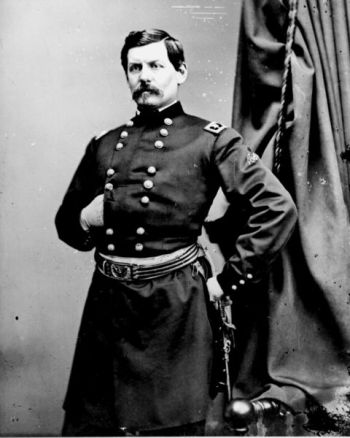 Peacetime Generals: Too Fearful of Losing to Risk Winning
 Scott at Powerline has a
  It's about "nudging," and our blog friend
  Some say P.J.O'Rourke is the new Mark Twain; but of course I'm the new Mark Twain so that can't be. He is the new Mencken, at least, or as fierce as Bierce, surely. I can't tell if he's lazy or smart --I imagine it's both-- because he almost never writes anything. He certainly never writes anything not worth reading.
  Our
Our  This is a weekly Saturday morning feature that will slowly, over time, turn you into a full-fledged computer expert. More info
  Whenever Teddy Roosevelt experienced a loss or deep disappointment, he would head off on an adventure - sometimes reckless ones. A paragraph from Candice Millard's fascinating

 If there is an epidemic of drooling pedophile lechers hanging around the beaches, it's news to me, but maybe Maine is different:
 Our blog pal Theo sent me this image re Obama as an impostor but, in fact, he is not. Obama gets in trouble whenever he says what he thinks - and either he or his wife do it all the time. They don't hide it.
  Lesson 1: Search Engine Tips