We are a commune of inquiring, skeptical, politically centrist, capitalist, anglophile, traditionalist New England Yankee humans, humanoids, and animals with many interests beyond and above politics. Each of us has had a high-school education (or GED), but all had ADD so didn't pay attention very well, especially the dogs. Each one of us does "try my best to be just like I am," and none of us enjoys working for others, including for Maggie, from whom we receive neither a nickel nor a dime. Freedom from nags, cranks, government, do-gooders, control-freaks and idiots is all that we ask for.
The title is a real question, I'd like to hear what people think.
Our department was given a briefing on yet another huge company-wide initiative to aggregate and coalesce all data, allowing us to develop relationships across whole departments and sectors of the businesses we run. It's a tremendous opportunity, and one which is needed if you consider what Facebook and Google are doing with data (among many other firms that have well-developed data management groups).
I had several questions about the project. For one, was there a revenue impact which was expected to offset the cost, and if so how was it calculated? What was the timeline for introduction at departmental and company-wide levels? What were the expectations of the use of the data? Was it better to implement in a piecemeal fashion, department by department - continuing the current path we are on - or was their top-down approach more efficient and likely to yield better results? Each question received an answer, sometimes dismissive, which led to more questions.
I was viewed negatively for my inquisitiveness. I explained I wasn't opposed to the project, but that I'd seen projects like this many times. None have worked as expected and most never paid off. These were not reasons to avoid doing it, but it is good to ask questions and be sure. I was told to 'trust' the data scientists, none of whom I know, and don't stand in the way. I acquiesced, and ceased my questions. Groupthink is a powerful thing. Data was here to save our business, I was assured.
On the train ride home, I ran into a colleague from another department who is much closer to this project and he told me even more details about the project. For one, it was the third attempt by this team to implement the 'vision' (so much for trust!). For another, they were abandoning all the work done in the previous 2 operations and starting from scratch, meaning work which had been done on all the old systems had to be reassessed and either tossed or transferred to newer platforms. Finally, they'd spent exorbitant sums of money already, to the point that break-even was probably 10 years off, assuming they met their 4 year timeline. He listened to my questions and nodded, saying they were all the right questions and there was good reason to question the nature and scope of this project.
Google, Facebook and all the other firms with huge data systems have the benefit of being young and starting from scratch while new technologies were being introduced. This is how business works, it's part of the process of creative destruction. The newer companies benefit from untried, but potentially beneficial products, living or dying by their ability to manage and incorporate these ideas and technology. Older companies have to try and keep up, and many are incapable of doing so. However, these older firms need to be careful about the implementation. Data is as much about art as it is about what the data tells us, sometimes less is more. Sometimes your gut tells you as much as $10mm worth of information does. I have seen people collect information on months-long projects only to confirm suggestions which were made at the outset. The delays cost money. There are rare, very rare, occasions when the data tells us something different. Sometimes the reason it tells us something different is due to the time delay in collecting the data. Perhaps this is a form of Heisenberg's Cat played out in the realm of business.
I am a huge believer in collecting and managing data. My job relies on it. But as I tell my boss, data and technology are like Stradivarius violins. You can give me a Stradivarius and I will make awful noise with it. Give it to a concert violinist, and beautiful music is made. The same is true of data. Many data scientists today, I've found, make very basic mistakes in their assumptions about what data tells them. The most common is the confusion over causation and correlation. I have had arguments with PhDs over this very issue when they present correlative data without proving the linkage to causation.
Baseball is a great example of this point. Sabermetrics have revived and increased my interest in the game. Yet Sabermetrics have limits. A cute, sappy movie Trouble With The Curveillustrates where data intersects with knowledge and experience. Data can provide support, but it takes experience to know what that data is telling you.
Dr. Joy Bliss recently posted about this issue, as the problem has infected even the realm of medicine and health.
Michael Crichton famously warned us of the problem of politicized science and data. Sadly, many intelligent people remain ignorant of misplaced trust in data, demonizing critics without explaining fully why the critics' logic is flawed.
A company, like the one which employs me, is just as likely to politicize positions. We call it groupthink. In my briefing, I was not part of the groupthink. I enjoy being on the outside. I may be wrong at times, but when I am, I'm happy to know that I have played the role of Captain Obvious, asking difficult questions in a fashion to open up the thought process further - if it can be opened up further. Sadly, as I watch what happens in the office, I begin to understand why Progressives remain so prevalent in our society. They are incapable of moving past groupthink. If everyone else is doing it, it must be good - right?
I think it's generally a bad idea, but I have done it many times including around NYC. A good adventure for sure at night, but daytime is fine. Here's something, but it's the half-drunks and the immigrants in cars that are the problem and I do not think this will have any impact on them because they are too busy jostling cars and dinging pedestrians to worry about bikers:
It is indeed an eating disorder which is probably related to, and often overlaps, the other eating disorders. Unlike the other eating disorders, it seems harmless enough although irrational, a waste of time, and annoying to others. A waste of effort and money too. Basically another variant of the obsessional neuroses.
Vegans, organics, gluten freaks, Whole Foods, and all that silliness.
Nobody can define healthy eating and it doesn't matter as far as we can tell. Therefore, if you worry about food we say you just need to get a life. A social life, wholesome hobbies, etc. Unless you need to lose weight for health and vigor, to prevent arthritis and diabetes, etc, that is. Does your cholesterol count matter for anything? Not at all, unless you have the genetic disease of hypercholesterolemia which is detectable early in life. In that case, you take pills, cross your fingers, and pray.
Universities exist to provide students with the knowledge, skills, and culture that will prepare them for life, while enhancing the intellectual capital upon which we all depend. Evidently the two purposes are distinct. One concerns the growth of the individual, the other our shared need for knowledge. But they are also intertwined, so that damage to the one purpose is damage to the other. That is what we are now seeing, as our universities increasingly turn against the culture that created them, withholding it from the young.
The years spent at university belong with the rites of initiation studied by the Victorian anthropologists, in which those born into the tribe assume the burden of perpetuating it. If we lose sight of this, it seems to me, then we are in danger of detaching the university from its social and moral purpose, which is that of handing on both a store of knowledge and the culture that makes sense of it...
There are hundreds of elitist, WASPy, old private communities like this scattered around the Northeast. Many operate as, or like, private clubs and some are more informal. I know about a lot of them, but have not been to many of them. They tend to be so discreet that you would not know about them.
Blooming Grove is great with thousands of acres, several streams and lakes and great old houses, but you have to be related to one of the founders to have a house there.
Inside the museums, Infinity goes up on trial Voices echo this is what salvation must be like after a while But Mona Lisa musta had the highway blues You can tell by the way she smiles See the primitive wallflower freeze When the jelly-faced women all sneeze Hear the one with the mustache say, “Jeeze I can’t find my knees” Oh, jewels and binoculars hang from the head of the mule But these visions of Johanna, they make it all seem so cruel
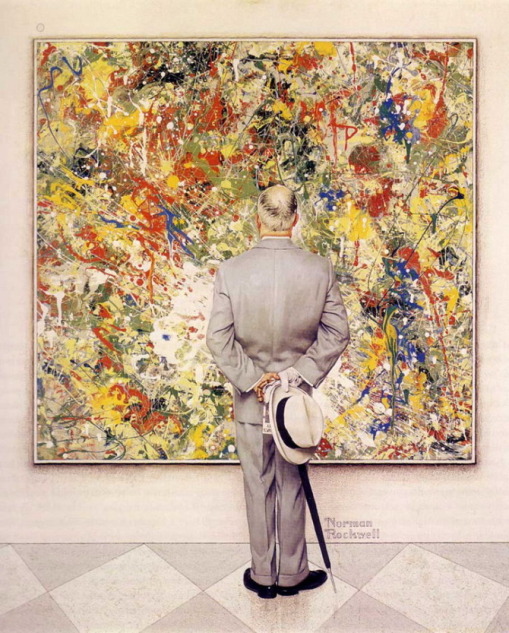
Michael O'Hare has plenty of complaints about art museums in Museums Can Change—Will They? Our great art institutions are cheating us of our artistic patrimony every day, and if they wanted to, they could stop.
Some of his gripes are reasonable, but some are not. Here are some of my points:
Museums are not just show places. They are safe repositories. Their stored things are used for sharing with other museums, for special exhibitions, study, etc.
Can looking at pictures be brain-deadening? Sure. I call it "museum brain." My limit is one hour, to see some things targeted in advance. It's overstimulating.
Are museums sort-of deadly environments? Yes. They are designed to highlight precious stuff in a sterile, non-distracting environment where everybody has access. Access is a good thing. However, little or nothing that one sees at the Met or at the Kunsthistorisches Museum was made for museum viewing. It was all made for a function, or for decor, in non-museum places - public or private. For entertainment, really, whether in church or in secular. Treating pictures as sacred relics in a Church of Art distorts the thing. When you see a single Picasso oil in somebody's living room, it's a different experience and you see it for what it is - totally cool and interesting decor mostly.
Related to that, the most comfortable museum I've used is the Belvedere. It is one of the first public art musems in the world. Everything is just hung or placed in the old Hapsburg palace as if it belonged there. Give it a try. The Frick is a bit like that too. It was somebody's house and people can still throw parties, weddings, etc. there with the Fragonards doing what they were meant to do - produce delight.
For Passover, a friend sent along his reminiscences of growing up Jewish:
Brisket is not the same as Corned Beef!
This goes back 2 generations, 3 if you are over 50. It also explains why many Jewish men died in their early 60′s with a non-functional cardiovascular system and looked like today’s men at 89.
Before we start, there are some variations in ingredients because of the various types of Jewish taste (Polack, Litvack, Deutch and Gallicianer). Sephardic is for another time.
Just as we Jews have six seasons of the year (winter, spring, summer, autumn, the slack season, and the busy season), we all focus on a main ingredient which, unfortunately and undeservedly, has disappeared from our diet. I’m talking, of course, about SCHMALTZ (chicken fat).
SCHMALTZ has, for centuries, been the prime ingredient in almost every Jewish dish, and I feel it’s time to revive it to its rightful place in our homes. (I have plans to distribute it in a green glass Gucci bottle with a label clearly saying: “low fat, no cholesterol, Newman’s Choice, extra virgin SCHMALTZ.” (It can’t miss!) Then there are grebenes – pieces of chicken skin, deep fried in SCHMALTZ, onions and salt until crispy brown (Jewish bacon). This makes a great appetizer for the next cardiologist’s convention.
There’s also a nice chicken fricassee (stew) using the heart, gorgle (neck) pipick (gizzard – a great delicacy, given to the favorite child), a fleegle (wing) or two, some ayelech (little premature eggs) and other various chicken innards, in a broth of SCHMALTZ, water, paprika, etc. We also have knishes (filled dough) and the eternal question, “Will that be liver, beef or potatoes, or all three?”
Other time-tested favorites are kishkeh, and its poor cousin, helzel (chicken or goose neck). Kishkeh is the gut of the cow, bought by the foot at the Kosher butcher. It is turned inside out, scalded and scraped. One end is sewn up and a mixture of flour, SCHMALTZ, onions, eggs, salt, pepper, etc., is spooned into the open end and squished down until it is full. The other end is sewn and the whole thing is boiled. Often, after boiling, it is browned in the oven so the skin becomes crispy. Yummy!
My personal all-time favorite is watching my Zaida (grandpa) munch on boiled chicken feet.
For our next course we always had chicken soup with pieces of yellow-white, rubbery chicken skin floating in a greasy sea of lokshen (noodles), farfel (broken bits of matzah), tzibbeles (onions), mondlech (soup nuts), kneidlach (dumplings), kasha (groats), kliskelech and marech (marrow bones) . The main course, as I recall, was either boiled chicken, flanken, kackletten, hockfleish (chopped meat), and sometimes rib steaks, which were served either well done, burned or cremated. Occasionally we had barbecued liver done to a burned and hardened perfection in our own coal furnace.
Since we couldn’t have milk with our meat meals, beverages consisted of cheap soda (Kik, Dominion Dry, seltzer in the spritz bottles). In Philadelphia it was usually Franks Black Cherry Wishniak (vishnik).
Gosh, I love this crazy city, but sometimes I like to get away from it for a little serenity. Then I get bored, and need to get back. As a country boy, you just need all that stimulation and hustle-bustle.
From my reading, it seems that New Amsterdam was more foundational to America than Plymouth ever was. And New Amsterdam was there first, as a speculative project of the Dutch West Indies Company. It was a wild and crazy multicultural tolerant, commercial place in 1623 and they mostly got along with the Indians. It is often omitted from the history that this is where the Pilgrims were headed.
I agree that ignorance of the law should be part of a defense except for the obvious crimes, because 300,000 laws is more than anybody could know or even understand. This is from Reynolds in USA Today:
"Regulatory crimes" ... are incredibly numerous and a category that is growing quickly. They are the ones likely to trap unwary individuals into being felons without knowing it. That is why Michael Cottone, in a just-published Tennessee Law Review article, suggests that maybe the old presumption that individuals know the law is outdated, unfair and maybe even unconstitutional. "Tellingly," he writes, "no exact count of the number of federal statutes that impose criminal sanctions has ever been given, but estimates from the last 15 years range from 3,600 to approximately 4,500." Meanwhile, according to recent congressional testimony, the number of federal regulations (enacted by administrative agencies under loose authority from Congress) carrying criminal penalties may be as many as 300,000.
In relation to the economy, for example, Adam Smith placed ‘a due administration of justice’, alongside peace and easy taxes, as one of the three requisites for wealth. The other half of The Wealth of Nations are his recently discovered Lectures on Jurisprudence, first published in 1978. Smith wrote about how English law seemed in its certainty, its complexity and its concern with property to be ideally suited to be a foundation for commercial capitalism. He noted for that ‘there is no country in Europe, Holland itself non-excepted, of which the law is, upon the whole more favourable in this sort of industry.’1 He also writes of ‘that equal and impartial administration of justice which renders the rights of the meanest British subject respectable to the greatest, and which, by securing to every man the fruits of his own industry, gives the greatest and most effectual encouragement to ever sort of industry…
Now that we have finally been informed by our intellectual superiors that a real breakfast is healthier than fattening grains and fattening fruit, a new heresy appears to attack the dietary consensus: Breakfast is not important (unless you are a growing child or do physical labor all day)
Of course not. I thrive on coffee for breakfast, maybe with a cigar or some tobacco. A good diner breakfast, much as I love it on the rare occasion, puts me to sleep instead of giving me energy to do things.
Boring topics, I know. Boring only in part because those who write about them tend to be pure Materialists, assuming that money and bourgeois comforts are all that matter in life. I always find that strange from Lefties, but Lefties do love and envy money more than I do. As I have observed before, Maine Guides, NYC would-be actors, adjunct faculty, organic farmers, grad students, carpentry apprentices, etc. all are below the poverty level. They neither need nor want any sympathy.
I see no virtue in economic equalizing. It never worked anywhere, and efforts to impose it by force generally end up with plutocratic, privileged bureaucrats and a nation of serfs serving the State. Why ‘inequality’ can be ‘beautiful’. Furthermore, many people do not base their life choices on money but instead on things more important to them.
Poverty in the US? Let's define it first. The US has an extensive safety net able to contain the unfortunate, the feckless, the mentally-ill, the temporarily out of work, etc., etc. We even go overboard with disability, providing for people who could easily do something useful in the world but are working the system. Nobody in the US goes without food, shelter, and a big screen TV if they want those things. Notable also is that US poverty stats do not include any government charity or private charity contributions. Of course, family always helps out first, and that is ignored too.
Still, poverty will never go away as long as it is defined as the lowest x% of US income. I am still awaiting the official study which can tell me exactly who "the poor" are in America, and whether they care. NYT: How poor are the poor?
The American legal philosopher Joel Feinberg attacked Mill by saying that we feel offence like a wound. You only have to think about the hurt from slights that have stayed with you longer than the pain from a broken bone to see the truth in his argument. Societies and individuals feel disgust, revulsion, shock, shame and embarrassment when they hear views that don’t physically harm them, Feinberg said in the 1980s. They can and should replace Mill’s “harm principle” with his “offence principle”—that the law can stop speech that causes serious offense.
Feinberg’s mild authoritarianism buttressed the illiberal version of liberalism that flourishes to this day. It supports the laws against “hate speech” which may not be so hateful it provokes its audience to violence, but is still grossly offensive. It provides the philosophical justification for the incessant Twitter storms and media fits about “gaffes”, “misspeaks”, or to use a modern phrase that reeks of the Victorian drawing-room, “inappropriate language”.
Go into the modern university and you won’t hear much about Mill or Milton or the millions around the world who have had to learn the hard way why freedom of speech matters. Instead, you will be fed philosophers far less rigorous than Feinberg.
The totalitarian impulse is omnipresent, and must be resisted at all times. The "offence principle," however, is nothing but a self-ridiculing bullying tactic which deserves mockery rather that resistance. If you equate offense with a wound, you live on the wrong planet. I am offended by people and things continuously, and that's normal life. But this is not really about emotional wounds - it's a bullying tactic and rarely if ever genuine. Not that that matters anyway.
True or false: Modern medicine is a miracle that has transformed all of our lives.
If you said “true,” you’d be right, of course, but that’s a statement that demands an asterisk, a “but.” “We’ve been wrong about what our job is in medicine,” writes Atul Gawande, a surgeon (at Brigham and Women’s Hospital in Boston) and a writer (at the New Yorker). “We think. . .[it] is to ensure health and survival. But really. . .it is to enable well-being. And well-being is about the reasons one wishes to be alive.” Through interviews with doctors, stories from and about health care providers (such as the woman who pioneered the notion of “assisted living” for the elderly)—and eventually, by way of the story of his own father’s dying, Gawande examines the cracks in the system of health care to the aged (i.e. 97 percent of medical students take no course in geriatrics) and to the seriously ill who might have different needs and expectations than the ones family members predict. (One striking example: the terminally ill former professor who told his daughter that “quality of life” for him meant the ongoing ability to enjoy chocolate ice cream and watch football on TV. If medical treatments might remove those pleasures, well, then, he wasn’t sure he would submit to such treatments.) Doctors don’t listen, Gawande suggests—or, more accurately, they don’t know what to listen for. (Gawande includes examples of his own failings in this area.) Besides, they’ve been trained to want to find cures, attack problems—to win. But victory doesn’t look the same to everyone, he asserts. Yes, “death is the enemy,” he writes. “But the enemy has superior forces. Eventually, it wins. And in a war that you cannot win, you don’t want a general who fights to the point of total annihilation. You don’t want Custer. You want Robert E. Lee... someone who knows how to fight for territory that can be won and how to surrender it when it can’t.” In his compassionate, learned way, Gawande shows all of us—doctors included—how mortality must be faced, with both heart and mind.
Memorial Sloan-Kettering Hospital in New York is likely the foremost cancer center in the world. However, in US rankings, it is at the bottom of hospital rankings because most of their patients die, as one might expect from a tertiary care cancer center. If you looked at the rankings, you would avoid the place as a death trap.
For another example, cardiac surgeons who are willing to take on the most difficult, or oldest, cases have the worst survival ratings. Of course they do. They are the best at what they do so they take on high-risk cases.
"Today, one of the most powerful religions in the Western World is environmentalism. Environmentalism seems to be the religion of choice for urban atheists. Why do I say it’s a religion? Well, just look at the beliefs. If you look carefully, you see that environmentalism is in fact a perfect 21st century remapping of traditional Judeo-Christian beliefs and myths.
There’s an initial Eden, a paradise, a state of grace and unity with nature, there’s a fall from grace into a state of pollution as a result of eating from the tree of knowledge, and as a result of our actions there is a judgment day coming for us all. We are all energy sinners, doomed to die, unless we seek salvation, which is now called sustainability. Sustainability is salvation in the church of the environment. Just as organic food is its communion, that pesticide-free wafer that the right people with the right beliefs, imbibe. . . .
There is no Eden. There never was. What was that Eden of the wonderful mythic past? Is it the time when infant mortality was 80%, when four children in five died of disease before the age of five? When one woman in six died in childbirth? When the average lifespan was 40, as it was in America a century ago. When plagues swept across the planet, killing millions in a stroke. Was it when millions starved to death? Is that when it was Eden?"
People maximize their advantages, because it produces choices. Choices are good. Everybody has some advantages, talents, gifts. Building social capital is what intact, functional families pursue because it makes life better and more fun for everybody.




 For Passover, a friend sent along his reminiscences of growing up Jewish: