Wednesday, January 7. 2009
It's a "best essay" because it is thought-provoking. The Claremont Institute has reposted Charles Kesler's 2005 The Crisis of American Identity in memory of Harvard's Samuel Huntington. One quote:
Huntington outlines two sources of national identity, a set of universal principles that (he argues) cannot serve to define a particular society; and a culture that can, but that is under withering attack from within and without. His account of culture is peculiar, narrowly focused on the English language and Anglo-Protestant religious traits, among which he counts "Christianity; religious commitment;…and dissenting Protestant values of individualism, the work ethic, and the belief that humans have the ability and the duty to try to create heaven on earth, a 'city on a hill.'" Leave aside the fact that John Winthrop hardly thought that he and his fellow Puritans were creating "heaven on earth." Is Huntington calling for the revival of all those regulations that sustained Winthrop's merely earthly city, including the strictures memorably detailed in The Scarlet Letter? Obviously not, but when fishing in the murky waters of Anglo-Protestant values, it is hard to tell what antediluvian monsters might emerge. If his object is to revive, or to call for the revival of, this culture, how will he distinguish its worthy from its unworthy parts?
another:
Modern liberalism, beginning in the Progressive era, has done its best to strip natural rights and the Constitution out of the American creed. By emptying it of its proper moral content, thinkers and politicians like Woodrow Wilson prepared the creed to be filled by subsequent generations, who could pour their contemporary values into it and thus keep it in tune with the times. The "living constitution," as the new view of things came to be called, transformed the creed, once based on timeless or universal principles, into an evolving doctrine; turned it, in effect, into culture, which could be adjusted and reinterpreted in accordance with history's imperatives. Alternatively, one could say that 20th-century liberals turned their open-ended form of culturalism into a new American creed, the multicultural creed, which they have few scruples now about imposing on republican America, diversity be damned.
To his credit, Huntington abhors this development. Unfortunately, his Anglo-Protestant culturalism, like any merely cultural conservatism, is no match for its liberal opponents. He persists in thinking of liberals as devotees of the old American creed who push its universal principles too far, who rely on reason to the exclusion of a strong national culture. When they abjured individualism and natural rights decades ago, however, liberals broke with that creed, and did so proudly. When they abandoned nature as the ground of right, liberals broke as well with reason, understood as a natural capacity for seeking truth, in favor of reason as a servant of culture, history, fate, power, and finally nothingness. In short, Huntington fails to grasp that latter-day liberals attack American culture because they reject the American creed, around which that culture has formed and developed from the very beginning.
Friday, January 2. 2009
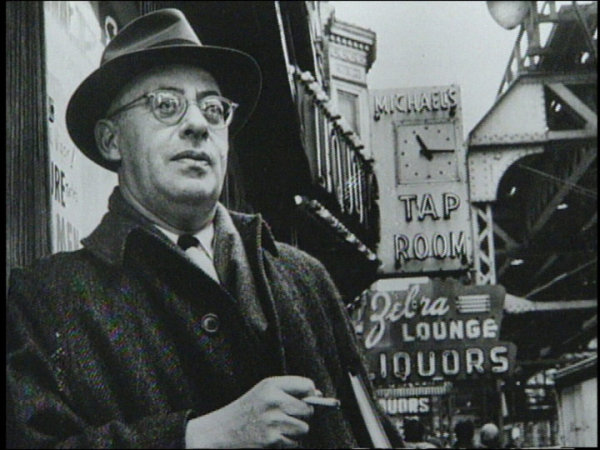
Alinsky is the best-known American Gramscian. The Chicago community organizer who was an inspiration to Hillary Clinton (and maybe indirectly to Obama) wrote a deeply cynical handbook for radicals who seek power. His rules for power tactics are here. We can see those rules followed and enacted every day, mainly in Left-wing in politics.
 Thanks to SDA for alerting us to a new model of the Antikythera Device. It's more of a calculator than a computer. Thanks to SDA for alerting us to a new model of the Antikythera Device. It's more of a calculator than a computer.
Most remarkable: they still have the original instruction manual for the 2100 year-old machine. I am missing the manuals for stuff I bought a year ago.
The video about the machine here.
Tuesday, December 30. 2008
Joe Skelly at NRO remembers O'Brien, who died a week ago at 91, and linked O'Brien's 1990 essay in the national Review, A Vindication of Burke. It's a rich historical essay, and would serve as a fine intro to Burke's work. Just one quote from it: 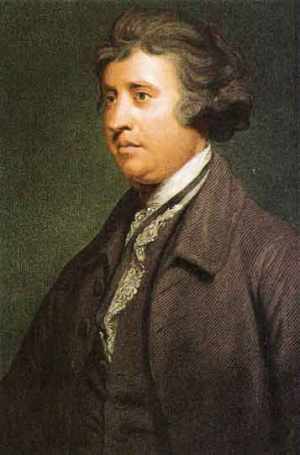 The grand distinguishing feature of the Reflections is the power of Burke’s insight into the character of the French Revolution, then at an early stage. This insight is so acute as to endow him with prophetic power. He sees what way the Revolution is heading. No one else seems to have done so at the time. The spring and summer of 1790 — the period in which Burke wrote the Reflections — was the most tranquil stage, in appearance, in the history of the Revolution. It was a period of constitution-making, of benevolent rhetoric, and of peaceful jubilation, as in the Déclaration de Paix au Monde on May 21, 1790, or the Fête de la Fédération on July 14, 1790, celebrating the first anniversary of the fall of the Bastille. The grand distinguishing feature of the Reflections is the power of Burke’s insight into the character of the French Revolution, then at an early stage. This insight is so acute as to endow him with prophetic power. He sees what way the Revolution is heading. No one else seems to have done so at the time. The spring and summer of 1790 — the period in which Burke wrote the Reflections — was the most tranquil stage, in appearance, in the history of the Revolution. It was a period of constitution-making, of benevolent rhetoric, and of peaceful jubilation, as in the Déclaration de Paix au Monde on May 21, 1790, or the Fête de la Fédération on July 14, 1790, celebrating the first anniversary of the fall of the Bastille.
Contemplating that attractive scene, in the spring and summer of 1790, most people seem to have assumed that the French Revolution had already taken place, and that all that remained was to reap its benign consequences. Burke sensed that the Revolution was only beginning. In the penultimate paragraph of the Reflections, Burke warned that the French “commonwealth” could hardly remain in the form it had taken in 1790: “But before its final settlement it may be obliged to pass, as one of our poets says, ‘through great varieties of untried being,’ and in all its transmigrations to be purified by fire and blood.”
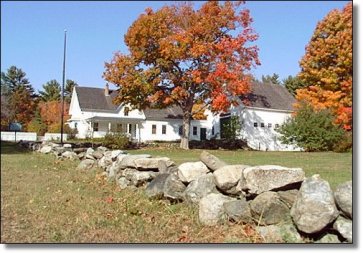 From Gene Expressions on Dec. 28: From Gene Expressions on Dec. 28:
Samuel Huntington died yesterday. Though famous for his Clash of Civilizations thesis, more recently he argued for an emphasis on the reality that this (the United States) is an Anglo-Protestant country. But I think that this assertion needs to clarified to a finer grained scale. In Albion's Seed: Four British Folkways in America, the author makes the claim that the culture of the United States is a synthesis of four strands of colonial settlers; New England Puritans, the Lowland Southerners (e.g., Tidewater Planters), the Highland Southerners (i.e., the Scots-Irish of Appalachia) and the polyglot peoples of the Mid-Atlantic (e.g., Quakers of Philadelphia, Dutch Patroons of New York and Swedes of Delaware, etc.). After reading quite a bit of American history, especially the period between 1600 and 1850, I think that over the long haul the concrete political and social realities of America owe much more to New England than the other regions. Â After I came to this conclusion (which I will flesh in more detail later), I couldn't help but note that today New England isn't included in the "Real America."
Monday, December 29. 2008
At vacation times, we like to re-post old material. The Dyl has proclaimed this week Gramsci week, so we'll re-post old Gramsci-related stuff daily. This from a couple of years ago - It is difficult to understand what has been happening politically in the US and in Europe for the past 30 years without understanding the influence of Gramsci (1891-1937) on Western Leftist thinking and strategizing. Gramsci was a clever Italian neo-Marxist who realized that the West, due to its prosperity, its increasingly-wide access to education and opportunity, social mobility, and its readiness to repair injustices (due to its Judeo-Christian morality), would never be amenable to a violent proletarian socialist revolution. So he came up with Plan B, which is often termed "Gramscian tactics." These were based on the idea, as the good Wiki entry says:  Capitalism, Gramsci suggested, maintained control not just through violence and political and economic coercion but also ideologically, through a hegemonic culture in which the values of the bourgeoisie became the 'common sense' values of all. Thus a consensus culture developed in which people in the working-class identified their own good with the good of the bourgeoisie, and helped to maintain the status quo rather than revolting. Capitalism, Gramsci suggested, maintained control not just through violence and political and economic coercion but also ideologically, through a hegemonic culture in which the values of the bourgeoisie became the 'common sense' values of all. Thus a consensus culture developed in which people in the working-class identified their own good with the good of the bourgeoisie, and helped to maintain the status quo rather than revolting.
Thus Western "hegemonic culture" became the enemy - even more so than "the ruling class," which was simply a reflection of bourgeois culture. And defeating that enemy could not be done with guns. It required a "long march through the culture" to slowly discredit and undermine its institutions, values, and foundations. This was a brilliantly destructive idea. Eventually, the society would fall apart, opening the way to totalitarian socialism to rescue the mess. Thus the nihilistic flavor of the Western Left which is always seemingly-incomprehensively mingled with extreme Statism. One might well ask why he wasn't satisfied with the remarkable outcome of Western regulated markets, the growth of the welfare state, unionization, etc. - but he wasn't. He was determined to remain true to Marx and to find a non-revolutionary path to economic totalitarianism. A central component of the culture war he envisioned was the war on religion (also Wiki): Gramsci stated that, in the West, bourgeois cultural values were tied to Christianity and therefore much of his polemic against hegemonic culture is aimed at religious norms and values. He was impressed by the power Roman Catholicism had over men's minds and the care the Church had taken to prevent an excessive gap developing between the religion of the learned and that of the less educated. Gramsci believed that it was Marxism's task to marry the purely intellectual critique of religion found in Renaissance humanism to the elements of the Reformation that had appealed to the masses.
I hope I do not sound paranoid when I soberly say that much of the wacky, upside-down, right-is-wrong, black-is-white stuff we see in the news these days is directly or indirectly inspired by Gramsci: the attacks on Christianity, the family, individual freedom, morality and moral judgements; multiculturalism; the cult of victimhood, "tolerance," political correctness, the replacement of the roles of family, religion, individual responsibility and choice with government rules, laws, and regs; the expansion of the State and the Welfare State and the Nanny State; anti-tradition, anti-capitalism, anti-success, anti-nationalism, anti-Americanism and anti-Westernism, etc - all the stuff that makes me echo Bob Grant with "It's sick out there, and getting sicker." I am sure Antonio never anticipated that a Green movement would emerge to become an ally of the slow, incrementalist and thus less-alarming Gramscian revolution. Yes, it is all ultimately about suppression of the individual soul and spirit - his freedom, autonomy, initiative and self-definition - the highest and most noble notions of Western Civilization - in pursuit of a collectivist utopia run by "them." In short, it's about the location of power and money. OK. This is getting too long-winded for Maggie's ADD writers and readers and Editor. This Town Hall post from last year, The New Left, Cultural Marxism, and Psychopolitics Disguised as Multiculturalism is a nice little piece on the subject. I am sure our readers have many more, better links and commentary.
Tuesday, December 16. 2008
Rush likes to joke about enviro-Nazis, but I didn't know how Greenie the Nazis actually were. And no, I am not invoking Godwin's Law here.
Tuesday, December 9. 2008
This from our guest poster Bruce Kesler, who has a long history of writing about Vietnam: The election of Vietnamese refugee Joseph Cao as a Republican in the most heavily Democrat congressional district in America (11% Republican), drawn to elect a Black (2/3rds Black population), comes as a surprise to some. Reasons given center around his community service record in post-Katrina New Orleans, the utter corruption of incumbent William Jefferson, and the reduced turnout of Blacks in this ballot postponed because of Hurricane Gustav. Various lessons are being proposed: Republican leadership call it an example of the results of a broader ethnic base and better ethics, calling for more. BlackVoices blog says a new generation of Black politicians cannot just count on racial solidarity but must demonstrate better ethics and effectiveness. Democrats expect a better candidate to reclaim the district in 2010, but expect a fight. While probably just a temporary balm to bashed Republican egos, this election of the first Vietnamese to Congress is notably ignored in all the state-run Vietnam news agencies which usually never miss an opportunity to herald the many accomplishments of refugee Vietnamese as if its own. Like refugees from communist oppression in Cuba or Russia, the Vietnamese in the US lean heavily Republican, the Vietnamese by 2-1. The lesson they’ve learned is that American ideals and policies are more to be valued than among many US natives who take them for granted or, even, denigrate the US compared to tyrannical regimes and ideologies. I’m probably unique among bloggers in writing many dozens of detailed, well-documented blog posts over the past few years about the ongoing political and religious repression in Vietnam and its ethnic cleansing brutality toward its minorities. And, probably nothing else I’ve written about has generated less interest. I won’t belabor the reader here with a repetition, but point those interested to a few good, brief introductory sources: Human Rights Watch “Speaking Up for Vietnam,” (many, many reports and analyses at HRW’s website); Former USAID worker and POW in Vietnam, tireless human rights advocate Mike Benge’s latest summary; the Montagnard Foundation’s report on ethnic cleansing (and ongoing tracking of it); and denuding of its and neighboring Laos and Cambodia’s rainforests.
The Bush administration, focused on the Middle East imbroglio, has been relatively weak in challenging Vietnam’s oppression, while encouraging the import trade from Vietnam that generates a $10+ billion deficit but enriches some US firms and entrenches the political rulers of Vietnam by creating a more prosperous, mostly quiescent urban class. Still, some in Vietnam are not so easily bought off, leading to labor strikes against more exploitive wages and conditions than even in China and the majority Buddhists and the Catholics refusing to buckle under to the state churches that are allowed. Tensions will increase as the international economic tanking slows Vietnam’s export-driven growth.

Returning to Joseph Cao, he has been heavily involved in Boat People SOS, founded to help Vietnam’s refugees. One would expect him to be a voice in Congress for Vietnam’s oppressed. But, one should expect him to concentrate more upon his district’s domestic concerns, especially if he is serious about an uphill re-election in 2010.
The new Obama administration, looking to relax US pressure on another communist relic in Cuba, is not likely to take up Vietnamese human rights more strongly. If Cao’s voice on Vietnam’s suffering population is to be magnified, it will require more Americans and Congressmen taking an interest in Vietnam’s oppression. The Vietnam Human Rights Network has easy links to most every international report on Vietnam, including from Amnesty International, Human Rights Watch, Freedom House, the US Commission on International Religious Freedom, Reporters Without Borders, and many more, all condemning Vietnam’s continuing oppression.
Another worthy cause is the Vietnam Healing Foundation run by my good friend R.J. DelVecchio, former Marine combat photographer in Vietnam and frequent visitor since. It is the only one that tries to aid severely wounded and destitute former South Vietnamese soldiers who continue to be denied basic food or medicine by Vietnam’s regime.
Whether Joseph Cao’s election promises any lasting relief to the US from more ethical Republicans or Black politicians is open to serious question. More important to Americans’ ethical relief would be more support for Vietnam’s long-suffering people.
Sunday, December 7. 2008
Sunday, December 7, 1941 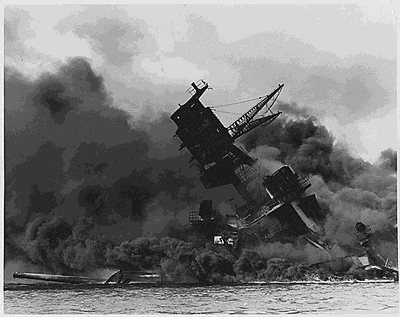
Saturday, December 6. 2008
Dino revisits his topic of the "lazy, easy" lives we have been leading in recent years. Can we awaken from the dreams? One quote: “The American boy of 1854 stood closer to the year 1 than to the year 1900.” Soon, almost no one in America will have a visceral understanding of what 1854 was like, and what the heck Henry Adams was talking about.
Another: A typical boy of 1854 knew what farming was like and may well have worked on a farm, knew horses and other animals, and learned how to maintain and fix things, from houses to wagons to furniture. A typical young man of 1947 had been in the army, knew people who lived on farms, could tune and maintain his own car, and could change the fan belt on the refrigerator and refill it with Freon. Both the boy and the young man had some feel for the technologies that were developing and changing around them, since the technologies were often sized on a human scale and involved mechanical processes that they had some acquaintance with. To an important extent, this is no longer true. You can’t fix an iPod the way you can fix a record player; indeed you can’t even easily open up an iPod to understand it, as you could unscrew the turntable cover to figure out how 33 1/3 rpm became 45 rpm. Nor can you fool around with a Toyota Prius the same way you could try to replace a 283 with a 327 in a ‘57 Chevy.
Read the whole thing.
Wednesday, November 26. 2008
 On September 6, 1620, our Pilgrim Fathers and Mothers set sail from Holland, where many Puritans had fled, to England to furnish the boat and pick up more passengers, and headed to what was called "North Virginia" - New York harbor, specifically. On September 6, 1620, our Pilgrim Fathers and Mothers set sail from Holland, where many Puritans had fled, to England to furnish the boat and pick up more passengers, and headed to what was called "North Virginia" - New York harbor, specifically.
They left too late in the year. The leaky Speedwell slowed them down, and the Mayflower herself was an old tub. On November 9 they made landfall in Cape Cod (a mere 2 degrees off course), but found heading south to NY was treacherous with the autumn storms, so they gave up that effort and returned to the Cape, anchored in Provincetown Harbor, and began exploring Cape Cod (and stealing caches of Indian corn) until deciding on Plymouth as the spot to settle down for the very hard first winter. Only 50 of the 110 on board the Mayflower survived the first winter. Had they anticipated that catastrophe, they never would have left Europe. Samoset and Squanto appeared in March (Squanto spoke English, and had already been to England, and probably to Spain too), and helped them figure out how to live, farm, hunt, and fish, in rugged New England. Plymouth, fortunately, had many large, abandoned Indian corn fields so it wasn't too difficult to get the spring planting underway. How differently history might have developed had they ended up where they had intended in the environs of the soon-to-be wealthy Dutch mercantile colony of New Amsterdam.
Wednesday, November 19. 2008
"Let her (Truth) and Falsehood grapple; who ever knew Truth put to the worse in a free and open encounter?"
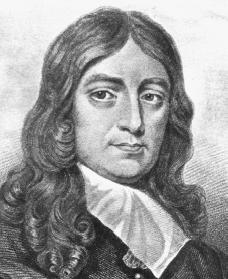 December 9th will be John Milton's 400th birthday (1608-1674). December 9th will be John Milton's 400th birthday (1608-1674).
A poet, for sure. People are doing fun things like this to celebrate Paradise Lost written, as he said, "to justify the ways of God to men." (It was also likely written to express his disappointment in the Restoration.)
Milton's writings primarily�dealt with�religion. He was a Protestant and a supporter�of Cromwell. Milton was a college drop-out (hated college and hated the other kids), and spent two years thereafter educating himself.�His father was a successful London scrivener, and Milton helped manage the family's business interests.
I'd like to highlight his pamphleteering, with which he busied himself before he wrote his epic poems. In the 1630s and 40's there were no newspapers, no broadsheets. Mass retail printing was just getting going, and "newsbooks" were in the future. There was little knowledge about current events for the average person, nor was government comfortable with that idea.
If you had some money, though, you could publish your thoughts and sell them as pamphlets. Those having other opinions would publish their own pamphlets in response. Public discussion and debate would ensue. This was citizen journalism, and sort of a blogging model.
Referring to his motives for writing pamphlets, he said:
I cannot praise a fugitive and cloistered virtue, unexercised and unbreathed, that never sallies out and sees her adversary, but slinks out of the race, where that immortal garland is to be run for, not without dust and heat.
 Milton's first well-known pamphlet was Divorce (1643), a provocative and�highly controversial theological defense of divorce. His views, it was said, would lead to social chaos. They referred to him as "The Divorcer,"�but he never did divorce. He was big on the modern notion of the "companionate marriage." Milton's first well-known pamphlet was Divorce (1643), a provocative and�highly controversial theological defense of divorce. His views, it was said, would lead to social chaos. They referred to him as "The Divorcer,"�but he never did divorce. He was big on the modern notion of the "companionate marriage."
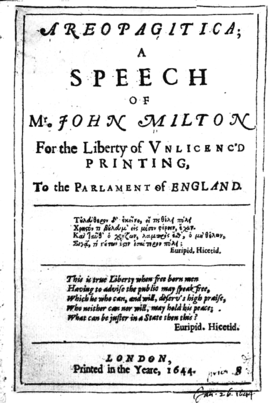
His best-known polemic today is Areopagitica (1644), written in defiance of, and as an attack on, government licensing laws on publication. (It was never a real speech.)
While often viewed today as a defense of freedom of speech (and most of his arguments tend that way), it was not written to propose free political speech: it was written to propose freedom of religious speech - freedom from government and church interference in seeking�God's truth. That was a distinctly Protestant view.�In his words:
And though all the winds of doctrine were let loose to play on the earth, so Truth be in the field, we do injuriously by licensing and prohibiting misdoubt her strength. Let her and Falsehood grapple; who ever knew Truth put to the worse in a free and open encounter?
For those interested in Milton's life, I recommend the highly enjoyable new Milton: Poet, Pamphleteer, and Patriot by Anna Beer.
Tuesday, October 28. 2008
Saturday, October 25. 2008
Thanks for the reminder, Jules: From this day to the ending of the world,
But we in it shall be remembered-
We few, we happy few, we band of brothers;
For he to-day that sheds his blood with me
Shall be my brother; be he ne’er so vile,
This day shall gentle his condition;
And gentlemen in England now-a-bed
Shall think themselves accurs’d they were not here,
And hold their manhoods cheap whiles any speaks
That fought with us upon Saint Crispin’s day.
Friday, October 24. 2008
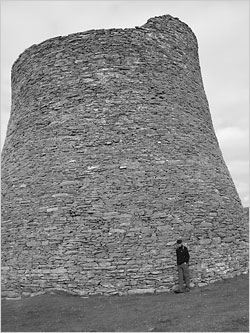 Will Self visits the most remote and God-forsaken of the Shetland Islands.I would like to go, unless Dem taxes prevent me from ever going anywhere again. These islands were Scandinavian until relatively recently. Photo by Will Self of the Brough of Mousa, a remarkably well-preserved Iron Age dwelling. More like a fortress. I'd guess it had a thatched roof on top. It is especially interesting to me because I am halfway through Francis Pryor's Britain BC. Do not read Pryor's book unless you want a ton of detail about prehistoric Britain. My sense is that pre-Neolithic, ie pre-agricultural man lived pretty much the same way everywhere on the planet, digging roots and picking nuts and killing stuff - including each other. Likely eating each other too. During most of that late-glacial history, Britain was connected to the Continent, with what is now the southern part of the North Sea being a giant marshy plain full of reindeer, elk, horses, pig, auroch, moose, beaver, and deer. (There are tons of prehistoric artifacts sitting in the now-undersea peat.) The Neolithic history is more interesting, and everything post-Neolithic isn't too much different from today except technologically.
Saturday, October 18. 2008
We already linked it, but I want to highlight this excellent essay in The Economist: A Short History of Modern Finance. It's a good clear intro for amateurs like me.
Sunday, October 12. 2008
 They said that Louis XlV had two baths in his life: one when he was born, and the second one killed him. They said that Louis XlV had two baths in his life: one when he was born, and the second one killed him.
Interesting review of two books on the history of cleanliness at Wilson Quarterly, but it does not explain why gals like baths and guys like showers. Our ancestors must have smelled ripe.
Friday, September 26. 2008
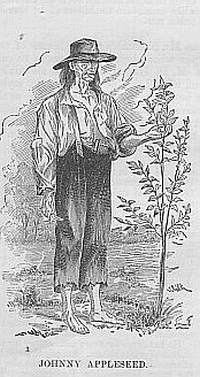 Johnny Appleseed - John Chapman - was an interesting character: an ascetic, a Swedenborgian missionary, and a nurseryman who had little interest in making money. Johnny Appleseed - John Chapman - was an interesting character: an ascetic, a Swedenborgian missionary, and a nurseryman who had little interest in making money.
Read about him and his unusual life at a good Wiki entry.
Thursday, September 25. 2008
Via Will Wilkerson, an excellent essay that undoes the myth that the US ever had entirely free markets.
Tuesday, September 23. 2008
Re our Yankee Stadium post yesterday, here's a photo of the "Old Met" from 1905, looking uptown. The yellow brick building stood at 1411 Broadway, occupying the block between 39th and 40th street. The Met moved to its new home in Lincoln Center in 1966, after which the Old Met, built in 1880, was torn down. 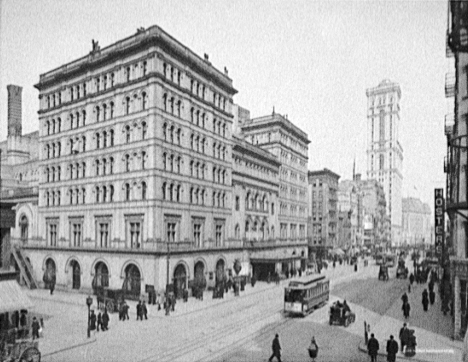
Sunday, September 21. 2008
A quote from Whittaker Chambers (h/t, Dr Bob): The New Deal was a genuine revolution, whose deepest purpose was not simply reform within existing traditions, but a basic change in the social, and, above all, the power relationships within the nation. It was not a revolution by violence. It was a revolution by bookkeeping and lawmaking. In so far as it was successful, the power of politics had replaced the power of business. This is the basic power shift of all the revolutions of our time. This shift was the revolution.
Tiger notes that, at times of possible economic collapse, moral hazard moves to the margin. He discusses Hamilton's handling of the Panic of 1792. How Washington and the politicians handled the Depression. Amy Shlaes discusses recovery without bailouts.
Sunday, September 14. 2008
“Wine, sex and baths ruin our bodies, but they are the stuff of life - wine, sex and baths.” The whole piece is here. h/t, Flares 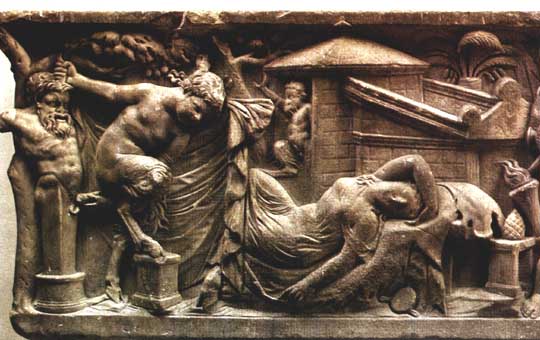
Saturday, September 13. 2008
 We may be a Yankee website, but we love the South - and the West. The Mid-west too. We may be a Yankee website, but we love the South - and the West. The Mid-west too.
We are a bit ambivalent about California, however, except for their wines, because it seems they put something strange in the water out there. THC or LSD or something. Luckily, it doesn't get into their grape juice. A reader alerts us to this site for interesting stuff: Southern Culture and History. "Veritate Superare." By the way, there is nothing racist about that flag. That was the battle flag of a proud but short-lived nation. "Insurgents," as the MSM might term them today.
Wednesday, September 10. 2008
How do societies do it, and how come some don't? The Culture of Prosperity
|