Monday, November 27. 2006
 Intelligence at work, from the Telegraph (h/t, Protein Wisdom): Intelligence at work, from the Telegraph (h/t, Protein Wisdom):
To understand the life-or-death significance of what the Pope does and says when he arrives in Istanbul, it is necessary to see this confrontation for what it is. This will involve some traumatic re-adjustment for most of the opinion-forming class in Britain. The first assumption that will have to go is the premise that Islamist terrorism can be understood in pragmatic, politically rational terms: in other words, that it can be addressed with the usual mechanisms of negotiation, concession and amended policy. The most readily accepted version of this is that a change to our policy in the Middle East will remove the grievances that “fuel” Muslim terrorism. The Cabinet has apparently been advised that all foreign policy decisions over the next decade should have the goal of thwarting terrorism in Britain and that this should involve “a significant reduction in the number and intensity of the regional conflicts that fuel terror activity”. So Britain is contemplating constructing a foreign policy, specifically in the Middle East, that is designed to give in to terrorist blackmail.
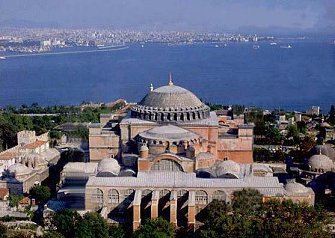
Well said. Why is it so difficult to understand that it's not about "grievances"? It's just old-fashioned imperialism, with a religious inspiration. Phony grievances have been used as excuses to rationalize warfare forever. Trojan War, for one. Editor's note: Speaking of the Pope visiting Istanbul, Tangled Web reminds us of how Constantinople "evolved" into a Moslem city. Yes, 1453 was a very "evolutionary" year for Constantinople: evolution by scimitar. You "evolve" quite a bit when your head is cut off. Image: Yes, the Hagia Sophia, The "Mother Church," the "Church of Holy Wisdom". Visit it, before you die. It's worth the trip.
This about sums it all up, for me. From a piece at View from 1776: The Constitution created a government of limited power for a religious and moral people. Political power was to be curbed by citizens’ God-given, inalienable, natural-law individual rights to life, liberty, and private property. As the English Glorious Revolution of 1689 established, when a ruler arbitrarily contravenes those rights, he has broken the social compact and thereby forfeited his right to rule. The paradigm of American liberal-progressive-socialists, in diametric contrast, is an authoritarian government that has both the right and the duty to determine how people should live their lives and even what thoughts are to be permitted expression in education and public forums. In the government envisioned by liberals, the “public good,” as defined by liberals, always trumps individual rights.
Sunday, November 26. 2006
Instapundit posted a link to this piece by Bennett in praise of our interstate highways. They get no praise from me. The romance of the open road? No thanks. Boring as hell. Not only that, the interstates were little more than a boondoggle for the car and real estate business. Why a boondoggle? Because these roads were bought by the taxpayers. The railroads, on the other hand, were paid for by the railroads. The highways created the urban sprawl which all aesthetes and conservation-minded folk, like me, deplore. Only those who live on the coasts know what these highways did to destroy, permanently, natural and agricultural areas - and to damage the railroad industry with government roads. I use them all the time, but I resent their existence nonetheless.
Sunday, November 19. 2006
Thanks to Neoneocon for highlighting Richard Thompson. British folk-rock? Whatever. The guy deserves it. For a taste, you can stream Mingulay Boat Song here.
Friday, November 17. 2006
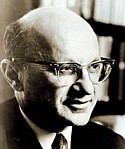 There's no such thing as a free lunch. There's no such thing as a free lunch.
Many people want the government to protect the consumer. A much more urgent problem is to protect the consumer from the government. I stand for the values of freedom, not just the practical benefits. Even if free market economics was not the most efficient system, I'd still be in favor of it because of the human values it represents of choice, challenge, and risk. Nobody spends somebody else's money as carefully as he spends his own. Nobody uses somebody else's resources as carefully as he uses his own. So if you want efficiency and effectiveness, if you want knowledge to be properly utilized, you have to do it through the means of private property. Underlying most arguments against the free market is a lack of belief in freedom itself. I think it's really disgraceful that the Republican Party, which preaches holding down the size of government, should have been, and the Bush administration should have been, such a big spender. I have found no reason whatsoever for having a public school system. You would have a better educational system—elementary and secondary system, if the government were not involved. Industrial progress, mechanical improvement, all of the great wonders of the modern era have meant relatively little to the wealthy.
The rich in Ancient Greece would have benefited hardly at all from modern plumbing: running servants replaced running water. Television and radio? The Patricians of Rome could enjoy the leading musicians and actors in their home, could have the leading actors as domestic retainers. Ready-to-wear clothing, supermarkets—all these and many other modern developments would have added little to their life.
The great achievements of Western Capitalism have redounded primarily to the benefit of the ordinary person. These achievements have made available to the masses conveniences and amenities that were previously the exclusive prerogative of the rich and powerful. The government solution to a problem is usually as bad as the problem. Nothing is so permanent as a temporary government program. The most important single central fact about a free market is that no exchange takes place unless both parties benefit. We cannot expect existing businesses to promote legislation that would harm them. It is up to the rest of us to promote the public interest by fostering competition across the board and to recognize that being pro-free enterprise may sometimes require that we be anti-existing business. A society that puts equality ahead of freedom...will end up with neither. The only way that has ever been discovered to have a lot of people cooperate together voluntarily is through the free market. And that's why it's so essential to preserving individual freedom. Concentrated power is not rendered harmless by the good intentions of those who create it. Most economic fallacies derive from the tendency to assume that there is a fixed pie, that one party can gain only at the expense of another. President Kennedy said, "Ask not what your country can do for you - ask what you can do for your country."... Neither half of that statement expresses a relation between the citizen and his government that is worthy of the ideals of free men in a free society.
Thursday, November 16. 2006
Milton Friedman has died. Age 94. We will be hearing a lot about him and his legacy, which is a good thing for sure.
Monday, November 13. 2006
Norm gets it: [L]et me repeat what I often say to students who come braying to me with postmodernist ideas: Suppose that I return a term paper to you with a failing grade and a note that reads, "I should give you a much better grade, but I hate your guts, so there." You will scream bloody murder, go to the dean, possibly sue me. What is the assumption behind your outrage? Obviously, you expect me to grade your paper fairly - that is, objectively - regardless of my feelings about you. But why do you demand this of me as a teacher while denying my ability to do it as a researcher?I've found, from my own experience, that when this kind of objection is put to them people of postmodernist outlook are not in fact lost for an answer. They will say something like this: 'Of course, there is an existing language game here, with its own rules, conventions and understandings, and within that language game we too know how to grade papers fairly and objectively.' Hooray, they know how to do it. They only fail to note how damaging this answer is for their opposition to the possibility of there being objective criteria. If everything is relative to one or another perspective, or cultural or intellectual framework, ruling out that there could be right and wrong (albeit always provisionally) about historical events, explanations of illness, ditto of the origin of species, and what have you, how does it suddenly happen that there's this thing called a language game which can be referred to just like that, as though what it is is clear to the vision, its rules are uncontroversial, its inner meanings and deployment of criteria supply a definitive way of resolving disagreement? If the pomo answer to this is to say that there is no such solid ground, because the language game itself is subject to the same relativizing effects that multiple different perspectives produce upon historical events, illness, and so forth, then the language game-type response to Berger's question is merely a delaying tactic. Once you fall through this particular floor, the relativist drop is bottomless. (See also this earlier post.)
Indeed, the drop is the fall into the abyss, and is not safe for children, or for anyone who cannot handle the metaphysical depths.
The granddaughter dared me to post these two YouTubes from Borat: 1. The Khazakstan national Anthem 2. Throw the Jew Down the Well
Thursday, November 9. 2006
Welcome, RWNH readers. Check out our blog, while you're here. You might like it, and the price is right. The loudest voices in political parties tend to be the ideologues, and ideologues always want ideological purity. Ideologies become almost like religions to some people but, like religions, most of them are wrong. (I write this as an old-fashioned Yankee conservative ideologue, for whom freedom from government intrusion, control, taxation, and annoyance is a primary consideration. And defence, of course, for national elections.) But American political parties are not liberal vs. conservative,and definitely not Left vs. Right - whatever "right" means. Both parties, most of the time, are pragmatic in governance, with a few sexy issues thrown in as red meat to their ideological base. (The news rarely reports the 99% of non-controversial governance that goes on in the executive offices of administrations, from the local to the federal.) Purity is not a good thing: internal debate is much more wholesome and American - unless politics is a religion to you. Mutts are always healthier than pure breeds. When you think about it, how do party affiliations begin? They are either inherited via argument or habit, or someone who wants to get into the game tends to join the party that has the most power where they live. I repeat: the Republican Party is not a Conservative Party, nor is the Democratic Party a Liberal or Socialist Party, in essence. Nor should they be, but the ideologues always want them to be. That is natural. What parties are, in essence, are fund-raising financial organizations designed to elect people who join their club, and to provide and support debate and opposition. Like baseball teams. That is why I was offended when a conservative Repub challenged liberal Republican Chaffee in RI, and I have no doubt that the damage from the primary is why Chaffee lost reelection: the controversy interfered with his quietly winning as people named Chaffee tend to do in RI, like people named Kennedy in MA. And this is why I was offended by Lamont's primary challenge to Lieberman. Both of those challenges were done on the grounds of ideological purity, as if motivated by Stalinist party-line doctrine. That is silly, and self-destructive: it's a big country, with many points of view on things (and anyone who disagrees with me is, of course, also Wrong Wrong Wrong). America is a majority conservative, tradition-respecting country, but above all, it is a pragmatic country. DeToqueville figured out, a long time ago, that pragmatism was a big part of our genius as a nation. While we tend to think that the two parties do tend "conservative" and "liberal," in fact there is plenty of overlap. For one example, the federal budget grew faster during Bush's time than it did during Clinton. So who is fiscally conservative, really? And who is the big spender? (Yes, I know about the war, but that is just part of the spending of our money. And yes, I know, Clinton was restrained by Repubs - but Repubs cannot restrain themselves!) Why was that? Bush was trying to be a pragmatist, not a conservative. Same as his dad, same as B. Clinton, same as Nixon, same as John F. Kennedy, same as Truman, same as Eisenhower. FDR, I believe, was a pragmatist who was captured by ideologues. Our (and my) conservative hero, Reagan, was a great teacher, but he was not even able, in eight years, to get a majority to close the highly annoying and intrusive federal Department of Education. His most important domestic accomplishment was to add some good folks to the Supreme Court - and the same goes for Bush. My point is highlighted by the number of conservative Democrats who have been elected this go-round, including, late last night (giving the Dems a Senate majority), the seemingly excellent candidate Jim Webb of Virginia. Good for them. It's healthy - and sane, because you could not build a national party with 100 Ted Kennedys or with 100 Tom Tancredos (although I do like Tom very much). So although it makes it convenient for the MSM and blog ranters to ideologically divide the parties, and then demonize the image of the party they dislike, and to idealize the image of the one they like, usually the reality is not exactly like that. What I want to see are most conservative Dems from the South and the West, and more liberal Repubs from the Northeast and California. Rahm Emanuel learned this from Clinton - or vice versa. Yes, it makes things more complicated but, heck, it the whole system was designed to be complicated, on purpose. Is this really about the election? Not really, I guess. Mid-terms are usually rough on incumbent parties, and this was no different - except that the margin had grown so thin since the 1994 Gingrich Revolution that it tipped the balance. But conservatives always have a tough challenge: their goal is to devolve power back to the people and to localities - which means undoing more than doing. A tough row to hoe, always. Even for Reagan. Like Christians in the Coloseum, conservatives shine most brightly in adversity, and in opposition. Cheerful warriors!
Monday, November 6. 2006
 Karl Rove admitted to a reporter last night, after a lengthy series of tequila shots in a bar known to be frequented by political insider and evangelical Christian transvestites in Georgetown, that "We never expected the Dems to anticipate our game plan." Karl Rove admitted to a reporter last night, after a lengthy series of tequila shots in a bar known to be frequented by political insider and evangelical Christian transvestites in Georgetown, that "We never expected the Dems to anticipate our game plan."
In a moment of uncharacteristic candor, the genius went on to say that "I have the Diebold master key code in my briefcase, and I can get any result I want, just through my laptop - even without our usual black voter intimidation program and our magic chad trick." "The only risk was that we overplay our hand with the computer voting," he bragged. "but now that the Dems are on to us, we may need to go to Plan B - martial law." News reports from Pierre indicate that Dick Cheney has already retired to what is rumored to be his CIA-constructed "duck blind" command center in South Dakota, ready to put Plan B into effect at a moment's notice. Before removing his wig and scarf to make a quiet, if stumbling, exit, Rove added "Don't try to come up here after the election with no ACLU lawyers - Cheney fired his warning shot last fall, so now everyone knows what he is capable of."
From Dr. Tawfik Hamid (via piece at Singleton): .... "We're not talking about a fringe cult here," he tells me. "Salafist [fundamentalist] Islam is the dominant version of the religion and is taught in almost every Islamic university in the world. It is puritanical, extreme and does, yes, mean that women can be beaten, apostates killed and Jews called pigs and monkeys.".... But I can tell you what it is not about. Not about Israel, not about Iraq, not about Afghanistan. They are mere excuses. Algerian Muslim fundamentalists murdered 150,000 other Algerian Muslims, sometimes slitting the throats of children in front of their parents. Are you seriously telling me that this was because of Israel's treatment of the Palestinians or American foreign policy?"
He's exasperated now, visibly angry at what he sees as a willful Western foolishness. "Stop asking what you have done wrong. Stop it! They're slaughtering you like sheep and you still look within. You criticize your history, your institutions, your churches. Why can't you realize that it has nothing to do with what you have done but with what they want."
Sunday, November 5. 2006
 Attended a talk by a preacher on that subject on Friday morning. I don't know the answer to the question, nor do I know the answer to the larger question: "Does God want us to be happy?" Or to the sillier question: "Does God want us to have fun?" Attended a talk by a preacher on that subject on Friday morning. I don't know the answer to the question, nor do I know the answer to the larger question: "Does God want us to be happy?" Or to the sillier question: "Does God want us to have fun?"
However, I suspect larger, deeper issues than these preoccupy God, and that "life in abundance" does not mean owning five expensive cars, or a 10,000 square foot house, or having a million sycophant friends, or a gun room full of Purdys and Perazzis - however pleasing and desirable those things may be. Speaking as just one regular guy, who is wealthy by world standards but well below average by my local neighborhood standards, it has always seemed that God is more interested in humbling me, and teaching me gratitude, and seeking my devotion, than in raising me up by worldly measures. But what I want to post is a quote from Nelson Mandela, with good comments following from Worstall, which which I agree: "Like slavery and apartheid, poverty is not natural. It is people who have made poverty and tolerated poverty, and it is people who will overcome it." If you start out with such a misdiagnosis you'll never be able to offer the right treatment.
Poverty is, how ever much we wish it wasn't, the natural state of mankind. It is the starting point, not something that is created at all, it's something that is there before we start to try and do anything.
The thing that is created is wealth, not poverty. What we need to study is not how poverty is created, for that is what is there already, but how wealth is created, which is the different and interesting thing.
Saturday, November 4. 2006
 The Dem strategy for these midterm elections has involved a very clever sleight of hand, and it's all about Obama and Foley. The Dem strategy for these midterm elections has involved a very clever sleight of hand, and it's all about Obama and Foley.
What they did was to say "Look at Obama and Foley, don't look at us." Reid, Pelosi, Kennedy, Dean, Gore, etc. all went into hiding (Kerry's gaffe blew that scheme, and Dean has trouble keeping his mouth shut), and the MSM cooperated mightily to distract the country with the fresh face of the likeable but thus far unaccomplished Obama - a guy with no track record who goes to church, and with the now-unlikeable mug of sleazeball Mark Foley. This is indeed a strategy of distraction: distraction from the people who may be in charge of the House, and from their unspoken (and unspeakable) goals. Above all, remember: It's NOT THE ECONOMY, STUPID. And just one additional question: How come the Dems can call Michael Steele a "Republican lawn jockey" but you cannot call Obama a "Dem plantation slave"? The real secret is that the Dems only love blacks and gays and women, etc. as long as they stand with their wealthy and privileged Dem masters. When they think for themselves, and stray from the Plantation, they are tracked down by the Party Hounds, and find themselves targets of hate, and in big trouble. It is a filthy business.
Monday, October 30. 2006
A new Episcopalian discovers that it's all about defeating "patriarchy," and about LGBT inclusion. Honestly, I had to think for a minute to figure out that LGBT thing; maybe I need to get out more. A quote: “The Church is the world’s greatest oppressor,” I reasoned, “but God is at work outside the Church, so our mission as Christians is to work to change the Church until it becomes like, you know, those places outside the Church.” It still seemed like I was missing something, but I figured I could think about it later. Bishop Robinson’s talk was, on its surface, all about LGBT inclusion, but he said it actually was about much more than that. At its most basic level, it was about the end of patriarchy, which to him explained why he met with such opposition. The audience nodded approvingly—civil rights, women’s rights, gay rights, and the sexual revolution were all part of a single struggle for liberation, from the Man, or something like that. Freedom, justice, and sex were all the same thing! I liked this idea. Being an Episcopalian, I thought, was going to be fun.
Whole piece at First Things.
Friday, October 27. 2006
Legal humor. Consent: the YouTube. (h/t, Overlawyered)
Thursday, October 26. 2006
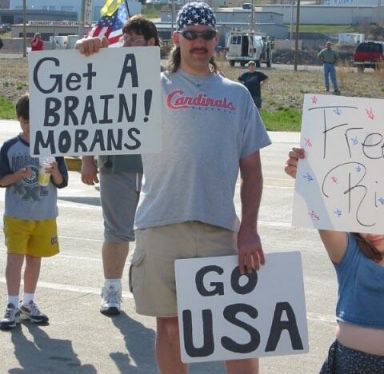 (Image shamelessly borrowed from Beth at My Vast Right Wing Conspiracy.) (Image shamelessly borrowed from Beth at My Vast Right Wing Conspiracy.)
Our News Junkie made a good point the other day when he mentioned distraction as the Dem election strategery. Like good attorneys, politicians can always find a case to make for themselves, regardless of its relevance - or honor, or honesty. That's their job, and that's why politicians are among the most despised professions in the US. The problem, in a mid-term election like this, is that the nation is prosperous, the economy is great, everyone has a job, the bad guys are on the defensive and leaving us alone here, the old folks have their free medicines, the Dow is up, and all is rosy in America the Beautiful. The Iraq War has turned into little more than an aggressive policing, and they may build a fence to protect us from the Mexican invaders. So clearly the Dems, with their allies in the MSM, have come up with the only logical strategy, or "theory," as we lawyers term it. This theory appears to be "Distract the moron voters:" Don't talk about the economy - talk about Mark Foley.
Don't talk about the Dow - talk about Obama (What's he ever done? You'd think
no-one has ever seen a smart black guy before. Well, I have met plenty.
Ever notice how the MSM applies the (racist, almost; condescending,
definitely) term "articulate black politician" anytime a black guy speaks
grammatical English?) Well, he loves Jesus, and God guides him, which is
just great...in a Dem.
Don't talk about illegal immigration - talk about Vietnam Iraq. It's a debacle
illegal war morass defeat whatever. Oh, and Rumsfeld is a moran.
Don't talk about jobs - talk about corruption - woops, that knife cuts both ways...
never mind. Well, how about embryonic stem cells? Yeah - let's try that. We
care about sick people, unlike those evil, cruel, heartless Repubs who want to
kill our women and children.
Don't talk about Islamic terrorism - Bush seems to have stopped it in the US, for the
moment. Talk about global cooling warming weather whatever. Yeah,
maybe Gore is onto something: Let's run against the weather! Well, but dang
- the weather has been really nice lately.
Don't talk about Iran - talk about WalMart (huh? everyone loves WalMart). Woops.
What else we got? All of the above seasoned with the usual and time-honored "Scare the blacks," "Scare the old folks", "We care," "Let the dead felons vote," "Scare the women who want abortions," "Saddam wasn't all that bad," "Time for a change," and "Promise the suckers more freebies." The MSM is clearly on board with this plan, as expected. My message to the Dems: Tell me plainly what you are FOR, and what you want TO DO, and I will decide how to vote.
Tuesday, October 24. 2006
 The challenge of being politically conservative is that one seeks political power to reduce, or devolve, power to the people and to their localities. The challenge of being politically conservative is that one seeks political power to reduce, or devolve, power to the people and to their localities.
In the famous words of Bill Buckley, "The job of conservatives was to stand athwart history, yelling, stop." It seems to be almost impossible to do, practically. And in democratic systems, everything is about the politically practical. It's accidentally built into the DNA of the system, (although giant American federal bureaucracies handing out money and rules never was intended - or even envisioned -by our founders who detested the giant European bureacracies and centralized state systems, as in France). Not everyone respects that heritage of ours. This week, I heard a voter quoted on the radio "Bush is focused on Iraq, but what is he doing to take care of me?" We have all heard such statements, because that attitude is pervasive, and, I believe, enormously destructive. So how do conservatives hold on to power when the population has been trained for two or three generations of Left-tinged rule to reflexively expect "government to fix it" - whatever it may be? There is only one way: to fill the nation with vigorous, optimistic, freedom-oriented, inspiring, courageous talk about the American way of life and the opportunities available to everyone to go out there and try to build whatever life they envision. Reagan knew how to do that. Bush has not the talent, nor the taste, for dramatic rhetoric - and neither did his dad. The subject comes up because of two blog pieces over the past week addressing the "totalitarian" impulses of the Left. We have often written on that topic at Maggie's Farm. Sisu from a piece titled "Simply an affirmation of naked power": The totalitarian impulse runs deep and dark in our species. Curious how often it seems to ooze up through the cracks on the left side of the aisle. We've always distrusted the motives - beyond maintenance of raw power - of our own entrenched "progressive" Massachusetts Senator Edward Ted Kennedy.
Dr. Sanity, from a piece entitled "The Political Left and their Totalitarian Dreams": What interests me is the transformation of the Democratic Party into a tool that every major enemy of this country--from the North Vietnamese, to the Soviets, to the Syrians all the way up to the present day-- has been able to use to advance their objectives at the expense of America. As Feldman notes, this does indeed give new meaning to the term "opposition party".
It also give new clarity to one of the issues that I have talked about on this blog repeatedly, and that is the complete betrayal by the political left in this country of the values and freedoms upon which the U.S. was founded.
I do believe that the Left has totalitarian dreams - a morally lost person can decide that the ends can justify the means if he cares about the "common good," and is certain that he's right. That is referring to the Left: I do not believe that all Dems have similar dreams, but I do think that they almost always favor policies which expand the federal state and its power - always for the "common good", mind you. C.S Lewis, as quoted by Samizdata: Of all tyrannies a tyranny sincerely exercised for the good of its victims may be the most oppressive. It may be better to live under robber barons than under omnipotent moral busybodies, The robber baron's cruelty may sometimes sleep, his cupidity may at some point be satiated; but those who torment us for own good will torment us without end, for they do so with the approval of their own conscience.
Power, unlike money, is a zero-sum game. Every incremental increase in federal governmment power and authority over our lives is at the price of a bit of individual and local power and autonomy. And with that price goes a bit of the human spirit and a bit of what makes America unique in the world.
Sunday, October 22. 2006
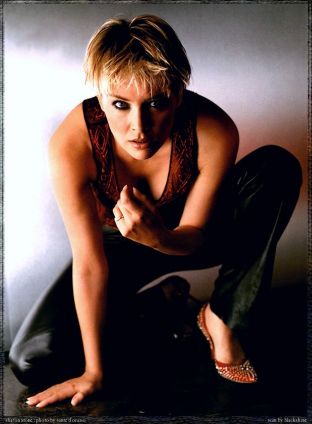 Is this contrived, or is it a good idea? A list of the 100 things I want to do before I get too old or die (without impossible fantasies like conducting the New York Symphony, or having some beers with Bob Dylan, or hunting grouse with PJ O'Rourke, or owning a pied a terre in Manhattan, or owning my own G IV, or spending the night with Sharon Stone). Is this contrived, or is it a good idea? A list of the 100 things I want to do before I get too old or die (without impossible fantasies like conducting the New York Symphony, or having some beers with Bob Dylan, or hunting grouse with PJ O'Rourke, or owning a pied a terre in Manhattan, or owning my own G IV, or spending the night with Sharon Stone).
I do have a list of the 7 places I wish to visit or re-visit, next: Scotland for grouse shooting and whiskey tasting, Turkey, Alaska for ptarmigan hunting and to see the tundra, Wales, Sicily, Tuscany, Patagonia for fishing. But a life-time To-Do list? Probably a good idea for someone like me. If it's not on my list, I never get to it. So I will add this to my To-Do list: "Make a lifetime To-Do list." I'll show you mine if you'll show me yours. Image: Yes, that is Sharon. Meant to do an image of a Red Grouse, but liked this better.
Monday, October 16. 2006
LaShawn has been hot on the Duke Phony Rape Case since the beginning. It smelled, from the beginning. But the 60 Minutes segment (which I missed - I do not watch much - or any - TV) put the nail in the coffin of this canard. We know politics: "Careers are at stake." Prosecutorial powers are terrifying when in the hands of those who seek not justice, but "success." This Nifong low-life schmuck should be disbarred by his peers, and the destruction of three young guys' lives should nag at his conscience until his death - if he has a conscience, which I doubt. I hereby pronounce the three lacrosse players as fully guilty of the crime of being adolescent white jerks. Now go in peace, with the heartfelt apologies from all of us that you got caught up in a political cesspool, and, in the future, just go to strip clubs for this kind of foolish titillating fun, where you cannot be caught up in this sort of disgusting mess. Better yet, keep looking to find a girlfriend to love and treasure, and try to find happiness. One effect of this entire story I have rarely seen mentioned: what has been the economic impact on black "sex-workers" in North Carolina? I am deeply concerned that they might be experiencing a decline in income. Perhaps some Congressman might help?
28 months for Lynn Stewart. A jury of her peers convicted her of terrorism and conspiracy. One of the co-conspirators got 24 years. I see other bloggers complaining about the lightness of her sentence. Maybe. But the point is made: We are a nation. We Americans understand that everybody screws up once in a while (which is why she does not get the death penalty as she would in many countries), but very few of us conspire with foreign enemies who desire to kill us. To me, this is not terrorism - it's treason. And treason has no place in a democracy. We always have two outlet in the USA - voting, and moving away. If you don't like the outcome of a vote, you suck it up, and if you don't like the country, you depart. This case is a good reminder that we are a nation - and that matters. It's not a joke.
Monday, October 9. 2006
 It is Indian Summer in New England. There is nothing finer. Nights are cool, in the 50s - perfect sleeping weather with the window open and the comforter tossed around, and the dogs at your feet. Blue skies, low humidity, nice breezes for sailing - and hunting season has begun, up north. And, at dusk, the crickets, which have grown large by now, cheer you up with their merry, end-of-life chatter. Here, near Hartford, few leaves have begun to change, but the crisp mornings tell you that they will, soon. It is Indian Summer in New England. There is nothing finer. Nights are cool, in the 50s - perfect sleeping weather with the window open and the comforter tossed around, and the dogs at your feet. Blue skies, low humidity, nice breezes for sailing - and hunting season has begun, up north. And, at dusk, the crickets, which have grown large by now, cheer you up with their merry, end-of-life chatter. Here, near Hartford, few leaves have begun to change, but the crisp mornings tell you that they will, soon.
Why George Bush? Because he controls the weather, does he not? Thanks George, for this remarkable Indian Summer we are having. And, speaking of the diabolical Bush, isn't it time for a big Thank You to him for this economy too, which is rolling along with essentially zero unemployment, a shrinking federal deficit, a record-breaking stock market, and rising wages without inflation? Who shall we blame for this? It's called the Bush Miracle Economy, and it's the biggest news - except for the Foley thing, and NoKo's creepy nuke test - but it isn't reported, and will not be. The press will give Bush credit for nothing. They are on the other side.
Saturday, October 7. 2006
From Horsefeathers: Horsefeathers has been fascinated by the decline of Liberalism. Perhaps this is because its rise and fall has occurred over the course of his own lifetime. It sometimes strikes us that all the people, now departed, whose opinions mattered most to us were liberals. While they are gone, Liberalism itself lingers, sick unto death, an almost moribund version of its once lively self. Liberalism was a part of the world of ideas in which we lived, part of what we admired in the older generation. It was the air we breathed and the way we thought of ourselves: we were Liberals, and proud of it. And now it is no more. How did a once robust philosophy devolve into a childish set of insular, self- flattering beliefs? How and why did the requirement for reasoned self-criticism, so vital to Liberalism as we knew it, give way to a whiny, feminized set of politically correct sentiments articulated with all the intelligence of a bumper sticker? How did feelings come to assume primacy over thought, while victim status became more sought after than real achievement? Finally, how did Liberalism come to reject reason itself, in favor of politically correct stances and naďve fantasies about human nature?
He is a recovering Liberal, like so many conservatives. For his answers to these questions, read the whole thing.
Tuesday, October 3. 2006
 This is the final piece of our mini-series on The Risk of Inaction, and Type 1 and Type 2 errors. With a final word about luck. This is the final piece of our mini-series on The Risk of Inaction, and Type 1 and Type 2 errors. With a final word about luck.
Last week we talked about the Null Hypothesis (Part 1), and Type 1 and Type 2 errors using the example of appendicitis, and we talked about the often-reciprocal relationship between Type 1 and Type 2 errors - when you reduce one, the other rises (Part 2). (By the way, Here's a site that discusses in detail how Type 1 and Type 2 errors work, in the judicial system.) And I mentioned that it seems to be human nature to focus on the risks of action more than on the risks of inaction. It's as if we have a bias for the Null Hypothesis, and a wishful neglect of False Negative errors. "Don't worry about it." "If it ain't broke, don't fix it." Or, in the words of Mark Twain, "I have known a great many troubles, but most of them never happened." Oftentimes, that is true. Not always. Inaction is just a special sort of action. Today, a few more examples from regular life. 1. I have heard Bob Brinker say this many times: If you own a stock, but would not buy that stock today at its current price, sell it (unless tax considerations trump that logic). Traders and professional investors think as much about selling or shorting as they do about buying, but my experience is that the regular retail investor puts much more thought into buying than selling. Thus the amateur tends to think of the risk as being front-loaded - it feels as if the risk lies in the buying. (There is a huge literature on the psychology of perceived risk.) However, the truth is that the risk of buying and of selling are comparable. Somehow, owning the stock psychologically comes to feel like a new Null Hypothesis, and the default position. That is illogical, Captain. 2. One of the wisdom themes that I hand out to my grandkids is this: Life is just a conveyor belt of opportunity, but they only pass by once. Jobs, friends, fun - everything. You usually get only one chance - well, sometimes more if you're lucky - before the thing or the moment passes you by. But we often let them pass by, for fear of error, or for excessive bias towards the Null Hypothesis (eg "there is nothing here"). Thus life gradually fills up with the regrets of lost chances. When I was young, I was timid with charming girls. I'd gin up some courage to say "Hey" to one, and end up with pain and humiliation (False Positive, Type 1 error). I said "Hey" to another, and ended up with a year of grief and confusion (False Positive, again, in the end). Eventually, I said "Hey" to one, and it worked out just fine, to this day. But you always wonder - how many False Negatives did I overlook, for fear of the unpleasant False Positives? Risk-aversion can be a blessing, but also a paralyzing curse. The most relevant example below. 3. Invading Afghanistan and Iraq, to bring the fight to "them." Man, those were some tough decisions: I wouldn't want the job of making them, (but I have no problem second-guessing them after the fact, from my armchair). The evidence for the Null Hypothesis - "There is nothing of concern here" was adequately disproven by evidence. Bill Clinton was paralyzed by fear of Type 1 errors, although he had little reason for that. In the process, he ignored the risk of inaction - which was extremely serious. Recently in the news, Bill Clinton complained that he had no chances to deal with terrorism - no opportunities to be a hero. Wrong. Truth is, he was too worried about False Positives, and doing something in error. But what about the False negatives concern on the other side of the debate? As Anchoress reminds us, he had plenty of opportunities to deal with terrorism, but wimped out, while blaming history for not giving him chances to do something. Didn't WTC 1, and the Cole, and Somalia happen while he was Pres? He had opportunities, but declined to engage them, like someone who is so fearful of buying stocks that they end up ten years behind. Mitchell at Democracy Project points this out with great clarity. What are the risks of NOT taking the fight to the jihadists? Well, the risk would be, probably, getting more of the same from an emboldened Jihad. When we focus too much on error and risk, we can miss taking account of Opportunity Cost: there is a life price paid for every missed opportunity, as all grown-ups know - to their chagrin. Decisions that involve life and death are tough. But fear of error can cause many missed opportunities to do what might be best. Yes, there is risk. Always. However, chosing not to act can be as consequential a decision, in life, as chosing to act. As I see it, the people who take Opportunity Costs and False Negatives into account when making their choices are often called "lucky." I knew a Beagle named Lucky. Got hit by a car but survived, grew old, and died.
Tuesday, September 26. 2006
The null hypothesis is not a logical fallacy. We are discussing it as a base for further discussions of fallacies in future posts on the subject of the risks of action vs. inaction and Type 1 and Type 2 errors. Outside of the world of statistics, the "null hypothesis" has become equated with the "nil hypothesis," which means, basically, nothing. That is to say, that nothing occurred that was not by chance or accident, or maybe by undiscovered or undiscussed causes. Thus it is a handy tool to use as a starting point for an honest discussion, debate, or argument. The null hypothesis is what many logical arguments ultimately argue about, or around, whether it is made explicit or not (it is a basic assumption of thinking in Western Civilization). When a null hypothesis is not assumed, a case for something is often termed "biased." (As we will discuss in a future post, "bias" is often a very useful and reality-oriented posture, and is the reason we do not look for Bluebirds in Brooklyn.) In law, the null hypothesis is the presumption of innocence. In science, it is the presumption that there is no connection between two phenomena. (Scientists and social scientists often complain that it is difficult to publish papers which support null hypotheses.) Hypotheses other than null hypotheses are often termed "alternative hypotheses." In general, it is easier to destroy an hypothesis than to prove one: proof is usually too much to ask for. Let's take one incendiary example: Null hypothesis: Blacks are not economically discriminated against, and there is nothing of interest here to debate or discuss. Fact: Black households have lower incomes than white households. Hypothesis #1: Employers pay blacks less money, or blacks get lower-paying jobs because of their color. Fact: Black households with intact marriages have essentially the same average family incomes as whites, but blacks have very high rates of unmarried families. Logical conclusion: An extraneous factor, such as marital status, may be determining the data, not skin color. The null hypothesis is supported by these facts. A liability example: Null hypothesis: Jim is innocent of liability or neglect. Fact: Jim had no proper fence around his pool, and the neighbor's beloved Shitsu wandered over, fell in, and drowned, so the neighbor wants $100,000. for pain and suffering. Hypothesis: Jim is guilty of not properly fencing his pool. Fact: Hurricane Jose knocked down his pool fence a week ago. Logical conclusion: Facts support the null hypothesis. Jim is innocent of negligence because of an accident of nature. A vegetable example: Null hypothesis: What you eat has no relationship with colon cancer. Fact: People who eat lots of broccoli have lower rates of colon cancer. Hypothesis #2: Broccoli helps prevent colon cancer. Fact: People who eat broccoli tend to eat lots of other veggies too. Hypothesis #3: Eating lots of veggies helps reduce colon cancer rates. Fact: Volume of dietary roughage (cellulose) probably correlates with reduced rates of colon cancer. Logical conclusion: The null hypothesis is probably wrong. There is some relationship, although causality is not demonstrated (that would be a cum hoc ergo propter hoc fallacy - a favorite fallacy of litigators). You might reduce your risk of colon cancer a bit by eating plenty of daily veggies and salads. (Still, your genes - or your GI doctor - may determine the outcome, eventually.) We wll build on this null hypothesis subject in the next Fallacy posting, which will highlight Type l and Type ll errors. More on the subject of the very important Null Hypothesis here. (I enjoy giving myself this elementary refresher - hope you like it too. Next installment probably on Thursday.)
Friday, September 22. 2006
Wierd conspiracy theories could not exist without this handy fallacy, but it is one for which juries are often total suckers. Argumetium ad ignorantium - "argument from ignorance", or "argument from incredulity", does not mean argument from stupidity - it means argument from a proposition which cannot be proven as fact, or from a proposition which cannot readily be disproven due to "ignorance" - eg lack of data. The lack of certain evidence for, or against, something does not make it either untrue, or believeable. Nor does the lack of certain evidence for something make an alternative theory more likely to be true. "It's hard to believe that a couple of terrorists knocked down the Trade Center, so it seems that Bush and the Israelis must have blown up the World Trade Center towers, and faked the TV images with the cooperation of TV news, so Bush could go into Iraq to get free oil to reward his rich friends. It's a huge conspiracy for the benefit of the Illuminati." Prove that is wrong. It is amazingly easy to make propositions which are simple lies, or absurd, but difficult to prove wrong. Thus you raise doubt, which can appeal to the paranoid part of people. Here's another: "Abe Lincoln greatly enjoyed his male friends and colleagues, so he probably was gay." Prove that isn't true. "The authors of the Second Amendment could not have intended that Americans should be killing eachother by having guns to protect their homes, so we should ban guns." Well, name me one of those guy's families which had no guns in their homes, but it's a bit late to do a poll now, so you can assert anything you want, based on your bias. I'd bet every one of the Founders had many guns in their home. Or, "Would my client, an experienced driver, forget to put n his parking brake? Impossible. My client deliberately declined to put on his parking brake, because he was afraid that the brake might fail on his '57 convertible Chevy, so he put it safely in "park" before it unfortunately, and tragically, but innocently, rolled down over all of those nice families at the beach." Try to prove I am wrong on that. Doubt? He's a nice guy - your next-door neighbor - not a murderer or a manslaughterer. He just likes antique Chevys, like we all do.
|