Thursday, April 20. 2006
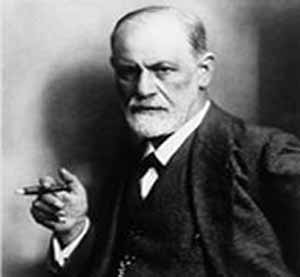 Two noted economists, Kahneman and Krueger, think they can solve the "problem of human unhappiness" using their "U-index." Not only that, they believe policy-makers should listen to them. Two noted economists, Kahneman and Krueger, think they can solve the "problem of human unhappiness" using their "U-index." Not only that, they believe policy-makers should listen to them.
If it were satire, it would be pretty funny. If they were psychologists, it would be ridiculous, because no psychologist or psychiatrist or psychoanalyst would claim to have the key to happiness, much less claim to be able to define the word - much less claim happiness to be the goal of human existence: defining the meaning of life is not their/our job. (Not to mention the fact that lots of folks are quite happy being grumpy and unhappy, while lots of others seem to be insatiable.) And one secret known well by psychoanalysts is that the way folks feel has mainly to do with their relationship with themselves, not to their material or life circumstances - unless their circumstances are dire, which is rare in the Western world. Thus, in the end, reading about these two guys feels a bit like reading a speech by Kim Il Sung, or something in Brave New World. Creepy. No-one wants government messing with our souls: we will deal with our own souls, thank you very much. Delivering the mail, killing terrorists, and leaving me alone are all that I ask of them. A quote from Kling's usual fine essay at TCS: My point is that -- with the exception of the Austrians -- economists have been going down a slippery slope of interventionism for a long time. Krueger and Kahneman are simply further down that slope.
another: Perhaps the original sin here is to think of the economist's role as that of policy advocate. The policy advocate combines the job of a technician with that of a preacher (Robin Hanson made this point to me during a discussion that we had after hearing a talk from the economist Deidre N. McCloskey). The technician predicts the consequences of a policy. The preacher argues for the policy. With research into subjective well-being, economists are making statements about what constitutes the good life. In doing so, we are encroaching on territory once claimed by philosophers and theologians -- and, more recently, by self-help gurus. In the 70's, it was I'm OK, You're OK. Now, we are saying "I have positive net affect, you have positive net affect."
Someone should tell these arrogant jokers and closet utopian totalitarians to stick to their knitting: I don't trust people with power who obtain their happiness by figuring out how to make me happy. Read Kling's entire piece here.
Tuesday, April 11. 2006
 Aliyah 3-15-06: Galilee Aliyah 3-15-06: Galilee
We hit the road to the upper and lower Galilee, in opposite order. A week ago Wed, off with the Ulpan, rising at 530 to get to Ulpan bus by 7 am. There is a quality of herding cats in such groups, with people meandering off and occasionally back. One girl from Switzerland insists that we stop the bus mid road, as her friend has just arrived at the Ulpan, which we left some ten minutes earlier: she's only three minutes away, she insists. And we stop. Miss Swiss exits the bus, assuring that we cannot leave, and we learn that her friend is still on the highway, being driven by someone, who doesn't' know Netanya, so can't find us. About ten minutes later, some reason prevails, and Opher -- our Yemenite guide-song leader-accordianist-pianist-overall core of patience -- negotiates Swissy back on the bus, with assurances that it is easier for her friend's driver to find us downtown Netanya (where another group has been patiently waiting for our now-late arrival). This was a bit like reverse-hostage negotiation: Opher trying to convince Miss Swiss on-board so that we can be held in thrall en route, rather than mis-en-scene. When Swissy's friend boards, both of them have a mad on for our not waiting mid-road, rather than going into town. This lasts for a few hours.
Something curative of the above upon entering "god's vineyard" -- Carmel. We put Zikhron Yaakov on our right and Haifa north and behind us as we descend into god-will-sow valley, the Jezreel. "To sow," the word in Hebrew, shares a root with the word, "arm," connecting us bodily with the limb used to broadcast seeds, signs of hope, of future. This is a very "bodied" land, Israel, also one with sudden, even stark shifts of weather, and we are edging into the season of hope, of spring. Our guide, Sara, points out that this is the best time to see the flowers in the Galilee, before the summer heat wilts them. Life buds, even blossoms here, sometimes in hidden corners, such as the forests we will visit, in spite of the acrimony surrounding. Freud, after receiving Stefan Zweig's enthusiastic book about Israel, thanked him, and remarked eliptically, that this is a strange land, from which little art or science has emerged, but only three illusions. (And of such illusions, Freud saw little future.) Freud finishes, it should be studied more.
Continue reading "Guest Author, Aliyah Diary #15"
Wednesday, March 29. 2006
It is a cliche that the definition of neurotic person is someone who keeps doing the same thing, while expecting a different result. There is surely a good lesson in that expression. However, I often find it useful to think about things from the outside, in ... instead of inside, out. Especially with stubborn minds. What do I mean? Erik Erikson famously said that "Psychotherapy begins where common sense ends." I like that. Despite being a psychoanalyst and thus by definition a happy diver into the human depths, I rarely take anyone deeper than is necessary. You don't want people to run out of air on the way down, or to get the bends on their way back. This is why I like the idea of Reality Therapy. You may call it God, or Life, or Reality, or Chance, or whatever you chose, but It has a funny of way of teaching, and re-teaching us whatever we need to learn until we finally learn it, or die first. For me, this is analogous to the image of Christ at the door of our heart, knocking and knocking until we open the door. Life is always trying to teach us something, and we all have problems and weaknesses and blind spots and areas of stupidity and of emotional immaturity where we can improve our mastery of life and of ourselves. Sometimes, all we need to do is to stop, look, and listen to find what it is that life is trying to teach our stubborn minds. While I would rather piously - but truthfully - say that the red buds now emerging on my antique French Roses are teaching me that God is in his heaven, instead I will offer a timely but trivial example from my own life. I will quote myself: An area of life in which I do not function well is with paperwork and book-keeping. I could find plenty of excuses for this, and plenty of fancy psychological explanations, but I was raised to never make excuses. The truth is that it is a character flaw, a flaw which is thrown in my face every tax season. I procrastinate - which is precisely what I am doing right now by writing this piece. I love Quicken, but I don't enter my checks. I save business receipts, but they collect dust in piles and drawers and and pocketbooks. I have delivered three Suburban loads of good outgrown kids clothing to Goodwill this year, but God knows where those lists are. In the glove compartment, maybe? And what about cost basis for stocks bought in 1987? The computer those numbers were on died years ago. No clue. And since then, I have changed brokerages and the old guy retired. I try to pretend that April 15 is an absolute deadline, or I would never get this chore done. And I cannot rely on the hubbie, because he will have nothing to do with my mess, so we file separately. The lesson is just not the annual miserable last-minute hassle to get everything together. Last year, I had a fine of over $3000 for errors and lateness. Ouch. There is just nothing like reality to hit you over the head and force you to learn.
Life is the real final exam, but you get to take it over every day. I will never forget my favorite Neurology professor in medical school who overheard me and a friend bitching about an exam in the hallway. "This is nothing," he said. "Every patient you will ever have is the real exam. These exams are just for you to find out what you don't know, before it's too late." Keep knocking, Reality. Eventually, we will get it. Thanks to God that every day is a new chance to learn and change.
Tuesday, March 28. 2006
 A few snippets, which require no comment because they speak for themselves. Our News Junkie posted this piece a day or so ago about the unpopularity of marriage among American blacks: Marriage is for White People. WaPo, H/T, Instapundit At the same time, Morse posted a piece at Town Hall titled Marriage: A Social Justice Issue. She points out, as has been done before by others, that most of black poverty is due to the absence of marriage. Marriage creates wealth and social stability, among other things. One quote: Marriage is a protective factor against social pathologies. Marriage generates and preserves wealth, unlike other family forms which dissipate wealth. A recent publication by the Boston-based Seymour Institute, "God’s Gift: A Christian Vision of Marriage and the Black Family", spells out the case for marriage as the most important next step for the future of black America. The report cites the fact that married families in the black community have twice as much income as unmarried black families. The founder of the Seymour Institute for Advanced Christian Studies is the Rev. Eugene F. Rivers, III, the black Pentecostal minister whose work with poor urban youth has been widely celebrated. In the introduction to God’s Gift, Rev. Rivers states his case. "The impact of the decay of marriage among black people has been enormous, resulting in higher poverty rates among black families, school failure among children, and the intergenerational transmission of high teen pregnancy rates and female-headed households. Sociological research has implicated fatherlessness in violence, drug use and criminal behavior, especially among young black males." To those who might argue that marriage is somehow alien to the black experience, linguist John McWhorter has an answer in the most recent issue of The American Enterprise. McWhorter observes that the high proportion of single parent families among blacks is a relatively new development, and not something that can be attributed to some amorphous "legacy of slavery."
And a comment from one of our readers, re the News Junkie post: What a depressing article. Marriage was ordained by God for the procreation and rearing of children in the service of God. Spouses are supposed to be helpmates to each other not playmates. Marriage is for grownups, not hedonistic children.
Saturday, March 18. 2006
Mar 6 2006 Lop-idary
Lop-idary, I have chosen to call it, this lopping art which is pruning by any other name. My actions in the kibbutz persimmon orchards, this stand of 8,000 souls with limbs akimbo, askew, I anoint as Lop-idary. For it is lopping, plain and simple. Yet, it has a topiary quality to it, sans the fanciful, artful outcome and the aim of good topiary to make imaginary forms, even of imaginary beasts -- unicorns, Sphinxes in the better gardens -- so that the underlying tree-being loses its character. Topiary is like what is done to poodles: changing handsome, proud dogs bred with burr-collecting fur into prancing decorations, with bulbous tail ends and swellings mid-torso, tuberous hair balls above the ankles. No, what I do with the persimmons is not topiary, for I am to lop to bring
more fruit, bring more light to the inner, lower limbs, make these trees, well, more persimmon-y. Yet, lop-idary, I baptize my new discipline, as it shares something with lapidary art: to cut, polish the rough gem, enough to bring out the radiance within -- to capture as much light as possible to make the gem more beautiful -- yet, not make that fatal cut that will ruin a fine gem, make it second rate, even shatter it.
Continue reading "Guest Author: Aliyah Diary #14"
Friday, March 17. 2006
Psychoanalytic theory isn't really very complicated. We only have three or four basic concepts, from which a myriad of fascinating ideas derive. One of the key basic concepts is Transference. At the risk of annoying readers who hate fashionable words like "template," I have to use "template". To keep it simple, a transference is a relationship template, usually molded during youth, and mostly unconscious - by which we mean that we aren't aware that it is acting on us. Transferences distort our relationships as our brains attempt to apply the template of prior relationships, or, more often, our distorted versions of prior relationships, onto current ones. Most common are paternal and maternal transferences, but sibling transferences, grandparent, friend and avuncular transferences are common too. (What's the female version of avuncular? Avauntuler?) Because our transferences tend to be beneath our awareness, they are usually only evident to analysts when observing behaviors or feelings which do not seem to fit the real current-life situation. Thus the less transference-driven our relationships are, the more mature and in reality they tend to be. As psychoanalytic concepts have been integrated into everyday thinking over the past 100 years, there has been a degradation of the technical terms. Thus we can talk about a "maternal transference" towards government, for example, when someone experiences their government as "need-fulfulling", or a "paternal transference" towards government when it is experienced as "opportunity-providing, demanding, and challenging." Even if such uses of the concept may not fit the technical usage, they are sometimes useful ways of thinking. For example, it is commonly stated that people tend to view the Democrats as the Mommy Party, and Republicans as the Daddy Party. It sounds like a ridiculous simplification when you hear it, but there is something to it: politics is not rational. I was moved to write this post because of a couple of items on the blog this week. Pieces about Europe: the passivity of Britain and Norway in the face of their enemies within; the economic irrationality of French socialism, etc. Such things represent what we would term "regressions" to "transferences." In other words, backwards developmental steps to more immature and less realistic ways of experiencing the world. When a kid privileged and smart enough to attend the Sorbonne feels he needs to rebel for job security, you know you are dealing with people who have reverted to a child-like, maternal experience of their government. It does not bode well for a nation whose youth seeks security over challenge, and comfort over life adventure. Similarly, in Britain, with their willful denial of the social cancer they have welcomed, we see a "regression" to a "nicey-nice" childish view of the world in which evil and unpleasantness do not exist - a Mommy World. They tried that before, didn't they? Despite all of the push in the direction of the Mommy World since Franklin Roosevelt, the US has never fully succumbed to the fantasy that government can make everything "nice." Thank goodness for that. In the US, many people tend to more annoyed when the government does something than when it doesn't. Thus the US does, indeed, tend to have less transference towards government - eg a less emotionally distorted relationship with government. Most of us want it to just drive away our enemies and to leave us alone, but we do have our share of those who wish the government could make all of our dreams come true. Lots more to say but this is getting too long. If you like my ideas, click our Psychoanalyst category and read more and get smart.
Saturday, March 4. 2006
(To find out what this is about, click the Aliyah Diary category on upper left) Feb. 17, 2006: Israeli DMV
Today is was a bully. I mean, Bully. I entered the Holon Division of Motor Vehicles, after the hour or so bus ride, and was transformed some dozen minutes later. Like the Hulk, bursting fissures through his skin.
In Judy Garland's Wizard of Oz, when the film switches from Kansas to Oz , it changes from black-and-white to color, the first use of color in a Hollywood film, I believe. Here, I went reverse: from color to black-and-white. And as in the film, Roger Rabbit, three-dimensional creatures turned into two-dimensional cartoons (who then pop-out 3-D eyes), so too 3-D became 2-D. I may have become two-dimensional also, I just couldn't see myself too well; I felt a bit, well, flat. But enough of this film-ishness. On to the tale of my transformation.
Here's the deal. The DMV (I will call it) is open sun through Thur., but will only change American licenses to Israeli permits on Mon. and Wed. This, I am later told, was publicized last Nof, in newspapers (in Hebrew), Radio (ibid.) and even internet (op. cit.).
But, I left with robust intentions. I was forewarned by fellow student, Miriam, that the Holon place is a place of snakey lines, Hebrew only, and being told to go from the front of one line to the end of another, and then again. I had girded my loins with a visit to the MEMSI office in Ra'anana: got an official-looking light green form
with my photo in one corner, filled out by an optometrist after an exam (40 shekels), then by a physician, then I completed it with questions that I mostly understood. Brought all my other documents: US license, US passport, Israeli I.D., Israeli Oleh card, and a blank check. Hopped the bus to TA at 800 ( a bit on the late side, I was forewarned), into TA central bus station by 9, through security, only to learn that I had to exit the building to get the Holon bus. (Holon means something like "sand-edness", as does in Arabic, Ramleh). The driver tells four of us to alight at a busy intersection, in an area that was in transition from rural to semi-industrial. I gather that the DMV is nearby, as I see students with a big "L" (for learner) magnetized to the top of their car, perched anxiously over the steering wheel, a bit praying-mantis-like, crawling in the right lanes of traffic, while their examiner sat next to them. Saw several examiners talking on their cell phones.
Continue reading "Guest Author: Aliyah Diary #13"
Monday, February 27. 2006
Eisenhower was the last Republican president not to be subject to rage unto paranoia, press hostility, and continual assault, disrespect, and contempt from the political opposition. (However, it is a fact that the leader of the war that saved the "free world" from fascism was widely viewed as a dunce by the Adlai Stevenson supporters.) If you are old enough to recall, Nixon was subject to what we would now call a "Nixon Derangement Syndrome" which finally brought him down. So were Ford and Reagan and Bush 41. All were demonized, called "stupid," and intensely hated by the opposition. Having learned this unfortunate lesson, the Republicans finally decided to try that same game with Clinton, who they managed to handcuff politically via relentless ankle-biting, but were never able to rally intense hatred against him - probably partly because of press sympathy but also because the foundations of hatred were not present. Where does this hatred come from? I think the Left believes that they are the "good smart guys," and any Repub a "bad dumb guy." I do not think that Conservatives tend to use such a black-and-white view of politics. Most Conservatives I know do not see themselves as the good guys, but as having better ideas. Thus, amongst Liberals, you rarely see the kind of social stresses that people like neo-neocon go through in being a neocon in a Left-liberal community. (Take me, for an example. I do not believe that I am "smarter" or "better" than Leftys and Liberals. I do believe that the ideas I hold about the relationship of the individual to the State are better ideas, that offer to bring out the best in people, but "some of my best friends are liberals," and it doesn't bother me at all. Friendship and shared interests should trump politics. When my Liberal pals are willing to discuss issues rationally, and not emotionally, I think it can be fun to debate and that it can add something to a friendship.) Along with the good guy/bad guy syndrome comes a sense of entitlement, I believe. If we are the good guys, then we deserve to be in charge. If we aren't, then something has gone terribly wrong, or something nefarious has occurred, or Americans are idiots. Feeling powerless when you "know" you are right makes some people nuts. (Never forget, though, that if American voters are idiots - it's the same idiots that vote when you win an election.) I find the hatred that is generated by this disappointed sense of entitlement to be very destructive. Debating ideas and world views is great, but hatred, lying, tantrums, and attribution of malevolence to other public servants is not the civil society I want to live in. (I also believe that not everything about this subject is psychological, per se. Liberals care more intensely about politics, because they are more invested in the role and power of the state. As a rule of thumb, except in the case of war, Conservatives tend to want to lessen the power of the State over the individual, Liberals to increase it. And yes, I think Bush is a conservative at heart, but a politician in practice....and I mean in "practice".) My message to the Bush-Deranged: there is no good vs. bad here. There are simply differing ideas and differing views of human nature - all deserving of rational debate. Let's debate - not hate.
Saturday, February 25. 2006
(Click the Aliyah Diary Category to find out what this is about) Feb. 17, 2006 Leg Hopper Something about working in the persimmon orchards gets the writing into me.
Today, despite a partially severed Achilles tendon, after ice pack, much anti inflammatories and Linus Pauling dosages of Vitamin C, I am
off. The bus is beaten by my favorite, the Sheirut Monit. (Pronounced as in the Old West term for stogies, Cheroot). I hop on (hopping being a current mode of travel on my left foot) and sans newspaper, sans reading glasses, sans full wakefulness, daydream the route to the kibbutz. The woman just in front of this 10-seater van is making herself up. I wonder of this, as I see her wedding ring. But she is careful, with mirror balanced on two fingers, she works with concentration. She needs little help, with her slightly olive-green tint of skin, but -- as woman have wont -- does look more beautiful after her "do." Moshek is always enthusiastic when I call. I read the word "karkar" on the Glil Yam welcome sign -- it is an archaic term for "founded." I also glance at the signs pointing to various companies leasing space from the kibbutz -- DHL is here, as is some high-techy place. Then there is the "biton," which I later learn is the kibbutz's own cement factory; this kibbutz and these kibbutzniks have very fundamentally built this country and in ways not deeply appreciated today. Moshek arrives in one of his dust-burdened diesel-powered trucklets. His handshake, this 68 year-old, rail-thin former Navy Seal, a man whose abdomen is noticeably hollow beneath his work shirt, is bone-hardened, firm. We are off. I mean to ask him something about energy collaboration with the Swedish government, but these matters evaporate from my head this early in the a.m. and in the face of his greeting: the last of the Zionists, he calls me. But, I tell him there are more of us. He likes, "us." We join the two Thai workers -- Shay is out ill, Moshek says. (Tomkap later tells me that Shay has sore muscles, not from work, but from weightlifting.)
Continue reading "Guest Author: Aliyah Diary #12"
Sunday, February 12. 2006
"Dane-geld" was the money you paid the Vikings to leave you alone, a bit like "protection" money in Brooklyn, or the way companies give money to Jesse Jackson. It's called "legal extortion". Horsefeathers remembered these lines of Kipling: It is always a temptation to a rich and lazy nation,
To puff and look important and to say:—
“Though we know we should defeat you, we have not the time to meet you.
We will therefore pay you cash to go away." And that is called paying the Dane-geld;
But we’ve proved it again and again,
That if once you have paid him the Dane-geld
You never get rid of the Dane. Indeed. And ultimately, after hundreds of years of raiding and pillage and rape and murder and destruction, the Danish Vikings, from Sven Forkbeard, to various Canutes, etc, ruled England for many years before the Norman Invasion in 1066. My free-association to these thoughts about appeasing an enemy leads to an excellent and, for me, very influential book: Hannah Arendt's Eichman in Jerusalem: A Report on the Banality of Evil. I will not try to summarize all of the wisdom in this book, but one of her many points is that Eichman did not have horns - he was a bureaucrat who wanted to get ahead and please his superiors. An average schlemiel, you might say. Part of the book refers to how the trusting and possibly overly-civilized, or innocent, Jews cooperated with German authorities. From an Amazon review by Egolf: One of the most disturbing sections of the book begins on page 117 in which Miss Arendt gives a horrifying example that mass murders in German occupied Europe were done with the sanction of the victims. She explains that leaders of Jewish councils cooperated with German authorties in a triage effort in herding victims to the concentration camps. This section reveals what happens when "decent" people exert serious efforts to prove that they can obey the law even if the law means their own destruction. These comments are followed by similiar remarks on page 137 whereby Miss Arendt remarks, ...the odd notion, indeed very common in Germany, that to be law-abiding means not merely to obey the laws but to act as thought one were the legislator of the laws that one obeys. Hence the conviction that nothing less than going beyond the call of duty will do." These remarks partailly explain the subtitle of the book, A REPORT ON THE BANALITY OF EVIL.
Yet, as depressing as this book is, Miss Arendt cites examples of rare courage in German occupied Europe during World War II. Miss Arendt cites the Danes who in effect said that they would no longer comply with German law, and a few Danes openly resisted efforts to arrest and convey Jews to concentration camps. This is an important part of the book in that it explains what can occur when petty minded bureaucrats meet with open defiance based on principle. Miss Arendt reveals what many thought was "toughness" was merely,... "a ruthless desire to comform at any price..."
|
Thinking about Arendt leads me to the famous 1974 Milgram Experiment, which demonstrated how ordinary people can be quickly led to depravity by following the rules and adhering to authority and civilization conformity pressures. Read the link, if you need a reminder. Nowadays, Political Correctness and Leftist Surrender are the main source of Peer Pressure. That's enough for now. This isn't a lecture. You connect the dots. Or let us show you modern-day civilized, humanitarian, humble, sensitive submission - let Gateway do it for you, - in Denmark!!! - with pictures... These are not the Danes who rescued the Jews: these are the Danes who submit, by reflex, to aggression. We all have people like that.
Wednesday, February 8. 2006
Few like to admit that hate and anger are enjoyable for human beings. From a psychiatric standpoint, hate and anger are "pleasurable" emotions, and righteous anger and hate are among the most satisfying of human emotions. I had planned to write Part 2 on Depression this week, but this is more pressing. Our News Junkie put his finger on it yesterday when he referred to the "Hate Party" going on in the Middle East. Indeed it is a party. What we are not permitted to report, in this modern-day New Puritanism world, is how much fun they are having. Those Moslem haters of the Western World are having a great time. Adrenaline flowing. Peer-sanctioned excuses for disinhibition of emotion, leading to destruction. Mobs led by instigators getting everyone high on regressive group-think. Riots, fights, and mayhem run deep in human nature. Don't we enjoy watching it on the news, and in movies? This is not unique to extremist Moslems, by any means. The NJ referred to the KKK's fire-lit Parties of Hate, but I can simply point to yesterday's Coretta King funeral for the most recent American Hate Fest, or the Kos website. People, sad to say, do enjoy opportunities for free expression of hate and anger. It is common, in Psychiatry, to find patients who refuse to let go of it, it is so satisfying and enjoyable. (I know, this truth is not supposed to be stated. People are just so nice at heart, aren't they, Jimmy Carter?) It is not necessary to be a paranoid to be looking for a fight. All humans are energized by a battle, but generally the guard-rails of culture and civilization contain the expression of these impulses. But humans welcome socially-sanctioned opportunities for it. Paranoid individuals, and those from paranoid-tinged cultures, have an easier time finding those opportunities, especially when led by clever manipulators. Europe, and the Middle East, now are filled with such folks who are like the half-in-the-bag guy at the bar saying "What you lookin' at?" Spoiling for an exciting fight. And dangerous, because they haven't signed the Social Contract. It's one of the reasons we need civilization: not to repress such emotions, but to contain our base human nature so we can pursue more worthy goals and more benign relationships. In this New Age of psychology run amuck, we all give too much validity and credibility to emotion. Since when are we expected to "understand people's feelings"? That is pop psychobabble, for the most part. It's very odd that a revolution of Reason, The Enlightenment, has led to this idealization of emotion. Can we blame it all on Rousseau? As irrational biological instincts which really cannot be controlled (although behavior in response to them can be, by normal sober adults), emotions deserve no particular respect, and they are meaningful data only in a shrink's office (or, if the emotion is passionate love, to your beloved). How come on this blog we constantly feel the need to repeat the AA Mantra: "Feelings aren't Facts."? How to deal with out of control anger, tantrum, and mayhem? In my profession, with firm limits. In the big world, with the firm limits of force. Such things wake people up to an anti-regressive reality. Nothing else will. Reason does not work with the regressed, with the paranoid, or with those intoxicated with the barbarian, yet human, joys of rage and destruction. Fight for free speech? With great pleasure!
Tuesday, February 7. 2006
The guest author of our Aliyah Diary, Nathan (who has never fired a gun in his life) received this letter last week after expressing an interest in joining the Civil Guard Bicycle Unit. He will do it: Dear Natan, In terms of moving forward in becoming a Civil Guard Member and
joining the Bicycle Unit, here are the steps: Application Form 6012 - Please fill out both pages and fax it back to me. You can also pass on a hard copy to me or rescan it and email it. This is the first step. Background Check - After receiving and processing Form 6012, the police will conduct a cursory background check on you. Rights and Responsibilities Lecture(s) - Should the background check not find anything disqualifying, you will be invited to Rights and Responsibilities Lecture(s). These cover issues such as: legal authority, conducting operations, detaining suspects, making arrests, using communications equipment etc. This information is taught lecture style in groups of between 1 and 3 classroom meetings. After the last meeting, you are "sworn in" and receive a temporary Civil Guard ID. This allows you to go unarmed on patrols with more senior and experienced officers. Keep in mind that most of what you need to know you learn on the job. Firearms Training - You will be invited to the next scheduled firearms training sessions. They usually include a night-time classroom training session (dry fire) and a daytime actual shooting qualification at a firing range (wet). The dry fire classroom training is usually held at an area school where you are acquainted with the weapons, view their field stripping and learn the basics of safety and marksmanship. General Civil Guards people train only on the .30 caliber M1 Carbine. Bicycle and other special unit volunteers also train on pistols like the 9 mm FN Mk.III and the 22 caliber Beretta 71 (and sometimes on the Micro-Galil Assault rifle
though this weapon has little use in the bicycle unit). This extra instruction may require you staying on after the general Civil Guards
have completed their training on the carbine. I have prepared some
English language guidebooks for using each of these weapons which I will give to you at the proper time. The "dry-fire" training is followed within usually less than a week by "wet" training either at a commercial range (indoor) or at the regional police firing range (outdoor) in Bareket. You will be required to demonstrate some (minimal) proficiency on the weapons (Rifles at about 30 meters, Pistols at about 10 meters) in order to be qualified to carry aweapon. You must repeat weapons training at least once every two years. On the Job Training - You will be paired with senior and experienced officers (starting with me) for the first six months of your service, during which as a rule you will ride unarmed. Thanks and Shavua tov,
Wednesday, January 25. 2006
We did a piece here many months ago on Cowboys and Cowgirls, and another piece on What do Men Want? Now Newsweek has a major piece on "the trouble with boys." One quote: In elementary-school classrooms—where teachers increasingly put an emphasis on language and a premium on sitting quietly and speaking in turn—the mismatch between boys and school can become painfully obvious. "Girl behavior becomes the gold standard," says "Raising Cain" coauthor Thompson. "Boys are treated like defective girls."
Well, duh. More from the piece: Boys have always been boys, but the expectations for how they're supposed to act and learn in school have changed. In the last 10 years, thanks in part to activist parents concerned about their children's success, school performance has been measured in two simple ways: how many students are enrolled in accelerated courses and whether test scores stay high. Standardized assessments have become commonplace for kids as young as 6. Curricula have become more rigid. Instead of allowing teachers to instruct kids in the manner and pace that suit each class, some states now tell teachers what, when and how to teach. At the same time, student-teacher ratios have risen, physical education and sports programs have been cut and recess is a distant memory. These new pressures are undermining the strengths and underscoring the limitations of what psychologists call the "boy brain"—the kinetic, disorganized, maddening and sometimes brilliant behaviors that scientists now believe are not learned but hard-wired.
Exactly right. Hard-wired. Read the whole thing. Once upon a time, every grandmother in the world knew all of this.
Saturday, January 21. 2006
Light in the Piazza, at the Vivian Beaumont (playing hookey from Aliyah In NY) Leonard Bernstein in his Harvard Lectures on music, gave six criteria for judging good music: five were technical (beat, harmony and such); the sixth was does it hit directly to the heart. Light in the Piazza hits the heart, multiple times --despite its music and lyrics, because of its story of hope and its actors.
I sat second row center. I saw the mother's, Victoria Clarke's, tears, quiet tears, sometimes noticeable as a glistening, or only as she touched her gloved hand to her cheek. She appeared moved, as if living the story for the first time, despite performing eight times weekly.
It's the story that can sound puerile if not performed well. When it is performed well, it raises hope, it touches heart.
A mother and her young adult daughter visit Florence. Mother later tells the audience that she visited once before, with her husband before her only childm and warns us, never to visit Italy with dreams, for dreams can be dashed there.
But in this tale, a dream is formed and brought to life.
Her daughter, quite beautiful (Katie Clark, in her Broadway debut) receives distractedly, mother's guidebook lectures on Florence, on art, on the quality of light in Florence, which artists sought in order to see more clearly. Her daughter Clara, is seen clearly by a young man, Fabrizio (Aaron Lazar) in a Piazza, and he sees her as if
she were painted by a Renaissance artist. He falls in love, he stumbles through his English, falls backon his Italian and she gets it. What he does not understand -- and her the language difference is a savior of love and hope -- is that Clara is a bit slow. A head injury at ten left her a bit slower than others. She is bright enough to know, to feel this; perhaps she recalls a time when her brain worked better, as did a patient I once interviewed. She demonstrates a naivete, a social simplicity in the way she approaches strangers, announces that this is their first visit, that she is from North
Carolina. Or in a frightening episode, she lights out to meet her Fabrizio at midnight, loses her way and is accosted by pimps and whores, then retrieved by her mother.
Continue reading "Light in the Piazza: Guest Review by NS"
Tuesday, January 17. 2006
12-23-05 Hermaphroditic Numbers: Learning Hebrew Hebrew -- learning it -- I have said little about. I play in my head
what I might sound like if my Hebrew errors were in English. I can
only approximate. In Hebrew, each verb has a connecting word following
it before aproper noun; not entirely like English. One word, et, is
not translateable; literally it could mean 'to.' in some contexts.
But I might err in saying, "I want to talk "on" you." Or, "May I ride
to you in your car." I will try to sort out a few more examples. But now to numbers.
Hebrew numbers are hermaphroditic, or perhaps have gender dysphoria,
or like some primitive life forms, change gender at puberty. First,
Hebrew is a gendered tongue (unlike us simpler-minded English
speakers). therefore, there are female and male numbers. Rather,
whena number is associated with a noun, it takes on the gender of the
noun. Here, already we have a chameleon-like quality of numbers, a
readiness to take on the morphology of whom it is abutting. But,
that's just the beginnig. Feminine words generally end with ah, or et
--- unless they are numbers. Male nubmers generally end with ah; up
until they reach puberty -- eleven. Then male nubmers lose their
ah's, a version of castration realization. But, female numbers, upon
reaching puberty, grow a tail, eh. Perhaps a version of female penis
realization: hit puberty, get a tail.
Continue reading "Guest Author: Aliyah Diary # 11"
Friday, January 6. 2006
The Smell of Cordite in the Morning It is time for one of our occasional free plugs for a good place. Wild Goose Lodge on PEI has been a loyal donor to our local Ducks Unlimited Chapter for many years, and everyone that I have spoken with about their trip has had a great time with Canada Geese. I look forward to my chance to go, because there are few adrenaline rushes like those that come with a flock of these giant (and delicious) birds cupping their wings to come into your decoys. 
Wednesday, January 4. 2006
If you are new to Maggie's Farm, click the Aliyah Diary category to find out what this is about. 12-22-05 Persimmons and Shaheebs
Yesterday was my Friday on Kibbutz. Pruning -- Khoftzim -- the very
limbs from which we were picking -- Koftzim -- persimmons in the last
few weeks. A lonelier day in several ways: the Bedouins have packed
up, back to their Kfar, the limbs are shorn of their colors, although
the leaves cling to some green, the sky is a Chicago gray, threatening
or promising rain, it is colder. I, late, hail a cab, then call
Moshek who brings me to joining the two
Thai regulars. Later, Moshek gives me some quick demography of
foreign workers and their experiences, at least on kibbutz. My best
remembrance of numbers is some 200,000 workers: the Thais in fields;
the Phillipinos in the homes for elderly; the Chinese, in
construction. The Chinese are well-regarded as efficient, hard
workers, with only occasional complaints. The Phillipinos, mostly
women, leave behind family, even children for one, two years, are
dedicated, quiet, shy. The Thais, well, I have told you a bit about
Shai. Moshek describes trying to hire workers form former USSR, the
last wave of immigrants ('90's) many of whom (perhaps 40%) came with
questionable claims to Jewish paternity or maternity and came for
economic reasons; would prefer to be in the US, Canada, Europe. Many
have built a life here (I think Moshek is being polite or kind at this
moment), but misery for the men in particular. The women snap up jobs
-- with the elderly, kitchens and such. Hebrew is learned in these
settings. The men, Moshek thinks, coming from a hierarchical setting
in which their word (and fist) ruled, dismiss such "demeaning" work.
They wave off the Ulpan crap, dismiss job offers they consider below
them, and if they do take a job and find it unsatisfactory, bolt.
Yes, since the last wave of "Russian" immigrants, more prostitution,
crime, violence and plenty of alcoholism. The irony here, I learn at
the end of the day, is that Moshek's grandparents came here from
Russia in the '30's, helped build this kibbutz, this country. But a
bit more later.
Continue reading "Guest Author: Aliyah Diary #10"
Tuesday, December 20. 2005
To find out what this is all about, click the ALiyah Diary Category at upper left and scroll through. 12-9-05: To Jerusalem, and not yet back.
In Jer, cafe Tmol Shilshom (the day before yesterday) sitting in
Yehuda Amichai's corner, around 5. Today, after an early a.m. bike
ride, bad spill, bent rear wheel, I collect myself, limping a bit like
an old 'rthitic farmer feeling the rain coming on. Deliver my bike to
Pablo to repair, check email at Ilan's, hop the bus to TA to give
lecture at Geha hospital, one of the largest Psychiatric hospitals in
Israel. As usual, I am on the wrong bus, but relying on the goodness
of strangers, the bus driver in this case, I am redirected at the
Azraeli Twin Towers, to catch the Petah Tivka (Hope's Opening) bus to
Geha.
Talked about dream interpretation, a paper I wrote some two years
ago, unpublished, in which I build on Erikson's idea that dreams are
dreamt at a certain moment in a person's life, sometimes embracing an
era's dilemmas, and we can explore this fruitfully, using both latent
and manifest content (the space, the time in the dream, the
physicality of it and its sensuality). I give examples of a child's
dream, a young adult, older adult, followed by dreams in different
phases of psychoanalysis, including an elegant end phase summary
dream.
Well, to begin, Gil Zaltzman, new head of child psychiatry, does the
usual nice introduction, then adds that I am an oleh hadash. First
quiet clapping, then across the auditorium of some 60 faculty, the
applause continues. At the end, applause again. And good questions,
very good, making me think harder on the paper. They ask me to stay
for lunch to talk more. The two administrative assistants attend the
talk and thank me.
Continue reading "Guest Author: Aliyah Diary, #9"
Tuesday, December 13. 2005
11-12: Persimmon Picker Inspector
Today, I was a Persimmon picker inspector.
To Kibbutz Glil Yam (Ocean's Wave), in Herzilya, I went on bus, after
talking with Moshek last night to be sure I could join our "cousins,"
he says, his Bedouin pickers today.
First, small town living vignette. I am up around 530, but Moshek had
asked me to come later, more like 800. So, I write, then head off for
the bus at just before 700, packing my laundry to be done before
shabbat (one set of sheets, guys). The makhbesah, laundry on
Ostrovski is closed -- unusual. I won't dally, so head over to Ahuza,
figuring Alberto's (formerly of Argentina) is open. Nada doing. What
to do, other then lug a plastic bag of linens about? I ask the owner
of the stationary store, who is setting up, if I can leave the laundry
with him to give to Alberto. He apologizes that he cannot leave the
store to deliver my laundry until 900 am. (Goodness, even an apology
for this?) Fine, I write a note to Alberto b'Ivrit to call me when
done.
Which he does around 1200. I field a call in the orchard, from a
foreign sounding Hebrew fellow, confuse him with Patrick placing a
prank call to me from San Francisco, then realize it isn't Patrick.
Alberto is done with my laundry and will close in half an hour. No way
I can leave and get back by then; we are just finishing and Moshek is
nowhere to be seen. So? Well, I ask him to deliver my laundry to
the stationary store. But to pay him. No hay problemo; he says to
stop by on Sunday, after ulpan. Beseder.
Nice life, if you can get it.
Continue reading "Guest Author: Aliyah Diary #8"
Tuesday, December 6. 2005
Polonius in Israel: Aliyah tales, 11-22-05
Polonius starts with my memory of a Mr. T. key fob I saw in Toy Boat
Ice Cream Parlor and Assorted Toys Shop on Clement in San Francisco.
Some will recall Mr. T. from the TV show which was a comic echo of
Mission Impossible. Mr. T., the black man with a Mohawk, laconic,
strong, of fierce mien. When he moved to Lake Park, Illinois, a tres
chic far north suburb of Chicago, known for its lots measured in
acres, its horse trails and its trees, and when he learned he was
allergic to pollen, T. got out his chain saw and cut down all the
trees on his multi-acred property.
But the key fob is one such that displays his mug and beneath it a
series of multicolored buttons, which when pressed, will growl at you
with Mr. T.-isms like, "Don't mess with me, Man!" or "The end of your
story is the start of my glory," and such.
Nu, what's this got to do with Polonius in Israel? Imagine a Mr.
Polonius key fob, which when pressed, spouted inanities. Inanities
that finally pressed Hamlet to silence Polonius hidden behind the
curtain. I generally picture this with a thrust of Hamlet's sword,
but once saw an updated version in which Hamlet uses a .22 caliber.
Not as moving. Something about the intimacy and immediacy of a fencing
move, a thrust, blade briefly buried in velvet curtain, a slow fall
and silence.
But this Polonius, the one in my ulpan, spouts, generally biblical
exhortations.
Continue reading "Guest Author: Aliyah Diary #7"
Tuesday, November 29. 2005
What is this? Click Aliyah Diary category to find out. Ulpan: Progressive Judaism, and the Bankrupcy of Judaism in San Francisco. 11-9-05
The Ulpan was so famous, I expect more physically imposing
structures, some international style of Mies, or perhaps Courboisier,
form following function, as our mental forms would follow the function
of our new language, new Semitic thoughts, biblical, spare, yet clear,
unwasted breath, nomadic laconicism. Biblical brevity we learn, but
such knowledge is transmitted in tin sheds, concrete bunkers with
corrugated roofs, in the Mediterranean summer. Our brains have Hebrew
baked into them.
Situated at the Southern tip of Netanyah, the town itself is sun-worn
with streets named yearningly after the Riviera -- Nice, Aixe,
Provence -- by French-tongued North African Jewish transplants,
refugees who continue to long after La Patrie.
The school, on grounds of a half-star hotel, more a youth hostel,
often sans youth, is too far to walk on baking summer days; too long
to wait for the bus, a heat-beaten mini-van, still run by North
African schedule, in a time warped by Camus' sun, slowly, belatedly
(in American time). The driver, should he be rushed, makes an upward
gesture with his hand, fingers pursed and tips pulsating at each other
as if to say, "I'm coming, I'm coming."
From the town square, pass the beach and as the road ends, veer left
onto a rutted, gravel-embedded path that bounces you to the gate, a
pseudo-security, a guard in the darkened shed, acting as if he has
smoked his nargilah at the last break. The gate is motorized,
electrified, slides open slowly, creakily and only partially, on
rusted rails.
Continue reading "Guest Author: Aliyah Diary #6"
Tuesday, November 22. 2005
See Aliyah Diary category to learn what this is about. Nov. 6, 2005 Rutie's Tears
When Rutie, my teacher, finally broke into tears, it caught me in the
throat. I could barely sing.
It started simply enough. Our ulpan classes gathered in Shulamit's
Tent for singing. Opher, the moshav-dweller who plays piano -- and
flute, and accordion (which he prefers, as he feels he is one with the
instrument) and directs the choir, and gives us the tours, and is the
secular Torah/Mishnah/Gemarrah teacher --embraces me as I enter,
remembers me from two years ago. Embraces me with one of those bear
hugs that Mizrahi Jews are better at than us Ashkenazim. (Patrick and
David know better of which I speak.)
We are preparing for a Rabin memorial ceremony next week with the
visiting army troops. The troops are to sing for us, and in
appreciation, Opher is preparing us to sing for them,. An Israeli
gift. So, this gaggle of Argentine-accented, and French-accented, even
two Japanese-accented Hebrew students and a couple like me, are being
directed in Opher's spirited manner as he plays a tuneless piano, or
dons his accordian. Before each song, Opher invites a teacher to read
and speak of the lyrics, we should know whereof we sing. [Later, I
recall that Plato wanted to ban poetry (at that time, sung lyrics)
from the Republic, as music bypasses the rational and goes straight to
the heart. (So, right he is about that. Leonard Bernstein gives five
characteristics by which to judge good music, then tacks on a sixth:
does it hit straight to the heart.)
Continue reading "Guest author: Aliyah Diary, #5"
Saturday, November 12. 2005
To learn what this is all about, click on the Aliyah Diary category. Whatever happened to L: or Why I moved back to Merkaz Klita Aliyah Nov 3, 2005
"I am but mad north-north-west: when the wind is southerly I know a
hawk from a handsaw." Hamlet
Last I wrote of L., the felonious feline afficianado, I was living in
a room, avoiding various cats in the house, and various more, like
Roman legions, encamped at doorstop, some dozen and a half, all spayed
by her in exchange for her victuals, served morning and night.
Somewheres around 6:30 a.m. the caterwalling would begin at her front
door by these feral felines: hear L. furiously opening dry cat foods,
pouring them into multiple metal bowls, mixing in assorted minerals or
vitamens, crashing and banging metal against metal, while water is
running. She dashes while juggling bowls, opens door, shooes back
those who try to enter, then casts bowls at paws, and fills their
water. Only then, she retreats to shower.
Her dress at home, this sixtyish hag, is something of a waif crossed
with an anorectic teen's attempt to be casually seductive. An
oversized sweatshirt, one shoulder bared, torn around the neck,
assorted holes; sweat shorts with holes abbuting regions with which I
did not wish to be acquainted. When she sat, there was some relief
from what was otherwise hung out behind. The hair, I mentioned is a
blackish thatch, which at moments of emphatic expressiveness -- a
frequent event -- she would brush or crush forwards over at her
temples, over her forehead and aside her brows, until, released, it
sprang back into unruliness. Her teeth were most admirable: white,
well-made, overly large for the face and body, much of her face hung
from these ivories. Bared, in a rhesus sardonicus, they warned you
away. No joy in this smile. Rather, danger.
Of her history, I chose not to ask, but there was no avoiding her
spillage. With British accent, she articulates: she is estranged from
her family, black-hatted Hassidim. Moved to the U.S. of A. to study
law, which she never practiced, considering it a filthy profession.
Now, she will only teach it. Got impregnated before she entered
menarchic sterility by a big black man, from which she begot this
handsome cafe-colored twenty-some year old, who blew out like the
wind, and whose room I inherit.
Continue reading "Aliyah Diary, Part 4"
Wednesday, October 26. 2005
Knowing and not-knowing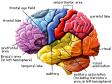 It is common for people to both know and yet not know something at the same time. Sometimes we call it "not noticing," or "avoidance" or "denial"; sometimes we call it "repression" or "forgetting,"and sometimes we call it "ignoring reality." Sometimes we must call it plain "stupid." There are many levels of "not knowing," including the always-challenging "not knowing that you're not knowing" (as in the charming Elvis ditty here: I Forgot to Remember to Forget Her. ) There's usually a pretty good reason for "not knowing" something we subliminally know, or suspect: it's almost always to avoid anxiety, worry, pain, loss, shame, guilt, weakness, inconvenience, conflict with others, conflict within ourselves, and other sorts of discomforts. When we refuse to know what we know, and we act on our "not-knowing", it usually works out badly. Still, it happens all the time, to the best of us. And we all know far more than we want to be aware of about ourselves, and about what goes on around us. "No brain, no pain". When I was in my analysis, which all psychoanalysts must undergo to cleanse the scalpel, so to speak, my analyst used to refer to "un-thought thoughts," which I find to be a very valuable concept in life and in my work as a shrink. Such unthought-thoughts can effect us in all sorts of sneaky ways, beneath our awareness or beyond our willingness to confront them directly. They effect us because there is ultimately no escape from the ideas in our heads, except death. Or maybe good therapy. But there are many such thoughts that we need to know, and need to face, to be fully in reality. Still, we all waste energy avoiding some of our thoughts. I advise people to sometimes turn off their car radios, put down the book, don't have that second Scotch, step away from that computer monitor (but not Maggie's Farm), turn off the boob tube, listen to those thoughts that drop down in the middle of the night - and confront them. It's not fun, but it is worthwhile: we have a lot to tell ourselves, if we would only listen. It's analogous to prayer: sometimes we need to shut the hell up and listen. Therefore it is fascinating to me, but not surprising, to see that there is a defineable neurophysiological correlate to such common occurences: why not blame it on your brain and let yourself off the hook? Science Daily.
Sunday, October 23. 2005
For the next few weeks, and hopefully longer, we will post guest author Nathan Szajnberg M.D. each Tuesday, a medical pal and the son of an Auschwitz survivor, who moved to Israel from California two months ago and is doing his "aliyah" - the long path to becoming an Israeli citizen. I hope he makes his diary into a book, and I hope we can post a good bit of it here, first. It is casually written and not edited yet. Aliyah 10-7: Fri.
A very trying day and would like to tell you about the cab driver in Jerusalem who tried to teach me g'matria and David Vincent on the bus up to Jer., a 21 yo. oleh from England who is now in the army. Both of whom lifted my spirits and remind me of why I want to be here. To paraphrase Bill Clinton (of wayward putz-heit, have shlong, will
travel) , "It's the people, stupid.)
And even before this, got a call from Moishek of Glil Yam. Few of you (in fact none of you ) will know that for years I have had a photo of Moishek in my office from Oct. 2000, when I went to israel for a child psych conference and to interview soldiers for the first time, and ended up working on glil yam with Moishek (and interviewing
soldiers for the first time). Nu, Moishek is now perhaps in his late 60's and head of chakal'ut, agriculture. at kibbutz glil yam. a ben meshek, a true son of the kibbutz, born and raised there. At first, perhaps dubious of my fine hands, he has me removing sticker'im from the large fruit crates on pallets and putting new ones on as they are
harvesting (persimmons, the smooth-skinned, rosy fruit about the size of small grapefruit, from Asia, I think). When he returns, he comments that whereas he had tossed the first old label on the ground, I had collected the old ones in order to toss them out. I mumble something about honoring the earth, but really thought, "My father would have castigated me if I threw things on the ground." Next day, I get promoted to transferring the saplings in the nursery from one pot to the other, adding the wonderfully rich, moist earth and fertilizer. And by day three, I am way up the ladder, (only figuratively) pruning the fig trees in the natan. By the fourth day,
Moishek was teaching me about cambium layers and how to partially strip tree bark to control growth; and going with me to the hadar ochel to have coffee at 9 am (and lamenting how since the kibbutz decided to contract out the food services, they now have to eat kosher. Haval). When we drive to the natal, his five year old granddaughter is marching by with her nursery, perhaps to pick pecans from the ground. She waves. He explains how much she wanted a dog, and her mother unable to tolerate it, sends it over to Moishek. Who now cares for the girl's pup and gives her daily opportunities to come by after school to play with it, walk and feed it. This is the fellow, who until I moved was pinned on my office wall, standing astride (like
Hercules did to bear Atlas's burden temporarily), arms hanging awkwardly at his side, blue-shirted with sleeves rumpled up above the elbow, unpatched dirt-soiled jeans, gray, tightly curled gray hair; behind him a tractor, pails of dirt and the former macadamia nut nursery.
Continue reading "Guest Author: Aliyah Diary, No. 1"
|