We are a commune of inquiring, skeptical, politically centrist, capitalist, anglophile, traditionalist New England Yankee humans, humanoids, and animals with many interests beyond and above politics. Each of us has had a high-school education (or GED), but all had ADD so didn't pay attention very well, especially the dogs. Each one of us does "try my best to be just like I am," and none of us enjoys working for others, including for Maggie, from whom we receive neither a nickel nor a dime. Freedom from nags, cranks, government, do-gooders, control-freaks and idiots is all that we ask for.
It happens in waves. Things my (free) Merlin app heard in 20 minutes this morning (NB: Merlin uses lots of battery):
Wood Thrush Baltimore Oriole Great Crested Flycatcher Chimney Swift Barn Swallow Eastern Towhee Chipping Sparrow Common Yellowthroat Yellow-rumped Warbler Yellow Warbler Red-eyed Vireo Eastern Kingbird Blackpoll Cedar Waxwing American Goldfinch Red-bellied Woodpacker House Wren Carolina Wren American Robin Fish Crow Northern Cardinal Common Grackle Chickadee Tufted Titmouse Canada Goose Blue Jay
It's probably due to the loss of small farms and hay meadows in the Eastern US. When the eastern US was mainly woodlands, they were probably uncommon too.
When I was a kid, Meadowlarks and flocks of Bobolinks were not unusual, especially during spring migration.
The grassland Western Meadowlark has no such problem.
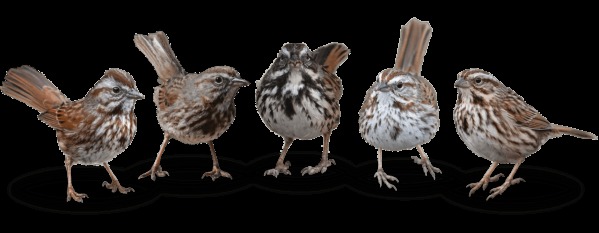
As our Juncos and White-Throated Sparrows head to Canada to nest, for us in the northern 2/3 of the US the sweet tune of the Song Sparrow seems to be everywhere.
You can learn all about this common sparrow here, including the song.
Just a couple of weeks left to get your new Wood Duck houses up, and, if you want to place your boxes in water, it's easier to do if you can walk on the ice and punch a hole to hammer a post into the shallows. That is, if you have any sturdy ice on your pond or marsh.
The males arrive to their breeding grounds in March, and hunt for nesting boxes and holes and crevices in trees before the gals arrive later in April.
If you have a stream or fresh water pond or marsh nearby, they will welcome your effort. Remember, there is no limit to the number of boxes you can place in or near a marsh - these birds are not territorial. I try to add one each year.
I place them on dead trees in the shallows of the beaver marsh, and nail a 3' aluminum flashing on the tree to deter coons and Blacksnakes. Some I put on a post in about 3-6' of water with a strong cement base. I always add a few inches of wood shavings on the bottom.
You can also put them in trees near ponds and marshes,
Our piece on Wood Duck here. I won't shoot a Wood Duck unless by mistake. They are highly edible, but too small. My joy is just to see them around, and my worry is just how many Snapping Turtles and egrets eat the young ones.
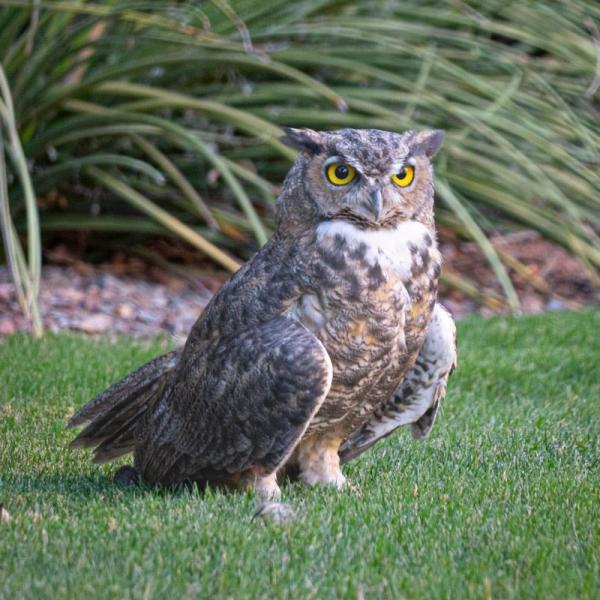
Our Horned owls and our local Bald Eagle are nested.
In our land, we have Nuthatches, Chickadees, Blue Jays, Mourning Doves of course, Cardinals, Downy and Red Breasted Woodpeckers, Carolina Wrens, an occasional House Finch, Cardinals.
Unusual not to see Grackles and other blackbirds yet, but we still have lots of snow cover.
New England is enjoying a gentle and lovely Nor'easter this weekend. Breezy and gusty to 40 mph, snowy but not too violent but does qualify as a blizzard. It's weather, sorta "bad weather for boating." Looks like around 12" thus far. Barometer 29.46.
Why, one might ask, are cyclones travelling to the northeast named after winds coming from the northeast? Well, it's because the winds in the cyclone blowing up from the southeest are usually offshore as the storm, as these typically do, travels up the coast. Image below from this site.
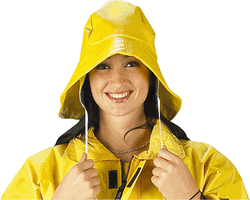
Offshore, therefore, the winds are more likely to be from the southwest - wet winds. However, a Sou'wester is any southwest wind. The big cyclonic storm are still called Nor'easters, as in Perfect Storm. Here's a real Sou'wester (the hat):
Thanks for all of the responses to my random question on Monday.
It seems to me that most people who offer bird food, other than the farmer whose spilled grain or corn is just incidental, do it because they enjoy seeing birds around. I'll offer a few points:
- I do bird seed in wintertime, maybe until mid-April. I do it to see what birds are around.
- Bears tend to sleep in winter, but if you have awake bears around, don't feed birds. You will just attract bears to your house. In bear country, many towns ban bird-feeding. Feeders attract mice and rats too so my preference is to have it all gone by afternoon.
- In suburban areas, House Sparrows and Starlings (both imports from England) can wipe out your feed. Difficult to control, even though they should find enough in mall parking areas. Here's Keeping House Sparrows away from feeders
- Winter birds do not need the stuff you offer them, but they can grow dependent on the hand-outs thus making them vulnerable when it's not given.
- The food you offer will determine what species you will attract. Woodpeckers and Carolina Wrens like suet. Annoying birds do not like safflower seed. Generic supermarket and Home Depot blends are not great. Niger seed gets Goldfinches and other finches but is expensive. The blends with peanut scraps and dried berries are cool. Chewy has good choices.
- I do not have hummingbird feeders in summer because they are supposed to be cleaned out so often, and our Ruby Throateds like our gardens anyway.
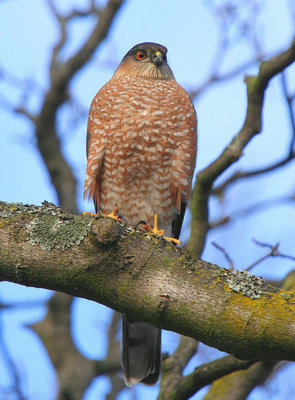
- In my part of New England, what feathered critters hang out? Flocks of Juncos, Mourning Dove, Song Sparrow, Blue Jay, Cardinal, Carolina Wren, Red Bellied Woodpecker, Downy Woodpecker, White Throated Sparrow, Chickadees, Titmice - not much exciting. Plus House Sparrows by the dozens, alas. By March migration though, it gets interesting. For excitement, an occasional Sharpshinned or Cooper's Hawk.
I usually see Sharp Shinned Hawks during migration, much less in winter. However, on a chilly day like this when 0 F is predicted tonight I suppose the Sharpies are as hungry as the birds I throw seed out for.
I do not feed the Blue Jays, Cardinals, Juncos, White Throated Sparrows, Titmice, Chickadees, Downy Woodpeckers, Carolina Wren, etc because they need it, but for my amusement. What is that Wren doing here now, and will it survive?
Well, I got a better look later and decided that it was a Coopers. Nice to see.
After mentioning the remarkable success of the restoration of our Wild Turkey populations. I was reminded of a couple of interesting restoration projects which appear to be working.
OK, it is true that beavers can be a pain, but they also create lovely ponds and marshes for all sorts of critters.
Like most other bugs, their "adult" reproductive phases are usually brief - a week or two. However, their time as eggs, larvae (in this case, caterpillars), and pupae varies depending on species and climate.
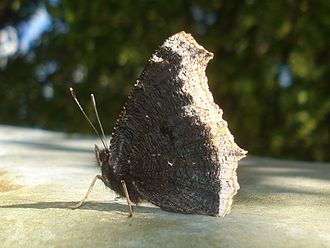
Some even migrate (eg Monarchs) and some, like Mourning Cloaks, (photo) hibernate, which is why you sometimes see them fully-fledged on the first warm days of Spring. Tough buggers, live on tree sap.
Many of the great salt marshes in the northeast US have been filled for development, mosquito (malaria) control, etc. On the southern US Atlantic coast, they still go on for miles.
Fresh water marshes tend to be transient but beavers are good at building new ones.
Salt or fresh, marshes are a paradise for many critters - local and migratory. I am most familiar with the salt marshes of Cape Cod, but have spent time in those of Georgia and South Carolina too.


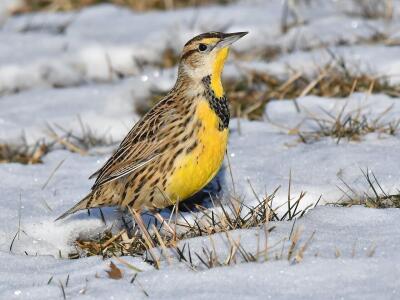 It's probably due to the loss of small farms and hay meadows in the Eastern US. When the eastern US was mainly woodlands, they were probably uncommon too.
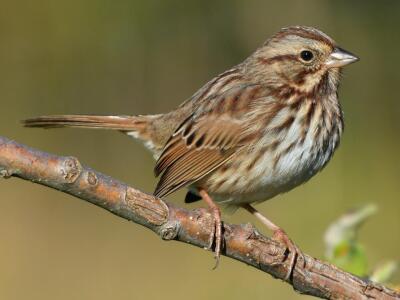 As our Juncos and White-Throated Sparrows head to Canada to nest, for us in the northern 2/3 of the US the sweet tune of the Song Sparrow seems to be everywhere.
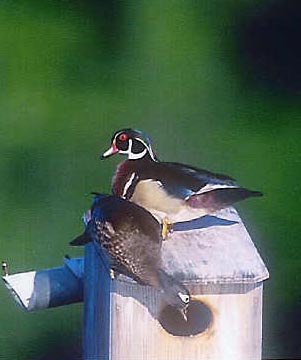 Just a couple of weeks left to get your new Wood Duck houses up, and, if you want to place your boxes in water, it's easier to do if you can walk on the ice and punch a hole to hammer a post into the shallows. That is, if you have any sturdy ice on your pond or marsh.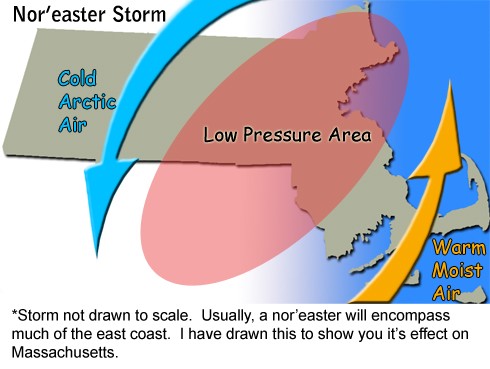
 I usually see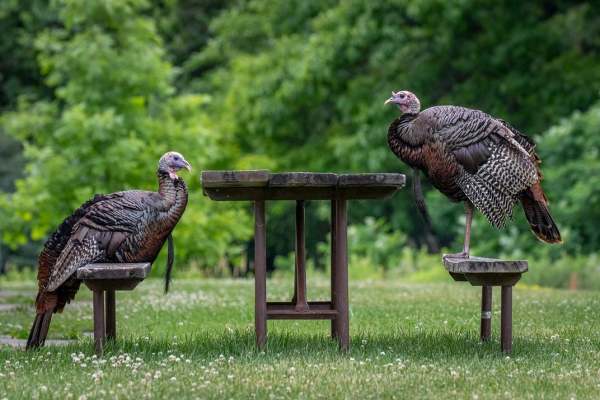
 Like most other bugs, their "adult" reproductive phases are usually brief - a week or two. However, their time as eggs, larvae (in this case, caterpillars), and pupae varies depending on species and climate.