(Doc innocently drops by the news sites this morning)
Nor'easter: November 2012 storm 'great concern' for devastated Jersey shore
"Jeezo!"
Nor'easter may bring 50 mph winds, rain to Sandy-hit areas
"Yikes!"
Nor'easter Threatens Weather-Weary NJ, NY
"Let's face it, they're goners!"
Admittedly, the news sounds pretty grim. The thought of people suffering from the bitter cold really tugs at my heartstrings. I'm just filled with empathy for the innocent souls who-
Oh, hold on a sec.
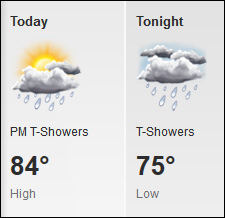
Sorry about the interruption. Had to turn the A/C on. It was getting a little stuffy in here. Damn Florida Keys weather.
Anyway, I thought this whole global warming thing was settled and we could expect to see this silly 'winter' business turned into a quaint anachronism by now, but apparently this isn't so.
With that in mind, I'm reposting my own contribution to the subject of staying warm, originally titled "How To Survive Living In A New England Igloo".
First, let us examine my credentials. Do I have the right to opine on cold weather living, someone basking in the warm, balmy Florida Keys?
Well, I lived in that wimpy state of New England for three years and breezed through those delightful minus-10-degree days without a qualm. But living in the quaint province of New England was nothing compared to living in what many consider to be the coldest hell on earth:
A Northern California coastal fog belt zone.
And surviving.
It all starts with the feet. Keep the feet warm and the entire body follows.
The Feet — Outdoor
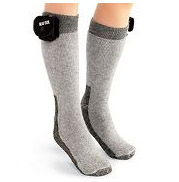 I used to go to Candlestick Park to watch S.F. Giants games, and what an ice box that baby was. When the fog rolled in, it was pretty miserable. Your body might be okay, just from standing and yelling and such, but your feet would be a couple of frozen ice blocks.
Enter the electric socks.
I figured they'd have some kind of thin wire mesh running throughout the entire sock, keeping the whole thing warm, like an electric blanket.
Not even close.
Instead, there's this tiny, flat strip of soft metal that runs under the curve of the toes, woven into the mesh of the socks, powered by a battery. It was simply amazing how warm my feet got from that one tiny warm strip of metal. The next thing I'd know, my feet would feel like they were ready to melt off and I'd be frantically clutching at the OFF switch.
And speaking of extremities (and I don't mean Bulldog's politics), don't forget the electric gloves.
Indoor
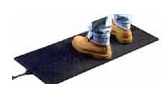 If you're sitting in a chilly room, keeping your feet warm will go a long way to fending off the shivers. For that, I'd recommend a heating pad placed under the rug, or on top of the rug with a small piece of carpet placed over it.
One thing to note is that they get way too warm for indoor household use, so they really need to be on a dimmer. But it can't be a regular light dimmer as the pad draws too much juice. It has to be a 'motor control' dimmer, like used with ceiling fans.
In my case, I bought this dual unit at the hardware store:
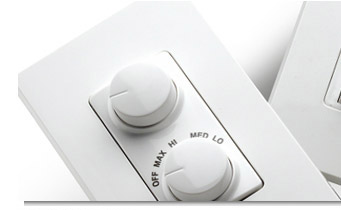
That allows me to put the desk lamps (two 25-watters) on the dimmer side and the heating pad on the other. Crank it up to 'Max' until it gets warm, then knock it down to 'Lo'.
Fireplaces
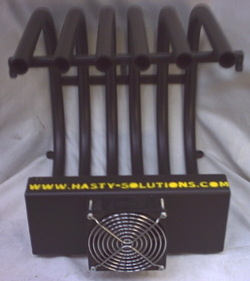 Those pipe units that blow hot air out into the room are a real winner. They say that 90% of a fireplace's heat goes up the chimney, and I can believe it. I lived in the aforementioned fog zone in a small, drafty cabin with a Danish fireplace that barely put out heat even at full roar. So I bought a unit of pipes that acted as the grate for the wood and had a hair dryer-type blower hooked up to it, shoving the hot air in the pipes out into the room. It was a precursor to the snappy model in the pic. It was one of those things that felt like it paid for itself in the first ten minutes.
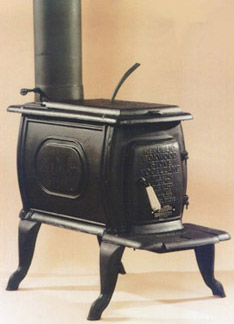
On the subject, if you have wood to burn, the most heat-producing thing I've ever witnessed outside of an industrial furnace was one of these babies:
Portable Room Heaters
I've tried the various types of space heaters and have found that the regular ol' type with the glowing red heating element and a fan works the best. The oil-filled types are certainly economical, but they don't heat a room worth beans because they're not moving the air around. The quartz and ceramic heaters are also economical, but only heat the side of you facing them. If you really want to feel comfortable, you need something that produces raw heat and a fan to mix it with the room air.
And it's certainly cheaper to heat a room than a house, so if you spend 99% of your time in the computer room, it'd make more sense to buy a space heater and keep the rest of the house just warm enough so that your hand doesn't freeze to the refrigerator door handle when you make a mad dash to the kitchen.
House Heaters
The house heater is putting out X number of BTUs, so if you're dumping some of it into an unused room, that's less for the rest of the house. If the vent doesn't have an 'open/closed' lever, don't hesitate to take steps. Either tape a piece of cardboard over the opening, or remove it and stuff something in the pipe.
The flip side is that you can go too far, so what's coming out of the open vents is so strong that it actually creates an uncomfortable draft in the room. There's a balance to be found between the two.
Drafts vs Fresh Air
There's a big difference between "drafts" and "ventilation". I hate drafts, but I like fresh air, so I usually have a window or two cracked even in the dead of winter, but it's never drafty in the room because of other factors. The best trick is to have tight-fitting mini-blinds over the window, so the incoming air is diffused by the blinds, rather than coming in as a stream of cold air, i.e., a draft.
When it comes to sealing household drafts, like under doors and around windows, most things can be sealed with a visit to the hardware store:
— Sliding wooden windows in older houses can sometimes leak like a sieve, but you can use tape to seal up the edges during the coldest months. Most types of tape will leave a bit of residue behind when you peel it off, but electrical tape probably least of all. If you don't like the idea of ugly black electrical tape around your windows, the marine stores usually sell white and blue electrical tape.
— When it comes to gaps under doors, there are all kinds of 'door sweeps' on the market, from rubber to felt to a hinged type that lowers as the door is closed. And in severe cases you could always raise the threshold (the piece on the floor the door closes over), although then people would trip over it, so if the gap is really that bad, it'd be best to just replace the door.
— Chimneys are also a major source of drafts. If the draft plate in the chimney doesn't close tightly, the next step would be tight-fitting glass fireplace doors that could be opened when in use. If you weren't going to use the fireplace at all, you could stuff an old blanket up it, but you'd have to promise to tie a string to it with a note on the bottom end saying "REMOVE ME FIRST!" for future residents.
Bedding
While people differ dramatically in regards to how they like the room kept overnight, I think most people sleep best in a cool room but with warm feet. What I'll do is pull a normal blanket over me, but drape an extra blanket across my feet. If it gets extra-cold overnight, it's easy to grab the extra blanket and pull it over you.
I'm also a big fan of electric blankets in cold climes, setting it to 'Cremate' fifteen minutes before jumping in the sack. If your normal blanket feels right but your feet are still chilly, use the electric blanket on 'Low' over just the feet.
It's Not Just The Room Air
When I was living in the aforementioned nasty Northern California coastal fog zone, I fought the cold for 10 months out of the year. At one point I made an interesting discovery.
What people tend to do is wake up or arrive home to a cold house, set the thermostat to their usual temperature and wait for it to feel comfortable. The thermostat gets to that temperature and shuts off the heater. Then the next few hours are spent with the place barely feeling like it's warm as the furniture and walls and floor and ceiling cool off the freshly-heated air and the heater cycles back on, over and over again until everything's finally up to room temperature.
I found that if I just kind of suffered for a while and let the place get extra-warm, that all of the surrounding material items would warm up quickly and the house heater and I didn't feel like we were fighting the cold for the next few hours. Nor do I think it cost much more, in that while it used up more juice heating the house up in the first place, the heater didn't cycle on near as much afterward.
Keeping It In Perspective Dept.
And the next time you're thinking of complaining about the cold, consider how cold it must be that throwing a mug full of water into the air...
never touches the ground.