|
Maggie's FarmWe are a commune of inquiring, skeptical, politically centrist, capitalist, anglophile, traditionalist New England Yankee humans, humanoids, and animals with many interests beyond and above politics. Each of us has had a high-school education (or GED), but all had ADD so didn't pay attention very well, especially the dogs. Each one of us does "try my best to be just like I am," and none of us enjoys working for others, including for Maggie, from whom we receive neither a nickel nor a dime. Freedom from nags, cranks, government, do-gooders, control-freaks and idiots is all that we ask for. |
Our Recent Essays Behind the Front Page
Categories
QuicksearchLinks
Blog Administration |
Saturday, March 19. 2011Purim: Where’s G-d When Needed?
The Jewish Bible is full of miracles from G-d. Yet, in the Book of Esther, G-d’s intervention is not mentioned. Rabbinic commentary says that the hand of G-d is hidden but manifest in the saving of the Jews from the genocide plans of Haman. That may well be so. However, if there was divine intervention, it took the trembling will and the actions of a few of his earthly humans to bring about the good outcome. Reminds me of this story. On January 1, G-d tells a very good, pious and observant man that in reward he will win the lottery that year. The man waits and waits, and on December 31 asks G-d why he hasn’t won the lottery yet. G-d answers, “meet me halfway, buy a ticket.” It is up to us, each and everyone of us, regardless of religion, to buy a ticket, to speak and act for safety from sworn enemies and to further justice in this world. This year, the reading aloud in our synagogues of the Megillah, the scroll of the Book of Esther, is on Saturday and Sunday. Haman’s name is drowned out by noisemakers, groggers, and Mordechai and Esther’s names are cheered. Purim is accompanied by celebrations for the children – to fix the meaning of Purim in their minds, and the adults giving food packages to the needy and to friends – to build community and spread blessings of plenty and caring. Hitler got the message of Purim. (from Wikipedia)
Haman exists in every generation, and must be confronted, or allowed to prevail. We are G-d’s hands. Purim is a fun holiday, so here’s SpongeBob’s version of the Megillah. Sunday, February 6. 2011Fast Eddie Rickenbacker, and one seagull
(Max Lucado, In The Eye of the Storm, pp.221, 225-226) According to Rickenbacker, each person on the rafts converted to Christianity after the experience. PS: By 1910, Rickenbacker was racing cars. Touted as the first man to drive a mile a minute, he received the sobriquet "Fast Eddie" (giving rise to a nickname borne by many men named Edward since his time). Eddie raced in the 1912, 1914, 1915 and 1916 Indianapolis 500. His only finish in the race was in 1914 when he finished 10th. In the other three races, he did not finish due to car failure. Notably, in the 1916 race, he started on the front row in 2nd place. Eddie was also an Ace in WW I with 22 enemy planes to his credit and started Eastern Airlines back in the 30's. Eddie left us back in 1973, but he was a pilot in two wars, an Ace, and received the Medal of Honor. He was also on the overseas air mail stamp some years ago. And he never forgot his debt.....
Posted by Gwynnie
in Our Essays, Religion, The Culture, "Culture," Pop Culture and Recreation
at
13:11
| Comments (12)
| Trackbacks (0)
Sunday, January 16. 2011QQQ"God doesn't send anybody to hell. People choose hell." Our pastor this morning, quoting another pastor
Posted by Bird Dog
in Quotidian Quotable Quote (QQQ), Religion
at
12:32
| Comment (1)
| Trackbacks (0)
WHAT IS ALPHA?
The Alpha course was developed in response to people who wanted to have the opportunity to investigate the claims of the Christian faith. Over ten weekly sessions, including a day or weekend away, guests hear the claims of the Christian faith. After the presentation, course attendees have a chance to question what they heard and discuss the validity of the claims. The support of all the major Christian denominations has enabled the Alpha course to spread rapidly around the world. Today, Alpha is run in over 160 countries and has been translated into more than 100 languages. Courses can also be found in many contexts including churches, homes, workplaces, military bases, colleges, schools, and prisons. There are many reasons why people enjoy attending the Alpha course. For some it’s the no pressure, non-judgmental atmosphere, others enjoy building relationships with new friends, while others appreciate the chance to discuss deep questions of life that they don’t otherwise get the chance to ask. WHAT HAPPENS AT ALPHA?
Alpha courses run in a wide variety of locations and at different times of the day. Courses vary in size, from one small group meeting in a home, to hundreds of people in a larger venue. Some courses are held over morning coffee or during a lunch hour, though most are evening courses, typically lasting 2 hours. Whatever the course size, people tend to remain in the same small groups for the duration of the course so they can get to know each other, continue discussions and deepen friendships. The whole course usually lasts for 10 weeks, with a day or weekend away about half way through. The emphasis is upon exploration and discovery in a relaxed and informal environment. The Alpha course consists of a series of talks addressing key issues related to the Christian faith. TOPICS The course curriculum is the book Questions of Life by Nicky Gumbel. Each talk reflects one of the chapters from this book. Please note: There is no obligation to attend all ten sessions. WHAT THE PRESS SAYS The New York Times "A novel approach to Christian education that has been catching on nationwide." Madeleine Bunting, The Guardian "What Alpha offers, and what is attracting thousands of people, is permission, rare in secular culture, to discuss the big questions - life and death and their meaning.“ The Express London WHAT PAST GUESTS SAY Anthony: "I didn’t expect the warm welcome I received, the interesting discussions or the lack of pressure to speak in the small groups that followed. I found that I could express any doubts about Christianity, and that my opinions would be respected. If I had an issue with something, I had a forum to voice it with no need to apologize." Rebecca: “Our church was offering this course and my husband and I thought it would be a great opportunity for us to share in this spiritual journey. We go to church with our two kids, say our prayers, etc. but something was missing. We wanted to find out what was missing.” Cynthia: I decided to take the Alpha course because I was unsure what it was I believed. I needed something to fill the empty place in my life. I started attending Alpha to seek answers to those basic questions about my faith and who God was.” Heather: “I was the typical 20 something who had attended church as a child, but once I became an adult I stopped going. When I returned to church I felt like something was missing in my life. The Alpha course helped me understand more about God. Saturday, January 1. 2011My Parable du Jour, about waiting and patience, and waiting for the LordLots of folks I know spend their spare time sitting in Deer stands, with bow or shotgun at hand. Here's the conversation from earlier this season: How did it go this morning? Nothing. No buck. A waste of time. See anything at all? Saw the sun come up. Anything else? A small doe, didn't want to take her. See anything else? A Sharp Shinned Hawk buzzed past my head. Anything else? Flock of Wild Turkeys walked by. Anything else? A Bobcat. No, two Bobcats. Anything else? A Box Turtle walking through the leaves.
What are we waiting for? I don't think I need to explain my parable...
Posted by Bird Dog
in Our Essays, Religion, The Culture, "Culture," Pop Culture and Recreation
at
09:26
| Comments (7)
| Trackbacks (0)
Thursday, December 30. 2010Faith and ReasonAll about monotheism, Abraham, and a mental experiment creating religion amnesia: How Did God Get Started? One quote from the lengthy essay by Colin Wells:
Friday, December 24. 2010Christmas Eve. "Unless you turn..."Matthew 18:1 1 At that time the disciples came to Jesus, saying, "Who is the greatest in the kingdom of heaven?" Joseph and Jesus, Guido Reni, 1635
Thursday, December 23. 2010Reborn: A Christmas Carol
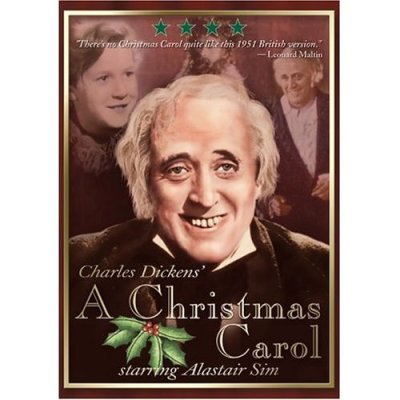
To state the obvious, the story is a metaphor, using Christmas as the setting, in which a man is reborn in Christ by the mystical power of the Holy Spirit (as represented by the "spirits,") transforming his soul from a grouchy, self-centered drudge into a loving, generous, and joyful creature. Many Christians, as I do, pray for some bit of that transformation and rebirth in our souls each Advent, as we remember and celebrate the birth of Christ. Sunday, December 19. 2010A bridge between supernatural awe and a friend in daily life
He also has another good piece up: What’s Better: Grilled Cheesus or the Absent God? Wednesday, December 15. 2010A Movie: The Gospel of JohnRe-posted -
Sticking tightly to the language and sequence of this very literary Gospel which was written 2 centuries after Christ's death, the 3-hour version captures all of the key moments of Christ's ministry, and is especially good at capturing the rabble-rousing, reckless and provocative style of his ministry and its inevitable culmination on the cross. It's easy to see why people wanted him out of the way - he was a big trouble-maker and no-one was insulated from his demands or his harsh judgements. Not a go-with-the-flow guy, and John depicts more the Jesus of Truth than the sweet Jesus of Love, yet love of God is the whole story. The role of Pilate is small but fascinating, and made it clear that we are all Pilates. What would I have done? Probably what Pilate did. Captain Vere in Billy Budd. The story of Pilate is a Greek tragedy, and I feel sympathy for his fate. My only complaint about the film is that Jesus spends more time talking about his relationship with God than he does preaching the rest of his message that was to change the world. I am not a Bible student - but that focus is a reflection of John's Gospel, which was a message to gentiles - "He is in me and I am in Him" - obviously not a message designed to engage the Jews of the time: "Crucify him. Crucify him." The Jews were not quite ready for a Messiah, nor is anyone, anywhere, any time. How are we to know whether a messiah is the real thing? Pilate is us, and the Jews are us. A holy dream in which we ourselves play every role, as we do in all dreams. Anyway, powerful and very moving stuff, and the narration by Plummer adds a lot. Something special for those who want to hear and see.
Posted by Bird Dog
in Our Essays, Religion, The Culture, "Culture," Pop Culture and Recreation
at
18:21
| Comments (16)
| Trackback (1)
Saturday, December 4. 2010How Christian is Christmas? A brief history of Christmas
and
My conclusion at the moment is that it's a Pagan holiday - with the baby Jesus added to the mix as Roman marketing. Every culture needs a party season. The real Christian holy day is Easter. I never heard of an Easter Party, and Easter parades are only in the movies. No, I am not a Grinch. I love Christmas, especially Christmas Eve in church. I like all the parties, too, to catch up with my million friends. I do not enjoy vacuuming pine needles, which is why I keep a pet Spruce Grouse around the Farm. Dang thing follows me everywhere.
Posted by Bird Dog
in Our Essays, Religion, The Culture, "Culture," Pop Culture and Recreation
at
11:38
| Comments (47)
| Trackback (1)
Thursday, December 2. 2010A praying AdventHere's one guide to a prayerful Advent this year. I find that guides help me with this, and with many other things. That's Fra Angelico's (aka Fra Giovanni da Fiesole, aka Guido di Pietro) Adoration of the Magi. When you're in Florence, take the bus ride 20 minutes up the hill to Fiesole and see his little chapel and monastery. It's an active convent now, so they might not let you in. Our thanks to the BD art fiend and art-finder pupette (now Wall-Streeter but still art-finder) who turned us on to that chapel. BTW, we think it's more fun to stay in the pastoral hills of old Etruscan Fiesole when visiting Florence. The bus runs until late, it's a quick cheap one-Euro ride, you get to ride with the locals, and the views are great. On our last visit, I think we only needed to use a cab once. Our pupette's Georgetown abroad semester was out of the old Rockefeller villa in Fiesole. Cool place. I should revisit those pics one of these days. Tuesday, November 30. 2010Chanukah 2010
This year’s calendar offers a way to think about two important dates in Judaism, the birth of today’s Israel and Chanukah. The two dates represent the importance of struggle to accomplish a Jewish state as well as the struggle to deserve a Jewish state. Four days after I was born, the modern state of Israel was ratified by the United Nations partition vote on November 29, 1947. Here’s a video recollection. By happenstance of the Jewish lunar calendar this year, Chanukah begins two days later with the first of eight candle lightings on December 1st. In the video, a commenter says that with the UN resolution Jews were no longer the object of history, acted upon by others, but the subject, taking control over their own fate. Divine intervention may have helped but it was the struggles of man that fulfilled the two-millennia of prayers. A humorous take is that at the beginning of a year G-d tells a pious man he will be rewarded by winning the lottery before year end. Months pass and come late December the pious man asks of G-d why he hasn’t won yet. The response: “Meet me halfway, buy a ticket.”
Maccabees (left); Hasmonean Kingdom 140-37 BC (left)
The most accepted theory of why the books of Maccabees are not included in the Jewish bible is that the Maccabee Hasmonean dynasty was not of the house of David and that it was itself later corrupted by Hellenism, due to its failure to live up to its nationalistic founding, and because the Jewish bible’s canonizers avoided provoking the Romans after their destruction of Israel, murder of as many Jews as they could and the dispersal of Jews to relative refuge elsewhere.
With the creation of modern Israel, as well as Jews promoting Chanukah as a counter to the lures upon their young of Christmas festivities, Chanukah has risen from a minor to a major Jewish holiday and the books of Maccabees are read more often.
The same tensions exist for modern Israel as for the Hasmonean and succeeding Herodian and diaspora era Jews. To what extent is the influence or antipathy of other powerful states to be accommodated or resisted? To what extent can the core nature of the Jewish state be compromised? To what extent are the survival of the state of Israel and the fate of Jews in their own hands?
Posted by Bruce Kesler
in Our Essays, Religion, The Culture, "Culture," Pop Culture and Recreation
at
13:32
| Comments (10)
| Trackbacks (0)
Monday, November 22. 2010Pilgrim Marriage
This is a re-post:
One historical detail I picked up in reading Philbrick's wonderful Mayflower is that the Pilgrims only permitted civil marriage ceremonies - no religion involved, and no preacher present. As Calvinists, the Pilgrims/Puritans/Separatists of colonial New England viewed the Anglican sacraments as Papist, and thus representative of the Anti-Christ - and they meant it. As a consequence, Congregational Churches, the heirs of the Puritan movement, still have no sacraments per se, although many have liberalized (or backslided?) to the extent of doing baptism, communion - and, of course, weddings which, even if not technically sacramental, are viewed as sacred vows. People long for a touch of the sacred and sacramental. It is fascinating to be reminded that our nation's deepest roots are in Calvinist theocracy: pre-enlightenment, for better or worse. They viewed the Indians as equals (though living in spiritual darkness), but they hung some Quakers in Boston�as blasphemers (but mainly tried to just send them away). They even hung an ancestor of mine, who ran away from her husband and kids in Kingston, Rhode Island and was caught on a trail outside of Boston, headed north. Her crime? She refused to return home. We suspect she was not overly fond of her husband, who had previously been suspected of throwing his first wife overboard on the way to Rhode Island in 1640.
Posted by Bird Dog
in History, Our Essays, Religion, The Culture, "Culture," Pop Culture and Recreation
at
12:50
| Comments (22)
| Trackbacks (0)
Sunday, November 21. 2010Retreat at Mepkin Abbey
I have a retired friend who spends around 6 weeks each year at Mepkin Abbey in South Carolina. Quite a few people do this sort of thing. It's a Trappist monastery (Cistercian, with strict rules) with guest houses for retreatants. (They do take in married couples as retreatants and you probably need to be Roman Catholic, but I'm not sure.) He does whatever labor is assigned to him - from baling hay to cleaning toilets, observes the rules of silence, and makes it to all of the Masses (beginning after the morning bells at 3 AM). He returns home "cleansed and refreshed by the Spirit." The guy was a drop-out seminarian, USMC in Vietnam, and, as he describes himself, a "kick-ass businessman." He is, indeed, a tough SOB who loves the Lord. The Abbey is an old plantation on the Cooper River, north of Charleston, donated to the order by the Luce family. Come Ye Thankful PeopleTuesday, November 16. 2010QQQ
Via Potemra, who says "It’s from Elizabeth Waterhouse’s Thoughts of a Tertiary, and it was used by Evelyn Underhill as one of the epigraphs to her classic book Worship" Sunday, October 31. 2010Up and running: Real Clear ReligionFriday, September 17. 2010My Yom Kippur MiracleEach year at the start of the Jewish High Holidays, Rosh Hashanah, I ask a question, usually how to be more constructive and helpful in my personal relationships in general or with a special person. The answer eludes me and it troubles me that I cant see the way. As I go through the days of prayer and reflection, various alternatives come from my mind, only to be rejected as too unreal or hollow or evasive or inadequate to the need. On Yom Kippur, which begins tonight, the longest night and day of prayer, and of a 25-hour fast, the worry that I wont find the answer gets more urgent. My fear rises of not finding the answer. As my mind gets submerged in repetitious prayers and wanders, as I get more light-headed with hunger, as the prayers of repentance get more fervent, an answer always comes late in the day, from my heart. Its never what I thought it would be. It is complete. It is not complex, though requires more focus, discipline, understanding. It always works for the coming year. Life is only complicated when avoiding simple truths. The miracle brings me closer to the person I want to be. It keeps me coming back for more. Friday, September 10. 2010Harry Potter Rosh HashanahJust returned from the second day of Rosh Hashanah services. We search within ourselves for error, correct it, and develop ways to be better. As the Jewish new year begins, the Torah reading for today is Bereshit Bara Elohim: In the beginning G-d created A millenia ago, Biblical and Talmudic scholar Rashi wrote a homily in which bereshit could be rendered bishvil reyshit, For the sake of beginning did G-d create the world. The point is that weve been given our start, and then what we do with ourselves is in our power. Another famous Jewish Rabbi, Joseph Soloveitchik, wrote, The most fundamental principle of all is that man must create himself. My Rabbi, then, passed out this quote from Harry Potter author JK Rowlings Harvard Commencement Speech: We do not need magic to change the world, we carry all the power we need inside ourselves already: we have the power to imagine better. Wednesday, September 8. 2010Lady Gaga Rosh HashanahRosh Hashanah starts tonight. My ever-active boys sat still, watched, listened, learned, and had fun with this Lady Gaga inspired Rosh Hashanah performance. Who am I to argue with Lady Gaga anymore!
A few translations: Days of Awe = The ten days from Rosh Hashanah to Yom Kippur, for especially intense introspection, self-correction and launching on better behaviors toward others. Mahzor = Special holiday prayer book Shofar = Rams horn, usually, blown from Biblical times to announce holidays, and at Rosh Hashanah to trumpet the Rebirth of the World and of us. In the Bible the day is called Yom Teruah, the day of the sounding of the shofar. Shanah Tovah = Our greeting to others for a good year, a shortened version of "May you be inscribed and sealed for a good year." Shanah Tovah to all from Maggie's Farm. Sunday, September 5. 2010Making space for God - a re-post
We discussed how, in Acts 13, they fasted and prayed as a way to invite the Holy Spirit to guide their missionary intentions. We discussed how quieting the mind and turning off the Blackberry can be a sort of "input fasting." The discussion reminded me of what a friend once advised me when I felt my prayer wasn't "working" (I don't mean I wasn't getting the right answer: I mean that I didn't feel I was in communion). My friend wisely said "When conversing with God, you need to STFU some of the time. You're talking too much to be able to listen. That's not a relationship." And it reminded me of this piece by Dr. Bliss: Try turning off the radio: Obsessions, distractions and diversions. I am not a child. I do not need to be told what to do in life most of the time (except by She Who Must Be Obeyed, on occasion. eg: "Call the vet," and "Take your BP meds," and "Bring hence some mint from the garden," and "You can't go to town in those filthy wrinkled pants."). But I do want and need God via the Holy Spirit as my co-pilot to give me light in the tough times, to lift me up in the good times, and to help keep my life aligned, as best I can discern it, with God's will. So I need to clear out the junk and make more mental space for that. Fall Cleaning. Otherwise, I'm just another animal, controlled by desires and interests, and constrained and regulated by ordinary reality. It's all really His space, isn't it? Wednesday, August 11. 2010Elul: The Lord Is In Our Fields
Tuesday night was the first night of the Hebrew month of Elul. This month is special in preparation for the Jewish High Holy Days of Rosh Hashanah and Yom Kippur. We search ourselves for our failings, commit to cease them, sincerely apologize to those weve harmed, and create new ways of behavior. The process is called Teshuvah, or return. This doesnt mean we have come all the way or achieved perfection, but rather we have made the sincere and real efforts to come closer to being and acting as we understand G-d desires for us. When Moses ascended Mount Sinai for forty days to receive the Ten Commandments, G-ds Law, the Hebrews were fearful he wouldnt return and created a Golden Calf to worship and party. When Moses descended, in anger he smashed the tablets. G-d has not decided what to do with you, and requires the Hebrews to abandon their former ways and corruptions of living as slaves in Egypt. G-d instructed Moses to again climb Mount Sinai to receive a replacement. Forty days later, during which time Moses asked of G-d to forgive the Hebrews sin he was instructed that the Israelites repent of their weakness and faithfully observe certain holy days. Moses returned with the Ten Commandments and G-ds forgiveness. The first day of Elul is the second time Moses went up on Mount Sinai, and 40-days later, when Moses returns, Yom Kippur, is when our fate is sealed based upon our acts. It is not our sins toward G-d that most matters but our sins toward each other. A central reading during Yom Kippur is from Isaiah in which it is not our pieties that earn us G-ds favor but how we treat each other, particularly those more in need. Before our sins toward G-d can be forgiven, we must first earnestly strive for the fine balance of G-ds earthly standards of justice and mercy. As distinct from holy days, like the Sabbath, during Elul we do not cease the work that can distract from our focus on G-ds way, or dress up to enter a sanctuary and pray our devotions as we would in entering the Lords palace. We continue our mundane activities while our Lord is consciously invited into our fields to see how we daily live, correct and improve ourselves. Friday, July 30. 2010Atheism as ReligionI think that the religious faith of most average Christians waxes and wanes over time, sometimes even in the course of a day. I do know people whose faith seems to be 100% and rock solid. In the end, I don't find thinking about the topic of strength of faith particularly useful or productive. God is a mystery to me, as is existence itself (and most other things too), but I believe that in prayer and in practice one can come into relationship with God - or at least with Jesus. Ron Rosenbaum speaks up for the Enlightenment agnostic in everyone: An Agnostic Manifesto - At least we know what we don't know. One quote:
Right, sort-of (I don't think we even know what we don't know). Science is not a religion. It's just a formalized, rigorous mode of inquiry from which most of the data and facts and theories are inevitably replaced over time. It is incapable of handling the Big Questions and Big Truth, but it sure can be useful. For example, we currently believe that "gravity" doesn't exist as a "force," but it's a handy concept anyway. Someday, our talk of "forces" wil be viewed as little more than 18th century gods. Chesterton: ""If there were no God, there would be no atheists."
Posted by Bird Dog
in Our Essays, Religion, The Culture, "Culture," Pop Culture and Recreation
at
11:11
| Comments (14)
| Trackbacks (0)
Thursday, July 22. 2010"In The Land Of Mao, A Rising Tide Of Christianity"
Perhaps governments cannot really replace God - as much as they might like to. Friday, June 25. 2010How Did Israel Become A People?At the doctors office this morning I picked up a magazine, Biblical Archaeology Review, of course dated November/December 2009. An article caught my eye, How Did Israel Become A People?, by Abraham Faust, based on his book (hold on for a doozy of a title) Israels Ethnogenesis: Settlement, Interaction, Expansion and Resistance (2007) which won the Biblical Archaeology Society Award for Best Scholarly Book on Archaeology. Briefly:
So much for arguments about Jews being a recently externally imposed colony on historically Arab land. The peoples in Faust promises another article about the development of Im going to be returning to the website of Biblical Archaeology Review, as there appear to be many interesting, scholarly articles and book reviews from various religious and academic viewpoints.
Posted by Bruce Kesler
in History, Our Essays, Religion, The Culture, "Culture," Pop Culture and Recreation
at
22:10
| Comments (0)
| Trackbacks (0)
Sunday, June 20. 2010Abba the Dad"Abba," the Aramaic word for "father," was sometimes used by Christ as a term for his true Father in heaven. Jesus spoke Aramaic, almost certainly knew enough Hebrew to study the texts, and may have known some Greek too. Greeks, like the Romans, were all over the place. Must have been like that multicultural bar scene in Star Wars. His use of "Dad" for God was transformational. I do not view God as having any gender, but I love the way Christ spoke of God as his Dad. Real Dads, however much they may aspire to be role models and to be strong and reliable supports for their kids, are only human and thus always deeply flawed. Yes, I greatly enjoyed Bruce's Father's Day post early this morning, especially the music. Jew, Christian, Moslem - whatever. If that song doesn't bring a tear, you have a problem. "Only you created tears, and only you can wipe them away forever." Friday, June 18. 2010Truth without valueI like the idea of "truth without value." How come it took me this long to find that concept? AVI's final paragraph of The Morality of Nonbelievers:
I agree with everything AVI says, and I feel motivated to think harder about things which affect me which have truth but little value. Lux et Veritas, as they say in Rome. They used to say it in New Haven, too.
Posted by Bird Dog
in Our Essays, Religion, The Culture, "Culture," Pop Culture and Recreation
at
12:08
| Comments (13)
| Trackbacks (0)
Wednesday, June 16. 2010John Wesley in Savannah
Methodism was the ultimate source of our 12-step programs: the Wesleyans liked to have methods for spiritual discipline. John Wesley was an evangelist, and liked to preach outdoors. He tried to convert the Georgia Indians. He was a "by faith alone" preacher. He got in a bit of a problem with a Georgia lady, and eventually returned to England. Here's a piece on Wesley in Georgia, and here's a Wesley bio. The hymns written by John and Charles Welsey are among my favorites. Charles wrote 6000 hymns. John even produced a hymnal but, as this site notes,
Image of John Wesley above, Charles Wesley below:
Posted by Bird Dog
in History, Our Essays, Religion, The Culture, "Culture," Pop Culture and Recreation
at
12:01
| Comments (2)
| Trackbacks (0)
Wednesday, May 26. 2010Good stufffrom Anchoress:
Sunday, May 23. 2010Another link to One Cosmos
(I wish he would leave the politics alone - not that I disagree with his - but I find the combination grating and disconcerting.) A sample of Gagdad's recent musings:
Or something like this, from a more recent post:
Image: A Hubble photo of a star nursery Saturday, May 15. 2010Immanence vs. Transcendence
As I understand it, the Abrahamic religions (Judaism, Christianity, and Islam) view God as both immanent and transcendent. I do, I suppose. However, I know little to nothing about theology. I fell into this subject while thinking about the word numinous (from Latin numen - a spirit which inhabits a thing or place). My Pastor referred to "numinous experiences," by which I believe he meant moments in which God's presence is strongly felt. I like the word very much. Thursday, May 13. 2010Willful Horizontality, and "What is the truth about truth?"Quote from a post at One Cosmos:
Read the whole thing, and be tolerant of Gagdad's rambling and his idiosyncracies. I like the parts about Truth, and about intelligence. We often reflect here on what our secular, pop-culture horizontal gods are today: ideologies, Gaia, science, self, governments, etc., even orgasms. When I consider the things that help me locate myself on a point above the x axis, "to fly like an eagle while being chained to the floor," I come up with poetry, song, prayer, moments of communion with others, and random moments of self-oblivious immersion in some aspect of Creation. My links to the vertical and to the things that cannot be touched. It's the job of preachers to assist that link too, isn't it? Alas for me, much of Scripture tends to speak more to my mind than to my soul, and True Beauty only blinds me. Working on those things, though. Hubble photo is Messier 101 Thursday, May 6. 2010Being a Christian in the World: "Passing through..."I attended the funeral of a colleague and pal of 20+ years early this afternoon. Jewish funeral, very short notice. Just took him and his wife to dinner ten days ago. Massive stroke. Second close death for me in one week. They played Louis Armstrong. The last year of his life was probably the best he had ever had. Recently retired (wife still working), biking through Asia with his lovely Mrs - who is a doctor, a month in Cabo, visiting kids in Lake Como and in California. Loved four things the most: deep thinking, bicycling long distances, his family - and good meals with good wines. Always cheerful, except when stupidity or dishonesty pissed him off. So modest, I never knew he was a Harvard grad til today at the funeral. Full scholarship, worked as a janitor for spending money. Tough for me to lose two special pals who loved life so much, in one week: I am not old yet. It connects to this "passing through" theme for me right now:
Anchoress posted this well-known (but new to me) second century letter to Diognetus, presenting an ideal version of A Christian In The World, in her Paradoxes of Christianity: Christians in the World Christians are indistinguishable from other men either by nationality, language or customs. They do not inhabit separate cities of their own, or speak a strange dialect, or follow some outlandish way of life. Their teaching is not based upon reveries inspired by the curiosity of men. Unlike some other people, they champion no purely human doctrine. With regard to dress, food and manner of life in general, they follow the customs of whatever city they happen to be living in, whether it is Greek or foreign. And yet there is something extraordinary about their lives. They live in their own countries as though they were only passing through. They play their full role as citizens, but labor under all the disabilities of aliens. Any country can be their homeland, but for them their homeland, wherever it may be, is a foreign country. Like others, they marry and have children, but they do not expose them. They share their meals, but not their wives. They live in the flesh, but they are not governed by the desires of the flesh. They pass their days upon earth, but they are citizens of heaven. Continue reading "Being a Christian in the World: "Passing through..."" Wednesday, May 5. 2010Was it really a "work ethic"?
A reader recently reminded us that the Puritans had two kinds of "callings", the "general calling" to God and a secondary calling to labor. Thus work was not seen as being about ethics, but as somewhat - or very much - sanctified. All honest work, after all, is a form of service. The pop view of our Puritan ancestors is distorted, and a bit of a straw man. Grace Baptist has a good post on Puritans and work. He refers to what looks like an interesting book: Worldly Saints: The Puritans as They Really Were.
Posted by Bird Dog
in Religion, The Culture, "Culture," Pop Culture and Recreation
at
10:37
| Comments (5)
| Trackbacks (0)
Sunday, May 2. 2010Fools for God"We are fools for Christ's sake, but ye are wise in Christ; we are weak, but ye are strong; ye are honourable, but we are despised." (KJV). "For the wisdom of this world is foolishness in God's sight. As it is written: "He catches the wise in their craftiness." (1 Corinthians 3:19) "For the message of the cross is foolishness to those who are perishing, but to us who are being saved it is the power of God." (1 Corinthians 1:18) "For since in the wisdom of God the world through its wisdom did not know him, God was pleased through the foolishness of what was preached to save those who believe." (1 Corinthians 1:21) Friday, April 30. 2010Letter to the Hebrews, plus CS LewisMy men's study/confessional group has been reading the Letter to the Hebrews for a couple of months. One of the topics we stumbled into this week was a discussion of obedience to God, and dutifulness. (Here's a recent post on obedience via Vanderleun.) While we guys all seem to acknowledge the need for discipline for spiritual growth, many of us confessed our tendency to lazily and self-congratulatingly replace a life in the spirit with "Christian" dutifulness and "doing good." We more or less ended up thinking of moral and religious dutifulness, if lacking the Holy Spirit and the direction of God, as clanging cymbals - empty noise. Of course, that was one of Christ's teachings. From a Christian standpoint, pride in one's Christian dutifulness and righteousness is a devil's snare - as is pride in one's humility. From Screwtape's Letter #14 with his advice to his apprentice Wormwood:
Wednesday, April 21. 2010The belly button and the search for God
Our umbilicus, he says, is our reminder that we have already passed from one mode of being to another. One quote:
He does not mention the term "re-birth," but that's part of what his post is about. I know that some of our readers think Gagdad Bob is an annoying nut, but I have found plenty of his transcendental imagery to be useful to me (including his metaphor of "verticality"). It is an affliction of middle age, especially if one has spent much time and effort in life preoccupied with the daily, practical, dutiful, material, and mundane - as what Gagdad calls a "Flatlander" - to find oneself asking "Is that all there is?" ...and to do all sorts of wacky and reckless things to deal with that question and with that emptiness, which things, indeed, bear no soul-nourishing fruit but are only empty distractions of the "How many holes does it take to fill the Albert Hall" sort. Yet what a crazy question that is for me or anybody to ask - "Is that all there is?" - in the midst of this buzzing, blooming miraculous and frightening cosmos which is packed with road signs of all sorts (including our humble belly buttons), pointing to God. OK, that's enough preaching and platitudes for one day at Maggie's. Here's a real question: Is God female? The medical/spiritual image of a human belly button is h/t Theo. That "Nexus" shirt is right on the button, as it were, isn't it? Tuesday, April 6. 2010Joseph RatzingerOur friend Anchoress emailed me this piece from a Lutheran, The dictatorship of relativism strikes backand goes nuclear. It begins:
Sunday, April 4. 2010Two religion quotes from today- Deacon Kevin McCormack, on Religion on the Line (radio): "If there were no Easter, there would be no Christmas." - My Pastor in church this morning (paraphrased): "If we cannot believe that Christ rose from the dead, or are on the path to believing it, then we're wasting our time here." (I think that is debatable, but I like totally get his point. - the illumination comes from stepping into the light. Many things in life are like that. Maybe most things.) Friday, April 2. 2010Good FridayGood Friday is a Christian day for prayer and reflection - not that every day is not.
Image: El Greco, 1695 Wednesday, March 31. 2010Beyond religion, and the relationship between Dog and ManOne never knows where Lent will take you. A month or two ago, I was fairly certain that I knew what painful, self-flagellating things I needed this Lent for, but it has led me in another direction entirely, and a direction which offers more joy than pain. It has led me to another level of the relational aspect of faith, as my posts during this Lent have indicated. It crystallized in my mind when I was contemplating my relationship with dogs during a recent night-time post-prandial dog-walk with my pal with ceegars. I generally connect with dogs pretty well, and think I have a good idea of how much of the bond is real and how much is imaginary.
Everything we experience in life is relational, in a sense - including to inanimate things and abstract things. It's how we are constructed. If I can delight in the slobbering kisses of a dog, what is it in me that prevents me from fully delighting in the (not-slobbering) kisses of God? I won't go on with this because it's too personal and probably boring for anybody who isn't exactly where I am, but maybe you can get my drift. I am a work in progress. Monday, March 29. 2010Passover Lessons: Joshua, Caleb and the Four SonsJoshua and Caleb are the only Jews from the original exodus from At the Passover Seder tonight traditional prayers and foods remind us of the trials and purpose of the exodus. The centrality of Jerusalem to Jews across the millennium is seen at the conclusion of the Seder when we all say Next Year In Jerusalem, as in every removal of the Torah from the ark we sing, For from Zion [Israel] shall come forth Torah and the Word of Hashem [G-d] from Jerusalem. The manner in which the Seder is conducted is intended to educate the children, a wise one, a wicked one, a simple one, and one who doesnt know to ask, as are all adults whether Jewish or other. Hence, we begin the narrative of Exodus (Haggadah) with the Four Sons. The Torah refers to four sons: One wise, one wicked, one simple and one who does not know how to ask a question. What does the wise son say? "What are the testimonials, statutes and laws Hashem our G-d commanded you?" You should tell him about the laws of Pesach, that one may eat no dessert after eating the Pesach offering.
What does the wicked son say? "What does this drudgery mean to you?" To you and not to him. Since he excludes himself from the community, he has denied a basic principle of Judaism. You should blunt his teeth by saying to him: "It is for the sake of this that Hashem did for me when I left What does the simple son say? "What's this?" You should say to him "With a strong hand Hashem took me out of And the one who does not know how to ask, you start for him, as the Torah says: "And you should tell your son on that day, saying 'It is for the sake of this that Hashem did for me when I left The passage of the four sons raises many questions: Continue reading "Passover Lessons: Joshua, Caleb and the Four Sons" Sunday, March 28. 2010What is "The Kingdom of God"? When Jesus came to Jerusalem for Passover
His teachings and his miracles had become famous. People threw their cloaks on the road and, presumably, palm leaves, for his horse to walk on. Much of their enthusiasm was unwarranted, however: the Jews were hoping for a political messiah (using the word "king"), more than they were hoping for the messiah who came to tell them that much of what they believed about being in relationship with God was wrong - and claiming that he had the authority to say so. "Salvation," for the crowds, meant salvation from the Romans, and "the kingdom of God," in the Hebrew Bible, referred to the literal restoration of a nation of Israel under God, as had been promised to David. There was no concept at the time, I believe, of the now-Christian idea of salvation or the Christian idea of "the kingdom of God." Furthermore, Jesus had no interest I am aware of in politics or governance and had no beef with the Romans. A radical for sure, in his apparent renunciation of the ordinary world. There is plenty of discussion about what is understood by the kingdom of God. My own view is that it refers to God's domain, ie the universe of those souls who seek relationship with God - not any literal kingdom but a "spiritual" (I hate that word), unworldly kingdom. Maybe "transcendent" is a better word. I suspect that the Jews who welcomed Jesus to Jerusalem were deeply disappointed to discover that Jesus' mission was not worldly, but other-worldly: only a few handfuls of people remained to constitute what the scholars term the "Christ cult" after the crucifixion. It took Paul's inspired work to rebuild on the foundation. (That's just my amateur take on it all. I am no expert.) Image: Fra Angelico's Entry into Jerusalem
Posted by Bird Dog
in Our Essays, Religion, The Culture, "Culture," Pop Culture and Recreation
at
17:13
| Comments (3)
| Trackbacks (0)
Palm Sunday: "The stones would shout out"
Luke 19: 29-40 29When he had come near Bethphage and Bethany, at the place called the Mount of Olives, he sent two of the disciples, Friday, March 26. 2010Passover and US Founding FathersThe Jewish holiday of Passover begins this year next Monday night with the first Seder. (Translation = Order or sequence and content of the prayers, symbolic foods, and retelling of the Exodus, with emphasis on educating the children.) Many Christians also celebrate the Passover Seder, which was their Last Supper. Less known is that the Exodus was central to the minds of the new United States' Founding Fathers. The first committee of the Continental Congress assigned to design our Great Seal, the symbol of our sovereignty, was comprised of three of the five men who drafted the Declaration of Independence: Thomas Jefferson, Benjamin Franklin and John Adams. Franklin chose a design of "Moses standing on the Shore, and extending his Hand over the Sea, thereby causing the same to overwhelm Pharaoh who is sitting in an open Chariot, a Crown on his Head and a Sword in his Hand. Rays from a Pillar of Fire in the Clouds reaching to Moses, to express that he acts by Command of the Deity." The motto: "Rebellion To Tyrants Is Obedience To God," which was later adopted by Jefferson as his personal motto.
The above is drawn from this website about the US' Great Seal. Click around the site. It is fascinating. Here's a relevant quote: "All the armies of Europe, Asia and Africa combined could not by force take a drink from the Ohio or make a track on the Blue Ridge, in a trial of a thousand years. At what point then is the approach of danger to be expected? I answer, if it ever reaches us, it must spring up amongst us. If destruction be our lot, we must ourselves be its author and finisher." Abraham Lincoln
Posted by Bruce Kesler
in Our Essays, Religion, The Culture, "Culture," Pop Culture and Recreation
at
11:05
| Comment (1)
| Trackbacks (0)
Sunday, March 21. 2010Today's Lenten sermon against religion
(It followed one of our missions updates about the prison ministry we support (good stuff indeed, but as a friend said in our Lenten Lunch study group afterwards, "Can we be as sharing of Christ's love to our next-door neighbor with the BMW as we can to the sick, the despairing, and the folks in prison?") The sermon seemed unusual to me in being a preaching against religion. Our Pastor, instead, held up the vision of the primacy of a personal relationship with God through Christ, bypassing much of what is often referred to as "religion." I suppose it was, in part, a preaching about the sins of piety, spiritual pride, righteousness, pro-forma ritual, and self-righteousness but I cannot do justice to the message. A personal relationship with God through Christ...that sounds kind of ordinary, but I suppose I was ready to hear the "relationship" part in a new way. Less abstract; more felt. I understand how the "religion" part is meant to be a help in building, guiding, and maintaining the relationship, but it can be a hindrance too. Religion can easily become idolatry. He spoke about how he has learned to tell when he is out of relationship with God by his reactions to life and people, and mentioned, interestingly, that having been raised and lived all his life as a Christian was a handicap to him as a Christian because he feels that he has never had the experience of being entirely out of relationship. He was speaking on Luke 18:9:
Saturday, March 20. 2010One way Jesus turned the world upside-down: "Beyond morality and religion"Re-posted from just one month ago - "Jesus tells us that everything we had ever thought about how to approach God is wrong."
Among other fascinating points, Keller observes that Jesus used the parable to depict two kinds of lost sons - the seemingly-"good" kind and the obviously-"bad" kind. The elder "good" son is crippled with the sins of spiritual pride and self-righteousness, and the younger is just an everyday rotten kid. However, Keller's main point in this regard is that neither son loved the father - they both focus on what they can get from the father (the inheritance in the elder's case, and a job in the prodigal's case) rather than on loving the father. They are lost because neither is in a loving relationship with the father. Keller holds up a vision of a Christianity which consists of a transformative relationship of love and communion with Christ and God which is, as he puts it, "beyond morality and beyond religion." He invites us to be reborn in a loving relationship with the Father. The fruits of that - the "fruits of the Spirit" - may emerge after and be more than the "clanging cymbals" of empty, dutiful, or self-validating virtue. I like this message because I have never directly associated Christianity as being centrally about doing "good" or being "good." Indeed, I sometimes think a good church sign might be "Sinners only, please." Good character and behavior are damn important in life and important to the people we are involved with, but not basic to Christianity. Being respectable, honest, dutiful, responsible, self-controlled, reliable people are primarily secular and/or psychological issues, despite Calvin. In Christ's time, the Pharisees (represented by the elder brother) were scrupulous about doing the right thing but lost track of their relationship with God during their search for goodness and correctness. Christ gave them hell for their pursuit of rightousness and, famously and scandalously, chose to hang out with lepers, whores, tax-collectors and the like (the sinful younger brother who might, someday, have to recognize a need for redemption). One of my comments in our group was in this vein: "Seems to me that there are many rational, practical, mature caring adult, legal, narcissitic, relational, and emotional reasons to be a good and upright person in this world and to live a life of decency and honor, but getting on the Father's good side and getting the Father to do what we want is not one of them." As one reviewer of Keller's book asks, "Which brother am I?" My private answer: "A bit of both and, I hope, a bit of loving son." There's a trailer of Keller's DVD here. Wednesday, March 10. 2010God's talkWe recently posted a link to a homey discussion about how God speaks to us. But here's Gagdad Bob:
« previous page
(Page 2 of 11, totaling 524 entries)
» next page
|